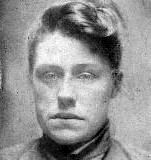
Frances Knorr
Murderer Sarah Makin
Murderer · Australia · 1892
Sarah Makin was also known as Sarah Jane Makin. John Makin (14 February 1845 –…
12 victims
Sarah Makin
Murderer · Australia · 1892
Sarah Makin was also known as Sarah Jane Makin. John Makin (14 February 1845 –…
12 victims
 John Makin
Murderer · Australia · 1892
John Makin (14 February 1845 – 15 August 1893) was an Australian baby farmer wh…
12 victims
John Makin
Murderer · Australia · 1892
John Makin (14 February 1845 – 15 August 1893) was an Australian baby farmer wh…
12 victims
 Kathleen Folbigg
Murderer · Australia · 1989
Kathleen Megan Folbigg (née Donovan) was an Australian child killer. She was co…
4 victims
Kathleen Folbigg
Murderer · Australia · 1989
Kathleen Megan Folbigg (née Donovan) was an Australian child killer. She was co…
4 victims
 Martha Rendell
Murderer · Australia · 1907
Martha Rendell was executed by hanging at Fremantle Prison on October 6, 1909.…
3 victims
Martha Rendell
Murderer · Australia · 1907
Martha Rendell was executed by hanging at Fremantle Prison on October 6, 1909.…
3 victims
 Amanda Kelly
Murderer · Australia · 2012
Amanda Kelly was sentenced to life in prison with a 14-year minimum on December…
1 victim
Amanda Kelly
Murderer · Australia · 2012
Amanda Kelly was sentenced to life in prison with a 14-year minimum on December…
1 victim
 Carla Hughes
Murderer · USA · 2006
Name: Carla Hughes Other names: Carla Ann Hughes Date of birth: June 12, 1981 A…
2 victims
Carla Hughes
Murderer · USA · 2006
Name: Carla Hughes Other names: Carla Ann Hughes Date of birth: June 12, 1981 A…
2 victims
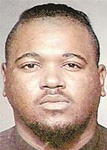 Cory Morris
Serial killer · USA · 2002
Cory Morris was a part-time karaoke disc jockey. Relatives had allowed Morris t…
5 victims
Cory Morris
Serial killer · USA · 2002
Cory Morris was a part-time karaoke disc jockey. Relatives had allowed Morris t…
5 victims
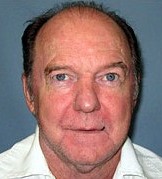 James Harvey Callahan
Murderer · USA · 1982
James Harvey Callahan was executed by lethal injection in Alabama on January 15…
1 victim
James Harvey Callahan
Murderer · USA · 1982
James Harvey Callahan was executed by lethal injection in Alabama on January 15…
1 victim
 Samuel Christopher Hawkins
Murderer · USA · 1976
Samuel Christopher Hawkins Hawkins was executed by lethal injection in Texas on…
2 victims
Samuel Christopher Hawkins
Murderer · USA · 1976
Samuel Christopher Hawkins Hawkins was executed by lethal injection in Texas on…
2 victims
 John Albert Taylor
Murderer · USA · 1988
John Albert Taylor (c. 1960) was executed by firing squad in Utah on January 26…
1 victim
John Albert Taylor
Murderer · USA · 1988
John Albert Taylor (c. 1960) was executed by firing squad in Utah on January 26…
1 victim
- Gender
- female
- Country
- Australia
- Location
- Brunswick, Melbourne, Victoria, Australia
- Date of birth
- December 10, 1868
- Age at first offence
- 23
- Characteristics
- child killer, infanticide, abuse
- Victim profile
- Children
- Method of murder
- Strangulation
- Date(s) of murder
- 1891 - 1893
- Years active
- 1891–1893
- Date of arrest
- August 1893
- Status
-
Executed
Executed by hanging at the Old Melbourne Gaol on January 15, 1894
Case record: Frances Knorr
Background
Frances Lydia Alice Knorr (also known as Minnie Thwaites) was born in 1868 in London, England, and emigrated to Sydney, Australia in 1887. She initially worked as a domestic servant and married Rudolph Knorr, a German immigrant and waiter.
After Rudolph Knorr was sent to prison in February 1892 for selling furniture bought on hire purchase, Frances was left pregnant and penniless. She managed by “baby farming” by looking after children whose mothers could not care for them.
Frances moved around Melbourne frequently and used both her maiden and married names during her child minding period. She was described as 23-year old, “white and careworn,” and she probably suffered from epilepsy. She was also described as “Baby Farming Murderess.”
The offence
In September 1892, the bodies of three babies were discovered in Brunswick. Frances was arrested and sent for trial in December.
The new tenant at the Moreland Road residence in Melbourne discovered the body of a baby girl while preparing a garden bed. Police dug up the rest of the garden and discovered a boy’s body as well. The bodies were linked to Frances Knorr.
Accounts of the case stated that Frances strangled some babies she could not place elsewhere or sell to childless couples, and that two of her victims were buried in a garden at Moreland Road. Another version of events described the discovery of three infants in Brunswick: a baby girl whose neck had a tightened length of rope, and two boys who were buried nearby; an autopsy was described as indicating strangulation for the little girl and suffocation for the two boys.
A description of evidence also stated that the little boy’s neck had been compressed to less than half its normal size, and that a tape around the neck had been the width of a sovereign coin, limiting breathing capacity. At the trial she admitted that she had buried the babies in the Moreland Road garden while claiming they had died of natural causes.
Investigation and arrest
Police soon traced the bodies to Rudolph and Frances Knorr, who had recently moved to Sydney and were “weren’t hard to find.” The Knorrs were picked up by police within days of the discovery of the three bodies and extradited to Melbourne to face the authorities.
When Frances was arrested, she was about to give birth to her second child. She told the arresting officer, Detective Keating: “I know what you have come for”.
While awaiting trial, Frances wrote a letter to her former lover, Edward Thompson, asking him to “manufacture some evidence” for her defence. Thompson’s mother surrendered the letter to police.
Trial
Frances Knorr was tried for murder in December and came to trial on April 11, 1893, charged only with the murder of the girl. The letter to Thompson was presented by the Crown as evidence. The letter was described as worded to implicate Thompson in the murders, but it was deemed pure fabrication.
Knorr gave a statement herself from the witness box and admitted that she had buried the babies in Moreland Road but claimed they had died of natural causes.
The Crown demonstrated that the babies had been strangled with a tape and described evidence about the compression of the boy’s neck. The trial lasted five days and resulted in a guilty verdict.
As the death sentence was mandatory, Judge Holroyd passed it. When sentenced, Knorr sobbed:
“God help my poor mother! God help my poor babies!”
During the proceedings described in another account, Thompson denied any knowledge of the involvement referred to in the letter, and the police believed him. The account also stated that after a “ploy” failed, Frances Knorr dramatically changed her evidence in the middle of the trial and admitted burying the babies while claiming natural causes.
Another part of the narrative stated that Frances was convicted on 1 December 1893 of the wilful murder of a female child.
Sentencing and execution
Knorr was taken back to the Old Melbourne Gaol to await execution. Accounts described her as a model and penitent prisoner in the condemned cell who spent her time singing hymns and praying.
On her last day, she made a written confession. It stated:
“Placed as I am now within a few hours of my death, I express a strong desire that this statement be made public, with the hope that my fall will not only be a warning to others, but also act as a deterrent to those who are perhaps carrying on the same practice. I now desire to state that upon the charges known in evidence as Number 1 & 2 babies, I confess to be guilty”.
Her execution was scheduled for 10:00am on Monday 15 January 1894.
In the execution account, the witnesses were brought into the yard opposite the gallows and stood in silence, hearing Knorr singing a hymn in her cell. She was led onto the scaffold, and when the sheriff asked if she had anything to say, she replied in a clear and unbroken voice:
“Yes, the Lord is with me! I do not fear what men may do to me, for I have peace, perfect peace!”
The trap released and she fell 7 feet 6 inches. Death was recorded as “instantaneous.”
Her last words were recorded as:
Her death mask was on display at the Old Melbourne Gaol.
Appeals
No appeal information was provided in the supplied material.
Outcome
Frances Knorr was found guilty and sentenced to death by hanging. She was executed by hanging at the Old Melbourne Gaol on January 15, 1894.
Aftermath and public reaction
Accounts described the public as deeply divided about her sentence. The state’s hangman, Thomas Jones, committed suicide two days before the execution. Another account described Jones as having sent 15 men to their deaths and as taking to the bottle before committing suicide by cutting his own throat while in a drunken stupor. His wife had threatened to leave him if he hanged Mrs Knorr.
On the eve of the execution, a crowd of 200 protesters gathered outside Old Melbourne Jail and sang hymns through the night while petitioning for a last-minute reprieve; the government stood its ground.
A written account also described renewed religious activity in the days leading up to her hanging, including confession, singing hymns, and prayer. Another account stated that authorities assessed she could have murdered as many as 13 infants, based on the period she was in the child minding business and later women coming forward.
Other details
A royal commission described that in 1893 Melbourne’s public health officer testified about post-mortems he had performed on over 500 children who had died, stating that more than half indicated murder.
A narrative also stated that the practice of “baby farming” was facilitated by social conditions, including scarce jobs during a depression and absence of state welfare. It was also described that diaries of John Castieau, governor of Old Melbourne Gaol from 1869 to 1884, indicated that it was a common practice for a pregnant woman to commit a crime to have her delivery in the gaol so she could be cared for.
A description also included an identifying description of Frances Knorr used by South Australian police: “...age about 25 years, height 5ft, 2in (157.4 cm), fair complexion, very stout build, light brown hair, very large peculiar-shaped mouth, very talkative, and speaks with a lisp.”
A further narrative stated that Rudolph Knorr had been imprisoned in Pentridge for fraud and that Frances had an affair with Edward Thompson, lived with him for a time until he cast her aside, and reunited with Rudolph before turning to child minding. It also stated that they had a daughter named Gladys.
Quotations included in the material:
- Frances Knorr to Detective Keating: “I know what you have come for”
- Frances Knorr at sentencing: “God help my poor mother! God help my poor babies!”
- Frances Knorr on the scaffold: “Yes, the Lord is with me! I do not fear what men may do to me, for I have peace, perfect peace!”
- Hanging execution account quote: “Yes. The Lord is with me.
Spotted an error, or have more information about this case?