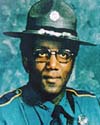
Richard Wayne Snell
Murderer Brian Kevin Rosenfeld
Murderer · USA · 1985
Brian Kevin Rosenfeld Brian Kevin Rosenfeld was sentenced to three concurrent l…
23 victims
Brian Kevin Rosenfeld
Murderer · USA · 1985
Brian Kevin Rosenfeld Brian Kevin Rosenfeld was sentenced to three concurrent l…
23 victims
 Marvin Gray
Murderer · USA · 1975
Marvin Gray was convicted killer who claimed responsibility for 23 slayings and…
23 victims
Marvin Gray
Murderer · USA · 1975
Marvin Gray was convicted killer who claimed responsibility for 23 slayings and…
23 victims
 Yahweh ben Yahweh
Murderer · USA · 1980
Yahweh ben Yahweh was born and legally named Hulon Mitchell Jr. (October 27, 19…
23 victims
Yahweh ben Yahweh
Murderer · USA · 1980
Yahweh ben Yahweh was born and legally named Hulon Mitchell Jr. (October 27, 19…
23 victims
 Russell Ellwood
Murderer · USA · 1991
Russell Ellwood was a former taxi driver. Authorities suspected him of killing…
20 victims
Russell Ellwood
Murderer · USA · 1991
Russell Ellwood was a former taxi driver. Authorities suspected him of killing…
20 victims
 Thomas Lee Royal
Murderer · USA · 1991
Thomas Lee Royal was sentenced to death for the February 21, 1994 capital murde…
2 victims
Thomas Lee Royal
Murderer · USA · 1991
Thomas Lee Royal was sentenced to death for the February 21, 1994 capital murde…
2 victims
 Tang Yongming
Murderer · China · 2008
Tang Yongming (47) attacked three people at the 13th-century Drum Tower in Beij…
1 victim
Tang Yongming
Murderer · China · 2008
Tang Yongming (47) attacked three people at the 13th-century Drum Tower in Beij…
1 victim
 David Scott Franks
Murderer · USA · 1994
Name: David Scott Franks · August 5, 1994 — David Scott Franks stabbed to death…
3 victims
David Scott Franks
Murderer · USA · 1994
Name: David Scott Franks · August 5, 1994 — David Scott Franks stabbed to death…
3 victims
 Lyle & Erik Menendez
Murderers · USA · 1989
Joseph Lyle Menendez (born January 10, 1968) and Erik Galen Menendez (born Nove…
2 victims
Lyle & Erik Menendez
Murderers · USA · 1989
Joseph Lyle Menendez (born January 10, 1968) and Erik Galen Menendez (born Nove…
2 victims
 Ricky Chase
Murderer · USA · 1989
Ricky Chase was convicted in February 1990 of capital murder for the robbery an…
1 victim
Ricky Chase
Murderer · USA · 1989
Ricky Chase was convicted in February 1990 of capital murder for the robbery an…
1 victim
- Gender
- male
- Country
- USA
- Location
- Miller County, Arkansas, USA
- Date of birth
- 1931
- Age at first offence
- 52
- Characteristics
- white supremacist
- Victim profile
- William Stumpp ( pawn shop owner) / Louis P. Bryant, 37 (Arkansas State Trooper)
- Method of murder
- Shooting ( modified Colt .45)
- Date(s) of murder
- November 3, 1983/June 30, 1984
- Years active
- 1983–1984
- Date of arrest
- June 30, 1984
- Status
-
Executed
Executed by lethal injection in Arkansas on April 19, 1995
Case details
Richard Wayne Snell (1931 – April 19, 1995) was executed in Arkansas on April 19, 1995.
He was described as a member of the radical white supremacist group The Covenant, The Sword, and the Arm of the Lord (CSA), also known as the “CSA”.
Background
Snell was associated with the CSA, which was started in 1971 in the small community of Elijah, Arkansas by polygamist James Ellison. Snell also frequented Elohim City, a private community located in Oklahoma, created by members of Ellison’s organization.
Snell believed that the CIA was using an airport in Mena, Arkansas to smuggle drugs into America. He made claims that local and state police departments in that area were involved in a cover-up of drug deals.
Snell claimed that he had filmed then-Governor of Arkansas Bill Clinton at Mena Airport. Snell’s claim that Clinton was filmed was stated as having “never been proven in any form”.
Snell also claimed that a then Arkansas state trooper assigned to “Governor Security” had beaten his (Snell’s) wife to force her to reveal the location of alleged video footage Snell had taken at Mena Airport.
The Bureau of Alcohol, Tobacco, Firearms and Explosives (ATF) had ongoing investigations into the organization. By the end of their operations, the ATF obtained 155 Krugerrands (gold coins), one live light antitank rocket (LAAW), 94 long guns, 30 handguns, 35 sawed-off shotguns and machine guns, one heavy machine gun (a Japanese copy of the WWI Lewis, in .303 caliber), and a quantity of C-4 explosives. Much of this arsenal was stolen.
In 1983, CSA member William Thomas accompanied Snell and CSA member Steven Scott in attempting to dynamite a natural gas pipeline near Fulton, Arkansas, without success. Scott was eventually captured and convicted for that crime. Several other members were arrested on various other charges, mostly weapons violations.
By 1985, the CSA had, for all practical purposes, fallen, due to most of its members being either killed or incarcerated.
The offence
Pawn shop murder
On November 3, 1983, William Stumpp was murdered during a robbery of his pawnshop in Texarkana, Arkansas.
Trooper murder and subsequent flight
On June 30, 1984, Snell was apprehended in Broken Bow, Oklahoma, after he shot and killed Arkansas State Trooper Louis Bryant on a western Arkansas highway. Snell had earlier been described as being originally charged only with the Bryant murder.
Soon after, investigators uncovered evidence linking Snell to the Stumpp murder.
Snell was sentenced to life in prison without parole for the murder of Trooper Bryant and sentenced to death for the pawn shop owner murder.
Victims and related harm
Trooper Bryant was 37. He was survived by his wife and son.
Four members of the DeQueen, Arkansas, Police Department were killed in an automobile accident while en route to Trooper Bryant’s funeral. The officers who were killed were Captain William Mills, Patrolman Herman Jones, Patrolman William Gilham, and Sergeant Roy Brewer.
Investigation and capture
Snell was apprehended by police in Oklahoma after a roadblock and a gunbattle that resulted in his wounding and capture. He was then returned to Arkansas for trial.
Trial
Bryant case
The Bryant trial occurred in Sevier County, which was north of Miller County, in which Texarkana is the county seat. Trooper Bryant was stationed in Sevier County, but lived in Texarkana.
A jury convicted Snell for the murder of Trooper Bryant. The jury sentenced him to life imprisonment without parole.
Stumpp case
On November 1, 1984, the same day he was sentenced in the Bryant case, prosecutors charged Snell for the murder of Stumpp.
The Stumpp trial took place between August 13 and August 15, 1985, in Miller County Circuit Court in Texarkana.
Court appointed attorneys Marshall Moore and Rick Shumaker represented Snell.
At the conclusion of the trial, the jury convicted Snell of capital murder and sentenced him to die by lethal injection.
The Arkansas Supreme Court affirmed the conviction and sentence. Snell v. State, 721 S.W.2d 628 (Ark.1986), cert. denied, 484 U.S. 872, 108 S.Ct. 202, 98 L.Ed.2d 153 (1987).
The court later denied Snell’s petition for post-conviction relief pursuant to Arkansas Criminal Procedure Rule 37. Snell v. State, No. CR 85-206, 1988 WL 81730, (Ark. Oct. 3, 1988) (per curiam), cert. denied, 490 U.S. 1075, 109 S.Ct. 2090, 104 L.Ed.2d 653 (1989).
Sentencing
Bryant murder sentence
A jury sentenced Snell to life imprisonment without parole for the murder of Trooper Bryant.
Stumpp murder sentence
A jury sentenced Snell to death by lethal injection for the capital murder of William Stumpp.
In the penalty phase of the Stumpp trial, the defense presented no mitigating evidence due to Snell’s purported waiver of his right to do so. The jury returned with a sentence of death by lethal injection.
The jury found that two aggravating circumstances existed at the time of Stumpp’s murder: (1) Snell had knowingly created a great risk of death to someone other than the victim (2) the murder was committed for pecuniary gain
No mitigating circumstances were found to apply.
Appeals
Federal habeas petition
On June 16, 1989, Snell filed a petition for writ of habeas corpus pursuant to 28 U.S.C. Sec. 2254 (1977).
After seven days of hearings the district court denied Snell’s petition as to his conviction. However, the court found that Snell’s sixth amendment right to effective assistance of counsel had been violated because his attorneys had not objected to a jury instruction concerning the “pecuniary gain” aggravating circumstance. The district court therefore vacated Snell’s death sentence and remanded to the Arkansas Supreme Court for appellate reweighing. Snell v. Lockhart, 791 F.Supp. 1367 (E.D.Ark.1992).
The parties subsequently appealed to the United States Court of Appeals, Eighth Circuit.
Richard Wayne Snell, Appellant, v. A.L. Lockhart, Appellee. Richard Wayne Snell, Appellee, v. A.L. Lockhart, Appellant. 14 F.3d 1289. United States Court of Appeals, Eighth Circuit. Submitted Sept. 15, 1993. Decided Jan. 28, 1994. Rehearing and Suggestion for Rehearing En Banc Denied March 22, 1994. Before McMILLIAN, Circuit Judge, HENLEY, Senior Circuit Judge, and MORRIS SHEPPARD ARNOLD, Circuit Judge. HENLEY, Senior Circuit Judge.
The appellate court stated: “We affirm in part and reverse in part.”
The appellate court concluded it would reverse the district court’s grant of Snell’s habeas petition and reinstate Snell’s death sentence.
Pretrial publicity and change of venue
Snell asserted that his rights to a fair trial and an impartial jury were violated due to massive amounts of pretrial publicity and the failure of the trial court to grant a change of venue. The district court rejected the claim because the record established that all jurors were impartial.
The appellate court concluded the media coverage was not so inflammatory as to require a presumption of prejudice, and that a review of the voir dire was necessary.
The appellate court reviewed the voir dire and concluded there was fair support in the record for the trial court’s determination that the jurors were qualified, including that none of the twelve jurors claimed to have a definite preconceived opinion as to Snell’s guilt.
Prosecutorial misconduct and plea agreement misrepresentation
Snell claimed prosecutorial misconduct in the misrepresentation of the state’s plea agreement with William Thomas, a state witness and an alleged accomplice.
The appellate court described that, while Thomas was under indictment in federal court for violations of the Racketeer Influenced and Corrupt Organizations (RICO) Act, Thomas entered into a plea agreement with federal authorities and disclosed facts concerning the Stumpp murder.
Asa Hutchinson, the United States Attorney prosecuting Thomas, acted as intermediary between Thomas’ lawyer and Kirk Johnson, the state prosecutor in the Stumpp case.
The appellate court described that Hutchinson wrote a letter to Thomas’ lawyer stating his belief that Johnson would agree not to press charges against Thomas in state court in exchange for testimony implicating Snell. Johnson never refuted Hutchinson’s impression in writing.
The appellate court described that Johnson met with Thomas and later notified Thomas’ attorney that “in exchange for the testimony ‘the State would not recommend any time additional to that which Mr. Thomas would receive in Federal Court.’ Ex. 1005.”
At trial, Thomas testified that on November 3, 1983, he, Snell, and Stephen Scott went to Stumpp’s pawnshop to rob it, that he stayed outside while Snell and Scott went into the shop, and that Snell came out and claimed to have shot Stumpp.
Snell argued there were two misrepresentations: First, that Johnson led the jury to believe that though Thomas would receive no additional time, the state would charge him with murder. Second, that the testimony stated Thomas could get up to thirty years when his maximum exposure was twenty years.
The district court found procedural default for the prosecutorial misconduct claim and held there was cause but no prejudice because it found the prosecutor had not misrepresented the state’s deal with Thomas.
The appellate court stated it followed a four-step analysis when deciding whether to consider a claim not presented to a state court, and it concluded cause but only partial clear error regarding the discrepancy.
The appellate court concluded that the false testimony did not deny Snell fundamental fairness, stating:
“Though ‘a conviction obtained by the knowing use of perjured testimony is fundamentally unfair, and must be set aside if there is any reasonable likelihood that the false testimony could have affected the judgment of the jury,’ United States v. Agurs, 427 U.S. 97, 103, 96 S.Ct. 2392, 2397, 49 L.Ed.2d 342 (1976); Giglio v. United States, 405 U.S. 150, 154, 92 S.Ct. 763, 766, 31 L.Ed.2d 104 (1972), the false testimony in this trial did not deny Snell fundamental fairness for two reasons.”
The appellate court concluded there was no reasonable probability that the difference between twenty and thirty years affected the jury’s judgment as to guilt or sentence.
Admission of CSA evidence and due process
Snell argued that evidence associating him with the CSA violated his due process rights. The district court held the due process issue was procedurally defaulted.
The appellate court concluded the CSA evidence admitted at Snell’s trial did not deny him due process, stating that it was relevant and its probative value outweighed prejudice under the applicable due process standard.
The appellate court described evidence supporting guilt, including William Thomas’ testimony that he helped Snell rob Stumpp’s pawnshop and that Snell admitted shooting Stumpp, a .22 calibre pistol as the murder weapon found in Snell’s possession, a .45 calibre automatic pistol positively identified as one of the guns stolen from the pawnshop, and testimony from CSA members about removing the serial number and Snell’s statements.
The appellate court also described that CSA members testified Snell brought jewelry to the CSA compound, that rings were taken for personal use (including one identified in court), and that other testimony tied Snell to a watch fob left on the scales in Stumpp’s pawnshop.
Ineffective assistance of counsel
Snell argued that his sixth and fourteenth amendment rights to effective assistance of counsel were violated in several aspects of his trial.
The appellate court applied the Strickland v. Washington standard and stated it could not show prejudice because the jury was unbiased.
The appellate court also addressed:
- failure to object in closing argument during the guilt phase, concluding no prejudice
- a jury question regarding parole during sentencing, concluding no deficient performance and that counsel’s tactical decision was protected from review
- alleged deficiencies in the handling and waiver of mitigating evidence, concluding Snell validly waived the right to present mitigating evidence and that counsel performance was not deficient
Parole-related jury note and response
The appellate court described that during sentencing deliberations, the jury sent a note asking whether life imprisonment without parole really meant no parole. The judge suggested a response stating:
“the defendant will be incarcerated in the Arkansas Department of Correction for a period of life or until and unless the Governor of the State of Arkansas commutes the sentence to a term of years or a number of years.” Ex. 39
Defense counsel agreed to the note so it was sent to the jury.
Waiver of mitigating evidence: examination transcript
The appellate court reproduced the trial court’s examination, as follows:
THE COURT: Mr. Snell , come around and have a seat on the witness stand. You may proceed questioning him as to mitigating circumstances.
BY MR. MOORE: Mr. Snell , as you are aware, this is the time when you are capable of putting on mitigating circumstances. Do you understand that?
A. Yes, sir, I do.
Q. Mr. Shumaker and I have discussed this with you, have we not?
A. Well, yes, I guess you have, although I think it is a little late at this moment for me to say anything.
Q. What do you mean by that, sir?
A. I just mean that. At this point I don't care.
Q. In my conversation with you a few minutes ago, was it not your desire to not put on any mitigating circumstances?
A. That is correct.
Q. That is still your desire at this time, is that correct, sir?
THE COURT: Mr. Snell , let me ask you for the Court's benefit and for the record much the same questions as Mr. Moore has asked you. To reiterate the question once again, you do not wish to put on any testimony pertaining to mitigating circumstances? Is that correct? No, your honor.
THE COURT: You know what mitigating circumstances are, what that means? Yes, sir.
THE COURT: Have a seat back where you were. Thank you, sir.
Trial Tr. 1135-1137.
The appellate court stated it believed Snell validly waived his right to present mitigating evidence.
Pecuniary gain aggravating circumstance and habeas relief
Snell argued that counsel were ineffective for failing to object to the “pecuniary gain” aggravating circumstance.
The appellate court described that, at the time of Snell’s trial, in the context of robbery-murder, Arkansas’ “pecuniary gain” aggravating circumstance violated the eighth amendment because it merely repeated an element of the underlying offense and therefore did not narrow the class of all murderers deserving the death penalty, citing Collins v. Lockhart.
The appellate court described that, after Snell’s trial, Lowenfield v. Phelps and Perry v. Lockhart led to reversal of Collins and therefore governed the analysis of whether the failure to object was ineffective.
The appellate court said since district court issued its ruling, the Supreme Court overruled the Eighth Circuit’s holding in Fretwell through Lockhart v. Fretwell, and that this controlled the case.
The appellate court therefore reversed the district court’s grant of Snell’s habeas petition and ordered reinstatement of Snell’s death sentence.
Outcome
The United States Court of Appeals for the Eighth Circuit stated: it affirmed the judgment of the district court to the extent it denied Snell’s petition for writ of habeas corpus, and reversed it to the extent it granted the petition. It remanded with directions to reinstate Snell’s death sentence.
Snell’s death sentence was carried out on April 19, 1995 by lethal injection in Arkansas.
Aftermath
The case materials described that Snell’s execution occurred on April 19, 1995.
His last words before execution addressed then-Governor Jim Guy Tucker:
“Governor Tucker, look over your shoulder; justice is coming. I wouldn't trade places with you or any of your cronies. Hell has victories. I am at peace.”
The case materials also included references that Snell was accused of plotting to bomb the Oklahoma City building in the 1980s and included discussion of possible links between individuals and an Oklahoma City bombing, including references to Timothy McVeigh and Terry Nichols, and references to an FBI report and correspondence and prison logs.
Other details
The appellate court footnotes included additional clarifications, including:
- Trooper Bryant’s trial took place in Sevier County, north of Miller County, in which Texarkana is the county seat.
- Arkansas’ Rule 37 was abolished in 1989 and later reinstated with different terms, with references in the opinion related to pre-1989 provisions.
- Though not an official member, Snell maintained close ties with the CSA.
- Discussion of juror questioning exchange concerning information from media reports was included, including an exchange between counsel and juror Brown.
Spotted an error, or have more information about this case?