
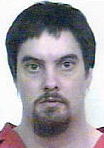
Jamie Ray Ward
Murderer Brian Kevin Rosenfeld
Murderer · USA · 1985
Brian Kevin Rosenfeld Brian Kevin Rosenfeld was sentenced to three concurrent l…
23 victims
Brian Kevin Rosenfeld
Murderer · USA · 1985
Brian Kevin Rosenfeld Brian Kevin Rosenfeld was sentenced to three concurrent l…
23 victims
 Yahweh ben Yahweh
Murderer · USA · 1980
Yahweh ben Yahweh was born and legally named Hulon Mitchell Jr. (October 27, 19…
23 victims
Yahweh ben Yahweh
Murderer · USA · 1980
Yahweh ben Yahweh was born and legally named Hulon Mitchell Jr. (October 27, 19…
23 victims
 Russell Ellwood
Murderer · USA · 1991
Russell Ellwood was a former taxi driver. Authorities suspected him of killing…
20 victims
Russell Ellwood
Murderer · USA · 1991
Russell Ellwood was a former taxi driver. Authorities suspected him of killing…
20 victims
 Robert Martines Perez
Murderer · USA · 1994
Name: Robert Martines Perez · Other name used in proceedings: Robert Martinez P…
15 victims
Robert Martines Perez
Murderer · USA · 1994
Name: Robert Martines Perez · Other name used in proceedings: Robert Martinez P…
15 victims
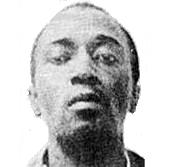 Richard Tucker
Murderer · USA · 1963
Richard Tucker was executed by electrocution in Georgia on May 22, 1987. Richar…
2 victims
Richard Tucker
Murderer · USA · 1963
Richard Tucker was executed by electrocution in Georgia on May 22, 1987. Richar…
2 victims
 Reinaldo Dennes
Murderer · USA · 1996
Reinaldo Dennes was born in Havanna, Cuba, on 2/9/56. His family came to the US…
1 victim
Reinaldo Dennes
Murderer · USA · 1996
Reinaldo Dennes was born in Havanna, Cuba, on 2/9/56. His family came to the US…
1 victim
 Robbie James Lyons
Murderer · USA · 1993
Robbie James Lyons (male, Black), death row inmate and defendant. · Stephen Wil…
1 victim
Robbie James Lyons
Murderer · USA · 1993
Robbie James Lyons (male, Black), death row inmate and defendant. · Stephen Wil…
1 victim
 Dalton Prejean
Homicide · USA · 1974
Dalton Prejean Dalton Prejean (December 10, 1959 - May 18, 1990) was an America…
2 victims
Dalton Prejean
Homicide · USA · 1974
Dalton Prejean Dalton Prejean (December 10, 1959 - May 18, 1990) was an America…
2 victims
 Robert Charles Towery
Murderer · USA · 1991
Robert Charles Towery was convicted in Superior Court (Maricopa) of first-degre…
1 victim
Robert Charles Towery
Murderer · USA · 1991
Robert Charles Towery was convicted in Superior Court (Maricopa) of first-degre…
1 victim
 Mark Edward Gardner
Murderer · USA · 1985
Mark Edward Gardner (c. 1956 – September 8, 1999) was executed at the age of 43…
3 victims
Mark Edward Gardner
Murderer · USA · 1985
Mark Edward Gardner (c. 1956 – September 8, 1999) was executed at the age of 43…
3 victims
- Gender
- male
- Country
- USA
- Location
- Walker County, Georgia, USA
- Date of birth
- 1956
- Age at first offence
- 33
- Characteristics
- serial rapist, kidnapping
- Victim profile
- Nikia Gilbreath, 23 (five months pregnant)
- Method of murder
- Asphyxiation resulting from her pharynx being stuffed with wadded-up paper towels
- Date(s) of murder
- August 17, 1989
- Years active
- 1989
- Date of arrest
- December 18, 1989
- Status
-
Sentenced to death
Sentenced to death on July 1991
Overview
Jamie Ray Ward, 41, was sentenced to death in July 1991 in Walker County for killing a 23-year-old woman who was five months pregnant. He was convicted of murder, kidnapping with bodily injury, and feticide. He appealed his convictions and death sentence. The Supreme Court of Georgia affirmed.
Timeline
- August 17, 1989 — The victim’s husband left for work at 6:00 a.m.; when he returned that evening, the 23-year-old victim (five months pregnant) and their car were missing, while their 22-month-old daughter was at home alone.
- Next day (after August 17, 1989) — The victim’s car was discovered on an unpaved logging road.
- Day after that (after the car was found) — The victim’s body was discovered in a trash dump several miles away.
- Early morning of December 18, 1989 — Ward, wearing gloves and a stocking mask, broke into a Gordon County home and kidnapped a woman from her bed while she was sleeping with her nine-year-old daughter.
- January 18, 1990 — Ward admitted to police that he had visited the victim’s home to check on a well he had helped drill earlier and had spoken to her.
- June 10, 1991 — Ward filed a motion to recuse the trial judge based on the trial judge’s professional and personal relationship with another trial judge in the circuit, described as the victim’s uncle.
- June 24 through July 12, 1991 — The case was tried.
- August 30, 1991 — A motion for new trial was filed and denied after hearing.
- October 16, 1991 — An appeal was docketed in the Supreme Court of Georgia.
- January 14, 1992 — Oral arguments were heard.
- June 11, 1992 — The case was decided.
- July 2, 1992 — Reconsideration was denied.
- April 1993 — Ward’s state appeal challenging the fairness of his trial was pending since April 1993.
The offence
Victim and pregnancy
The victim was 23 years old and was five months pregnant. The couple’s 22-month-old daughter was at home by herself after the victim disappeared. The victim’s husband left for work at 6:00 a.m. on August 17, 1989, and returned that evening to find the victim missing along with her car.
Events and condition of the body
The police arrived later that evening with many friends and relatives present. At first, nothing appeared to be missing except for the victim and her car, but it was later learned that:
- a telephone cord had been forcibly removed from the wall jack (leaving the plug),
- most of the victim’s underwear had been removed from her dresser drawer,
- a quilt and a baby blanket had been taken.
The victim’s car was discovered the next day on an unpaved logging road. The victim’s body was discovered the day after that in a trash dump several miles away.
The body had ligature marks around the wrists and ankles indicating she had been bound. Three of her ribs were broken and there were various bruises about her body. Her fetus was in a partially delivered condition. The mother died of asphyxiation resulting from her pharynx being stuffed with wadded-up paper towels. The death of the mother resulted in the destruction of the fetus.
Additional offence facts leading to convictions
Ward was convicted by a jury in Walker County of:
- murder,
- kidnapping with bodily injury,
- feticide.
The Supreme Court of Georgia held that the evidence, although circumstantial, supported the conviction.
Investigation
No clear suspects were developed for several months following the disappearance and discovery of the victim’s body.
Modelling negligees, rapes, and threats in Gordon County
In early morning of December 18, 1989, Ward broke into a Gordon County home wearing gloves and a stocking mask. He kidnapped a woman from her bed as she lay sleeping with her nine-year-old daughter. He drove the woman to an abandoned farmhouse, forced her to model negligees he had brought with him, and raped her. He then took her to another abandoned house and raped her again.
Ward told her he had killed two people and pointed out a “good place” to “dump bodies” if she ever wanted to. He also told her he had been watching her and told her some things about her personal situation that a stranger should not have known. Ward returned the woman to her home. Later, she discovered that some of her underwear was missing.
Items and records found at Ward’s home
The Gordon County police arrested Ward at his residence. Ward’s home was unfinished inside. Most of the walls were not sheetrocked and there was no running water and, except for the bedroom, no electricity. The unfinished rooms were full of boxes containing several thousands of dollars worth of lingerie and adult magazines.
Officers found handwritten carefully labelled and indexed magazines and lingerie catalogs, including descriptions and numerical ratings of women in the magazines. Officers also found:
- scraps of paper with physical descriptions of and tag numbers for women,
- dates, times and locations of observations,
- directions to their homes,
- newspaper clippings about rapes, murders and missing women,
- newspaper photographs of women,
- driver’s licenses and insurance cards belonging to various women,
- handwritten directions to the home of the victim in the case,
- the victim’s swimming suit bottom,
- the victim’s quilt and baby blanket,
- hidden under a pile of wood, six newspaper articles about the victim’s disappearance.
Admission to police
On January 18, 1990, Ward admitted to police that he had visited the victim’s home to check on a well he had helped drill earlier and had spoken to her. Ward also said:
I been a liar all my life. I need some help. If I done it, I didn't mean for it to happen and I am sorry.
Arrest
Ward was arrested after the Gordon County police located evidence at his residence and after he kidnapped and raped a woman in Gordon County.
Trial
Procedural posture and court
In WARD v. THE STATE (S92P0087), the Supreme Court of Georgia reviewed the convictions and death sentence. The case involved murder, kidnapping with bodily injury, and feticide. It was tried in Walker Superior Court before Judge Wood.
Ward’s appeal challenged the fairness of his trial and his death sentence.
Admissions and evidentiary rulings
Extrinsic transactions to establish motive and identity
Ward complained of the state’s use of extrinsic transactions to establish motive and identity and argued they were not sufficiently similar. The Supreme Court of Georgia described the governing approach from Felker v. State and Williams v. State, and concluded that the extrinsic transactions were relevant to explain the nature of the crime and to prove identity by establishing motive. The court stated that there was no error in their admission in evidence.
Expert testimony about sexual deviation
An FBI agent who specialized in the study of sex crimes was qualified as an expert witness in the field of sexual deviation and the behavior of violent sexual offenders. The agent testified at the guilt phase and explained sexual deviations and the significance of certain conduct in relation to these deviations. The agent enumerated objective similarities between the crime on trial and the Gordon County rape.
Ward objected, contending the presence or absence of similarities were matters jurors could determine themselves, and that the testimony was impermissible opinion evidence. The Supreme Court of Georgia rejected the objection, holding the agent’s opinion was one of fact and not an inadmissible legal conclusion.
Polygraph evidence
The trial court excluded polygraph evidence from the guilt phase. The Supreme Court of Georgia held there was no error in that exclusion.
Closing arguments
Ward raised several issues about the prosecution’s guilt-phase closing argument. The Supreme Court of Georgia addressed each.
(a) Ward argued the prosecutor’s “make them explain” argument amounted to a comment upon Ward’s failure to testify and shifted the burden of proof. The Supreme Court of Georgia held the argument was not an attempt impermissibly to shift the burden of proof, and that the jury would not naturally and necessarily take it as a comment on failure to testify.
(b) Ward contended the prosecutor improperly limited and belittled his right to confront witnesses by commenting during closing argument on Ward’s cross-examination of the Gordon County victim about consent and force. The Supreme Court of Georgia found no improper limitation or belittlement.
(c) Ward argued that the prosecutor’s comment about “these woods” after the prosecutor rhetorically questioned why the defense made an issue of missing mud inside the victim’s car was objectionable. The Supreme Court of Georgia acknowledged the reference to the prosecutor’s own experience was doubtless objectionable, but found it not sufficiently material or prejudicial to warrant reversal.
(d) Ward complained of the prosecutor’s argument:
Remember during the rape [in Gordon County], he would ask her are you having an orgasm, do you enjoy the sex with me. There are reasons we asked those questions, we can't discuss it in this part of the case, but there are significant reasons for asking those questions. The Supreme Court of Georgia disapproved the argument but held it too ambiguous to warrant reversal.
(e) Ward challenged the prosecutor’s statement “I am telling you the truth” while admitting he did not know where the missing telephone cord was or what had happened to some of the missing underwear. The Supreme Court of Georgia found no reversible error.
(f) Ward challenged the prosecutor’s argument that convicting Ward only of involuntary manslaughter “is like convicting Jack the Ripper or Charles Manson for disturbing the peace.” The Supreme Court of Georgia held it was not impermissible.
(g) Ward challenged the prosecutor’s statement that the victim’s daughter no longer had a mother, the victim’s husband no longer had a wife, and the victim had lost her daughter. The Supreme Court of Georgia held it was not impermissible.
(h) Ward argued that telling the jury the crime was sexually motivated was improper. The Supreme Court of Georgia held it was a reasonable deduction from the evidence.
Searches and seizure
Searches of Ward’s home were authorized either by warrant or by the consent of Ward’s wife. The Supreme Court of Georgia held the items seized were relevant to the crime and properly seized as evidence. The court held the warrants were issued by a neutral and detached magistrate and supported by probable cause, and that there was no error in denial of the motion to suppress.
Handwriting exemplar and suppression issues
Ward argued that the trial court erred in permitting the state to use, as a handwriting exemplar, a written statement Ward made to authorities in the Gordon County case. Ward argued that because the statement was suppressed in the Gordon County prosecution based on a violation of Edwards v. Arizona, its use violated his Fifth Amendment right against self-incrimination. The Supreme Court of Georgia ruled it was not error to allow use of a written statement voluntarily delivered by the defendant as a handwriting exemplar, even if later suppressed because of the Edwards prophylactic rule.
Miranda-related communication initiation
The Supreme Court of Georgia recited Edwards v. Arizona and stated that the record supported the trial court’s findings that Ward initiated communications with the police and waived his Miranda rights. Ward’s statement was properly admitted.
Jury findings on intent to kill
The Supreme Court of Georgia held that by its verdict of malice murder, the jury found Ward intended to kill his victim, that the evidence supported that finding, and that Ward’s contention that he should not have been sentenced to death because he did not intend to kill had no merit.
Change of venue, venue selection, and other procedural issues
The Supreme Court of Georgia rejected Ward’s claims:
- No manifest error occurred in denial of a motion for change of venue.
- A criminal defendant was not entitled to a post-indictment committal hearing.
- The Unified Appeal Procedure was not unconstitutional.
- Death-qualification of prospective jurors was not improper.
- Ward was not entitled to separate juries for the guilt and sentencing phases.
- There was no error in the denial of challenges to the jury array, including complaints about use of 1980 census figures rather than 1990 census figures to compile jury lists.
Feticide definition and convictions for both murder and feticide
The Supreme Court of Georgia described the statutory definition of feticide under OCGA 16-5-80 (a) and addressed Ward’s argument that the “quick” language precluded a conviction for both murder of the mother and feticide. The court disagreed, stating that the emphasized language contributed specificity and required the jury to make a factual finding that Ward’s actions, had they resulted in death to the mother, would have constituted murder. The court also held that the same conduct could support conviction of more than one crime so long as one crime was not included in the other as a matter of law or of fact. The court found neither crime was included in the other as a matter of law or of fact and held it was not error to convict Ward of both offences.
Grand jury and jury instructions
The Supreme Court of Georgia rejected arguments that:
- statutory voir dire questions (OCGA 15-12-164) conflicted with presumption of innocence,
- Ward was entitled to a transcript of grand jury proceedings,
- there was error in selection of grand jury forepersons in Walker County,
- the trial court abused its discretion by admitting gruesome photographs after Ward made an issue of the length of time the body had lain there,
- the trial court’s instructions on credibility of witnesses were erroneous,
- the pattern charge on extrinsic transactions amount to reversible error,
- the court’s instructions on “reasonable doubt” were erroneous. The court also addressed death penalty justification and sentencing instructions, including instructions on general deterrence and the sufficiency of the state’s burden of proof.
Sentencing
Ward was sentenced to death for the murder conviction. The Supreme Court of Georgia addressed sentencing-phase issues, including the jury’s deliberations and instructions:
- It held there was no error regarding sentencing-phase instructions on the state’s burden of proof.
- It rejected error claims about not stating a specific presumption in favor of life sentence.
- It held there was no error in the court’s refusal to deliver Ward’s requested instruction regarding extrinsic crimes unless proved beyond a reasonable doubt.
- It held no error occurred in failing to instruct on mitigating circumstances of mental disturbance and “residual doubt.”
- It held proper instructions required unanimity in the jury’s verdict.
- It upheld aggravation evidence related to Ward’s prior guilty pleas.
- It stated the evidence supported the jury’s finding that the murder occurred during the commission of the offense of another capital felony, where the only charged capital felony was kidnapping with bodily injury.
The Supreme Court of Georgia also addressed an error in the court’s instructions on the b (1) circumstance, stating that kidnapping is not a capital felony under the instruction given, while kidnapping with bodily injury is a capital felony. The court held the erroneous instruction did not amount to reversible error because the jury’s b (2) finding was valid and sufficient to support the death sentence.
The Supreme Court of Georgia also held Ward’s death sentence was not impermissibly influenced by passion, prejudice, or other arbitrary factor, and that it was neither excessive nor disproportionate to penalties imposed in similar cases.
Appeals
Ward appealed his convictions and death sentence. It also described:
- The case was decided on June 11, 1992 and reconsideration was denied on July 2, 1992.
- The appeal challenging the fairness of the trial had been pending since April 1993.
The Supreme Court of Georgia’s disposition stated that the reasons for affirming supported its conclusion that there was no reversible error in the issues Ward raised.
Other details
Prior guilty pleas and aggravation admission
The Supreme Court of Georgia held a proper foundation was laid for admission in aggravation of Ward’s prior guilty pleas.
Recusal motion
On June 10, 1991, Ward filed a motion to recuse the trial judge. The motion alleged the trial judge’s professional and personal relationship with another trial judge in the circuit, who was described as the victim’s uncle, “reasonably calls into question the impartiality” of the trial judge. The defense conceded it was aware of the familial relationship and had not filed a recusal motion for almost a year, but claimed that having the opportunity to personally watch the trial judge, Ward distrusted the situation. An outside judge was assigned to hear the motion. After a hearing based upon the motion and a stipulation of facts, the assigned judge ruled against it on three grounds:
- it was not timely filed,
- the motion’s “bare conclusions” of lack of impartiality were not legally sufficient,
- aside from the fact that another trial judge in the circuit was the uncle of the victim (which the trial judge did not know), nothing had been presented suggesting lack of impartiality.
The order denying the motion noted that if “friendship and association” with the victim’s uncle required recusal, “almost every judge of this state would be disqualified.” The Supreme Court of Georgia found no error.
Parties and counsel at oral arguments (as listed)
For appellee: Ralph Van Pelt, Jr., District Attorney; Mary Jane Palumbo, Michael J. Moeller, Assistant District Attorneys; Michael J. Bowers, Attorney General; Susan V. Boleyn, Senior Assistant Attorney General; Peggy R. Katz, Staff Attorney. For appellant: Christopher A. Townley, Gleason, Davis & Dunn; David J. Dunn, Jr.
Case references
The Supreme Court of Georgia decision was identified as WARD v. THE STATE with citation references provided in the case material, including (262 Ga. 293) and (417 SE2d 130) (1992). The material also included the statement: “DECIDED JUNE 11, 1992 — RECONSIDERATION DENIED JULY 2, 1992.”

Spotted an error, or have more information about this case?