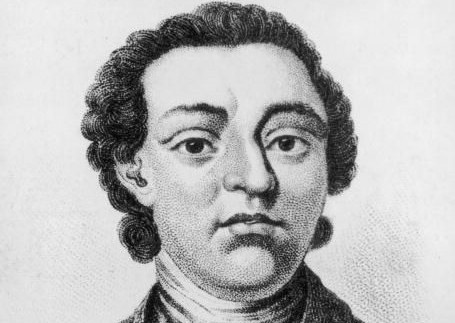
Earl Ferrers
Murderer Albert Burrows
Murderer · United Kingdom · 1920
Albert Burrows (also named Albert Edward Burrows): married farm labourer who to…
4 victims
Albert Burrows
Murderer · United Kingdom · 1920
Albert Burrows (also named Albert Edward Burrows): married farm labourer who to…
4 victims
 Dale Cregan
Murderer · United Kingdom · 2012
Dale Christopher Cregan (born 6 June 1983) was convicted in the United Kingdom…
4 victims
Dale Cregan
Murderer · United Kingdom · 2012
Dale Christopher Cregan (born 6 June 1983) was convicted in the United Kingdom…
4 victims
 John Cooper
Murderer · United Kingdom · 1985
John Cooper was a serial killer from Milford Haven, Pembrokeshire. Cooper was c…
4 victims
John Cooper
Murderer · United Kingdom · 1985
John Cooper was a serial killer from Milford Haven, Pembrokeshire. Cooper was c…
4 victims
 Rahan Arshad
Murderer · United Kingdom · 2006
Rahan Arshad (born 1970) was a taxi driver. He lived at Turves Road, Cheadle Hu…
4 victims
Rahan Arshad
Murderer · United Kingdom · 2006
Rahan Arshad (born 1970) was a taxi driver. He lived at Turves Road, Cheadle Hu…
4 victims
 Bobby Wayne Swisher
Murderer · USA · 1997
Bobby Wayne Swisher was executed by lethal injection in Virginia on July 23, 20…
1 victim
Bobby Wayne Swisher
Murderer · USA · 1997
Bobby Wayne Swisher was executed by lethal injection in Virginia on July 23, 20…
1 victim
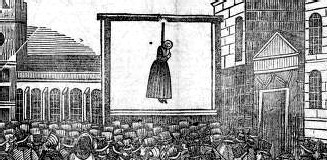 Catherine Wilson
Murderer · United Kingdom · 1854
Catherine Wilson was a British nurse who poisoned victims after befriending the…
7 victims
Catherine Wilson
Murderer · United Kingdom · 1854
Catherine Wilson was a British nurse who poisoned victims after befriending the…
7 victims
 Warren Kimbro
Murderer · USA · 1969
Warren Aloysious Kimbro was a Black Panther Party member in New Haven, Connecti…
1 victim
Warren Kimbro
Murderer · USA · 1969
Warren Aloysious Kimbro was a Black Panther Party member in New Haven, Connecti…
1 victim
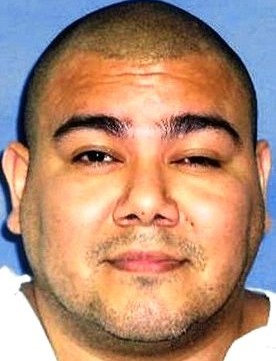 David Martinez
Murderer · USA · 1994
David Martinez was convicted and sentenced to death for the 1994 capital murder…
2 victims
David Martinez
Murderer · USA · 1994
David Martinez was convicted and sentenced to death for the 1994 capital murder…
2 victims
 Hesham Hadayet
Murderer · USA · 2002
Hesham Mohamed Hadayet was an Egyptian-American who killed two people at Los An…
2 victims
Hesham Hadayet
Murderer · USA · 2002
Hesham Mohamed Hadayet was an Egyptian-American who killed two people at Los An…
2 victims
 Richard Gerald Jordan
Murderer · USA · 1976
Defendant: Richard Gerald Jordan · Victim: Edwina Marter (husband: Charles Mart…
1 victim
Richard Gerald Jordan
Murderer · USA · 1976
Defendant: Richard Gerald Jordan · Victim: Edwina Marter (husband: Charles Mart…
1 victim
- Gender
- male
- Country
- United Kingdom
- Location
- Staunton Harold Hall, Leicestershire, England, United Kingdom
- Date of birth
- August 18, 1720
- Age at first offence
- 40
- Characteristics
- abuse, drunken rage, torture, rape?
- Victim profile
- John Johnson (an old family steward)
- Method of murder
- Shooting
- Date(s) of murder
- January 18, 1760
- Years active
- 1760
- Date of arrest
- Same day
- Status
-
Executed
Executed by hanging at Tyburn on May 5, 1760; dissection followed the execution
Case record: Earl Ferrers (Laurence Shirley, 4th Earl Ferrers)
Background
Laurence Shirley was the 4th Earl Ferrers and was born on 18 August 1720 and executed on 5 May 1760. He was also known by the Christian name “Lawrence” in some passages. He was described as descended of an ancient and noble family with Plantagenet blood in his veins.
He was the eldest son of Hon. Laurence Ferrers, who was the younger son of the 1st Earl Ferrers, a descendant of Robert Devereux, 2nd Earl of Essex. Ferrers quit his estates and Oxford education at the age of twenty. During the time he spent in Paris, he plunged into every kind of excess.
Ferrers inherited his title from his insane uncle in 1745. The inheritance included estates in Leicestershire, Derbyshire and Northamptonshire. His main residence was at Staunton Harold Hall in northwest Leicestershire, about two miles from Ashby-de-la-Zouch in Leicestershire.
Ferrers was also described as a cousin to Selina, Countess of Huntingdon, a prominent Methodist lady and supporter of George Whitefield, though Ferrers was not involved in the Methodist revival. It was said that there was insanity in his family, and his behaviour was described as eccentric with a violent temper, though he was capable of managing his business affairs.
In 1752, Ferrers married the youngest daughter of Sir William Meredith. The marriage to Mary was described as unhappy, with Mary living in fear of the Earl’s constant drunken rages and violent outbursts, and with his womanising and his mistress and children. In 1758, Mary obtained a separation from him for cruelty through an Act of Parliament. As part of the separation arrangements, it was agreed that Mary should receive an income from rents from some of the properties on the estate, and control of the estate was vested in trustees.
Ferrers was also said to have had a relationship from 1743 with Margaret Clifford and with her he had four illegitimate daughters between 1744 and 1749. Margaret Clifford later lived with him after the dissolution of the marriage and, in 1760, Ferrers sent away Margaret Clifford and the children and the male servants shortly before the killing of John Johnson.
Mary later remarried to Lord Frederick Campbell and died in a fire at her country seat, Coomb Bank, Kent, on 25 July 1807.
Other details (family, estate arrangements, and associated people)
Ferrers secured the appointment of an old family steward named Johnson (also written as John Johnson) as receiver of rents. The steward faithfully performed his duty as a servant to the trustees and was described as not proving amenable to Ferrers’ personal wishes.
The text named:
- Sarah Johnson, Johnson’s daughter, who was present at the Hall at the time of the murder and was among the trial witnesses.
- Elizabeth Burgeland, one of the maid-servants who admitted Johnson.
- A local man notably a collier named Curtis, who disarmed and arrested Ferrers.
- Dr Kirkland, a surgeon from Ashby-de-la-Zouch, who was summoned after the shooting.
- Humphries, the Chaplain of the Tower.
- Vaillant, a sheriff.
- Errington, another sheriff.
- Thomas Turlis, the hangman, and also an assistant to Turlis.
- Horace Walpole, who was cited regarding how long Ferrers took to die.
- Peter Williams, who gave an account of an incident involving a mare.
- Springthorpe, who advanced with a pistol to require Ferrers to surrender.
- Kinsey, who kept a public-house at Ashby where Ferrers was taken into custody.
- Lord Henley, Keeper of the Great Seal, created Lord High Steward upon the occasion.
- Sir Charles Pratt, Attorney General, and Sir Charles Yorke, Solicitor General.
- Black Rod, the custody officer used for peers awaiting trial.
Ferrers made a will while awaiting execution. One version of the will named:
- £16,000 to his four daughters by Margaret,
- £200 to Sarah Johnson.
Another version of the will named:
- 1,300 pounds to Mr Johnson’s children,
- 1,000 pounds to each of his four natural daughters,
- sixty pounds a year to Mrs Clifford for her life. This second disposition of his property, made after conviction, was described as not valid.
The offence
Ferrers shot and killed his family steward, John Johnson, after summoning him to Staunton Harold Hall. The killing was described as murder, and a heated argument preceded the shooting in Ferrers’ study.
At the time of the offence, Ferrers sent away his mistress Margaret Clifford, the children, and the male servants before Johnson arrived at the Hall.
Two versions of the account were provided about the confrontation and threats, both describing an argument over business matters and that Ferrers ordered Johnson to kneel and then shot him with a pistol.
In one account:
- On 18 January 1760, Johnson called at the earl’s mansion at Staunton Harold, Leicestershire, by appointment and was directed to his lordship’s study.
- After business conversation, Lord Ferrers shot and killed Johnson.
- Ferrers directed medical attention and the steward died the following morning.
In another account:
- Five days before the murder, on Sunday the 13th of January 1760, Ferrers paid a visit to Johnson and invited him to visit the Hall on Friday the 18th.
- On the appointed Friday, Johnson came after being admitted by maid-servant Elizabeth Burgeland.
- Johnson was called into Ferrers’ room, required to settle an account and then ordered to kneel.
- Ferrers cried: “Down on your other knee! Declare that you have acted against Lord Ferrers. Your time has come -- you must die.”
- Ferrers drew a loaded pistol from his pocket and fired.
- Johnson was not immediately fatally injured and later died the following morning after treatment and removal to his own house.
The text also included an assertion of additional violent conduct toward Johnson after the initial shooting, including threats to shoot him and seizing him by the wig while he lay dying.
The text also included claims about motive and planning, describing:
- “There was clear evidence of premeditation and planning in the murder”
- and that Ferrers invited Johnson to the Hall and sent out Margaret Clifford, the children and the male servants.
Investigation
After the shooting, a doctor was summoned. Dr Kirkland was sent for and removed Ferrers to Kirkland’s house when Ferrers became too drunk to remain under observation at the Hall. Johnson was put to bed and treated for his wound.
A coroner’s jury later returned a verdict of wilful murder. Ferrers was remanded to Leicester prison.
Neighbours armed themselves and decided to apprehend the killer, and they set out for Staunton Harold. After neighbours saw Ferrers going towards the stables, Ferrers escaped back into the house. Ferrers later appeared at a garret window and said: “How is Johnson?” and was told Johnson was dead; Ferrers responded: “it was a lie, and desired that the people should disperse -- and then he gave orders that they should be let in and furnished with victuals and drink.”
Ferrers was then found walking on the bowling green armed with weapons, and collier Curtis disarmed and arrested him. Another man, Springthorpe, had advanced with a pistol and required surrender, but Ferrers put his hand toward his pocket and Springthorpe stopped short believing he was feeling for a weapon, allowing Ferrers to escape into the house.
Arrest
Ferrers was apprehended about four hours after the escape when he was walking on the bowling green, armed with a blunderbuss, a brace of pistols and a dagger. The arrest was carried out by a collier named Curtis.
After the coroner’s jury returned a verdict of wilful murder against Ferrers, he was taken to Leicester gaol. He was then transferred to the Tower of London and committed to the custody of Black Rod awaiting trial on 14 February 1760. He arrived in the Tower at about six o’clock on the evening of 14 February.
Trial
Ferrers was tried for murder by his peers in Westminster Hall in April 1760. The trial:
- opened on 16 April 1760,
- continued for 2 days,
- included proceedings before the Lord High Steward, Lord Henley,
- with the Attorney General Sir Charles Pratt and the Solicitor General Sir Charles Yorke leading for the prosecution.
The witnesses included:
- Dr Kirkland,
- Sarah Johnson,
- and three women servants who were present at the Hall at the time of the murder.
Ferrers conducted his own defence. He attempted a defence of insanity, supported by considerable evidence. The text described that “just about everyone who knew him thought he was mad.” It later stated that Ferrers maintained he had only pleaded insanity to oblige his family and that he had always been ashamed of such a defence.
The text included a quote attributed to Horace Walpole: “Lord Ferrers was not mad enough to be struck with Lady Huntingdon’s sermons. The Methodists have nothing to brag of his conversion, though Whitefield prayed for him.”
Another witness, Peter Williams, gave an account that when Ferrers came to collect a mare left with the Williams family, Ferrers was unhappy with how the horse had been cared for, hit Mrs Williams and seriously injured Peter Williams with a sword. The Solicitor General pointed out this was no proof of insanity or eccentric behaviour, and was quoted as saying that if a man couldn’t take such action against a negligent servant, then everyone present would be in the dock.
After a verdict of guilty by his fellow peers, a sentence of hanging by the neck until dead followed by dissection was described as mandatory under the Murder Act 1752.
The execution was stayed from Monday 21 April until Monday 5 May to allow arrangements to be made and because the prisoner was of importance.
Sentencing
Ferrers was found guilty and was sentenced to be hanged by the neck until dead and then anatomised.
He was respited due to his rank, and the execution was postponed until 5 May 1760.
Appeals
No appeals were described.
Outcome
Ferrers was executed by hanging at Tyburn on 5 May 1760 and was subsequently dissected.
Aftermath
The body was placed in a coffin for transport to Surgeons’ Hall after the hanging. The dissection was carried out at Surgeons’ Hall. The body was publicly exposed until the evening of Thursday 8 May, when it was returned to his family for burial in St Pancras church.
The text stated that 22 years later, the body was taken back to Staunton Harold to be re-interred in the family vault.
The text also recorded that it was said Ferrers was hanged with a silken rope, but described that claim as a myth.
Timeline
- 1743 — Ferrers began a relationship with Margaret Clifford.
- 18 August 1720 — Earl Ferrers was born.
- 1744 — Ferrers had an illegitimate daughter with Margaret Clifford (within the 1744–1749 range).
- 1745 — Ferrers inherited his title from his insane uncle.
- 1749 — Ferrers had illegitimate daughters with Margaret Clifford (within the 1744–1749 range).
- 1752 — Ferrers married Mary, the youngest daughter of Sir William Meredith.
- 1756 — At Derby races, Ferrers ran his mare against Captain M--'s horse for L.50; he was the winner.
- 1758 — Mary obtained a separation from Ferrers for cruelty by Act of Parliament.
- 16 April 1760 — The trial opened at Westminster Hall.
- 18 April 1760 — The trial continued and proceeded to verdict and sentencing described in the text.
- 2 May 1760 — The king George II signed the Writ of Execution.
- 5 May 1760 — Ferrers was executed by hanging at Tyburn.
- 8 May 1760 — The body was delivered to his friends for interment after dissection and public exposure.
- 14 February 1760 — Ferrers was committed to the custody of Black Rod at the Tower of London.
- 25 July 1807 — Mary, Lady Ferrers (after remarriage to Lord Frederick Campbell), died in a fire at Coomb Bank, Kent.
Verbatim quotations (as included)
- Horace Walpole: “Lord Ferrers was not mad enough to be struck with Lady Huntingdon's sermons.
- Ferrers (threatening Johnson, quoted with shouted words): “Down on your other knee!
- Ferrers (asked about Johnson’s condition): “How is Johnson?”
- Ferrers’s response to being told Johnson was dead: “it was a lie, and desired that the people should disperse -- and then he gave orders that they should be let in and furnished with victuals and drink.”
- Ferrers (on the scaffold, final question): “Am I right?”
- Ferrers (before the hanging, quoted words): “Lord have mercy upon me, and forgive me my errors.”
- Ferrers (on use of prayer, attributed to the chaplain interaction): “I always thought it a good prayer, you may use it if you please.”
- Ferrers (procession remark, quoted): “so large a mob had collected because the people had never seen a lord hanged before.”
- Ferrers (request to sheriffs in the landau journey): “Thirsty, and should be glad of a glass of wine-and-water.”
Other details (execution and conduct)
A special new gallows was constructed at Tyburn. The scaffold was reached by a short flight of stairs and had uprights topped with a cross beam; beneath the beam was a small box-like structure designed to sink into the scaffold to leave the criminal suspended. The design included black cushions for the Earl and the chaplain to kneel on before the hanging. The text described that every seat in Mother Proctor’s Pews was taken and that a huge crowd gathered around the gallows, held back by Javelin men.
Ferrers wore his wedding suit, a light coloured satin one embroidered with silver, and said: “he thought this at least as good an occasion for putting them on as that for which they were first made”.
The body was demanded of the keeper of the Tower by the sheriffs of London and Middlesex, and Ferrers was conveyed to Tyburn in his own landau drawn by six horses. He was accompanied by Mr Humphries, the chaplain, and Mr Vaillant, the sheriff.
The procession to Tyburn took 2 ¾ hours. The text described remarks about the mob and that Ferrers would have preferred beheading. It also stated that he had petitioned the king to allow him to be beheaded instead.
At Tyburn, the chaplain asked that prayer be offered and asked leave to repeat at least the Lord’s Prayer, to which Ferrers replied: “I always thought it a good prayer, you may use it if you please.” Ferrers gave Sheriff Vaillant his watch and presented five guineas to the chaplain. He had brought the same sum to give to the hangman Thomas Turlis but handed it to the wrong man, leading to nearly a fight between Turlis and his assistant.
Ferrers and Mr Humphries kneeled on two black cushions and said the Lord’s prayer. Ferrers concluded by saying: “Lord have mercy upon me, and forgive me my errors.” He mounted the drop where his arms were tied with a black silk sash, and the rope was placed around his neck. He was asked “Am I right?” as his final question. A white nightcap which he had brought with him was pulled down over his head. The sheriff gave the signal because Ferrers declined to give it himself.
The platform sank around noon and Ferrers’ feet remained virtually in contact with the platform due to a mechanism fault. He writhed slightly for a short period before becoming still; Horace Walpole reported it took 4 minutes for him to die. His body remained to hang for the customary hour before being taken down and placed in the coffin for transport to Surgeons’ Hall for dissection.
The text also described a woodcut being made of his body in its coffin. After dissection, his body was put on display until the evening of Thursday 8 May, when it was returned to his family for burial in St. Pancras church.
Spotted an error, or have more information about this case?