
Raymond Gurule
Murderer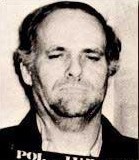 Ervil LeBaron
Murderer · USA · 1972
Ervil Morrell LeBaron (1925 to August 16, 1981) was the leader of a polygamous…
35 victims
Ervil LeBaron
Murderer · USA · 1972
Ervil Morrell LeBaron (1925 to August 16, 1981) was the leader of a polygamous…
35 victims
 Brian Kevin Rosenfeld
Murderer · USA · 1985
Brian Kevin Rosenfeld Brian Kevin Rosenfeld was sentenced to three concurrent l…
23 victims
Brian Kevin Rosenfeld
Murderer · USA · 1985
Brian Kevin Rosenfeld Brian Kevin Rosenfeld was sentenced to three concurrent l…
23 victims
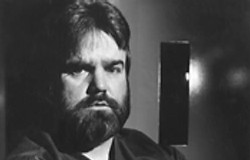 Marvin Gray
Murderer · USA · 1975
Marvin Gray was convicted killer who claimed responsibility for 23 slayings and…
23 victims
Marvin Gray
Murderer · USA · 1975
Marvin Gray was convicted killer who claimed responsibility for 23 slayings and…
23 victims
 Yahweh ben Yahweh
Murderer · USA · 1980
Yahweh ben Yahweh was born and legally named Hulon Mitchell Jr. (October 27, 19…
23 victims
Yahweh ben Yahweh
Murderer · USA · 1980
Yahweh ben Yahweh was born and legally named Hulon Mitchell Jr. (October 27, 19…
23 victims
 Russell Ellwood
Murderer · USA · 1991
Russell Ellwood was a former taxi driver. Authorities suspected him of killing…
20 victims
Russell Ellwood
Murderer · USA · 1991
Russell Ellwood was a former taxi driver. Authorities suspected him of killing…
20 victims
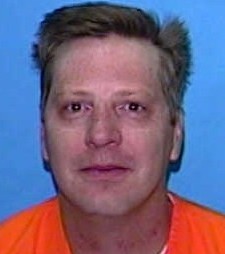 John Richard Marek
Murderer · USA · 1983
Name: John Richard Marek · DC Number: #094417 · Race: WHITE · Sex: MALE · Hair…
1 victim
John Richard Marek
Murderer · USA · 1983
Name: John Richard Marek · DC Number: #094417 · Race: WHITE · Sex: MALE · Hair…
1 victim
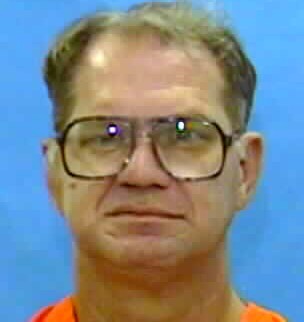 Henry Sireci
Murderer · USA · 1975
Henry Sireci (W/M) was prosecuted in the Ninth Judicial Circuit, Orange County,…
1 victim
Henry Sireci
Murderer · USA · 1975
Henry Sireci (W/M) was prosecuted in the Ninth Judicial Circuit, Orange County,…
1 victim
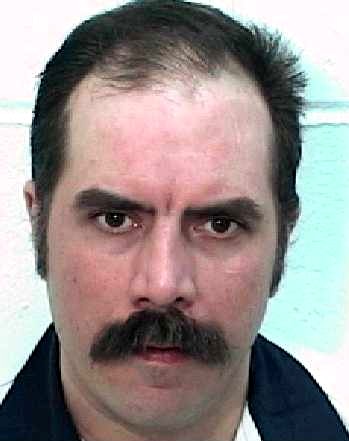 David Aaron Perkins
Murderer · USA · 1995
David Aaron Perkins was tried in the Clayton Superior Court before Judge Ison a…
1 victim
David Aaron Perkins
Murderer · USA · 1995
David Aaron Perkins was tried in the Clayton Superior Court before Judge Ison a…
1 victim
 Ferdinand Gamper
Spree killer · Italy · 1996
Ferdinand Gamper was identified as the killer in a series of shootings in Meran…
6 victims
Ferdinand Gamper
Spree killer · Italy · 1996
Ferdinand Gamper was identified as the killer in a series of shootings in Meran…
6 victims
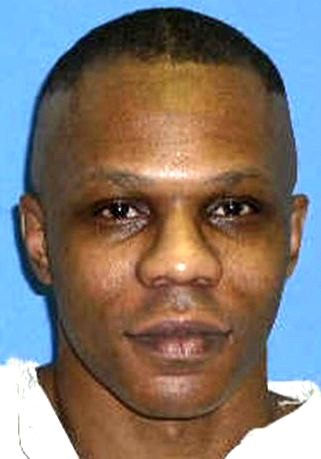 Larry Donell Davis
Murderer · USA · 1995
Larry Donnell Davis was executed by lethal injection in Texas on July 31, 2008.…
1 victim
Larry Donell Davis
Murderer · USA · 1995
Larry Donnell Davis was executed by lethal injection in Texas on July 31, 2008.…
1 victim
- Gender
- male
- Country
- USA
- Location
- Alameda/San Mateo Counties , California, USA
- Date of birth
- 1958
- Age at first offence
- 24
- Characteristics
- armed robbery
- Victim profile
- A 81-year-old woman / Elliot Dolinka, 15 ( gas station attendant )
- Method of murder
- St abbing with knife
- Date(s) of murder
- 1982 / 1984
- Years active
- 1982–1984
- Date of arrest
- —
- Status
-
Sentenced to death
Sentenced to death on 1990
Case record: Raymond Gurule
People
- Raymond Anthony Gurule — defendant; former Los Angeles man; convicted of first degree murder.
- Elliot Dolinka — victim; 15-year-old attendant.
- Mark Garrison — accomplice; told police that he and Gurule robbed Barry’s Chevron in Daly City; pleaded guilty to first degree murder without special circumstances; was psychotic at the time he was arrested.
- Barry’s Chevron — gas station alleged to have been robbed in Daly City.
- Judge James Ottis Miller — imposed sentence after the second jury returned a death penalty verdict.
- Judge Lawrence Stevens — presided at the first trial; later elevated to the First District Court of Appeal; barred Gurule’s lawyers from discovering records of his accomplice’s psychiatric treatment; later granted the defense access to a substantial amount of psychiatric material concerning Garrison.
- Justice Kathryn M. Werdegar — wrote the opinion for the high court; included a footnote regarding Gurule’s ancestry.
Timeline
- 1982 — Gurule claimed it was his accomplice who slashed the throat of a gas station attendant during a robbery that netted $75.
- Early 1970s — Gurule had a history of violence dating back to an assault on a house parent in a group home in Los Angeles.
- 1984 — Gurule was serving a 15-year-to-life sentence for a second degree murder in Alameda County.
- 1982 robbery netted $75 — Gurule was convicted of first degree murder with special circumstances involving the killing of 15-year-old Elliot Dolinka during a robbery.
- 1987 — Gurule was implicated in an unsolicited 1987 confession after police had exhausted hundreds of leads without making an arrest.
- Two years earlier than Daly City killing — Gurule was identified as a suspect in the Daly City killing while serving his Alameda County sentence.
- Seven years after the crime — the trial occurred seven years after the robbery-murder.
- 1990 — Gurule was condemned on one count and sentenced to death.
- 2002 (Tuesday, July 23, 2002) — The Supreme Court of California unanimously upheld the death sentence in a case identified as People v. Gurule, 02 S.O.S. 3703.
Background
Raymond Anthony Gurule had a history of violence dating back to an assault on a house parent in a group home in Los Angeles in the early 1970s. He was serving a 15-year-to-life sentence for a second degree murder that took place in Alameda County in 1984 when he was identified as a suspect in the Daly City killing two years earlier.
The offence
Jurors convicted Gurule of first degree murder with two special circumstances:
- He had murdered 15-year-old Elliot Dolinka during the course of a robbery.
- He had previously been convicted of murder.
During a robbery at Barry’s Chevron in Daly City, the robbery netted $75. Gurule claimed it was his accomplice who slashed the throat of the gas station attendant.
Investigation
Mark Garrison told police that he and Gurule robbed Barry’s Chevron in Daly City. Garrison said it was Gurule who killed the young attendant during the early-Saturday-morning robbery. After police had exhausted hundreds of leads without making an arrest, Garrison implicated Gurule in an unsolicited 1987 confession.
Garrison said he only knew his co-robber as “Apache,” which was tattooed on his forearm. The jury was informed that the testimony was probative because Gurule had the tattoo described by Garrison, lived in the area where Garrison said Apache lived, and was identified by other witnesses as having been seen in the vicinity of Barry’s Chevron around the time of the murder.
Arrest / Competency and plea of accomplice
Garrison was initially found incompetent to stand trial, but he was found fit after treatment. He entered a guilty plea to a charge of first degree murder without special circumstances. He was sentenced to 30 years to life in prison and agreed to testify against Gurule.
Trial
The jury in his first trial deadlocked in the penalty phase. A second jury returned a death penalty verdict.
Gurule argued that his constitutional right to confront his accuser was violated when Judge Lawrence Stevens—who presided at the first trial and has since been elevated to the First District Court of Appeal—barred Gurule’s lawyers from discovering records of his accomplice’s psychiatric treatment. Stevens granted the defense access to a substantial amount of psychiatric material concerning Garrison.
Gurule also argued that Garrison should not have been allowed to testify because he did not know Gurule by name and could not identify him in court. Gurule further claimed the testimony was “inherently unreliable” because Garrison had a plea agreement that left open the possibility his plea would be vacated if newly discovered evidence showed that he had lied about his lack of participation in the murder.
Justice Kathryn M. Werdegar wrote: “The jury was informed that Garrison was psychotic at the time he was arrested, that he was taking tranquilizing medication as well as antipsychotic medication, that he originally was found incompetent to stand trial, that he heard voices in his head (auditory hallucinations), that he was paranoid and believed inmates were intending to do him harm, that he engaged in unusual and repetitious hand movements, and that he was generally confused and disorganized in his thinking,” Werdegar explained.
Werdegar explained why the court considered the testimony probative. Werdegar noted that the trial occurred seven years after the crime and that any prejudice resulting from Garrison’s testimony was minimal in light of Gurule’s admission that he participated in the robbery.
Evidence about psychiatric records
Stevens, after an extensive in camera inspection, allowed the defense to have access to some of Garrison’s psychiatric records. The judge declined to consider disclosure of records concerning Garrison’s meetings with psychiatrists retained by his lawyer as potential expert witnesses, holding that the attorney-client privilege was an absolute bar to such disclosure. Justice Werdegar agreed, stating that the records were “fully privileged,” and adding that even if they weren’t, the disclosure of a substantial amount of psychiatric material—more than Gurule would have been entitled to under current case law—rendered any error harmless.
Sentencing
After the second jury returned a death penalty verdict, San Mateo Superior Court Judge James Ottis Miller imposed sentence. Gurule was sentenced to death and was condemned on one count in 1990.
Appeals / Supreme Court decision
The Supreme Court of California unanimously upheld the death sentence.
The justices rejected Gurule’s claims about the confrontation issue relating to psychiatric records of his accomplice. Justice Werdegar wrote the opinion and agreed that attorney-client privilege applied and that any error would have been harmless.
The justices also rejected the claim that Garrison should not have been allowed to testify because he did not know Gurule by name and could not identify him in court. The justices also rejected the claim that Garrison’s testimony was “inherently unreliable” because of the plea agreement’s possibility of vacatur if newly discovered evidence showed that he had lied about his lack of participation in the murder.
As for the plea agreement, Werdegar concluded that it did not deprive Gurule of a fair trial. Werdegar explained that a plea agreement requiring testimony against an accomplice always involves “a certain degree of compulsion,” but that the bargain Garrison received was not “tainted beyond redemption” because it only required that he tell the truth, not that he testify in accordance with the prosecution’s theory of the case.
Werdegar also noted that Gurule was partially of Native American ancestry in a footnote.
The case was identified as People v. Gurule, 02 S.O.S. 3703. There had been no reversals.
Outcome
The Supreme Court of California upheld the death sentence unanimously. Gurule’s death sentence remained in effect after the court’s decision.
Other details
- Michael Newton was associated with “An Encyclopedia of Modern Serial Killers.”
Spotted an error, or have more information about this case?