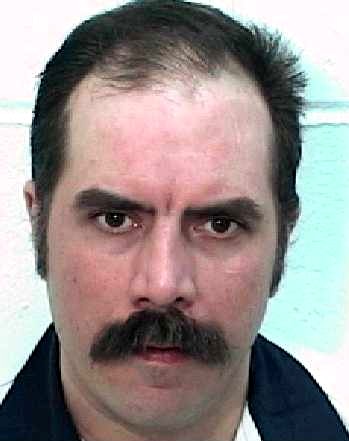
David Aaron Perkins
Murderer Brian Kevin Rosenfeld
Murderer · USA · 1985
Brian Kevin Rosenfeld Brian Kevin Rosenfeld was sentenced to three concurrent l…
23 victims
Brian Kevin Rosenfeld
Murderer · USA · 1985
Brian Kevin Rosenfeld Brian Kevin Rosenfeld was sentenced to three concurrent l…
23 victims
 Russell Ellwood
Murderer · USA · 1991
Russell Ellwood was a former taxi driver. Authorities suspected him of killing…
20 victims
Russell Ellwood
Murderer · USA · 1991
Russell Ellwood was a former taxi driver. Authorities suspected him of killing…
20 victims
 Robert Martines Perez
Murderer · USA · 1994
Name: Robert Martines Perez · Other name used in proceedings: Robert Martinez P…
15 victims
Robert Martines Perez
Murderer · USA · 1994
Name: Robert Martines Perez · Other name used in proceedings: Robert Martinez P…
15 victims
 Billy Frank Vickers
Murderer · USA · 1993
Billy Frank Vickers Vickers was executed by lethal injection in Texas on Januar…
14 victims
Billy Frank Vickers
Murderer · USA · 1993
Billy Frank Vickers Vickers was executed by lethal injection in Texas on Januar…
14 victims
 Debra Gindorf
Murderer · USA · 1985
Debra Lynn Gindorf was charged by indictment with six counts of murder for inte…
2 victims
Debra Gindorf
Murderer · USA · 1985
Debra Lynn Gindorf was charged by indictment with six counts of murder for inte…
2 victims
 Reetika Vazirani
Murderer · USA · 2003
Reetika Vazirani (1962–2003) was an American poet and educator. On July 16, 200…
1 victim
Reetika Vazirani
Murderer · USA · 2003
Reetika Vazirani (1962–2003) was an American poet and educator. On July 16, 200…
1 victim
 Kevin Aaron Conner
Murderer · USA · 1988
Kevin Aaron Conner was convicted by jury in the Marion Superior Court, Criminal…
4 victims
Kevin Aaron Conner
Murderer · USA · 1988
Kevin Aaron Conner was convicted by jury in the Marion Superior Court, Criminal…
4 victims
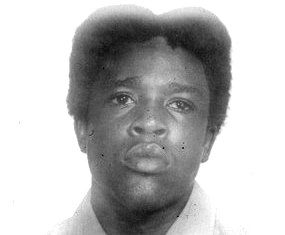 James Dupree Henry
Murderer · USA · 1974
James Dupree Henry was sentenced by Florida state courts to be executed for the…
1 victim
James Dupree Henry
Murderer · USA · 1974
James Dupree Henry was sentenced by Florida state courts to be executed for the…
1 victim
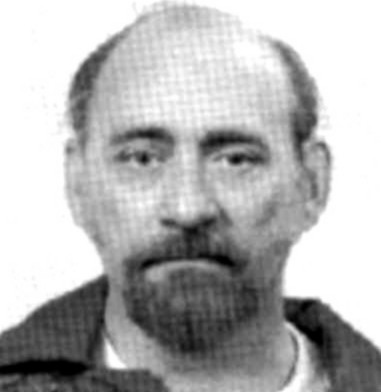 Perry Steven Miller
Murderer · USA · 1990
Perry Steven Miller admitted to being guilty of the 1990 murder of Christel Hel…
1 victim
Perry Steven Miller
Murderer · USA · 1990
Perry Steven Miller admitted to being guilty of the 1990 murder of Christel Hel…
1 victim
- Gender
- male
- Country
- USA
- Location
- Clayton County, Georgia, USA
- Date of birth
- 1960
- Age at first offence
- 35
- Characteristics
- armed robbery
- Victim profile
- Herbert Ryals III, 38
- Method of murder
- St abbing with knife
- Date(s) of murder
- August 13, 1995
- Years active
- 1995
- Date of arrest
- Same day
- Status
-
Sentenced to death
Sentenced to death on June 1997; judgment affirmed; all the Justices concur
Case details
David Aaron Perkins was tried in the Clayton Superior Court before Judge Ison and was convicted of the murder of Herbert D. Ryals, III. The jury sentenced Perkins to death. The Supreme Court of Georgia affirmed the judgment.
Timeline
- August 12, 1995 — Perkins had an argument with his wife, Gail, and told a friend that “something's going to go down tonight.”
- August 13, 1995 — Perkins bought a bottle of whiskey and, around midnight, invited Herbert Ryals to his apartment to drink and play guitars; Perkins later called his wife at 5:00 a.m. and told her not to scream or “freak out.”
- August 13, 1995 — Perkins was arrested two hours after he returned to the apartment.
- June 23-28, 1997 — The trial took place.
- June 27, 1997 — The jury convicted Perkins of malice murder, felony murder, and two counts of possession of a knife during the commission of a felony.
- June 28, 1997 — The jury recommended a death sentence for the murder; the trial court sentenced Perkins to death for malice murder, vacated the felony murder conviction, merged one count of possession of a knife during the commission of a felony into the other count, and imposed a consecutive five-year sentence.
- July 22, 1997 — Perkins filed a motion for a new trial.
- November 17, 1997 — Perkins filed an amended motion for new trial.
- November 20, 1997 — The trial court denied the motion.
- December 18, 1997 — Perkins filed his notice of appeal.
- January 9, 1998 — The case was docketed.
- April 21, 1998 — Oral argument was held.
- September 21, 1998 — The case was decided.
- December 27, 1997 — Judgment affirmed.
Background
Perkins contended that the Clayton County district attorney engaged in gender bias by seeking the death penalty exclusively against men. Because Perkins’ statistical evidence failed to show selective prosecution in his case, the Supreme Court of Georgia affirmed.
The evidence showed that Perkins had a long history of criminal convictions for violence and theft. Perkins and Ryals had met only once previously.
The offence
On August 12, 1995, Perkins had an argument with his wife, Gail. She left their apartment to spend the night with her mother-in-law.
Perkins remarked to a friend about the full moon and said “something's going to go down tonight.” Perkins bought a bottle of whiskey and invited a neighbor, Herbert Ryals, to his apartment to drink and play guitars around midnight. Perkins called his wife at 5:00 a.m. and asked her to bring some cigarettes to their department. Perkins met Gail outside the apartment and told her not to scream or “freak out.”
Once inside, Gail observed numerous bloodstains in the apartment and the victim, with visible stab wounds, lying motionless on the bathroom floor. Perkins pulled a knife from his pocket and told her that he would kill her if she tried to call the police. Gail left the apartment after promising Perkins that she was going to buy cigarettes and called the police, reporting a stabbing. Gail described the scene and her husband’s violent behavior to responding officers and told them that they would need “more units.”
After more officers arrived, police followed Gail to her apartment, where she gave them a key. Officers entered the apartment and discovered the victim’s body in the same bloody condition described by Gail. The victim was found lying on his side in the bathroom, curled into a fetal position.
The medical examiner testified that there were eleven stab or cut wounds on the victim. A stab wound in the center of the chest had been delivered with such force that the knife damaged the heart. There were five stab wounds to the back, including three that had pierced the victim’s lungs, and two ribs were fractured by the force used to inflict these wounds. The victim also had wounds on his arms, shoulder, finger, and nose. Based on the depth of the stab wounds, the doctor estimated that the knife used had a blade length of five inches.
The doctor also testified about a serious blunt force injury to the victim’s left eye in which the blow fractured the skull and skull fragments were forced into the victim’s brain. The doctor said the wound was consistent with being struck by a liquor bottle. The victim also had a series of parallel bruises on his chest that matched the frets on a guitar found in the living room. Several stab wounds could have been fatal, and the doctor testified that none of the wounds had been immediately fatal and that the victim could have lived for ten minutes after being injured.
An expert on blood spatter testified that the blood droplets and smears indicated that the victim had been initially assaulted in the living room and had fled, wounded and still under attack, through the kitchen and bedroom and into the bathroom. A broken liquor bottle in the bedroom indicated that the victim had been struck there with the bottle. Damage to the bathroom door showed that the victim had tried to barricade himself inside the bathroom but the door had been forced open from the outside. The blood spatter throughout the apartment and on the victim’s clothing showed that the victim had been conscious and either standing or sitting when the wounds had been inflicted.
To show motive, the state presented evidence that the victim’s wallet was missing and that Perkins had spent the last of his money to purchase liquor the day before the murder. A former inmate testified that Perkins had boasted in jail about hiding incriminating evidence, including the victim’s wallet and identification.
Perkins claimed self-defense. He testified that the victim suddenly and without reason hit him with a guitar, so he drew the knife he always wore on his belt and “just started sticking.” The knife was never recovered; Perkins claimed that he lost it that night.
Investigation and arrest
Before obtaining a search warrant, police entered the apartment at 6:00 a.m., secured the crime scene, and seized evidence that was in plain view. The entry without a warrant and seizure of items in plain view were permissible under either the consent or exigent circumstances exceptions because the defendant’s wife had reported a stabbing, asked the police to enter the apartment, and given them a key to the front door.
A search warrant was issued at approximately 1:00 p.m. on the same day to enable officers to conduct a more detailed search of the apartment. The supporting affidavit recited that a dead white male with multiple stab wounds had been found in the defendant’s apartment and that the defendant had been charged with murder. Based on these facts, the affidavit was sufficient to support the magistrate’s finding of probable cause.
Perkins was arrested two hours later when he returned to the apartment. During booking, Perkins mumbled, “[the victim] hit me with his guitar, I hit back, so I hit him back, I think he's dead, I know he's dead.” Perkins then became violent toward the booking officer and had to be further restrained. No one observed any marks, bruises, or cuts on the defendant, and Perkins did not request any medical treatment. While being handcuffed, Perkins told police that he had been watching them for over an hour.
A neighbor testified that Perkins had knocked on her door before his arrest, asked for a cigarette, and said, “I've just killed someone and I'm going to jail for the last time.”
Trial
A jury convicted Perkins of the murder of Herbert D. Ryals, III and found aggravating circumstances. The jury found as aggravating circumstances that the murder was committed while the defendant was engaged in the commission of an aggravated battery and was outrageously and wantonly vile, horrible, and inhuman in that it involved depravity of mind and an aggravated battery to the victim.
During the trial, a Virginia police officer testified about how Perkins had thrown a fellow officer through a window, and Perkins taunted the courtroom by making boxing gestures.
Perkins filed a plea in bar to prevent the Clayton County district attorney’s office from seeking the death penalty in his case because of alleged gender discrimination. The trial court denied the plea.
Perkins also challenged the issuance of a search warrant and the admission of hearsay statements by Gail Perkins.
Plea in bar: alleged gender discrimination
Perkins claimed that the Clayton district attorney only sought the death penalty against men and that this alleged gender bias violated the state and federal constitutions. He submitted evidence that the Clayton County grand jury indicted 73 men and 11 women for murder, and that the district attorney sought the death penalty against nine men and no women from 1985 until 1995, when Perkins was charged with murder. He also introduced records of female murder defendants to show that statutory aggravating circumstances existed in those cases to warrant the seeking of the death penalty.
The Supreme Court of Georgia held that Perkins had the burden on an equal protection claim to prove purposeful discrimination and its discriminatory effect on him, and that to prevail he needed to prove that the decisionmakers in his case acted with discriminatory purpose. The court concluded that Perkins’ meager statistics were insufficient to show selective prosecution because they did not provide evidence specific to his own case supporting an inference that gender considerations played a part in the district attorney’s decision to seek the death penalty against him. The court also declined to create a Batson-like rule requiring the state to explain its reasons for seeking the death penalty. It held that the U. S. Constitution and Georgia law authorized the death penalty for Perkins’ crimes and that Perkins failed to show the state acted in an unconstitutional manner with respect to his case.
Search warrant challenge
Perkins claimed that the issuing magistrate had insufficient information to determine probable cause. The Supreme Court of Georgia found that the affidavit was clearly sufficient to support the magistrate’s finding of probable cause.
Hearsay: Gail Perkins’ statements to police
Perkins argued that the trial court erred by allowing hearsay statements by his wife to be admitted under the necessity exception to the hearsay rule. Gail Perkins described her husband’s threatening behavior and the bloody condition of the apartment to Riverdale Police Officer Johanne Welch, the first officer to respond to the 911 call, and one hour later described in greater detail the crime scene, her husband’s demeanor, his brandishing of the knife, and his refusal to allow her to get help for the victim.
At trial, Gail Perkins exercised marital privilege and refused to testify. The trial court ruled her statements were admissible under the necessity exception to the hearsay rule, and Welch and Bedingfield testified about her statements.
The Supreme Court of Georgia held that necessity and trustworthiness were satisfied: necessity was demonstrated by Gail Perkins being unavailable as a witness and as the only eyewitness to key evidence, including Perkins’ demeanor after the murder and his display of the probable murder weapon, which was never recovered. The court also cited timing (statements made within two hours), corroboration by physical evidence and other witnesses, and that Gail Perkins had never attempted to recant or disavow her statements. It concluded the statements were properly admitted.
Jury instructions and sufficiency of evidence for aggravating circumstances
The Supreme Court of Georgia held the jury instruction on the definition of aggravated battery was not error. The trial court was not required to define the meaning of “seriously” regarding the phrase “seriously disfiguring the person's body or a body part,” and it did not err by instructing that “disfigurement may be temporary.”
Perkins argued that the facts were insufficient to support findings of aggravated battery and depravity of mind under the (b)(2) and (b)(7) aggravating circumstances. The court applied the standard for sufficiency of the evidence to support findings of a statutory aggravating circumstance and held that viewed favorably to the prosecution, the evidence authorized a rational trier of fact to find that Perkins invited the victim to his apartment, attacked him without provocation, chased him through the apartment, and continued inflicting wounds until Ryals died. The court found the victim suffered numerous severe injuries before death, including multiple stab wounds that pierced the heart and lungs, a broken sternum, fractured ribs, and a fractured skull, and that the victim was conscious receiving the wounds and may have lived as long as ten minutes after being injured. It concluded evidence was sufficient beyond a reasonable doubt.
Death sentence: arbitrariness and proportionality
The Supreme Court of Georgia found that Perkins’ death sentence was not imposed as the result of impermissible passion, prejudice, or other arbitrary factor. It also found the death sentence was not excessive or disproportionate in light of similar cases listed in the appendix, which involved deliberate killings with an aggravated battery to the victim before death or depravity of mind.
Sentencing
Perkins was sentenced to death for malice murder, after the jury recommended a death sentence for the murder. The trial court vacated the felony murder conviction. The trial court merged one count of possession of a knife during the commission of a felony into the other count and imposed a consecutive five-year sentence.
The Supreme Court of Georgia also held that execution by electrocution was not unconstitutional. The judgment was affirmed and all the Justices concur.
Appeals
Perkins filed his notice of appeal on December 18, 1997, and oral argument was held on April 21, 1998. The case was decided on September 21, 1998 with judgment affirmed and all the Justices concurring.
Perkins also filed a plea in bar related to alleged gender discrimination in seeking the death penalty and challenged evidentiary and procedural rulings at trial.
Outcome
Judgment was affirmed by the Supreme Court of Georgia. All the Justices concur.
Other details
The case citation was PERKINS v. THE STATE (269 Ga. 791) (505 SE2d 16) (1998), with Fletcher, Presiding Justice. The Supreme Court affirmed on all issues addressed, including the denial of Perkins’ plea in bar, upholding the search warrant, upholding admission of Gail Perkins’ hearsay statements under the necessity exception, rejecting instructional claims regarding aggravated battery, rejecting sufficiency challenges to aggravating circumstances, and rejecting claims that the death sentence was arbitrary or unconstitutional.
The appendix included parties and counsel: Robert E. Keller, District Attorney; Clifford A. Sticher, Erman J. Tanjuatco, David B. Hornsby, Assistant District Attorneys; Thurbert E. Baker, Attorney General; Christopher L. Phillips, Assistant Attorney General; Susan V. Boleyn, Senior Assistant Attorney General, for appellee; and Thomas M. Martin, for appellant.
Notes in the record stated that the crimes occurred on August 13, 1995; the grand jury indicted Perkins on November 8, 1995, the same day that the state filed its notice of intent to seek the death penalty; the trial took place from June 23-28, 1997; and the jury convictions and sentencing steps occurred on June 27-28, 1997.


Spotted an error, or have more information about this case?