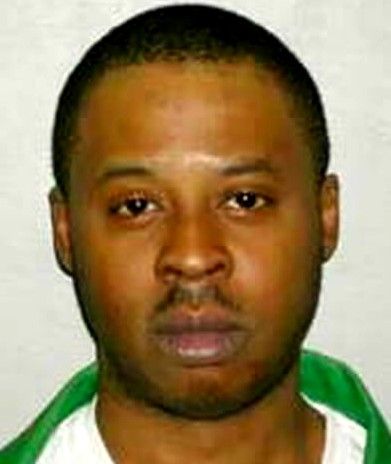
Joseph Gardner
Murderer Brian Kevin Rosenfeld
Murderer · USA · 1985
Brian Kevin Rosenfeld Brian Kevin Rosenfeld was sentenced to three concurrent l…
23 victims
Brian Kevin Rosenfeld
Murderer · USA · 1985
Brian Kevin Rosenfeld Brian Kevin Rosenfeld was sentenced to three concurrent l…
23 victims
 Russell Ellwood
Murderer · USA · 1991
Russell Ellwood was a former taxi driver. Authorities suspected him of killing…
20 victims
Russell Ellwood
Murderer · USA · 1991
Russell Ellwood was a former taxi driver. Authorities suspected him of killing…
20 victims
 Robert Martines Perez
Murderer · USA · 1994
Name: Robert Martines Perez · Other name used in proceedings: Robert Martinez P…
15 victims
Robert Martines Perez
Murderer · USA · 1994
Name: Robert Martines Perez · Other name used in proceedings: Robert Martinez P…
15 victims
 Billy Frank Vickers
Murderer · USA · 1993
Billy Frank Vickers Vickers was executed by lethal injection in Texas on Januar…
14 victims
Billy Frank Vickers
Murderer · USA · 1993
Billy Frank Vickers Vickers was executed by lethal injection in Texas on Januar…
14 victims
 Moses Sithole
Serial killer · South Africa · 1994
Moses Sithole (November 17, 1964) was a serial rapist and serial killer in Sout…
38 victims
Moses Sithole
Serial killer · South Africa · 1994
Moses Sithole (November 17, 1964) was a serial rapist and serial killer in Sout…
38 victims
 Troisville Sykes
Homicide · USA · 1883
Troisville Sykes. Kate Townsend was Troisville Sykes’s mistress. She owned a ho…
1 victim
Troisville Sykes
Homicide · USA · 1883
Troisville Sykes. Kate Townsend was Troisville Sykes’s mistress. She owned a ho…
1 victim
 Curtis Wilkie Beasley
Murderer · USA · 1995
Curtis Wilkie Beasley was charged with Robbery, Grand-Theft Auto, and the First…
1 victim
Curtis Wilkie Beasley
Murderer · USA · 1995
Curtis Wilkie Beasley was charged with Robbery, Grand-Theft Auto, and the First…
1 victim
- Gender
- male
- Country
- USA
- Location
- Dorchester County, South Carolina, USA
- Date of birth
- January 15, 1970
- Age at first offence
- 22
- Characteristics
- rape, torture
- Victim profile
- Melissa Ann McLaughlan (female, 25)
- Method of murder
- Shooting
- Date(s) of murder
- December 30, 1992
- Years active
- 1992
- Date of arrest
- October 20, 1994
- Status
-
Executed
Executed by lethal injection in South Carolina on December 5, 2008
Case record: Joseph Gardner
Status and sentence
Joseph Martin Luther Gardner was executed by lethal injection in South Carolina on December 5, 2008. A voice over an intercom said: "The sentence in the case of South Carolina V. Joseph Gardner was carried out at 6:15 p.m."
Gardner mouthed "Thank you, I'm OK. Thank you, I'm OK" several times. He also was heard saying something that sounded like "I'm going to pray." Corrections officials pronounced him dead at 6:15 after a doctor did not feel a pulse or hear a heartbeat.
Gardner had a written statement in which he apologized to Melissa McLauchlin's family and loved ones. The statement said:
"I would like to apologize to the family and loved ones of Melissa McLauchlin for taking her from them and causing them so much pain. I was 22 years old then, and I am 38 now. While I have always been sorry for what I did, the passage of time has allowed me to mature, reflect and experience spiritual growth in ways that were foreign to me as a young man. I have repented for what I have done, and I am very grateful to the many people who have prayed with me and for me over the years and in my final days. I deeply regret that my actions deprived Ms. McLauchlin of the chance to marry, have children and experience life with God. I have spent years praying for her, and I encourage all people of faith to do the same."
He declined a final meal.
Timeline
- December 30, 1992 — Melissa Ann McLauchlin was raped and assaulted by multiple men after being spotted walking along Rivers Avenue in North Charleston.
- December 31, 1992 — The victim was killed.
- January 9, 1993 — Police arrested seven people, including two ringleaders and two women charged with being accessories to murder and sexual assault.
- October 20, 1994 — Joseph Gardner was arrested in Philadelphia.
- December 1995 — Gardner received a death sentence after his trial.
- Saturday, December 6, 2008 — Joseph Gardner was executed by lethal injection, pronounced dead at 6:15 p.m. in the state's death chamber.
The offence
Melissa Ann McLauchlin, age 25, was raped and tortured, and she was shot five times in the face. She was left to die by the side of a road. Her death involved a kidnapping and included physical torture as found by the jury.
The events began on the evening of December 30, 1992, when the victim was an intoxicated young woman who got into an automobile with three men she did not know. The men drove to a trailer where the victim engaged in sex acts with several different men, initially voluntarily but then objected and was still assaulted. The assaults included an attempt to sodomize her over her protests.
After the assaults, the victim was instructed to bathe, was placed in handcuffs and blindfolded, and was taken from the trailer to a waiting car with a heavy coat placed over her head. In the car, three men got in: one man sat beside her and Joseph Gardner took the front passenger's seat. The men drove for a period of time leaving the county where the trailer was located and entering Dorchester County.
The victim freed herself from the handcuffs and began to struggle. Joseph Gardner pushed her head back and shot her twice in the face. The driver pulled the car onto the shoulder, and Joseph Gardner shot her three more times. The men then dumped the victim on the roadside. Passersby saw the body on the side of the highway and called for help while the victim was still alive, but she soon died.
Police stated that Joseph Gardner and some of the men made a New Year's resolution to rape and kill a white woman as retribution for 400 years of oppression of black people. The jury found aggravating circumstances of criminal sexual conduct, kidnapping, and physical torture.
Police said at the time that Joseph Gardner and his co-defendants decided to kill a white woman as retribution for slavery, citing a letter found during the investigation that contained slurs and statements justifying revenge. The victim’s family and Gardner’s attorneys disagreed with a race-based plot having motivated the killing.
Investigation
Police gave the victim a ride home, but she apparently set out on foot for another club. Police later suspected a racial motivation from the start because they found a "crudely-written racial diatribe" in the trailer, complete with racial epithets about white oppression and statements claiming blacks were "justified in seeking revenge."
Walter Bailey, described as the chief prosecutor in the case, said: "It was the absolutely most brutal and senseless crime, one of the worst things I have ever seen. Totally unprovoked."
Investigators located the trailer where the victim was raped a day after police took four days to identify the body.
A letter and other statements were cited in connection with the alleged justification for revenge.
Arrest and flight
Joseph Gardner was AWOL from the Navy and eluded police for nearly two years. He was on the FBI's Most Wanted List. He was living in Philadelphia and was arrested there on October 20, 1994, after someone saw his picture in the post office and tipped off the police.
Trial
Trial court and judge
The trial occurred in December 1995. Circuit Judge Ralph King Anderson imposed the sentence of death.
The South Carolina Supreme Court described the case as a death penalty case: the defendant was convicted of murder and kidnapping and received a death sentence after the jury found aggravating circumstances of criminal sexual conduct (CSC), kidnapping, and physical torture. The court affirmed the conviction and sentence.
Change of venue and photographs
Gardner argued that pretrial publicity required a change of venue and contended the trial judge erred in denying his request. The Supreme Court held he was not entitled to a change of venue on the ground of pre-trial publicity.
Gardner also contended the trial judge committed reversible error by admitting a close-up color photograph of the victim's face in the sentencing phase. The Supreme Court held the photograph was admissible and affirmed.
Evidence about physical torture and misconduct
The Supreme Court held there was sufficient evidence to submit the aggravating circumstance of physical torture to the jury, noting graphic testimony including repeated sexual assaults and attempts to sodomize the victim.
The appellate decision also addressed alleged jail misconduct prior to trial, describing that his misconduct while awaiting trial led to his transfer to Broad River Correctional Institution and placement on safe-keeping status in the death row area. It described a rebuttal effort by the solicitor through cross-examination of correctional officers who testified about his good conduct.
Jury findings and sentencing
The jury found the aggravating circumstances of criminal sexual conduct, kidnapping, and physical torture. The jury recommended death, and the state court imposed a death sentence.
During the penalty phase, Gardner told the jury, "Do what you think is best." He apologized to the victim’s parents before sentencing, and his mother sobbed as Circuit Judge Ralph King Anderson imposed the sentence.
One report described Gardner’s closing statements and argument to the jury, and quoted his statements to the jury and the victim’s parents:
"I don't want to die. What happened shouldn't have happened, but I don't want my kids to grow up without me," Gardner told the jury, referring to his two young sons who live in Detroit.
Gardner said to the victim’s parents: "I hope it gives you some sense of closure so you can put this behind you and move on. Yesterday when I was listening to you talk, it really hurt me. I really hurt you."
The appellate record described that the events leading to the crimes began on December 30, 1992, and ended with the victim being shot and left on the roadside, followed by the men returning to the trailer and going out nightclubbing.
Co-defendants and outcomes
Multiple individuals were convicted and sentenced for roles in the kidnapping, rape, and murder.
- Matthew Carl Mack — sentenced to life eligible for parole after 30 years.
- Matthew Paul Williams — sentenced to life eligible for parole after 30 years. Williams pleaded guilty to murder and was sentenced to life in prison with parole eligibility after 30 years. It was also stated that 1st Circuit Solicitor Walter Bailey agreed that if Williams helped prosecute Gardner, Williams could be sentenced again under circumstances that would cut parole eligibility to 20 years.
- Danny DeWayne McCall — sentenced to 9 years, with service of six years followed by five years of probation; described as suspended upon service of six years followed by five years of probation. He was denied parole in June 1995. Another report described 6 years.
- Roger Williams — sentenced to 5 years; described as third-degree criminal sexual conduct and being present during commission of a felony and not reporting it; scheduled for release in December 1995.
- Craig Rice — described as an accomplice who did not participate but learned about the crime and did nothing.
- Edna Lee Jenkins — pleaded guilty to being an accessory after the fact of murder, illegally buying two handguns within 30 days, and lying on a firearms application. She served 554 days in jail. Another report described 7 years and that the 7-year term was suspended for time served.
- Indira Simmons — pleaded guilty to failing to report a felony. She served 572 days, partly in jail and the remainder under house arrest.
- Two women, Edna Williams and Indira Simmons — were charged as accessories to murder and sexual assault among those arrested.
- Other men and women involved — additional details were included in the narrative describing that three rapists were sailors stationed at nearby Charleston Naval Base.
Appeals and post-conviction proceedings
Direct appeal
Gardner was convicted and sentenced to death; he appealed.
The South Carolina Supreme Court case was cited as State v. Gardner, 332 S.C. 389, 505 S.E.2d 338 (S.C. 1998) (Direct Appeal). The Supreme Court held:
- defendant was not entitled to change of venue on the ground of pre-trial publicity;
- close-up color photograph of the victim's face was admissible in the sentencing phase; and
- evidence supported submission to the jury of the aggravating circumstance of physical torture. The Supreme Court affirmed the conviction and death sentence.
Federal habeas
Gardner sought federal habeas relief, cited as Gardner v. Ozmint, 511 F.3d 420 (4th Cir. 2007) (Habeas).
The United States Court of Appeals for the Fourth Circuit affirmed the district court's denial of habeas relief. It described several habeas issues:
- right to trial by impartial jury and juror dishonesty during voir dire;
- ineffective assistance of counsel for failing to exercise a peremptory challenge;
- ineffective assistance for mitigation presentation;
- handling of testimony concerning racial motivation.
The Fourth Circuit stated it affirmed the district court’s denial of relief.
Other details
Victim background and family
Melissa "Missi" McLauchlin was described as a native of Wixom, Michigan, living with her fiancé’s family in North Charleston, South Carolina. She had an argument with her fiancé at a nightclub before storming out and beginning to walk home. Her parents lived in Live Oak, Florida, and their ordeal began on the night of Dec. 30, 1992.
Clair McLauchlin offered a statement during coverage of the execution:
"It's over for him but not for us. It will never be over for us."
Patricia McLauchlin made a statement about what would happen after the execution:
"There is never a good excuse for taking a person's life. It hurts too many people."
In another quoted context, Clair McLauchlin said: "What he did in 1992 was a life sentence for us that is never going to go away. It's always there, and it will always be there," and also: "He's getting off free in a way."
Navy status and FBI Most Wanted list
Gardner was AWOL from the Navy and remained at large until his arrest in Philadelphia in October 1994. Police noted that he might never have been caught had the FBI not put him on the "ten most wanted" list.
Written evidence and cultural references at trial
At least one co-defendant testified that the defendants spent hours watching pornographic films, movies showing executions, and a recap of the Rodney King beating story. Matthew Carl Mack testified that Gardner said, "That’s 400 years of oppression. That’s why that could happen."
A statement quoted from Mack described a conversation and a “New Years resolution”:
On the 28th or 29th of December, 1992, I was sitting in my trailer with Joe Gardner, Matthew Williams, drinking beer and talking. I was telling them that I had a fight with my girlfriend, who is white, and I was mad at her. I said I would like to “fuck her up.” I kept talking and said it could be any white bitch, I would fuck up any white bitch. I said I would like to fuck up a white girl right now. Matthew was saying, I'd be down for fucking a white girl. Joe said, I'd kill the white bitch. Joe said, before the end of the year. That's my New Years resolution, before the end of the year. I understood Joe to mean he meant to kill a white girl before the end of 1992. Nothing happened the rest of the night. (Emphasis added).
Mack continued:
On New Years Eve I asked Matt how many years do you think this takes off for oppression against the black race. Matt replied about ten years. I believe the killing of the girl by Joe was racially motivated due to the conversation we had just a few days before the incident. I believe the girl was killed to prevent the girl from testifying against us for what had occurred at the trailer that night. (Emphasis added).
Items on mental state and procedural details
The federal habeas opinion discussed mitigation presentation and defense efforts to investigate Gardner's background for mitigation. It described that Gardner advised his family members not to cooperate with counsel's efforts to develop mitigating evidence and refused medical releases until shortly before trial.
Execution facility and witnesses
Gardner was executed at Broad River Correctional Institution in Columbia, South Carolina. Three media witnesses were led into the state's capital punishment facility at Broad River Correctional Institute and were in a viewing room. Norman Ellis, described as Gardner's cousin, was in the viewing area.
A relative also heard Gardner mouth, "Thank you, I'm OK."

Spotted an error, or have more information about this case?