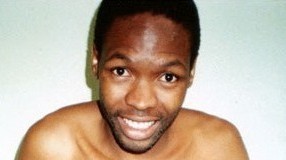
Moses Sithole
Serial killer Louis Van Schoor
Serial killer · South Africa · 1986
Louis van Schoor was a security guard and an ex-policeman who was convicted and…
39 victims
Louis Van Schoor
Serial killer · South Africa · 1986
Louis van Schoor was a security guard and an ex-policeman who was convicted and…
39 victims
 Norman Afzal Simons
Serial killer · South Africa · 1986
Norman Afzal Simons was a former teacher. He later converted to Islam in 1993,…
22 victims
Norman Afzal Simons
Serial killer · South Africa · 1986
Norman Afzal Simons was a former teacher. He later converted to Islam in 1993,…
22 victims
 Velaphi Ndlangamandla
Serial killer · South Africa · 1998
Velaphi Ndlangamandla, known as the “saloon killer”, was convicted in connectio…
19 victims
Velaphi Ndlangamandla
Serial killer · South Africa · 1998
Velaphi Ndlangamandla, known as the “saloon killer”, was convicted in connectio…
19 victims
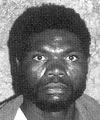 Sipho Thwala
Serial killer · South Africa · 1996
Sipho Mandla Agmatir Thwala (born 1968) was a South African rapist and serial k…
16 victims
Sipho Thwala
Serial killer · South Africa · 1996
Sipho Mandla Agmatir Thwala (born 1968) was a South African rapist and serial k…
16 victims
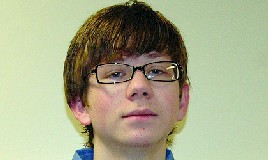 John Caudle
Homicide · USA · 2009
John Caudle was the 14-year-old biological son of Joanne Galla (also referred t…
2 victims
John Caudle
Homicide · USA · 2009
John Caudle was the 14-year-old biological son of Joanne Galla (also referred t…
2 victims
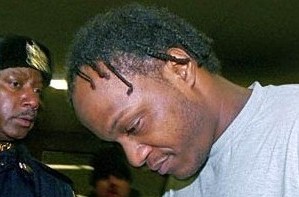 Raymont Hopewell
Serial killer · USA · 1999
Raymont Hopewell was a 35-year-old defendant who was accused of killing five pe…
5 victims
Raymont Hopewell
Serial killer · USA · 1999
Raymont Hopewell was a 35-year-old defendant who was accused of killing five pe…
5 victims
 Georg Karl Grossmann
Serial killer · Germany · 1913
Georg Karl Grossmann, who commonly called himself just Karl Grossman (also give…
50 victims
Georg Karl Grossmann
Serial killer · Germany · 1913
Georg Karl Grossmann, who commonly called himself just Karl Grossman (also give…
50 victims
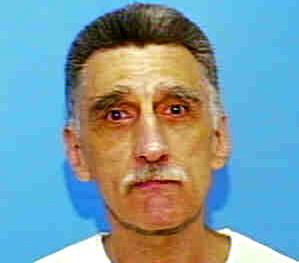 Robert Anthony Buell
Murderer · USA · 1982
Robert Anthony Buell was a former Akron city planner who lived in the nearby to…
1 victim
Robert Anthony Buell
Murderer · USA · 1982
Robert Anthony Buell was a former Akron city planner who lived in the nearby to…
1 victim
 Juan Fernando Hermosa Suarez
—
Juan Fernando Hermosa Suárez A partir del 22 de noviembre de 1991 se registró u…
Juan Fernando Hermosa Suarez
—
Juan Fernando Hermosa Suárez A partir del 22 de noviembre de 1991 se registró u…
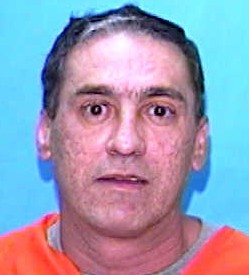 Guillermo Arbelaez
Murderer · USA · 1988
Guillermo Arbelaez was identified as the appellant in Florida Supreme Court Gui…
1 victim
Guillermo Arbelaez
Murderer · USA · 1988
Guillermo Arbelaez was identified as the appellant in Florida Supreme Court Gui…
1 victim
- Gender
- male
- Country
- South Africa
- Location
- Pretoria/Gauteng, South Africa
- Date of birth
- November 17, 1964
- Age at first offence
- 30
- Characteristics
- serial rapist
- Victim profile
- Women
- Method of murder
- Ligature strangulation
- Date(s) of murder
- 1994 - 1995
- Years active
- 1994–1995
- Date of arrest
- October 18, 1995
- Status
-
Imprisoned
Sentenced to 50 years imprisonment for each of the 38 murders, 12 years imprisonment for each of the 40 rapes, and five years imprisonment for each of the six robberies; since his sentences run consecutively, the total effective sentence was thus one of 2,410 years on December 5, 1997
Case details
Moses Sithole (November 17, 1964) was a serial rapist and serial killer in South Africa.
Background
Sithole was born in Vosloorus, a poor neighbourhood of Boksburg in apartheid-era South Africa. When he was five, his father died, and his mother abandoned the family. Sithole and his siblings spent the next three years in an orphanage, where he later said they were mistreated. He ran away back to his mother, who sent him back to the orphanage. He eventually moved in with his older brother. He began raping women in his twenties. While in prison, he was sexually assaulted by other prisoners.
Sithole was described as an attractive and charming man, with social ease and intelligent demeanour. It was said that many victims were enticed to assaults, and often deaths, in broad daylight, with promises of employment opportunities that would never materialise.
The offence
Sithole committed the “ABC Murders,” named because they began in Atteridgeville, continued in Boksburg, and finished in Cleveland, a suburb of Johannesburg. The victims were all female. It was said that victims were lured or transported to outlying fields where they were beaten, stripped, raped, and strangled with articles of their own clothing. Several victims were found with hands tied behind their backs, and one still wore a blindfold. Many were left with pieces of clothing draped across their faces as if to prevent them from staring at their killer in death.
The series was said to have started in June 1994, shortly after Sithole had served house arrest for rape. Between 1994 and 1995 South African authorities were alarmed by the growing number of dead women appearing around Pretoria and Johannesburg. Several of the women were left with their hands tied behind their backs. One woman was blindfolded. Many were found with their heads covered with clothing. It was described that Sithole murdered his first victim because she had shouted at him when he asked her for directions:
“I cannot remember her name,” he said. “I killed her and left her there. I went straight home and had a shower.”
Sithole’s murder technique was described as luring victims by pretending to be a businessman and offering them work, including inventing a fictional charity organization. After gaining trust, he offered to walk them through a veld (an Afrikaans word literally meaning “field”) to the “business headquarters” until they were out of sight and hearing range; he would then overpower, rape and strangle them.
By 1995, he had claimed over 30 victims, igniting a nationwide panic. In some cases, he called the victim’s family and taunted them.
People
Moses Sithole
Moses Sithole was the accused. He was also identified as the voice on calls to reporters.
Victims and related individuals named
- Patrica Khumalo (29-year-old rape victim; testified at his 1996 trial; first recorded rape incidence was said to have occurred in September 1987).
- Buyiswa Doris Swakamisa (rape victim; attacked in February 1989; made a police report resulting in Sithole’s arrest and trial; jailed in Boksburg Prison for six years in 1989 for the rape of Swakamisa; later referenced in court evidence).
- Amelia Rapodile (a victim; last seen before an appointment to see a man named Moses Sithole on 7th September).
- Agnes Mbuli (a victim; body discovered near Benoni on 3rd October 1995).
- Josephine Mlangeni (25) (strangled in Boksburg North; without underwear; a witness found her).
- Absalom Sangweni (witness; warned a couple not to walk in the field).
- Melody Stern (typist at Afrox in Pretoria West; typed documents for the organisation alleged to have been set up by Sithole).
- Jimmy Lepule (taxi driver; husband of Mildred Lepule).
- Mildred (wife of Jimmy Lepule; mother of their two children; promised a clerical job with promotion to a social worker in three years; interviewed on June 1 last year by a “Professor Williams” per Lepule’s account; separated from Sithole).
- “Professor Williams” (interviewee name connected to job interview).
- Pheri (man who allegedly called Mildred and set up the interview).
- Mildred’s husband, Jimmy Lepule (listed above; identified Pheri and the interview arrangement through his testimony).
- Bridgette (daughter of Sithole and Martha Ndlovu).
- Martha Ndlovu (wife; testimony in court; separated two months before he was arrested; wife who identified items in court).
- Inspector Francis Mulovhedzi (police detective who arrested Sithole; described the arrest details).
- Eben Jordaan (defence counsel).
- Charles Schoeman (named in relation to a jailhouse confession videotape).
- Dr Leendert Jansen (voice expert).
- Dr Micki Pistorius (named in profiling context).
- Robert Ressler (retired FBI profiler).
- Tamsen de Beer (journalist; Sithole contacted her and identified himself as the killer).
- Nelson Mandela (identified in relation to visiting a scene and concerns about the crime wave).
- David Selepe (named; accused accomplice possibility; shot dead in December 1994).
- George Fivaz (national commissioner; emphasised Sithole should not be harmed if apprehended by the community).
- Reg Crewe (police spokesman).
- Retha Meintjies (Transvaal deputy attorney general; led prosecution).
- Joshua Amupadhi (named journalist).
- Reg Crewe (already listed; police spokesman).
- Mokaba Mogotsi (victim; met Sithole at an East Rand children’s home for street children where she worked; reported missing person; body later found).
- Charles Schoeman (again referenced for videotape creation; jailhouse confession videotape).
- David Selepe’s officer (killing described as exonerated on a claim of self-defense; officer name not provided).
Other named associates and family
- Simon Sithole and Sophie Sithole (parents; Sophie abandoned the family; father died when Sithole was five).
- Patrick (older brother).
- Simon & Sophie Sithole; five children total mentioned (Sithole one of five children).
- Sithole’s brother-in-law (promised him help to get a gun; arranged a meeting that was said to have been trapped).
- Sithole’s nephew (described as “doing time” with him; introduced Martha Ndlovu to Sithole).
Timeline
- September 1987 — First recorded incidence of rape was said to involve 29-year-old Patrica Khumalo, who testified at his 1996 trial.
- February 1989 — Buyiswa Doris Swakamisa was attacked; a police report led to Sithole’s arrest and trial.
- 1989 — Sithole was jailed in Boksburg Prison for six years for the rape of Swakamisa.
- 1993 — Sithole was released early for good behaviour.
- June 1994 — The series was said to have started, shortly after Sithole served house arrest for rape.
- June 1 (year referenced as “last year” in testimony) — Mildred was to be interviewed on June 1 by a “Professor Williams.”
- August 1995 — Sithole was identified as having been seen with one of the victims.
- September 1995 — A body was discovered at the Van Dyk Mine near Boksburg; forensic experts recovered ten bodies over the next 48 hours.
- September 7, 1995 — Amelia Rapodile was last seen before an appointment to see a man named Moses Sithole.
- September 23, 1995 — Robert Ressler arrived to assist with development of a profile.
- October 18, 1995 — Sithole was apprehended; police intercepted him, and he was shot when he was armed with a hatchet.
- October 22, 1995 — Moses Sithole was charged with 29 murders in the magistrates' court in Brakpan (dated “23rd October 1995” elsewhere in the record).
- October 23, 1995 — Moses Sithole was charged with 29 murders in the magistrates' court in Brakpan (as stated in the other narrative).
- November 14, 1995 — He was transported to Boksburg Prison to await trial.
- October 22, 1996 — Sithole made his first court appearance and was formally charged with 38 murders, 40 rapes, and six counts of robbery.
- November 14, 1996 — Trial scheduled to begin (postponed when he arrived in court with pants drenched in blood).
- February 1997 — When the trial finally convened.
- January 29, 1997 — The trial was delayed until this date regarding the admissibility of a tape.
- December 3, 1996 — Prosecution introduced a video shot during Sithole’s initial incarceration in which he admitted to 29 murders.
- December 4, 1997 — He was found guilty on all charges; verdict was read over three hours with sentencing postponed until the next day.
- December 5, 1997 — Sentenced: 50 years imprisonment for each of the 38 murders, 12 years imprisonment for each of the 40 rapes, and five years imprisonment for each of the six robberies; total effective sentence was thus one of 2,410 years.
- December 5, 1997 (also mentioned) — He was described as found guilty of 38 murders and 40 rapes.
Investigation
South African authorities consulted retired FBI profiler Robert Ressler and Dr Micki Pistorius in their search for the “ABC” killer; it was concluded that the murders in Atteridgeville, Boksburg, and Cleveland were linked. A psychological profile indicated an intelligent, organised individual with a high sex drive and suggested the possibility of a second killer.
It was described that police sought to establish whether bodies conformed to a definite pattern; the method of attack varied to such an extent that it was impossible to state with certainty that one killer was responsible. As victims were identified and the chronology of deaths became apparent, there was said to be evidence the killer was evolving his murder technique to extract the greatest pain from victims.
A witness saw Sithole acting suspiciously in the company of a young woman and discovered her body, but the witness had been too far away to identify the killer.
Investigators were certain that the Boksburg bodies were linked with the victims at Atteridgeville.
Arrest
In August 1995, Sithole was identified as having been seen with one of the victims, and police discovered details of his fake business and a previous rape conviction. He went on the run.
Sithole contacted journalist Tamsen de Beer and identified himself as the killer. At the third call, he gave De Beer a number to call back. Police rushed to the pay phone he was calling from, but they arrived too late.
Shortly thereafter, Sithole contacted his brother-in-law, who promised help to get a gun and arranged a meeting. The brother-in-law notified police, but Sithole sensed a trap and ran. Police shot him twice when he charged them with an axe, wounding him before taking him into custody.
During the arrest, it was also said that police set a trap for him at a factory in Benoni where he was to meet a brother-in-law. Inspector Francis Mulovhedzi described that police waited for three hours and when he arrived in rain, Mulovhedzi told him to enter the premises, but Sithole refused to come inside. Mulovhedzi returned and said he was going to call the brother-in-law. When Mulovhedzi returned, Sithole took two steps back and started running away. Mulovhedzi chased him, fired two warning shots, and said Sithole ran into a dark alley, turned back, and chopped at him with an axe. Mulovhedzi shot him in the right leg but Sithole fought back and bit the policeman on the right thumb. Mulovhedzi said he fired two more shots, wounding Sithole in the stomach and disabling him.
Sithole’s defence counsel, Eben Jordaan, said Sithole had a different version: Sithole said he was walking in the street when he bumped into Mulovhedzi, and that Mulovhedzi drew his pistol and began firing without a word.
Sithole was hospitalised, operated on, and transferred to a secure Military Hospital in Pretoria.
Confession and evidence
Sithole admitted to numerous killings while being interviewed by detectives.
A police claim that he had waived his right to an attorney while making his confession was later denied in court.
A jailhouse confession videotape was made by Charles Schoeman on the condition that Sithole and three other prisoners would get a share of the royalties. It showed Sithole in a cell while giving an account of one of his victim’s last moments before death. Sithole was also described as a willing party to video and audio tapes made by fellow prisoners, in which he told fellow prisoners he hated women and felt he was teaching them “a very good lesson” by murdering them.
Facts contained in the tapes were said to be repeated in a confession to police and in a phone conversation with a Johannesburg journalist.
An unknown caller, identified by voice experts as Sithole, claimed to be the Gauteng serial killer and gave details of where he had left the bodies of several of his victims; police found women’s bodies in exactly the places and positions described.
Dr Leendert Jansen gave the voice expert opinion:
“To the best of my knowledge, there is no doubt whatsoever that the unknown voice is definitely that of Moses Sithole.”
The legality of admissibility of a tape recorded illegally in a jail cell caused delays in the trial until 29th January 1997. Technical issues relating to it, as well as Sithole’s original confession, meant the trial dragged on until 29th July 1997, when a judge ruled that the evidence was admissible.
During trial proceedings, evidence included a video introduced by the prosecution on 3rd December 1996 in which Sithole admitted to 29 murders. He described his technique in some detail and claimed that he began killing only in July 1995, selecting his victims for their resemblance to Buyiswa Doris Swakamisa.
Trial
By the time the trial began on 21st October 1996, the total charges were said to have increased to 38 counts of murder, 40 counts of rape, and 6 counts of robbery. He pleaded not guilty to all charges.
Building a chronological picture, the prosecution introduced testimony from the earliest rape victims, detailing their ordeals before his first conviction for rape. The prosecution examined his connection with each murdered victim, including testimony about alleged job offers and specific techniques used to lure victims to their deaths.
Sithole appeared cool and collected during the testimony and was said to have seldom raised his head, but sat up and stared during testimony about the organisation against women and child abuse.
The prosecution rested its case on 15th August 1997.
Sithole’s defence depended largely on his denial of involvement, and his testimony was described as rambling and incoherent.
On 3rd December 1997, jurors convicted him on all counts. The verdict took three hours to read, so sentencing was postponed to the next day. On the morning after the conviction, the judge made a statement that, in view of the abhorrent nature of the crimes, he would have had no hesitation in pronouncing a death sentence, but the death penalty in South Africa had been declared unconstitutional in 1995.
During the trial period, it was also stated that when his trial began on November 14 it was postponed because he arrived in court with his pants drenched in blood, was treated for an open knee wound apparently sustained at Pretoria Central Prison. When the trial finally convened in February 1997, an American voice expert identified Sithole as the caller who had boasted of his murders to reporters at The Star.
Sentencing
On December 5, 1997, Justice David Carstairs sentenced Moses Sithole to 50 years imprisonment for each of the 38 murders, 12 years imprisonment for each of the 40 rapes, and five years imprisonment for each of the six robberies. Because the sentences ran consecutively, the total effective sentence was thus one of 2,410 years.
Justice David Carstairs ordered that Sithole would be required to serve at least 930 years before being eligible for parole.
Appeals
No appeal information was provided.
Outcome
Sithole was convicted of 38 murders and 40 rapes, and he was sentenced to consecutive terms totaling one of 2,410 years.
Aftermath
Sithole was incarcerated in C-Max, the maximum security section of Pretoria Central Prison. During his imprisonment, press reports stated that he was HIV positive. He received treatment for the virus while in prison. His wife and child died of the disease.
Moses Sithole’s wife and family details were described through court testimony:
- Martha Ndlovu testified that their relationship began in prison at Pretoria Central Prison in July 1993, that Sithole wrote letters, and that she started visiting him regularly until his release on parole in November 1993.
- Ndlovu testified that they lived together in Soshanguve, Pretoria after his release.
- They were married in March last year, three months after the birth of daughter Bridgette.
- Their relationship ended on July 31 1995 after a heated argument over school keys, which Sithole was said to have taken to work but the school wanted back.
- Ndlovu testified that she did not see him again until his arrest in October.
Items identified by Ndlovu:
- Ndlovu identified a watch, a necklace and rings as belonging to Sithole. The prosecution had earlier submitted the items as evidence, stating they had been stolen from some of the slain women.
Police arrest testimony referenced by Ndlovu’s proceedings included that Inspector Francis Mulovhedzi described how he shot Sithole several times before arresting him.
Witness testimony in court connected Sithole to an organisation against abuse:
- Melody Stern testified that Sithole asked her to type forms for people to fill out at schools for abused people, and that she typed membership recruitment forms and minutes of meetings. Stern said the organisation’s name resembled that of the police’s child protection unit, and that when she pointed this out Sithole changed it.
- Jimmy Lepule testified that his wife Mildred was promised a clerical job with promotion to a social worker in three years by a man she called Pheri; that she was to be interviewed on June 1 by a “Professor Williams”; and that she received a call from Pheri setting up the interview shortly before it.
- Lepule testified that Mildred was interviewed and then was not seen alive again, with her later being seen in a mortuary.
A witness, Josephine Mlangeni (25) incident, was described as:
- Absalom Sangweni testified that he warned a couple not to walk in a field in Boksburg North.
- He later found the woman strangled with a piece of her clothing and without underwear.
It was also stated that the state spent a week seeking to prove that murders were committed by the same person in similar circumstances: promise of a job, rape, then strangling them with their underwear or an item of their clothing, with bodies found in open fields with identification documents destroyed or hidden.
Related background about possible accomplices included:
- It was stated that police initially suspected Sithole might be an accomplice of David Selepe, linked to murders of women in Cleveland, but Sithole denied ever meeting Selepe and no evidence connected the two men.
- David Selepe had nothing to say on the subject and was shot dead in December 1994, reportedly after attacking a policeman on a visit to one of his crime scenes; the officer who killed Selepe was exonerated on a claim of self-defense.
Sithole was also described as being HIV positive and was said to have received treatment for HIV while incarcerated, but that treatment circumstances in prison differed from those available to average citizens, per the narrative provided.
A call placed to reporters at The Star was said to have been made by a mysterious caller whose voice experts identified as Sithole, and police found women’s bodies in exactly the places and positions described by the caller.


Spotted an error, or have more information about this case?