
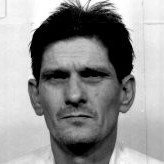
John Sterling Gardner
Murderer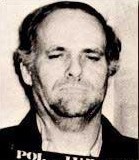 Ervil LeBaron
Murderer · USA · 1972
Ervil Morrell LeBaron (1925 to August 16, 1981) was the leader of a polygamous…
35 victims
Ervil LeBaron
Murderer · USA · 1972
Ervil Morrell LeBaron (1925 to August 16, 1981) was the leader of a polygamous…
35 victims
 Brian Kevin Rosenfeld
Murderer · USA · 1985
Brian Kevin Rosenfeld Brian Kevin Rosenfeld was sentenced to three concurrent l…
23 victims
Brian Kevin Rosenfeld
Murderer · USA · 1985
Brian Kevin Rosenfeld Brian Kevin Rosenfeld was sentenced to three concurrent l…
23 victims
 Marvin Gray
Murderer · USA · 1975
Marvin Gray was convicted killer who claimed responsibility for 23 slayings and…
23 victims
Marvin Gray
Murderer · USA · 1975
Marvin Gray was convicted killer who claimed responsibility for 23 slayings and…
23 victims
 Yahweh ben Yahweh
Murderer · USA · 1980
Yahweh ben Yahweh was born and legally named Hulon Mitchell Jr. (October 27, 19…
23 victims
Yahweh ben Yahweh
Murderer · USA · 1980
Yahweh ben Yahweh was born and legally named Hulon Mitchell Jr. (October 27, 19…
23 victims
 Russell Ellwood
Murderer · USA · 1991
Russell Ellwood was a former taxi driver. Authorities suspected him of killing…
20 victims
Russell Ellwood
Murderer · USA · 1991
Russell Ellwood was a former taxi driver. Authorities suspected him of killing…
20 victims
 Nelson Hart
Murderer · Canada · 2002
Nelson Hart (born c 1968) was a Newfoundland, Canada resident. He lived with hi…
2 victims
Nelson Hart
Murderer · Canada · 2002
Nelson Hart (born c 1968) was a Newfoundland, Canada resident. He lived with hi…
2 victims
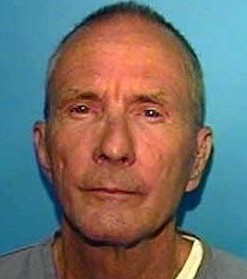 Donn Duncan
Murderer · USA · 1969
Name: Donn Duncan · Date of birth: 09/25/45 · Case number (Ninth Judicial Circu…
2 victims
Donn Duncan
Murderer · USA · 1969
Name: Donn Duncan · Date of birth: 09/25/45 · Case number (Ninth Judicial Circu…
2 victims
 David Scott Poe
Murderer · USA · 1986
David S. Poe was convicted of felony-murder in the Criminal Court of Montgomery…
1 victim
David Scott Poe
Murderer · USA · 1986
David S. Poe was convicted of felony-murder in the Criminal Court of Montgomery…
1 victim
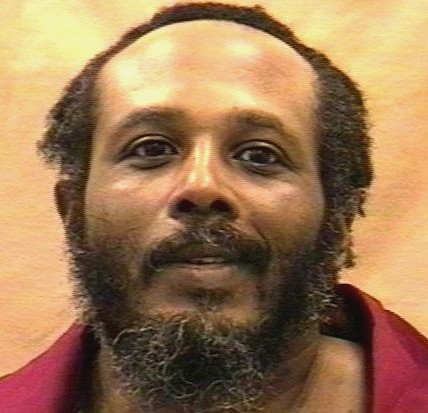 Guy Tobias LeGrande
Murderer · USA · 1983
Guy Tobias LeGrande was sentenced to death in Stanley County Superior Court for…
1 victim
Guy Tobias LeGrande
Murderer · USA · 1983
Guy Tobias LeGrande was sentenced to death in Stanley County Superior Court for…
1 victim
 Jean Harris
Murderer · USA · 1980
Jean S. Harris was born Jean Struven in 1923 in Cleveland, USA. Her mother, Mil…
1 victim
Jean Harris
Murderer · USA · 1980
Jean S. Harris was born Jean Struven in 1923 in Cleveland, USA. Her mother, Mil…
1 victim
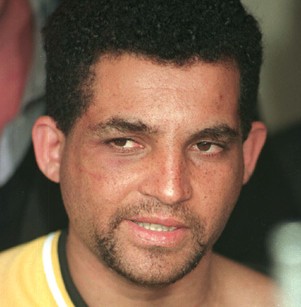 Francisco de Assis Pereira
Serial killer · Brazil · 1997
Francisco de Assis Pereira was a motorcycle courier who became known as the “pa…
11 victims
Francisco de Assis Pereira
Serial killer · Brazil · 1997
Francisco de Assis Pereira was a motorcycle courier who became known as the “pa…
11 victims
- Gender
- male
- Country
- USA
- Location
- Forsyth County, North Carolina, USA
- Date of birth
- April 6, 1958
- Age at first offence
- 24
- Characteristics
- robbery, drugs, alcohol, crime spree
- Victim profile
- Ray T. Shaver, 72 / Richard Adams, 21, and Kim Miller, 24
- Method of murder
- Shooting (20-gauge shotgun)
- Date(s) of murder
- December 17/23, 1982
- Years active
- 1982
- Date of arrest
- March 23, 1983
- Status
-
Executed
Executed by lethal injection in North Carolina on October 23, 1992
Case record: John Sterling Gardner
Timeline
- December 17, 1982 — Gardner shot and killed Rowan County retiree Ray T. Shaver during an armed robbery at Shaver’s home.
- December 23, 1982 — Gardner committed the Steak and Ale murders in Winston-Salem: he shot and killed restaurant employees Richard Adams (21) and Kim Miller (24) with a shotgun while robbing the restaurant.
- December 23, 1982 — Linda Cain, a cashier at the restaurant next door to the Steak and Ale, heard the shotgun blasts and saw a man run from the Steak and Ale to the passenger side of a waiting automobile, and she later identified Gardner from police photographic line-ups.
- December 5, 1991 — Gardner’s execution, originally scheduled for January 10, 1992, was stayed pending appeal by order filed December 5, 1991.
- March 7, 1988 — Gardner filed a motion commencing state habeas proceedings in federal court.
- June 25, 1991 — The magistrate judge denied Gardner’s motions for discovery, a scheduling order, and an evidentiary hearing, and recommended denial of each claim.
- September 11, 1991 — The district court adopted the magistrate judge’s report and recommendation without elaboration.
- February 4, 1992 — The United States Court of Appeals for the Fourth Circuit heard argument.
- January 10, 1992 — Gardner’s execution was originally scheduled for this date.
- October 23, 1992 — Gardner was executed by lethal injection in North Carolina.
- June 4, 1992 — The United States Court of Appeals for the Fourth Circuit decided the appeal.
- July 17, 1992 — The court issued an amended decision on denial of rehearing.
Background
John Sterling Gardner was executed by lethal injection in North Carolina on October 23, 1992.
Gardner was 34 years old at the time of execution.
Gardner was condemned to die for the December 23, 1982 murders of Richard Adams (21) and Kim Miller (24).
Gardner maintained innocence at the time of execution and continued to maintain his innocence.
His lawyer was abusing drugs and alcohol at the time of the trial and was later suspended on the grounds of professional negligence.
As his execution approached, his lawyers noted in appeals that the jurors who had recommended the death sentence to the trial judge had not been allowed to hear testimony about the abuse he had suffered as a child. The United States Supreme Court voted unanimously to deny a stay.
The execution was witnessed by the families of Gardner’s victims.
“I feel deep regret and sorrow for the victims' families,” he said in a final statement.
“Though they believe that I did what I was convicted of, I did not. But I feel sorry for them, that's all.”
Gardner’s last words were:
“All I have to say is if more parents would raise their children in God-fearing homes, maybe some of them wouldn't end up in the position I'm in.” -- John Sterling Gardner
The offence
On December 23, 1982, at approximately 12:30 a.m., two employees of a Steak and Ale restaurant in Winston-Salem, North Carolina were closing the restaurant for the evening.
Gardner entered the Steak and Ale restaurant at approximately 12:30 a.m. and demanded money, which was readily given to him by the employees. He killed Richard Adams and Kim Miller with shotgun blasts to the face and neck.
Gardner killed them during a robbery with a dangerous weapon under the felony murder rule.
Richard Adams had been at the Steak and Ale as a management trainee for four months and had just earned a business degree from Virginia’s Emory and Henry College.
Adams could not get the receipts to balance with the cash and charges on the day of the murders, so he stayed late.
If Adams’ figures had added up the first time, Adams and Miller would have probably left the restaurant about midnight.
Kim Miller was working as a bartender four nights a week to finance her unpaid day job as a door-to-door Jehovah’s Witness.
Miller stayed to keep Adams company and was passing the time polishing the brass bar.
According to a written confession recorded in September 1983, immediately after he was sentenced to death, Gardner had spent the earlier part of that night drinking and shooting up “crystal meth.”
By 11 p.m., Gardner was riding around Winston-Salem with his girlfriend, a topless dancer, and a male friend.
Gardner asked his girlfriend if she knew of a place that would be good to rob.
They drove by the Steak and Ale at 799 S. Stratford Road.
Gardner said he told Giordano to park behind the restaurant and to cut the lights but keep the engine running.
Carrying a 20-gauge shotgun, Gardner knocked on the back door sometime between 12:15 and 12:30 a.m.
When Miller cracked the door and said, “Can I help you?” Gardner forced it open, pointed the gun at her, and demanded to be taken to the safe.
Miller and Gardner walked a few feet and entered the small office where Adams was at his desk working a calculator.
Miller picked up a bag of money and gave it to Gardner.
Adams jumped.
Gardner fired a single shot at Adams’ face. Adams died instantly.
Miller fell to her knees and begged for her life. Gardner later told police that he did this.
Gardner placed the barrel of the gun at Miller’s neck and pulled the trigger.
One of Miller’s earrings was found several feet away from her body and was marked with powder burns.
Gardner fled with $2,696.55.
Gardner spent $825 to buy a used Chevelle and spent the rest on a rabbit coat and a St. Bernard puppy for his girlfriend.
Linda Cain, a cashier at the restaurant next door to the Steak and Ale, was walking to her car at the time of the robbery and murders.
She heard the shotgun blasts and saw a man run from the Steak and Ale to the passenger side of a waiting automobile.
Cain had direct eye contact with the individual for several seconds and later identified Gardner from police photographic line-ups as the fleeing individual.
Gardner confessed to all of the murders after his arrest.
Gardner pleaded guilty to a third slaying connected to a six-week crime spree after his conviction in the two others.
Gardner’s execution was for the killing of Richard Adams (21) and Kim Miller (24) at the restaurant in Winston-Salem.
Investigation
On March 17, 1983, Jeff Royal, an inmate at the Forsyth County jail, implicated Gardner in the murders.
When confronted that day, Gardner denied participating in the murders but stated that a prisoner he identified as “Johnny” had confessed to the killings.
After repeating the “Johnny” story and failing a polygraph test approximately one week later, Gardner chose to make a statement, executed a waiver of rights, and stated that he was at the Steak and Ale but had remained in the car while Jeff Royal and “Johnny” had gone inside to rob the restaurant.
After he was taken to the crime scene and asked to recount events, one officer expressed disbelief of Gardner’s story and Gardner confessed to committing the murders.
Gardner gave a second tape-recorded statement admitting that he was the triggerman in the killings and setting forth details of the incident.
On March 24, the police asked Gardner to clarify certain statements in the tape-recorded confession. He further described the victims, where he had shot them, and their positions after they were shot.
Arrest
Gardner was confronted by police after Jeff Royal implicated him in the murders.
After police asked Gardner to clarify statements on March 24, Gardner’s tape-recorded statements included his confession to being the triggerman and details about where he shot the victims.
Trial
Gardner was tried on two counts of first degree murder beginning September 19, 1983.
The jury convicted Gardner on both counts based on the felony murder rule that the murders were committed during a robbery with a dangerous weapon.
At the guilt phase of the trial, Gardner presented an alibi defense and testified in his own behalf.
Gardner recanted his confession and denied any connection to the robbery or the murders.
He claimed he confessed merely to protect his girlfriend and that he knew the details of the crime from suggestions made by the police and secretly viewing photos of the crime scene while in custody.
Gardner and the jury had both guilty verdicts and the sentencing phase was conducted before the same jury that rendered the guilty verdict.
At the sentencing phase, the jury recommended death sentences on each murder count.
The State proffered no testimony at this phase of the trial but relied on the testimony presented at the guilt phase.
Gardner offered the testimony of a state psychiatrist who had evaluated Gardner for competency.
Judgments on Gardner’s convictions and sentences were entered September 23, 1983.
Gardner’s judgments were affirmed on appeal to the North Carolina Supreme Court on August 28, 1984.
The United States Supreme Court denied certiorari on February 19, 1985.
Gardner’s trial counsel was Bruce Fraser.
At the time Gardner’s trial began, Fraser was appointed to represent Gardner on July 7, 1983 and served as counsel through trial, which commenced on September 19, 1983.
Gardner’s execution press coverage included that he “went to his death continuing to maintain his innocence.”
Sentencing
At the sentencing phase of the trial, the jury recommended death sentences on each murder count.
The verdict form was completed by the jury after three hours of deliberation and specifically found as mitigating circumstances Gardner’s family history, his history of alcohol abuse, and drug addiction as brought out by the testimony of Dr. Rood at sentencing.
Dr. Rood was the state psychiatrist who had evaluated Gardner for competency approximately four months prior to trial.
Dr. Rood testified at the sentencing phase and related Gardner’s statements, including that he had moved frequently as a child, that his mother was “a wine-o,” that he had failed several grades in school and had never completed high school, that he “hope[d] he [the father] died,” that he had abused drugs since he was a teenager, and that he had married at 18 but the marriage had failed despite counselling.
Dr. Rood opined that Gardner was not suffering from any mental defect, but that his past history of substance abuse could have impaired his judgment at the time of the murders.
Fraser made a closing argument at sentencing seeking mercy for Gardner on the premise that Gardner had grown up without a support group, had no chance to receive proper training or develop normally and morally, and therefore had diminished responsibility for his actions that did not warrant imposition of the death penalty.
Fraser made specific reference to Gardner’s disadvantaged background, the alcoholism of his mother, and the lack of family support as mitigating factors on Gardner’s behalf.
Fraser compared the culpability of Gardner with others who had opportunities to succeed but had thrown them away, and argued that those others were more culpable.
The jury did not find that Gardner was impaired in his ability to appreciate the criminality of his conduct and to conform his conduct to the law despite Dr. Rood’s stated opinion that Gardner’s past substance abuse could have caused such impairment.
Appeals
A motion commencing state habeas proceedings was filed in federal court on March 7, 1988.
The case was referred to a magistrate judge for resolution of non-dispositive motions and a report and recommendation.
In an eighty-nine page order and report filed June 25, 1991, the magistrate judge denied Gardner’s motions for discovery, a scheduling order, and an evidentiary hearing.
The magistrate judge found that Gardner had presented a mixed petition and that the State had unconditionally waived all further exhaustion of state remedies.
The magistrate judge recommended denial of each claim.
After objections were filed by Gardner, the district court adopted the report and recommendation on September 11, 1991 without elaboration.
After denial of reconsideration, the appeal followed and was expedited.
Gardner’s execution was stayed pending appeal by order filed December 5, 1991.
The United States Court of Appeals for the Fourth Circuit addressed Gardner’s challenges to the imposition of the death penalty and affirmed.
Gardner raised issues including:
- ineffective assistance of counsel at the sentencing phase due to counsel’s failure to adequately investigate and present a case of mitigation,
- due process violations based on the State’s failure to produce discovery and prosecutorial misconduct,
- unconstitutional sentencing instructions requiring unanimity in considering mitigating evidence,
- denial of due process because he was denied court-appointed psychiatric assistance.
Gardner also challenged discovery relating to Jeff Royal’s statement implicating Gardner.
The prosecutor’s question about Miranda warnings and whether Gardner had committed another murder in a neighboring county was challenged as prosecutorial misconduct.
Gardner also challenged the prosecutor’s reference in closing argument at sentencing to “your kids ... my kids,” claiming it constituted misconduct that improperly inflamed the jury.
The prosecutor’s remarks were found improper, but the court concluded they did not rise to the level of a constitutional violation warranting a new sentencing hearing.
Gardner attacked the jury instructions and verdict form on grounds that mitigating evidence could only be considered if all twelve jurors agreed on the existence of a particular mitigating circumstance, citing Mills v. Maryland and McKoy v. North Carolina.
The court held that the unanimity restriction described in Mills and McKoy did not apply because the jury instructions or verdict form contained no such unanimity restriction on the jury’s use of mitigating evidence.
Gardner argued the trial court violated due process by denying him the assistance of a court-appointed psychiatric expert, citing Ake v. Oklahoma.
The court held that Ake was decided after Gardner’s conviction became final and did not apply.
Other killings during a crime spree
On December 17, 1982, at 10:30 a.m., Gardner shot and killed Rowan County retiree Ray T. Shaver (72) during an armed robbery at Shaver’s home.
Shaver was giving his dog a bubble bath.
Gardner later confessed to all of the murders after his arrest.
The court also noted that since the original imposition of the death sentences, Gardner pleaded guilty to another murder in Rowan County that occurred only days before the murders in this case and that commission of that offense could be another aggravating factor before the jury in any resentencing for the subject murders.
Other details
Gardner presented evidence in state postconviction proceedings attempting to show that trial counsel, Bruce Fraser, spent inadequate time preparing for trial.
Gardner also presented evidence that there was significant information about his childhood in state social services files and from testimony of his parents, relatives, friends, and a psychological expert, that Fraser failed to discover and utilize as mitigating evidence at sentencing.
The state habeas court rejected each of Gardner’s claims by written opinion.
This order was upheld on appeal in state and federal supreme courts with case numbers listed as Nos. 83 CRS 14519 and 83 CRS 14520 in Forsyth County Superior Court, filed August 29, 1986.
Gardner filed for state habeas relief on December 2, 1985.
An evidentiary hearing was held during the state collateral review.
Gardner presented testimony from his father, mother, an aunt who had cared for him as a child, his father’s girlfriend referred to as “Mom,” and a former girlfriend who lived with Gardner for approximately five months.
Gardner also presented county social services department records that revealed an extremely difficult home life resulting from an abusive father and a drunken mother.
Gardner presented testimony of a clinical psychologist who reviewed the social service records and interviewed Gardner, his family, and others.
The psychologist opined that assuming Gardner’s guilt, he was “under stress” at the time of the murders, suffered from an emotional or mental disturbance, and his capacity to conform his conduct to the requirements of the law was impaired.
The psychologist concluded Gardner could be a decent human being but that when stressed, his abusive childhood would influence his behavior and impair his judgment.
Fraser’s time records indicated only three specific conferences with Gardner, while Fraser testified that there were other instances when he met with Gardner that were not recorded in his time sheets.
Gardner argued that Fraser rarely visited him in jail prior to trial.
Gardner presented additional evidence in federal court that Fraser may have begun to develop drug and alcohol problems five to six years earlier, including medical records from a detoxification center dated September 18, 1989.
The magistrate judge made no findings and conducted no hearings with respect to that evidence.
After filing his federal petition, Gardner submitted additional evidence not addressed at the state level, including evidence that Fraser was privately reprimanded by the state bar and medical records from a detoxification center.
Gardner attempted to expand the record on appeal with additional documents concerning Fraser’s legal woes by motion filed February 3, 1992; the motion to expand the record was denied as untimely.
The record indicated that at trial North Carolina law did not require appointment of more than one attorney in capital cases, and subsequent to Gardner’s trial the law was amended to require appointment of assistant counsel in capital cases under N.C. Gen. Stat. § 7A-450 (1989).
Gardner’s petition indicated that he was initially represented by Mr. Michael Grace, appointed counsel of the North Carolina bar, from the time he was arrested in connection with these murders until arraignment.
Crime-stoppers, an organization independent of the city of Winston-Salem, had offered Jeff Royal $600.00 for information.
Royal anticipated the possibility of receiving additional reward money from another non-governmental reward source.
Gardner submitted documents purporting to be new evidence implicating Royal, including yearbook pictures and an affidavit from a friend of a victim, as well as affidavits from an investigator and one of Gardner’s present attorneys alleging they were told by a Randy Church that Jeff Royal told Church while in jail together in 1984 that Royal was present on the night of the Steak & Ale murders.
The court concluded none of the evidence offered concerning Royal was exculpatory with respect to Gardner.
The court also concluded that there was no evidence the state was aware of the proffered statements implicating Royal prior to trial.
Case identifiers mentioned
Gardner was identified in the appellate case as: John Sterling GARDNER, JR., Petitioner-Appellant v. Gary DIXON, Warden, Central Prison, Raleigh, North Carolina, Respondent-Appellee.
The appeal number was No. 91-4010 in the United States Court of Appeals for the Fourth Circuit.
Quotations
- Linda Cain’s identification involved direct eye contact and later identified Gardner from police photographic line-ups, as described in the case narrative.
- Miller’s statement at the back door was quoted: “Can I help you?”
- The confession described crystal meth use: Gardner spent the earlier part of that night drinking and shooting up “crystal meth.”
- Dr. Rood quoted statements included that Gardner “hope[d] he [the father] died,” and that his mother was “a wine-o.”
- The clinical psychologist quote included that Gardner was “under stress.”
- Gardner’s last words were quoted in full:
- Gardner’s final statement was quoted in full:
Spotted an error, or have more information about this case?