
Troisville Sykes
Homicide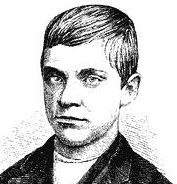 Jesse Pomeroy
Homicide · USA · 1874
Jesse Pomeroy was sentenced to death on two counts in 1876. His sentence was co…
10 victims
Jesse Pomeroy
Homicide · USA · 1874
Jesse Pomeroy was sentenced to death on two counts in 1876. His sentence was co…
10 victims
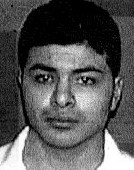 Edward Brian Capetillo
Homicide · USA
Edward Brian Capetillo was a Latino male who was 17 years of age at the time of…
1995 victims
Edward Brian Capetillo
Homicide · USA
Edward Brian Capetillo was a Latino male who was 17 years of age at the time of…
1995 victims
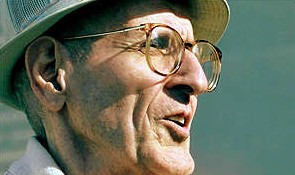 Jack Kevorkian
Homicide · USA · 1990
Jack Kevorkian (born May 26, 1928) was a controversial American pathologist. He…
130 victims
Jack Kevorkian
Homicide · USA · 1990
Jack Kevorkian (born May 26, 1928) was a controversial American pathologist. He…
130 victims
 David Koresh
Homicide · USA · 1993
David Koresh (born Vernon Wayne Howell; August 17, 1959 – April 19, 1993) led t…
79 victims
David Koresh
Homicide · USA · 1993
David Koresh (born Vernon Wayne Howell; August 17, 1959 – April 19, 1993) led t…
79 victims
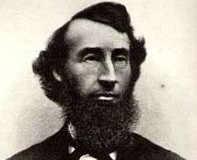 Nathaniel Gordon
Homicide · USA · 1860
Nathaniel Gordon (c.1834 – February 21, 1862) was the first and only American s…
29 victims
Nathaniel Gordon
Homicide · USA · 1860
Nathaniel Gordon (c.1834 – February 21, 1862) was the first and only American s…
29 victims
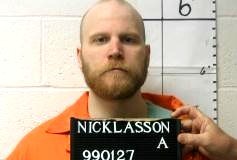 Allen Nicklasson
Murderer · USA · 1994
Allen Nicklasson · late August 1994 — Dennis Skillicorn, Allen Nicklasson, and…
3 victims
Allen Nicklasson
Murderer · USA · 1994
Allen Nicklasson · late August 1994 — Dennis Skillicorn, Allen Nicklasson, and…
3 victims
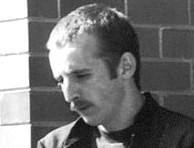 Julian Knight
Mass murderer · Australia · 1987
Julian Knight was a 19-year-old former Australian Army officer cadet who was ar…
7 victims
Julian Knight
Mass murderer · Australia · 1987
Julian Knight was a 19-year-old former Australian Army officer cadet who was ar…
7 victims
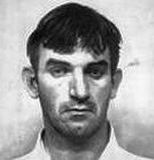 Robin Reid
Murderer · Australia · 1982
Robin Reid was sentenced to life imprisonment on November 26, 1982. In prison,…
1 victim
Robin Reid
Murderer · Australia · 1982
Robin Reid was sentenced to life imprisonment on November 26, 1982. In prison,…
1 victim
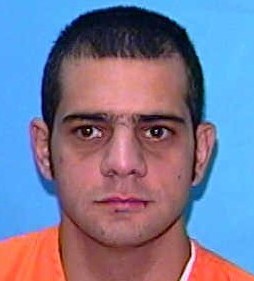 Anthony Farina
Murderer · USA · 1992
Anthony Farina (born 11/20/73) was tried in the Seventh Judicial Circuit, Volus…
1 victim
Anthony Farina
Murderer · USA · 1992
Anthony Farina (born 11/20/73) was tried in the Seventh Judicial Circuit, Volus…
1 victim
- Gender
- male
- Country
- USA
- Location
- New Orleans, Louisiana, USA
- Date of birth
- ???
- Characteristics
- —
- Victim profile
- Kate Townsend (his mistress for 25 years)
- Method of murder
- St abbing with knife
- Date(s) of murder
- November 3, 1883
- Years active
- 1883
- Date of arrest
- —
- Status
-
Acquitted / overturned
Acquitted by a jury on February 1, 1884
Case identification
Troisville Sykes.
Background
Kate Townsend was Troisville Sykes’s mistress. She owned a house of ill-fame on Basin street and was wealthy, having as much as $200,000 in her own right.
A will attributed to Kate Townsend included that she had no father or mother living and had no forced heirs. In the will, she gave and bequeathed to Mr. Travesville Sykes, of this city, all the property, real and personal, which she might die possessed of, constituting him her sole and universal legatee. The will further stated that in case of death of said Travesville Sykes, she gave and bequeathed to Mrs. Stephen Sykes, his mother, and to all her children, all the property, real and personal, which she might die possessed of. The will also appointed Travesville Sykes as her testamentary executor, and it revoked all wills or codicils previously made by her.
The will was signed by Kate Townsend, E. Fulton, A. Robert, W.A. Bienvenue and A.E. Bienvenue, and bore date the 19th of September, 1872.
The civil law issue presented was whether Sykes could inherit from Kate Townsend.
Civil Code, 1481 was quoted as follows:
"Those who have lived together in open concubinage are incapable of making to each other, whether inter vivos or mortis causa, any donation of immovables; and if they make a donation of movables, it cannot exceed one-tenth part of the whole value of their estate."
The passage also stated: Those who afterwards marry are excepted from this rule.
The civil law provisions about revocation on account of ingratitude were also quoted as follows:
"Article 1559, Civil Code, reads that donations are liable to be revoked or dissolved for "the ingratitude of the donee.""
"Art. 1560 says revocation on account of ingratitude can take place "if the donee has attempted to take the life of the donor.""
"Article 1561 authorizes the suit for revocation by the heirs of the donor against the donee within a year after the death of the donor."
Sykes applied to the court to probate the will and had gone so far as to mortgage a portion of the property to secure counsel to defend him against a charge of murder. The question disturbing the legal mind of New Orleans was described as whether Sykes could inherit from her.
The offence
On the 3rd inst., Travesville Sykes killed Kate Townsend in New Orleans.
The will and the described “quarrel that culminated in the tragedy” were connected to Sykes’s demand for money. The woman was stabbed with a large dirk knife nine times.
Plea
Sykes’s plea was self defense.
Trial
Sykes was tried for the murder of Kate Townsend.
The New York Times reported that the trial “came to an end to-day by the jury bringing in a verdict of ‘Not guilty,’ and the accused man was turned loose.”
The verdict reached by the jury was:
- “Not guilty”
A New Orleans report noted that the trial came to an end on February 1, 1884 and that the verdict was “Not guilty,” with Sykes being turned loose.
A separate note indicated that the Monroe Bulletin, Wednesday, February 6, 1884, page 2, column 1, said that Troisville Sykes was acquitted of the murder, and described the result as “set free by a considerate jury.”
Outcome
Troisville Sykes was acquitted of the murder of Kate Townsend by a jury on February 1, 1884. He was turned loose after the jury returned a verdict of “Not guilty.”
Other details
A New York Times dateline line associated with the trial result was: “NEW-ORLEANS, Feb. 1.”
The published material included the statement “The trial of Troisville Sykes for the murder of Kate Townsend, his mistress, in New Orleans.”
Spotted an error, or have more information about this case?