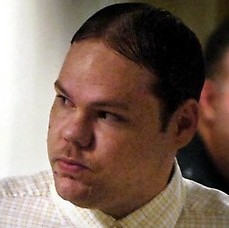
Eugene McWatters
Murderer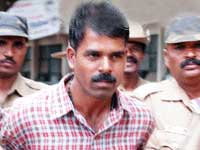 Umesh Reddy
Murderer · India · 1998
Umesh Reddy was sentenced to death on October 27, 2006. The Karnataka High Cour…
18 victims
Umesh Reddy
Murderer · India · 1998
Umesh Reddy was sentenced to death on October 27, 2006. The Karnataka High Cour…
18 victims
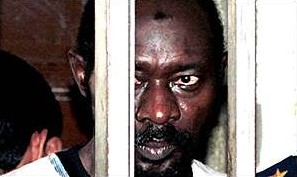 Mohammed Adam Omar
Murderer · Yemen · 1995
Mohammed Adam Omar was a morgue assistant at Sanaa University’s medical faculty…
16 victims
Mohammed Adam Omar
Murderer · Yemen · 1995
Mohammed Adam Omar was a morgue assistant at Sanaa University’s medical faculty…
16 victims
 Robert Martines Perez
Murderer · USA · 1994
Name: Robert Martines Perez · Other name used in proceedings: Robert Martinez P…
15 victims
Robert Martines Perez
Murderer · USA · 1994
Name: Robert Martines Perez · Other name used in proceedings: Robert Martinez P…
15 victims
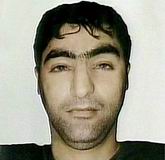 Farda Gadirov
Murderer · Azerbaijan · 2009
Farda Gadirov (also given as Farda Asad oglu Gadirov; Azeri: Fərda Qədirov; Geo…
12 victims
Farda Gadirov
Murderer · Azerbaijan · 2009
Farda Gadirov (also given as Farda Asad oglu Gadirov; Azeri: Fərda Qədirov; Geo…
12 victims
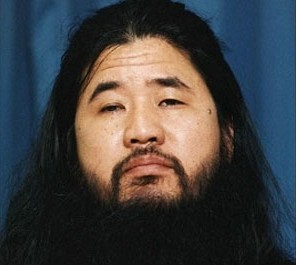 Shoko Asahara
Murderer · Japan · 1995
Shoko Asahara was the founder of Japan's controversial Buddhist religious group…
12 victims
Shoko Asahara
Murderer · Japan · 1995
Shoko Asahara was the founder of Japan's controversial Buddhist religious group…
12 victims
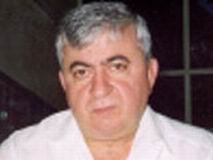 Haji Mammadov
Murderer · Azerbaijan · 1995
Haji Mammadov was a former officer of the Crime Investigation Department of the…
11 victims
Haji Mammadov
Murderer · Azerbaijan · 1995
Haji Mammadov was a former officer of the Crime Investigation Department of the…
11 victims
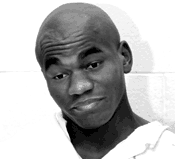 Edwin Debrow
Homicide · USA · 1991
Edwin Debrow Jr. was convicted in 1992, at age 12, of a fatal shooting during a…
1 victim
Edwin Debrow
Homicide · USA · 1991
Edwin Debrow Jr. was convicted in 1992, at age 12, of a fatal shooting during a…
1 victim
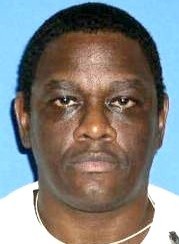 James Lewis Jackson
Murderer · USA · 1997
James Lewis Jackson was convicted of capital murder involving the strangling de…
3 victims
James Lewis Jackson
Murderer · USA · 1997
James Lewis Jackson was convicted of capital murder involving the strangling de…
3 victims
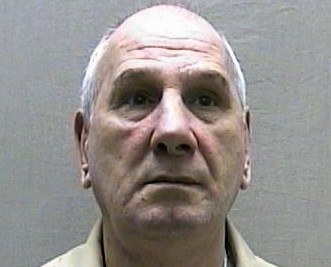 James Koedatich
Serial killer · USA · 1971
James Koedatich was born in 1948. Koedatich committed his first known murder in…
3 victims
James Koedatich
Serial killer · USA · 1971
James Koedatich was born in 1948. Koedatich committed his first known murder in…
3 victims
 Clayton Weatherston
Murderer · New Zealand · 2008
Clayton Weatherston Sophie Kate Elliott was born 11 June 1985 and was 22 years…
1 victim
Clayton Weatherston
Murderer · New Zealand · 2008
Clayton Weatherston Sophie Kate Elliott was born 11 June 1985 and was 22 years…
1 victim
- Gender
- male
- Country
- —
- Location
- —
- Date of birth
- J une 20, 1978
- Age at first offence
- 26
- Characteristics
- rape
- Victim profile
- Jackie Bradley, 43 / Christal Wiggins, 29 / Carrie Caughey, 18
- Method of murder
- Strangulation Loca tion : Martin County, Florida, USA
- Date(s) of murder
- Mar ch -Jun e 2004
- Years active
- 2004
- Date of arrest
- June 23, 2004
- Status
-
Sentenced to death
Sentenced to death on December 4 , 2006
Case record
Overview
Eugene Wayman McWatters Jr. was sentenced to death for killing three women in the 2004 “Salerno Strangler” killings. He also received three consecutive life prison terms for raping the women. Circuit Judge Larry Schack ordered that McWatters serve three consecutive life prison terms for raping the women and also ordered that he be chemically castrated if he met the medical criteria.
McWatters was convicted by a jury on September 28 of first-degree murder and sexual battery.
People
- Eugene Wayman McWatters Jr. (28): defendant
- Laura Crosby Dittmer: daughter of a victim; mother was one of McWatters’ first victims
- Jackie Bradley (43): first victim
- Christal Wiggins (29): victim
- Carrie Caughey (18): victim
- Jessica Aleman: sister of McWatters
- Det. Mike Dougherty: detective who pretended to befriend McWatters and got him to confess
- Assistant State Attorney Tom Bakkedahl: prosecutor
- Prosecutor Erin Kirkwood: prosecutor in opening statements
- Prosecutor Tom Bakkedahl: prosecutor in closing arguments and sentencing
- Defense counsel Robert Udell: attorney for the defence
- Defense attorney Bob Udell: defence attorney (co-counsel)
- Defense counsel Rusty Akins / defence attorney Rusty Akins: defence attorney
- Det. Brian Bergen: detective who questioned McWatters in a recorded conversation
- Martin County Circuit Judge Larry Schack: judge who presided over the trial and sentencing
Timeline
- June 23, 2004 — McWatters confessed in recordings after his arrest on an unrelated sexual battery charge.
- October 4, 2006 — Article describing the criminal justice system’s work in apprehending, trying, and convicting Eugene McWatters of the rape and murder of three Martin County women in the 2004 “Salerno Strangler” killings.
- September 19, 2006 — Opening statements described conflicting images of McWatters and trial events involving a bomb threat and jury selection, followed by the trial’s opening.
- September 30, 2006 — Jury found McWatters guilty of three counts of first-degree murder and three counts of sexual battery.
- December 4, 2006 — McWatters was sentenced to death.
- December 05, 2006 — Reporting that a man was sentenced to die for sexually assaulting and strangling three women during a 10-week period in 2004, including the sentencing orders by Judge Larry Schack.
The offence
Victims and attacks
Three women were killed during the 2004 “Salerno Strangler” killings. The victims were:
- Jackie Bradley (43), whose body was found March 31 in a canal about 100 feet from a Port Salerno home owned by McWatters’ sister Jessica Aleman.
- Christal Wiggins (29), murdered May 31.
- Carrie Caughey (18), whose body was found June 3.
McWatters raped and strangled the three women. All three women were found unclothed from the waist down, with their shirts jammed up into their armpit area and bras pushed over their breasts. A forensic pathologist concluded they were sexually assaulted and then murdered based on the disarray of the victims’ clothes and the fact that they were strangled.
Circumstances described at trial
Prosecutors described that McWatters lured the women:
- For Carrie Caughey (18) and Christal Wiggins (29): crack cocaine
- For Jackie Bradley (43): a shower
Witnesses described:
- Bradley: McWatters promised her a shower; witnesses from the Golden Gate homeless camp said they watched Bradley and McWatters walk away together toward a Port Salerno home owned by Jessica Aleman.
- Caughey: a witness said he had dropped her off behind a Lil’ Saints convenience store after they unsuccessfully tried to buy crack cocaine. Caughey was last seen alive walking down Lincoln Street in Port Salerno with McWatters trailing behind on a bicycle, calling her name.
- Wiggins: witnesses at a house party where McWatters and Wiggins attended said they last saw the two together. McWatters returned to the house without Wiggins, “sweating,” “hyped up,” and requesting cocaine, according to a witness deposition. Although Wiggins was murdered second, her body was the last to be discovered; it was found on June 7.
McWatters attempted to hide the bodies. In a walk through one of the crime scenes after his arrest, McWatters described details that had never been released, including where one victim was attacked, that rocks were used to weigh down another’s body in a drainage ditch, and that he broke off tree branches to hide one of the bodies in the woods.
Investigation
Martin County Sheriff’s detectives moved quickly to find the killer after the deaths of Jackie Bradley, Christal Wiggins, and Carrie Caughey.
Detective work and approach
Det. Mike Dougherty pretended to befriend McWatters and ultimately got him to confess.
Law enforcement officers sought the killer after the deaths while deputies searched among people in the woods near Port Salerno and Golden Gate, describing the search as involving “alcoholics and addicts who live a shadow life in the woods.”
Evidence and forensic limits
Because of the bodies’ extensive state of decomposition, no concrete forensic evidence was collected from any of the crime scenes.
Prosecutor Erin Kirkwood stated that “We’re not going to have a CSI moment in this trial,” referring to the television show “Forensic Files,” and said:
- Any DNA on Bradley’s body was lost when it was submerged in a Port Salerno drainage canal in March 2004.
- The bodies of Carrie Ann Caughey and Christal Dawn Wiggins were highly decomposed when they were found near a Port Salerno lake on June 3 and June 7, 2004.
Confrontation through a confession
Before the June 23 confession, detectives tried to connect McWatters to the crimes through a foot-deep hole next to Caughey’s body. Detectives believed the killer murdered her, picked her up, tripped in the hole and then dropped her; leaving the body as it fell, the murderer used tree branches to cover it up.
During the June 23 confession, McWatters relayed varying stories about how he fractured his ankle around the time of the murders:
- First, he told detectives he injured his leg in an all-terrain vehicle accident.
- When asked for names of the people he was with, he recanted and said a car had run over his foot during a drug deal.
In a recorded conversation, Detective Brian Bergen asked about conflicting stories. McWatters responded in the recorded conversation as follows:
"I don't know," McWatters said.
"'Cause (expletive), story kinda got confused in my head. 'Cause trying to make up a story to tell everybody else and then (expletive) tellin' you," McWatters said.
"In between the two stories and (expletive), like I told ya man, I'm confused."
McWatters eventually admitted to killing the three women in the recordings, saying he was in the process of having sex with each of them when he “lost it.” He said:
"I don't know how or why I done that. It's still a mystery to my own self."
Surveillance video release
Authorities released surveillance video showing McWatters in handcuffs and in the custody of Martin County sheriff's deputies hours before he was questioned and arrested in the three women's deaths. A statement from Assistant State Attorney Nita Denton accompanied the release, including:
"Obviously, he admits he was the last one with each of the victims, and that he was having sex with them when something happened," Assistant State Attorney Nita Denton said.
"He doesn't tell us what that something is, but then he admits they're dead."
Arrest
McWatters was arrested on June 23, 2004 on an unrelated sexual battery charge, after which detectives placed him in an evidence room containing “Salerno Strangler” evidence.
A telephone call placed to McWatters' attorneys, Robert Udell and Rusty Akins, was not immediately returned Tuesday morning after sentencing.
Trial
Charges and counts
McWatters was charged with:
- three counts of first-degree murder
- three counts of sexual battery
The jury found him guilty of three counts of first-degree murder and three counts of sexual battery.
Trial conduct and jury deliberations
A bomb threat put a halt to court proceedings during the trial; the trial then resumed and jury selection continued.
At one point during deliberations, the jury asked to listen to the confession statement with the aid of prepared transcripts that were used in the trial to help decipher poor audio quality. The law did not allow use of transcripts during deliberations, and court officials planned to try to find a better sound system.
The jury foreman disclosed that the panel had begun filling out the verdict form, but it had not reached a verdict. The form was ordered sealed until deliberations resumed.
Opening statements
Prosecutors painted McWatters as “a calculating murderer, a hyped-up drug addict, a cunning predator of wayward women.” The defence painted him as an abandoned child, a high school drop-out, and an informer with aspirations of helping to catch a serial killer—while also claiming he ended up getting wrongly arrested for the crimes himself.
Prosecutor’s closing arguments
Assistant State Attorney Tom Bakkedahl argued jurors could find first-degree murder in two ways:
- if the women were raped, it was considered first-degree felony murder
- if the killings were planned, even for the briefest of periods, they qualified as first-degree premeditated murder
Bakkedahl argued:
"The cause of death proves premeditation," Bakkedahl said, noting testimony from experts that it takes at least four minutes to kill a person with strangulation, and that's if they don't struggle.
To illustrate, he held his hands as if choking an invisible throat and timed a minute of silence, saying:
"One minute," he said after 60 seconds of intense silence in the crowded courtroom.
"One minute. You want me to stand there for three more minutes? Is that premeditation?"
Defence arguments
Defense attorney Rusty Akins argued there was no evidence of force and it was possible the women had consensual sex and were killed later. He also argued:
- McWatters gave a false confession based on information he gleaned from his contacts with detectives and witnesses during the two-month investigation.
- the reliability of the memories of prosecution witnesses was questionable because many admitted they were drinking or using drugs during the times they said they saw McWatters with the victims.
Akins said:
"These witnesses didn't come in and tell you they were baking cookies," Akins said.
Part of the final argument from the defence came from co-counsel Bob Udell. He repeated his suggestion that McWatters may have confessed because he wanted to seem important. Bakkedahl responded to end his argument, saying:
"He just wanted to be somebody. He's somebody now," Bakkedahl said.
"He's a murderer, and he's a rapist."
Confession context and dispute
McWatters’ confession was central to the prosecution. Prosecutors acknowledged detectives deliberately placed him in an evidence room to force him to “stew” about the crimes and their victims, and they argued this induced him to confess out of guilt.
The defence argued detectives deliberately placed McWatters in the evidence room jam-packed with “Salerno Strangler” evidence so he could learn things only the killer would otherwise know, and it claimed McWatters confessed after being under the influence of marijuana and alcohol.
Sentencing
Circuit Judge Larry Schack sentenced McWatters to death on December 4, 2006, and ordered:
- three consecutive life prison terms for raping the women
- chemical castration if he met the medical criteria
Courtroom statements and reactions
Laura Crosby Dittmer, whose mother Jackie Bradley was McWatters’ first victim, said:
"The joke you thought you were playing is now on you,"
Prosecutor Tom Bakkedahl called McWatters a coward for refusing to speak at sentencing. Bakkedahl said:
"This defendant is the worst of the worst," and also called him a coward for refusing to speak.
Outcome
McWatters was convicted by a jury on September 28 of first-degree murder and sexual battery and was later sentenced to death on December 4, 2006.
Aftermath
McWatters’ family including his mother and his pregnant sister sat behind him during the trial while he cried when the verdict was read on September 30, 2006.
Spotted an error, or have more information about this case?