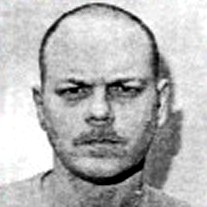
Jimmie Wayne Jeffers
Murderer Ervil LeBaron
Murderer · USA · 1972
Ervil Morrell LeBaron (1925 to August 16, 1981) was the leader of a polygamous…
35 victims
Ervil LeBaron
Murderer · USA · 1972
Ervil Morrell LeBaron (1925 to August 16, 1981) was the leader of a polygamous…
35 victims
 Brian Kevin Rosenfeld
Murderer · USA · 1985
Brian Kevin Rosenfeld Brian Kevin Rosenfeld was sentenced to three concurrent l…
23 victims
Brian Kevin Rosenfeld
Murderer · USA · 1985
Brian Kevin Rosenfeld Brian Kevin Rosenfeld was sentenced to three concurrent l…
23 victims
 Marvin Gray
Murderer · USA · 1975
Marvin Gray was convicted killer who claimed responsibility for 23 slayings and…
23 victims
Marvin Gray
Murderer · USA · 1975
Marvin Gray was convicted killer who claimed responsibility for 23 slayings and…
23 victims
 Yahweh ben Yahweh
Murderer · USA · 1980
Yahweh ben Yahweh was born and legally named Hulon Mitchell Jr. (October 27, 19…
23 victims
Yahweh ben Yahweh
Murderer · USA · 1980
Yahweh ben Yahweh was born and legally named Hulon Mitchell Jr. (October 27, 19…
23 victims
 Jeremy Steinke
Murderer · Canada · 2006
Jeremy Allan Steinke was sentenced to three life sentences on December 15, 2008…
3 victims
Jeremy Steinke
Murderer · Canada · 2006
Jeremy Allan Steinke was sentenced to three life sentences on December 15, 2008…
3 victims
 Ronald Clark O'Bryan
Murderer · USA · 1974
Ronald Clark O'Bryan (also recorded as Ronald C. O’Bryan) was executed by letha…
1 victim
Ronald Clark O'Bryan
Murderer · USA · 1974
Ronald Clark O'Bryan (also recorded as Ronald C. O’Bryan) was executed by letha…
1 victim
 Odell Barnes
Murderer · USA · 1989
Defendant: Odell Barnes (also referred to as Odell Barnes Jr.) · Date of birth:…
1 victim
Odell Barnes
Murderer · USA · 1989
Defendant: Odell Barnes (also referred to as Odell Barnes Jr.) · Date of birth:…
1 victim
 Travis Glass
Murderer · USA · 2001
Travis Glass — defendant; convicted of murdering thirteen year old Steffini Wil…
1 victim
Travis Glass
Murderer · USA · 2001
Travis Glass — defendant; convicted of murdering thirteen year old Steffini Wil…
1 victim
- Gender
- male
- Country
- USA
- Location
- Pima County, Arizona, USA
- Date of birth
- June 7, 1946
- Age at first offence
- 30
- Characteristics
- drugs, revenge
- Victim profile
- Penelope Cheney (his former girlfriend)
- Method of murder
- Strangulation with belt / Overdose of heroin
- Date(s) of murder
- October 20, 1976
- Years active
- 1976
- Date of arrest
- —
- Status
-
Executed
Executed by lethal injection in Arizona on September 13, 1995
Case overview
Jimmie Wayne Jeffers was convicted of the first-degree murder of his former girlfriend, Penelope Cheney, and was sentenced to death. Jeffers was executed by lethal injection in Arizona on September 13, 1995.
Jeffers killed Cheney after luring her to a Tucson motel room with promises of heroin. After poisoning and strangling Cheney, Jeffers beat her body while making statements during the beating, required Doris Van Der Veer to inject more heroin, and later buried the body in a secluded area near Sedona.
Background
In May 1976, Jeffers and his girlfriend, Penelope Cheney, were arrested and jailed on charges of possession of narcotics and receipt of stolen property. Jeffers posted bond for Cheney but was unable to post bond for himself and remained in custody at the Pima County Jail.
While in jail, Jeffers learned that Cheney was cooperating with police by providing information about Jeffers’ heroin transactions. Jeffers wrote a note to another jail inmate offering money if the inmate would kill Cheney. The detention officer who was supposed to deliver the note read it and seized it.
Jeffers was released from jail in October 1976, and moved into a Tucson motel with Doris Van Der Veer about a week later.
The offence
On October 20, 1976, Jeffers lured Cheney to the motel by promising her heroin. When Cheney arrived, Jeffers introduced her to Van Der Veer, and Van Der Veer excused herself.
After about two and a half hours, Van Der Veer returned to the motel room, knocked on the door, and entered when admitted by Jeffers. Jeffers pointed a gun at Van Der Veer, ordered her to sit in a chair and be quiet, and then admitted her into the room where Cheney was lying unconscious on the bed.
Jeffers injected a fluid into Cheney’s hand and told Van Der Veer he had “given her enough shit to kill a horse, and this bitch won’t die.” Van Der Veer noticed foam coming from Cheney’s mouth, which she recognized as a sign of heroin overdose. Van Der Veer checked Cheney’s condition and determined Cheney was still alive. Van Der Veer asked Jeffers if he was going to help Cheney, and Jeffers responded, “No, I'm going to kill her.”
Jeffers removed the belt from around Cheney’s waist and began to choke her with it, then discarded the belt and choked her with his bare hands. Van Der Veer urged Jeffers to stop, stating Cheney would probably die anyway, but Jeffers replied, “No, I've seen her this way before, and she's come out of it.”
After strangling Cheney, Jeffers instructed Van Der Veer to check Cheney’s pulse. Van Der Veer found no pulse and reported that Cheney was dead. Jeffers then ordered Van Der Veer to inject more heroin into Cheney and to choke her while Jeffers took pictures. Van Der Veer complied.
Jeffers told Van Der Veer he did this to have proof that she was an accomplice. Jeffers then beat Cheney with his hands several times, calling her a “bitch” and a “dirty snitch,” and stating, as each blow landed, that:
“ [t] his one is for [naming several names]. ”
Jeffers then dragged Cheney’s body off the bed and placed it in the shower stall. After three days, when the body began to smell, Jeffers and Van Der Veer wrapped the body in newspaper and plastic garbage bags, placed it in a sleeping bag, transported it to a secluded area, and buried it in a shallow grave.
An autopsy showed that Cheney died of a heroin overdose.
Other related actions after the murder
A month later, Sharon Galarza, a friend of Penny Cheney and Jeffers, was arrested on prostitution and drug charges and called Jeffers to suggest that Cheney had set her up. Jeffers told Sharon: “Well, nobody has to worry about her anymore,” and “She’s gone. I killed her.” Jeffers also warned Sharon not to tell anyone, stating he did not act alone.
A few days later, Jeffers invited Sharon to his hotel room with the promise of heroin. When Sharon arrived, Jeffers assaulted her by holding a butcher knife to her throat and forced her, at knifepoint, to inject herself with heroin.
Investigation
Jeffers had received reports while in jail that Cheney was cooperating with police by providing information about Jeffers and certain heroin transactions.
When Jeffers wrote a note offering money to another jail inmate to kill Cheney, the detention officer read the note and seized it.
Arrest and custody
In May 1976, police arrested Jeffers and Penelope Cheney on state-law charges of possession of narcotics and receipt of stolen property.
Jeffers was released from jail on bond in October 1976 pending appeal of his convictions.
Trial
Parties
The trial court proceedings included:
- Presiding Judge: Ben C. Birdsall
- Prosecutors: James Himelic and D. Jesse Smith
Timeline of trial and sentencing
- January 10, 1978 — Start of trial
- February 9, 1978 — Verdict
- April 19, 1978 — Sentencing
- July 10, 1980 — Resentencing
Verdict
A jury convicted Jeffers of the first-degree murder of Cheney.
Sentencing
After the sentencing hearing, the trial court found two aggravating circumstances and no mitigating factors. Jeffers was sentenced to death under the Arizona death penalty statute, including findings beyond a reasonable doubt at the second sentencing hearing.
At the second sentencing hearing, the trial court found:
- grave risk of death to another person (Van Der Veer) in the commission of the murder
- the murder was committed in an especially heinous, cruel, and depraved manner
The trial court found no mitigating factors sufficiently substantial to call for leniency, and resentenced Jeffers to death.
Appeals
Arizona Supreme Court
On direct appeal, the Arizona Supreme Court affirmed the convictions and sentences in State v. Jeffers, 135 Ariz. 404, 661 P.2d 1105 (1983).
The Arizona Supreme Court reversed the trial court’s finding that Jeffers knowingly created a grave risk of death to another person or persons in addition to the victim of the offense, and it rejected the trial court’s cruelty finding.
The Arizona Supreme Court stated that cruelty required pain; it concluded there was no evidence the victim suffered pain because, after the injection of heroin, Cheney lost consciousness and never regained consciousness before she died. The court therefore determined the murder was not “cruel” for purposes of A.R.S. 13-703(F)(6).
However, the Arizona Supreme Court affirmed that the murder was “especially heinous . . . and depraved,” and it described factors for heinousness and depravity. The court concluded that Jeffers:
- climbed on top of the dead victim and hit her in the face several times, causing additional wounds and bleeding
- displayed apparent relish for the crime, evidenced by testimony that while he was beating the dead victim he called her a “bitch” and a “dirty snitch” and stated, as each striking blow landed, that “[t]his one is for” naming several names
The Arizona Supreme Court rejected Jeffers’ contention that the especially heinous, cruel or depraved aggravating circumstance, as construed and applied, was unconstitutionally broad. It stated that each element—cruel, heinous, and depraved—had been narrowly defined and construed to meet constitutional standards, and it stated that the case law had narrowly limited applicability to cases that stand apart from the norm. The Arizona Supreme Court also found no mitigating factors sufficiently substantial to call for leniency and determined aggravating factors outweighed mitigating factors.
The Arizona Supreme Court concluded the death sentence was not disproportionate and performed review pursuant to A.R.S. 13-4035, finding one aggravating factor—especially heinous and depraved—and no mitigating factors sufficiently substantial to call for leniency.
Federal district court and Court of Appeals
Jeffers petitioned for habeas corpus in the United States District Court for the District of Arizona, and the Federal District Court denied the petition. The Court of Appeals for the Ninth Circuit vacated Jeffers’ death sentence on the ground that the especially heinous, cruel or depraved circumstance was unconstitutionally vague as applied to him.
The Ninth Circuit agreed the circumstance was not unconstitutionally vague on its face, but held that applying the statutory standard in this case was arbitrary.
U.S. Supreme Court
The U.S. Supreme Court decided Lewis v. Jeffers, 497 U.S. 764 (1990). The U.S. Supreme Court reversed and remanded the Court of Appeals.
In its decision, the U.S. Supreme Court described the issue as involving federal habeas review of a state court determination that the offense was committed in an especially heinous, cruel or depraved manner. It held that the Court of Appeals erred in holding that Arizona’s construction contravened governing Supreme Court decisions, and it held that the Court of Appeals erred by conducting de novo, case-by-case comparisons of facts from other cases.
The Supreme Court concluded that, under a “rational factfinder” standard, a rational factfinder could have found Jeffers relished the killing and inflicted gratuitous violence on the victim, and it found evidence supported the Arizona Supreme Court’s findings.
Published opinions and case citations (as stated)
State v. Jeffers, 135 Ariz. 404, 661 P.2d 1105 (1983).
Jeffers v. Ricketts, 627 F. Supp. 1334 (D. Ariz. 1986).
Jeffers v. Ricketts, 832 F.2d 476 (9th Cir. 1987).
Lewis v. Jeffers, _ U.S. _, 110 S. Ct. 3287, 111 L. Ed. 2d 606 (1990).
Last meal and final statements
Jeffers’ last meal included:
- 10 ounce steak
- peas
- rolls with butter
- 1 baked potato with shredded Cheddar cheese
- strawberry pie with whipped cream
- large chocolate malt
Jeffers had requested 3 pounds of prime rib, cooked medium rare; a pound of king crab legs; and three lobster tails complete with drawn butter, but prison officials called the request unreasonable due to issues of quantity and availability.
Before his execution, Jeffers gave his executioners the finger and released a string of obscenities.
Execution day details
Jeffers was executed on September 13, 1995 by lethal injection in Arizona. He spent 20 years on Death Row before his execution.
Reporters said Jeffers squirmed and made an obscene gesture as he received the lethal injection while strapped to a gurney. His last words to the Corrections Director, Sam Lewis, were described as “a stream of obscenities,” according to Michael Arra.
The execution had been delayed 17 hours by a series of appeals in which it was argued that his lawyers in 1978 had presented an inadequate defense at his trial and sentencing. The U.S. Supreme Court cleared the way for him to die by rejecting one last appeal on the representation matter, and he was executed within the hour.
A small group of protesters demonstrated opposition to capital punishment by holding a vigil outside the prison gates.
Other details
Jeffers’ age at execution was stated as 49.
Jeffers let loose a string of profanity and died with his middle finger extended toward the witnesses.
Jeffers’ case record referenced Arizona death penalty statutes and related aggravating circumstances, including grave risk of death to another person and “especially heinous, cruel or depraved” manner, and it referenced review and resentencing procedures.
Jeffers was convicted of receiving stolen property and sentenced to 12 years in prison. Shortly after, he was convicted of federal firearms charges and sentenced to 20 years.
Jeffers was convicted of Penny’s murder in 1977.
Sharon Galarza was arrested on drug and prostitution charges and, in return for a nolle prose, told what she knew about Penny’s murder.
Spotted an error, or have more information about this case?