
William Gardner
Mass murderer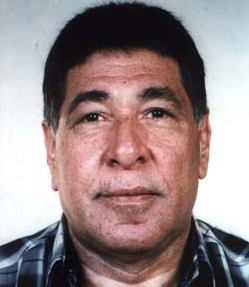 Gameel Al-Batouti
Mass murderer · USA · 1999
Gameel Al-Batouti (also rendered “Gamil ElBatouty” or “El Batouty” in U.S. offi…
216 victims
Gameel Al-Batouti
Mass murderer · USA · 1999
Gameel Al-Batouti (also rendered “Gamil ElBatouty” or “El Batouty” in U.S. offi…
216 victims
 Timothy McVeigh
Mass murderer · USA · 1995
Timothy James McVeigh (April 23, 1968 – June 11, 2001) was a United States Army…
168 victims
Timothy McVeigh
Mass murderer · USA · 1995
Timothy James McVeigh (April 23, 1968 – June 11, 2001) was a United States Army…
168 victims
 Julio Gonzalez
Mass murderer · USA · 1990
Julio Gonzalez was sentenced to 174 twenty-five-year sentences (a total of 4,35…
87 victims
Julio Gonzalez
Mass murderer · USA · 1990
Julio Gonzalez was sentenced to 174 twenty-five-year sentences (a total of 4,35…
87 victims
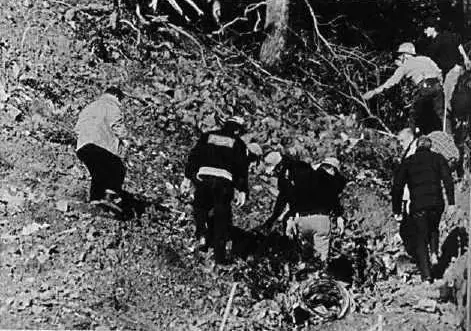 David Burke
Mass murderer · USA · 1987
David Augustus Burke (May 18, 1952–December 7, 1987) was an employee of USAir,…
43 victims
David Burke
Mass murderer · USA · 1987
David Augustus Burke (May 18, 1952–December 7, 1987) was an employee of USAir,…
43 victims
 George Jo Hennard
Mass murderer · USA · 1991
George Jo Hennard carried out a mass killing at a Luby’s Cafeteria in Killeen,…
23 victims
George Jo Hennard
Mass murderer · USA · 1991
George Jo Hennard carried out a mass killing at a Luby’s Cafeteria in Killeen,…
23 victims
 Shawn Bentler
Mass murderer · USA · 2006
Shawn Bentler (born 1983 or 1984) was a convicted murderer from Bonaparte, Iowa…
5 victims
Shawn Bentler
Mass murderer · USA · 2006
Shawn Bentler (born 1983 or 1984) was a convicted murderer from Bonaparte, Iowa…
5 victims
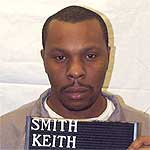 Keith Smith
Murderer · USA · 1991
Keith Smith was prosecuted in the case styled State of Missouri v. Keith A. Smi…
2 victims
Keith Smith
Murderer · USA · 1991
Keith Smith was prosecuted in the case styled State of Missouri v. Keith A. Smi…
2 victims
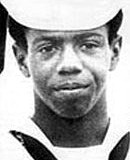 Mark Essex
Spree killer · USA · 1973
Mark James Robert Essex was a Navy veteran who engaged in a shooting and arson…
9 victims
Mark Essex
Spree killer · USA · 1973
Mark James Robert Essex was a Navy veteran who engaged in a shooting and arson…
9 victims
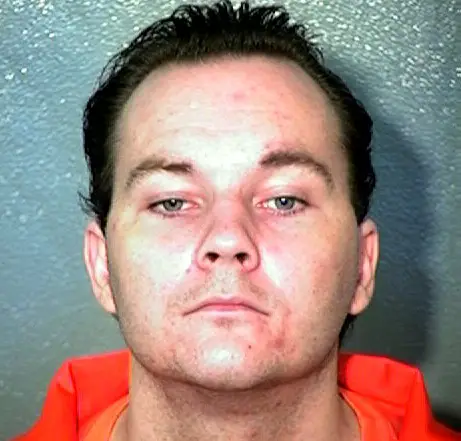 Steven Newell
Murderer · USA · 2001
Steven Newell was known to Elizabeth Byrd because he had dated Elizabeth’s sist…
1 victim
Steven Newell
Murderer · USA · 2001
Steven Newell was known to Elizabeth Byrd because he had dated Elizabeth’s sist…
1 victim
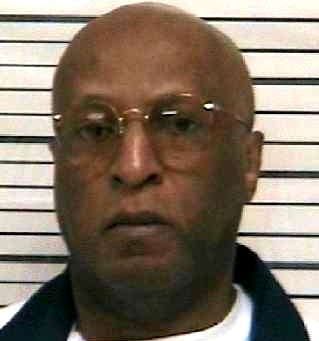 Carzell Moore
Murderer · USA · 1976
Carzell Moore was tried in the Superior Court of Monroe County, Georgia, for th…
1 victim
Carzell Moore
Murderer · USA · 1976
Carzell Moore was tried in the Superior Court of Monroe County, Georgia, for th…
1 victim
- Gender
- male
- Country
- USA
- Location
- Hamilton County, Ohio, USA
- Date of birth
- September 26, 1972
- Age at first offence
- 20
- Characteristics
- robbery, arson
- Victim profile
- Mykkila Mack, 8; Deondra Freeman, 10; Richard Gaines, 11; Markeca Mason, 11, and Denitra Satterwhite, 12
- Method of murder
- Fire ( smoke inhalation)
- Date(s) of murder
- January 26, 1992
- Years active
- 1992
- Date of arrest
- 2 days after
- Status
-
Executed
Executed by lethal injection in Ohio on July 13, 2010
Case information
- Name: William L. Garner
- Inmate number: OSP #A264-900
- DOB: September 26, 1972
- County of conviction: Hamilton County
- Date of offence: January 26, 1992
- Case number: B920826
- Date of sentencing: November 5, 1992
- Presiding judge: Thomas Nurre
- Prosecuting attorney: Arthur M. Ney Jr.
- Institution: Ohio State Penetentiary
Background
In the pre-dawn hours of January 26, 1992, Addie F. Mack was at a local hospital emergency room in Cincinnati, Ohio, for treatment after falling on an icy sidewalk. While in the hospital waiting area, Mack called her son to update him on her status, and she accidentally left her purse unattended by the pay telephone.
The offence
Theft and entry
William Garner took Mack’s purse near a pay telephone in the emergency room area and removed keys, a driver’s license, and a wallet from inside the purse. He used the address from Mack’s driver’s license to direct a taxicab to Mack’s apartment at 1969 Knob Court in Cincinnati. The cab driver was Thomas J. Tolliver.
Garner provided Tolliver with Mack’s wallet as collateral for the cab fare and asked Tolliver to wait while Garner went inside. Garner entered the apartment using keys taken from the purse.
When Garner entered the apartment, he noticed four girls and two boys sleeping. The children’s ages were described as ranging from 8 to 13 in different parts of the record.
One of the girls woke up and asked Garner for a glass of water, and Garner gave her the water and let the child watch television for a few minutes before sending her back to bed. Garner explained his presence in the apartment by telling the girl that he ran into her mother at the hospital and she had sent him to check on the children.
Garner carried several items from the apartment to the taxicab, including a television set, VCR, portable telephone, and a Sony “boom box” radio.
Attempted cover-up by arson
After removing the stolen items, Garner returned to the apartment and set three fires.
- Two fires were set in the mother’s unoccupied bedroom and another unoccupied bedroom; those fires smoldered but eventually went out.
- The third fire was set on the living room couch and quickly consumed the living room and filled the entire apartment with heavy smoke.
Mack’s oldest child, Rod Mack, was awakened by smoke, heard sisters screaming, and saw fire in the hallway outside his bedroom. Rod attempted to get the other children out through a bedroom window and escaped through the window, sliding onto a dormer over the front door, then down.
The other five children aged 8–12 (described as including Rod’s three sisters, a cousin, and a neighbor boy who was spending the night) did not follow him and died inside.
Victims named and ages
- Mykkila Mack, age 8
- Deondra Freeman, age 10
- Richard Gaines, age 11
- Markeca Mason, age 11
- Denitra Satterwhite, age 12
- Rod Mack, age 13 (survived)
Statements about intent
After arrest, Garner admitted entering the home and setting the fire, but said he thought the children would escape. He told police he set the couch on fire to cover fingerprints he suspected he had left on the couch, and he also stated that he intended to create a smoke screen.
He explained his conduct to Tolliver and police by saying that his girlfriend “threw him out” during a fight, and that he was removing his belongings.
Garner purchased snacks at a convenience store, and Tolliver later described Garner’s actions and locations visited during the night.
Investigation
Identification and search
During the investigation, police located Tolliver based on information from two police squad car officers who had observed a young man walking to a Yellow Cab waiting outside the Knob Court address just prior to the time the fire was reported.
Tolliver told police he picked up Garner at the hospital emergency room, drove to 196 Knob Court, waited while Garner entered, and returned with several items. He then drove Garner to a United Dairy Farmers (“UDF”) convenience store and waited while Garner purchased items.
Police recovered a television set from Tolliver which Garner had removed from Knob Court and which Tolliver accepted as collateral in lieu of cab fare when Garner could not pay cash. Police obtained surveillance videotape from the UDF and showed Tolliver still photographs taken from it. Tolliver confirmed the individual shown was his fare based on clothing rather than facial features.
Police then showed Tolliver three photo arrays, two of which contained photographs of Garner. Tolliver identified Garner as the “William” he had transported in both arrays.
Based on information received from Tolliver, police obtained a search warrant and searched the Burnet Avenue residence where Garner had been taken by Tolliver. Police recovered items matching Tolliver’s descriptions, including a VCR, a Sony “boom box”, a portable telephone, a pair of gloves, a set of keys later identified as Mack’s, and copies of Mack’s children’s birth certificates. Police also photographed a UDF grocery bag in a trash can at the residence.
Arrest and Miranda rights
Police arrested Garner in connection with the fire and advised him of his Miranda rights. Garner was interviewed at police headquarters and provided a taped statement describing events from the previous night.
Arrest
Garner was arrested during the search of the Burnet Avenue residence after police had obtained a search warrant. Police advised him of his Miranda rights. Garner was transported to police headquarters and was advised again of his Miranda rights.
Trial
Charges
Garner was indicted and charged with five counts of aggravated felony-murder (R.C. 2903.01[B]). Each count included three death penalty specifications.
He was also charged with:
- aggravated burglary (R.C. 2911.11)
- two counts of aggravated arson (R.C. 2909.02)
- theft
- receiving stolen property
The capital specifications included allegations that the killings were committed for the purpose of escaping detection, apprehension, trial or punishment for aggravated burglary; that the offense was part of a course of conduct involving the purposeful killing of more than one person; and that the offense was committed while Garner was committing or fleeing immediately after committing aggravated burglary and aggravated arson and that he was the principal offender or acted with prior calculation and design.
Plea and guilt-phase verdict
Garner pleaded no contest to the charges of theft and receiving stolen property. The case proceeded to trial on the remaining charges.
A jury found Garner guilty of all charges, including the death penalty specifications.
Rod Mack testified for the prosecution during trial.
Mitigation
After a mitigation hearing, the jury recommended the imposition of the death sentence, and the recommendation was accepted by the trial court.
Psychologists Nancy Schmidtgoessling and Jeffrey Smalldon testified that Garner suffered from organic brain impairment and had an IQ of 76 in the borderline range of intellectual functioning. Dr. Smalldon concluded that Garner had residual attention disorder, borderline intellectual functioning, and a mixed personality disorder with borderline antisocial features. Joseph Schroeder testified on behalf of the state regarding learning disability and lack of organic brain damage.
Pretrial and trial rulings (assignments of error described)
- The trial court overruled a motion to suppress Garner’s taped statement and other statements given to police.
- The trial court denied a motion to suppress identification evidence based on the photo arrays shown to the taxicab driver.
- The trial court denied a motion to increase the number of peremptory challenges allowed in capital cases.
- The trial court excluded prospective jurors during voir dire due to their general opposition to the death penalty.
- The trial court permitted defense counsel to ask whether jurors would consider age as a mitigating factor if instructed by the judge.
- The trial court sustained objections and instructed the jury to disregard certain prosecutorial remarks during voir dire and closing argument; the appellate court described that the conduct did not deprive Garner of a fair trial.
- During trial, a police officer referred to Garner’s use of that address in one of his arrests; the trial court sustained an objection and instructed the jury to disregard the question and answer; a mistrial was denied.
Sentencing
On November 5, 1992, the trial court accepted the jury’s recommendation and sentenced Garner to death on each of the five counts of aggravated murder.
The trial court also sentenced Garner to:
- ten to twenty-five years in prison for aggravated burglary and aggravated arson
- two years in prison for theft and receiving stolen property These terms were to be served consecutively.
Appeals
Direct appeal
The court of appeals affirmed Garner’s convictions and death sentence. The cause was presented on appeal as of right.
On November 22, 1995, the Ohio Supreme Court affirmed Garner’s conviction and death sentence on direct appeal.
Postconviction relief
Following the affirmance on direct appeal, Garner filed a postconviction petition to vacate or set aside the sentence pursuant to R.C. 2953.21. The trial court denied the petition for postconviction relief, and the appellate court affirmed that ruling.
The postconviction appeal described issues raised by Garner, including claims attacking due process in the handling of the petition, claims related to findings of fact and conclusions of law, and claims about appointment of a psychologist and an attorney to assist with discovery and development of postconviction claims.
Federal habeas corpus
Garner filed a petition for a writ of habeas corpus in the federal courts after the denial of state postconviction relief. The district court denied the petition.
In Garner v. Mitchell, 557 F.3d 257 (6th Cir. 2009), the Court of Appeals described that habeas corpus relief was properly denied because Garner validly waived his Miranda rights notwithstanding expert testimony-based in part on a test administered six years later. The opinion stated that Garner was not entitled to habeas relief and affirmed the district court’s judgment.
Habeas results before 2009 (procedural history described)
A panel decision in the Sixth Circuit had reversed Garner’s conviction and death sentence and remanded for further proceedings due to constitutional rights being violated by use of Garner’s confession at trial.
The en banc later described that the waiver was knowing and intelligent and affirmed denial of habeas relief.
Miranda-waiver dispute described
The appellate discussion included that Garner argued he did not understand his right to remain silent and that his waiver was not “knowingly and intelligently” made. A dissenting view described the question as whether Garner had the capacity to understand the warnings and the waiver.
Outcome
Garner’s death sentence was affirmed, and he was executed by lethal injection in Ohio.
Final statement and last meal
Garner read a final statement from a hand-written note held up by an official. The statement included the following:
- “heartily sorry ... my carelessness caused a great loss to many and if my flesh gives you all some kind of peace, I want that for you. If this will give you closure, I hope it will.” Garner apologized to the six family members of the victims. He thanked the state of Ohio, his spiritual advisers, and friend Stacy Evans, who gave him a clipping of her dreadlock to hold as he died. Garner said: “I thought I’d never be free, but I am free now.”
A final words account also included that the warden called out: “Time of death, 10:38 a.m.,” when the curtain opened at 10:39 a.m.
Garner’s final meal was described as a porterhouse steak, fried shrimp, barbecued chicken and ribs, a large salad, potato wedges, onion rings, sweet potato pie, chocolate ice cream, and Hawaiian Punch.
Other details
- The execution took place on July 13, 2010 by lethal injection at the Southern Ohio Correctional Facility.
- An execution account described an approximately ten-minute delay before Garner was pronounced dead, during which “faint heart sounds” were heard despite “no other life signs.”
- The execution account described that the prison used closed-circuit television for witnesses, including Rod Mack, and that other witnesses watched from witness rooms.
- The trial record described mitigation evidence including childhood abuse and sexual abuse, poor schooling, and expert testimony about IQ and organic brain impairment.
- The record listed prior and additional details in connection with confinement and prison conduct, including references to infractions and the naming “Peewee” for Garner.
Spotted an error, or have more information about this case?