Lewis Hutchinson
Serial Killer Alton Coleman
Serial Killer · USA · 1984
Alton Coleman was executed by the state of Ohio for crimes committed during a 1…
8 victims
Alton Coleman
Serial Killer · USA · 1984
Alton Coleman was executed by the state of Ohio for crimes committed during a 1…
8 victims
 Antoine François Desrues
Murderer · France · 1777
Antoine François Desrues (1744–1777) was a French poisoner. Desrues was born at…
2 victims
Antoine François Desrues
Murderer · France · 1777
Antoine François Desrues (1744–1777) was a French poisoner. Desrues was born at…
2 victims
 Rev. James Hackman
Murderer · United Kingdom · 1779
13 December 1752 — James Hackman was baptized at Gosport, Hampshire. · 1772 — H…
1 victim
Rev. James Hackman
Murderer · United Kingdom · 1779
13 December 1752 — James Hackman was baptized at Gosport, Hampshire. · 1772 — H…
1 victim
 Klaas Annink
Murderer · Netherlands · 1774
Klaas Annink (June 18, 1710 – September 13, 1775), better known as Huttenkloas,…
Klaas Annink
Murderer · Netherlands · 1774
Klaas Annink (June 18, 1710 – September 13, 1775), better known as Huttenkloas,…
 Michael Zabawa
Murderer
Michael Zabawa was a Minnesota man who lived in Matawan, and he worked at a hog…
2007 victims
Michael Zabawa
Murderer
Michael Zabawa was a Minnesota man who lived in Matawan, and he worked at a hog…
2007 victims
 Clinton Lee Young
Murderer · USA
Clinton Lee Young (born July 19, 1983) was convicted of murdering two men in No…
2001 victims
Clinton Lee Young
Murderer · USA
Clinton Lee Young (born July 19, 1983) was convicted of murdering two men in No…
2001 victims
 Daniel Dougherty
Murderer · USA · 1985
Daniel Dougherty Daniel Dougherty lived with a girlfriend at the time of the fi…
2 victims
Daniel Dougherty
Murderer · USA · 1985
Daniel Dougherty Daniel Dougherty lived with a girlfriend at the time of the fi…
2 victims
 Anthony Bell
Spree killer · 2006
Anthony Bell was convicted of killing his wife and four in-laws in a May 2006 s…
5 victims
Anthony Bell
Spree killer · 2006
Anthony Bell was convicted of killing his wife and four in-laws in a May 2006 s…
5 victims
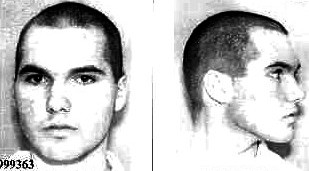 Whitney Lee Reeves
Homicide · USA · 1999
Whitney Lee Reeves (TDCJ Number 999363) was born on 08/21/1981. He was male, ha…
2 victims
Whitney Lee Reeves
Homicide · USA · 1999
Whitney Lee Reeves (TDCJ Number 999363) was born on 08/21/1981. He was male, ha…
2 victims
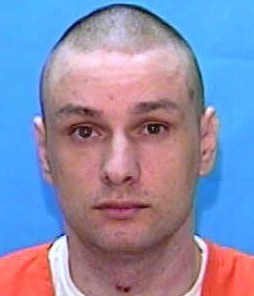 Jason James Mahn
Murderer · USA · 1993
Jason James Mahn. Jason James Mahn’s parents divorced in Wisconsin in 1974 when…
2 victims
Jason James Mahn
Murderer · USA · 1993
Jason James Mahn. Jason James Mahn’s parents divorced in Wisconsin in 1974 when…
2 victims
- Gender
- male
- Country
- Jamaica
- Location
- Jamaica
- Date of birth
- 1733
- Age at first offence
- 40
- Characteristics
- thrill killing
- Victim profile
- Travellers
- Method of murder
- Shooting
- Date(s) of murder
- 1760s - 1773
- Years active
- 1773
- Date of arrest
- —
- Status
-
Executed
Executed by hanging in Spanish Town on March 16, 1773
Case record: Lewis Hutchinson
Lewis Hutchinson was a Scottish doctor and an early recorded serial killer in Jamaica.
Background
Edinburgh Castle was located in the Pedro district of St. Ann, on a low hill near the main road from St. Ann’s Bay to Jamaica’s south side. The ruins of Edinburgh Castle stood as a small and square building with two storeys and two circular loop-holed towers placed diagonally at opposing corners. The building had a door at one side of the front angle and another near the front tower on the east side.
Lewis Hutchinson came to Jamaica in the 1760s to head an estate called Edinburgh Castle. He was also known as “the mad doctor,” “the Mad Master,” and “the Mad Master and Mad Doctor of Edinburgh Castle.”
Hutchinson was said to have legally obtained the house and property, while his cattle keeping was also described as being maintained through the theft of strays from neighbours. He owned several enslaved persons who were said to have done his bidding in connection with the killings.
The offence
Travellers were reported to have disappeared after stopping at Edinburgh Castle or travelling past the property. Hutchinson killed for sport, described as “what may be described as a thrill killing,” and passers-by from all races, shapes, sizes, and incomes were said to be “fair game.”
Hutchinson was described as shooting lone passer-by with a single shot. He was said to have forced enslaved persons to throw victims’ bodies into a sinkhole on the property. That sinkhole became known as “Hutchinson’s Hole.” It was also said that victims were dismembered, and that Hutchinson fed on the flow of blood, with remains left for animals such as vultures to feast on.
At the height of his killings, Hutchinson was said to have invited victims to his castle to be entertained before being killed. His reputation for debauchery made people avoid him out of fear. Hutchinson’s slaves’ tales of terrible treatment and gruesome details of the murders made him legendary.
Investigation
Cases of travellers disappearing without a trace began to mount after Hutchinson’s arrival. Edinburgh Castle was described as the only inhabited location for miles on the way from Saint Ann’s Bay to the south side of the island, which meant travellers often rested at the castle without knowing they would become the target of Hutchinson’s rifle.
The killings and stories about Hutchinson’s methods were described as being hard to verify at the time, and people preferred to leave him alone rather than attempt to have him arrested, because of the unsettled and lawless state of the island.
Even Dr. Hutton’s report to officials about an attack on him while he was on the route to join his wife and daughter in Kingston did not persuade officials to apprehend Hutchinson.
Attempted apprehension and escape
Hutchinson attacked his unarmed neighbour Dr. Hutton, causing a silver plate to be worn in Dr. Hutton’s head for the remainder of his life. After that, the young English soldier John Callendar set out to bring Hutchinson in. Hutchinson shot Callendar on sight.
Hutchinson then fled south to Old Harbour and boarded a ship. The Royal Navy was said to have been keeping watch, commanded by Admiral Rodney. Hutchinson’s escape vessel was intercepted.
Hutchinson made a last attempt to escape by leaping overboard, but his flaming red hair betrayed him. Men from the warship rescued him, took him into port, and later sent him on to Spanish Town for trial.
Admiral Rodney was congratulated by Jamaica’s House of Assembly for his assistance in apprehending Hutchinson and placing him behind bars.
Trial
Legal proceedings against Hutchinson began after he was apprehended. Edinburgh Castle was searched, and Hutchinson’s slaves were described as giving information about crimes and victims.
Hutchinson pleaded not guilty to the charges laid against him. During the trial, it was found out that Hutchinson had not acted alone; a group of like-minded individuals were described as participating and watching enthusiastically.
Hutchinson was tried, found guilty, and condemned to death by hanging in Spanish Town Square. The records of his trial stood in the National Archives.
The trial also involved other individuals:
- Plantier James Walker was found guilty and condemned to death for the murder of farmer William Lickley.
- Roger Maddix was tried, found guilty, and condemned to death for his own parts in the murder of farmer William Lickley and schoolmaster Timothy Cronin.
- Maddix’s wife, Dorcas, and a Miss Susanna Cole and a Miss Elizabeth Thomas watched schoolmaster Cronin’s death by strangulation while pinioned in stocks. Cronin’s watch and seal were later found in Elizabeth Thomas’ possession. Miss Thomas was tried, pled not guilty, and received judgment as such.
The trial narratives included quotations about the evidence and Hutchinson’s activities.
"The castle was searched and forty-three watches were said to have been found there, besides quantities of clothing and many other articles, showing that Hutchinson had committed most, if not all, of the murders with which he was popularly credited. His unfortunate slaves, to whom, as may be supposed, he had been friendly, came now gladly and told all that they know about his proceedings, and shows what he used to do with the bodies of his victims, which had hitherto been a puzzle."
Sentencing
Hutchinson was condemned to death by hanging in Spanish Town Square.
Appeals
No appeal information was provided.
Outcome
Lewis Hutchinson was hanged in Spanish Town on March 16, 1773.
Aftermath
After Hutchinson’s arrest and the search of his home, approximately 43 watches and a large amount of clothing were found.
Hutchinson was said to have left funds to inscribe an epitaph on his marble tombstone, but his wishes were ignored, and the epitaph was described as never being inscribed on stone.
"Their sentence, pride and malice, I defy. Despise their power, and like a Roman, die"
The ruins of Edinburgh Castle remained and were described as being listed among Jamaica National Heritage Trust’s (JNHT) historic sites of interest. It was said that people in the neighbouring community stayed far from the place, and that the ghosts of murdered victims were believed to roam the ruins, especially at night.
Other details
Edinburgh Castle was built by Lewis Hutchinson and was described as a two-storey “castle” with two circular loop-holed towers placed diagonally at opposite corners.
A description of Hutchinson’s birth and education was included: Hutchinson was born in Scotland in 1733, where he was believed to have studied medicine for a while.
The case narratives referenced two surviving accounts of Hutchinson’s crimes: one penned by Rev. George Bridges in The Annals of Jamaica, Vol. 2 (1828) based on testimony from a former Hutchinson slave, and the other written by Annie E. Cork (Cundall 1915, pp. 296-299), described as the great-great-grand-daughter of Dr. Jonathan Hutton, one of Hutchinson’s neighbours and a survivor of one of his attacks.
An excerpt quoted from Annie E. Cork’s account said:
"About the year 1768 there lived at Edinburgh Castle, in the Pedro district of St. Ann, Jamaica, a desperado called Lewis Hutchinson. He owned the property on which he lived, and was said to have been a man of some education but he was the terror of the neighbourhood, and it was not infrequent for a white man to disappear mysteriously, and it would then be said that Hutchinson had made a way with him by shooting him as he passed the ‘Castle,’ which was furnished with loopholes and overlooked the road. But these stories were hard to verify, and such was the unsettled and lawless state of the Island in those days that people preferred to leave Hutchinson alone, rather than attempt to have him arrested."
Another excerpt quoted from Rev. Bridges’ account described Hutchinson’s methods and included:
"Yet no traveller who attempted that defile, however poor or wretched he might be, ever escaped the confines of their owner’s narrow territory. The needy wanderer would sometimes call for refreshment at the only habitation which for many miles had cheered his weary eye, but it was the last he was destined ever to behold. The wealthy passenger was alike the mark and victim of his unerring aim from a loop-hole under which he was compelled to pass. A thick-set hedge of logwood had also been so prepared by the road-side, at a short distance from the house, that while he could detain in conversation any one who might pass during the time that he was engaed in his cattle-fold hard by, his slaves from behind the fence could leisurely take aim at the devoted victim. … To enjoy the gory spectacle, he first dissevered the ghastly head from the palpitating body: his most pleasing occupation was to whet his streaming knife; the gloomy temper of his soul was sated only by a copious flow of blood; and when he could no longer gaze upon the decaying countenance, he placed it high in the air, in the hollow trunk of a cotton tree, where vultures might complete the horrid deed. The mangled carcass was thrown down one of those deep and hollow drains which are peculiar to mountainous countries of volcanic origin, and whose mouths, descending perpendicularly, conduct the torrents which periodically fall to the level of the ocean."
Another quoted statement about Hutchinson’s escape attempt included:
” in this too he was thwarted for, we are told, his flaming red hair betrayed his presence even when he dived and he was eventually rescued by men from the warship, taken into port and later sent on to Spanish Town for trial.”
It was stated that the final count of people murdered by Hutchinson would never be known.
Lewis Hutchinson was described as “Jamaica’s earliest recorded serial killer” and “one of its most prolific.” Frank Cundall (1915, pg. 295) was quoted saying:
“Amongst evil-doers mentioned in Jamaica history, Lewis Hutchinson of Edinburgh Castle holds a high place.”
Clinton V. Black (1966, pg. 80) was quoted saying Hutchinson was the most feared and hated man of his day and that:
“the most detestable and abandoned villain that ever disgraced the human species.”
The epitaph quoted above was described as the two-line inscription Hutchinson left funds for, while also being stated that it was never inscribed on stone.
Spotted an error, or have more information about this case?