
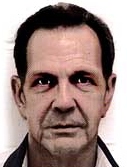
George Clifton Gilmore
Murderer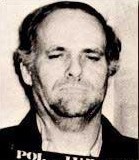 Ervil LeBaron
Murderer · USA · 1972
Ervil Morrell LeBaron (1925 to August 16, 1981) was the leader of a polygamous…
35 victims
Ervil LeBaron
Murderer · USA · 1972
Ervil Morrell LeBaron (1925 to August 16, 1981) was the leader of a polygamous…
35 victims
 Brian Kevin Rosenfeld
Murderer · USA · 1985
Brian Kevin Rosenfeld Brian Kevin Rosenfeld was sentenced to three concurrent l…
23 victims
Brian Kevin Rosenfeld
Murderer · USA · 1985
Brian Kevin Rosenfeld Brian Kevin Rosenfeld was sentenced to three concurrent l…
23 victims
 Marvin Gray
Murderer · USA · 1975
Marvin Gray was convicted killer who claimed responsibility for 23 slayings and…
23 victims
Marvin Gray
Murderer · USA · 1975
Marvin Gray was convicted killer who claimed responsibility for 23 slayings and…
23 victims
 Yahweh ben Yahweh
Murderer · USA · 1980
Yahweh ben Yahweh was born and legally named Hulon Mitchell Jr. (October 27, 19…
23 victims
Yahweh ben Yahweh
Murderer · USA · 1980
Yahweh ben Yahweh was born and legally named Hulon Mitchell Jr. (October 27, 19…
23 victims
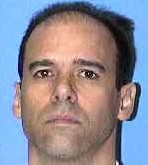 Reinaldo Dennes
Murderer · USA · 1996
Reinaldo Dennes was born in Havanna, Cuba, on 2/9/56. His family came to the US…
1 victim
Reinaldo Dennes
Murderer · USA · 1996
Reinaldo Dennes was born in Havanna, Cuba, on 2/9/56. His family came to the US…
1 victim
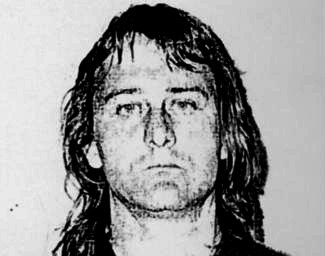 Andrew Garforth
Murderer · Australia · 1992
Andrew Peter Garforth (born August 8, 1963) was an Australian criminal. He was…
1 victim
Andrew Garforth
Murderer · Australia · 1992
Andrew Peter Garforth (born August 8, 1963) was an Australian criminal. He was…
1 victim
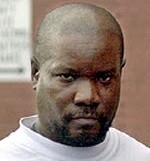 Ronald Taylor
Murderer · USA · 2000
Ronald Taylor was a 39-year-old man from Wilkinsburg who went on a racially mot…
3 victims
Ronald Taylor
Murderer · USA · 2000
Ronald Taylor was a 39-year-old man from Wilkinsburg who went on a racially mot…
3 victims
 Troisville Sykes
Homicide · USA · 1883
Troisville Sykes. Kate Townsend was Troisville Sykes’s mistress. She owned a ho…
1 victim
Troisville Sykes
Homicide · USA · 1883
Troisville Sykes. Kate Townsend was Troisville Sykes’s mistress. She owned a ho…
1 victim
 Elfriede Blauensteiner
Serial killer · Austria · 1981
Elfriede Blauensteiner (born 22 January 1931 in Vienna; died 18 November 2003)…
5 victims
Elfriede Blauensteiner
Serial killer · Austria · 1981
Elfriede Blauensteiner (born 22 January 1931 in Vienna; died 18 November 2003)…
5 victims
- Gender
- male
- Country
- USA
- Location
- St. Louis County, Missouri, USA
- Date of birth
- August 6, 1946
- Age at first offence
- 33
- Characteristics
- alcohol, attempted rape, murder for hire, police officer, robbery
- Victim profile
- Elderly men and women
- Method of murder
- Shooting
- Date(s) of murder
- 1979 - 1980
- Years active
- 1979–1980
- Date of arrest
- January 2, 1981
- Status
-
Executed
Executed by lethal injection on August 31, 1990, at the Potosi Correctional Center in Missouri; the Supreme Court refused to block the execution and affirmed that appeals failed to stop the execution
Case details
George Clifton Gilmore was executed on August 31, 1990.
Background
George Clifton Gilmore lived in a trailer with his brother Norman and Leonard Laws, along with several members of the Gilmore family. All three men were unemployed. After some discussion, they decided the easiest way to make money would be to “rob old people.” They agreed they would kill the victims to prevent them from identifying any of the three perpetrators.
The offence
Late in the evening of October 28, 1980, Gilmore, his brother Norman, and Leonard Laws met and decided to rob Clarence and Lottie Williams.
In the early morning hours of October 29, 1980, they went to the Williams’s home, roused Mr. Williams, and convinced him to open his front door. They took Mr. Williams to his bedroom where he and Mrs. Williams were bound with clothesline. They ransacked the home and took several items to their vehicle.
Gilmore and Norman returned to the Williams’s bedroom. Gilmore shot Mr. Williams with a twelve gauge shotgun; he reloaded the weapon and then shot Mrs. Williams. Thereafter, kerosene was spread throughout the home. Mr. Williams had not been killed by the first shotgun blast and attempted to escape when he saw the kerosene being spread throughout his home. Gilmore stopped the escape by shooting Mr. Williams a second time.
Several weeks after the murders, Gilmore discussed the crimes with two relatives, Robert Gilmore and Bobby DeClue. After confirming the story by a visit to the site of the Williams’s home and speaking to Norman Gilmore, DeClue and Robert Gilmore reported the incident to police and agreed to help apprehend the three perpetrators.
Gilmore testified at trial that he denied murdering Watters, and he testified that at the time of the murder he was an alcoholic and had been taking “speed” and “acid.”
Investigation and arrest
On January 2, 1981, DeClue and Robert Gilmore tricked Leonard Laws and Gilmore into leaving their trailer, after which they were arrested at a police roadblock. Norman Gilmore was arrested at a house in Franklin County, Missouri.
Trial
Gilmore’s conviction and death sentence were affirmed in State v. Gilmore, 661 S.W.2d 519, 521-22 (Mo. 1983) (en banc), cert. denied, 466 U.S. 945, 104 S.Ct. 1931, 80 L.Ed.2d 476 (1984).
In the penalty phase, the jury found statutory aggravating circumstances that Gilmore murdered Mary Luella Watters for the purpose of receiving money or any other thing of monetary value, Mo.Rev.Stat. Sec. 565.012.2(4) (repealed), and for the purpose of preventing her from testifying at a judicial proceeding, Id. Sec. 565.012.2(12) (repealed).
As additional aggravating circumstances, the jury found that Gilmore had six prior criminal convictions, and after viewing Gilmore’s videotaped confession, that he had murdered Lottie and Clarence Williams.
During the penalty phase, the only mitigating evidence that Gilmore offered was the testimony of Elaine Sluce, who taught Gilmore when he was a thirteen-year-old student in 1959 in her special education class. Sluce, who also testified at trial, offered her belief that Gilmore had been abused as a child.
Gilmore also presented the testimony of Dr. Peter Heinbecker, a psychiatrist who had examined Gilmore four times between September 1981 and February 1982. Dr. Heinbecker testified that Gilmore’s mental abilities were in the borderline mentally retarded range and that he functioned intellectually at the level of a twelve-year-old boy.
Sentencing
Gilmore was sentenced to death.
The authorities said Gilmore and his partner, Leonard Laws, killed five people in a crime spree in the St. Louis area, singling out elderly or helpless people for robbery and murder. Mr. Laws was executed in May.
Appeals
United States Court of Appeals for the Eighth Circuit
Gilmore appealed from the district court’s order denying his second petition for a writ of habeas corpus challenging his conviction and death sentence for the 1979 murder of Mary Luella Watters.
The appeal was docketed as 908 F.2d 385, George C. Gilmore, Appellant, v. Paul Del[o], Superintendent, Potosi Correctional Center, Appellee, No. 89-2234.
- Submitted April 12, 1990
- Decided July 16, 1990
- Before ARNOLD, Circuit Judge, FLOYD R. GIBSON and HENLEY, Senior Circuit Judges
- HENLEY, Senior Circuit Judge
The district court denied the petition on the basis that all but one ground raised in the petition had been raised in his first petition and rejected by the court in Gilmore v. Armontrout, 861 F.2d 1061 (8th Cir. 1988), cert. denied, --- U.S. ----, 109 S.Ct. 3176, 104 L.Ed.2d 1037 (1989).
As to the remaining ground, the district court rejected Gilmore’s contention that a unanimity requirement in a death-penalty phase instruction violated Mills v. Maryland, 486 U.S. 367, 108 S.Ct. 1860, 100 L.Ed.2d 384 (1988).
The Eighth Circuit affirmed the district court’s denial of the petition, and it rejected the Mills issue on procedural grounds. It stated that Gilmore’s failure to raise the Mills claim in his first petition constituted an abuse of the writ. It also stated that consideration of the Mills claim would be procedurally barred by Gilmore’s failure to raise it in state court.
The court explained that in death-penalty cases it is, with some exceptions, an abuse of the Great Writ to assert new grounds for relief that were available at the time of an initial petition, and it described the application of procedural-bar “cause” and “prejudice” and the “factual innocence” exception in connection with the abuse-of-the-writ defense. The court stated that Gilmore had not demonstrated cause and that the innocence exception was unavailable to him.
The Eighth Circuit wrote:
If it be suggested that the point is a novel one, ... the Mills opinion itself stands as refutation. The case is written as a standard application of the rule that juries must be free to consider any and all evidence as a mitigating factor. This has been a familiar feature of the legal landscape since 1978, when Lockett v. Ohio, 438 U.S. 586 [98 S.Ct. 2954, 57 L.Ed.2d 973] was decided. The tools with which to make a Mills argument were available ... when this case was tried.
Id. Accord Stokes v. Armontrout, 893 F.2d 152, 155-56 (8th Cir.1989).
The Eighth Circuit also wrote:
Gilmore's "failure to make a Mills-type argument before the Missouri courts bars ... consideration of the claim...." Id. at 156.
It further wrote:
Also, as in Smith and Stokes, Gilmore's "effort to bring himself within the innocence exception fails." Id.
The court quoted:
'The question is this: if the jury had been told, in compliance with Mills, that any mitigating circumstance, even if not unanimously found by the jury, could be weighed, would it probably have fixed the punishment at life in prison?'
It stated that on that question the burden was on the petitioner and that, based on the whole trial transcript, he had not carried it.
The court noted the statutory aggravating circumstances and additional aggravating circumstances found by the jury, and it described the mitigating evidence offered at the penalty phase.
The Eighth Circuit stated that:
Accordingly, we affirm the judgment of the district court denying Gilmore's second petition for a writ of habeas corpus.
It added that it expressed no view on the constitutionality of the challenged instruction but only affirmed the Mills issue on procedural grounds.
The court wrote:
Gilmore's "constitutional claim is beyond our reach."
The stay of execution remained in effect pending any timely petition for rehearing and mandate.
The Eighth Circuit included a description of the challenged instruction, quoting it verbatim:
If you decide that a sufficient aggravating circumstance or circumstances exist to warrant the imposition of death, as submitted in Instruction No. 26, it will then become your duty to determine whether a sufficient mitigating circumstance or circumstances exist which outweigh such aggravating circumstance or circumstances so found to exist. In deciding that question you may consider all of the evidence relating to the murder of Mary Luella Watters. You may also consider whether the capacity of the defendant to appreciate the criminality of his conduct or to conform his conduct to the requirements of law was substantially impaired. You may also consider any circumstances which you find from the evidence in extenuation or mitigation of punishment. If you unanimously decide that a sufficient mitigating circumstance or circumstances exist which outweigh the aggravating circumstance or circumstances found by you to exist, then you must return a verdict fixing defendant's punishment at imprisonment for life by the Division of Corrections without eligibility for probation or parole until he has served a minimum of fifty years of his sentence.
Supreme Court and other federal proceedings
The Supreme Court refused by a 6-to-1 vote to block Gilmore’s death. Justice Thurgood Marshall dissented. Justice Antonin Scalia did not take part in the case. Federal District Judge Edward L. Filippine dismissed Gilmore’s appeals. The United States Court of Appeals for the Eighth Circuit, in St. Louis, also dismissed Gilmore’s appeals.
Appeals were pursued by Gilmore’s lawyers, Kevin Collins and James Delworth.
The arguments asserted in the lawyers’ appeals included claims that mitigating evidence had not been considered earlier. William L. Webster, the Missouri Attorney General, rejected those arguments. Dale Riley, a prison spokesman, said:
"He had no last words,"
Outcome
Gilmore was declared dead at 12:10 A.M. at the maximum-security Potosi Correctional Center. The execution used sodium pentothal, Pavlon, and potassium chloride delivered through a tube into Gilmore’s arm. Gilmore was strapped to a gurney and covered to his chin by a blanket. He strained at first to see his friends and appeared to say, “I love you.” Two minutes later he was declared dead. A series of appeals failed to stop the execution.
Gilmore was executed for killing Mary Luella Watters, 83, in August 1979. He had received the death sentence for three other murders and was given a life sentence for a fourth.
People involved
- George Clifton Gilmore — condemned man
- Norman Gilmore — brother of George Clifton Gilmore; arrested at a house in Franklin County, Missouri
- Leonard Laws — partner of Gilmore; arrested at a police roadblock; executed in May
- Clarence Williams — victim; bound with clothesline; shot with a twelve gauge shotgun; survived first shotgun blast and attempted to escape; shot a second time
- Lottie Williams — victim; bound with clothesline; shot
- Robert Gilmore — relative who, with Bobby DeClue, reported the incident to police and agreed to help apprehend the perpetrators
- Bobby DeClue — relative who, with Robert Gilmore, reported the incident to police and agreed to help apprehend the perpetrators
- Mary Luella Watters — victim; 83 years old; murdered in August 1979
- Elaine Sluce — witness who taught Gilmore in 1959 in her special education class; testified in mitigation about abuse as a child
- Dr. Peter Heinbecker — psychiatrist who examined Gilmore four times between September 1981 and February 1982; testified about borderline mentally retarded range and intellectual functioning at the level of a twelve-year-old boy
- Paul Del[o] — Superintendent, Potosi Correctional Center; appellee in the habeas appeal
- Kevin Collins and James Delworth — lawyers for Gilmore
- William L. Webster — Missouri Attorney General
- Edward L. Filippine — Federal District Judge
- Dale Riley — prison spokesman who stated: “He had no last words”
- Justice Thurgood Marshall — dissented
- Justice Antonin Scalia — did not take part in the case
- Supreme Court justices — Supreme Court vote referenced as 6-to-1 refusal to block execution
- Justice names and roles are referenced in the appellate and execution discussion
Timeline
- October 28, 1980 — Gilmore, Norman Gilmore, and Leonard Laws met and decided to rob Clarence and Lottie Williams.
- October 29, 1980 — Gilmore and the others roused Mr. Williams, convinced him to open the front door, bound Mr. and Mrs. Williams with clothesline, ransacked the home, shot Mr. Williams (first and second times) and shot Mrs. Williams, and spread kerosene throughout the home.
- August 1979 — Gilmore was executed for the murder of Mary Luella Watters.
- January 2, 1981 — DeClue and Robert Gilmore tricked Leonard Laws and George Gilmore into leaving their trailer; both were arrested at a police roadblock; Norman Gilmore was arrested at a house in Franklin County, Missouri.
- September 1981 — Dr. Peter Heinbecker began examining Gilmore (one of four examinations).
- February 1982 — Dr. Peter Heinbecker completed examinations of Gilmore (final examination in the set).
- April 12, 1990 — The habeas appeal was submitted to the United States Court of Appeals for the Eighth Circuit.
- July 16, 1990 — The habeas appeal was decided by the United States Court of Appeals for the Eighth Circuit.
- August 31, 1990 — Gilmore was executed by lethal injection in Missouri and declared dead at 12:10 A.M.
Other details
A brother, a niece and a fiancee who were not identified wept and covered their faces with their hands as officials announced the execution.
The condemned man’s age was stated as 44 years old in the execution discussion.

Spotted an error, or have more information about this case?