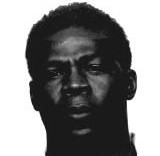
Kenneth Granviel
Mass murderer Francisco Paula Gonzales
Mass murderer · USA · 1964
Francisco Paula Gonzales was a passenger on Pacific Air Lines Flight 773. Gonza…
44 victims
Francisco Paula Gonzales
Mass murderer · USA · 1964
Francisco Paula Gonzales was a passenger on Pacific Air Lines Flight 773. Gonza…
44 victims
 James Huberty
Mass murderer · USA · 1984
James Oliver Huberty was a 41-year-old unemployed security guard. He was born i…
21 victims
James Huberty
Mass murderer · USA · 1984
James Oliver Huberty was a 41-year-old unemployed security guard. He was born i…
21 victims
 Charles Whitman
Mass murderer · USA · 1966
Charles Joseph Whitman (June 24, 1941 – August 1, 1966) shot and killed 14 peop…
15 victims
Charles Whitman
Mass murderer · USA · 1966
Charles Joseph Whitman (June 24, 1941 – August 1, 1966) shot and killed 14 peop…
15 victims
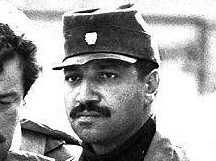 George Emil Banks
Mass murderer · USA · 1982
George Emil Banks was an American mass murderer and a former Camp Hill prison g…
13 victims
George Emil Banks
Mass murderer · USA · 1982
George Emil Banks was an American mass murderer and a former Camp Hill prison g…
13 victims
 James Edward Pough
Mass murderer · USA · 1971
James Edward Pough (1948 – 18 June 1990) was an American mass murderer. On 18 J…
12 victims
James Edward Pough
Mass murderer · USA · 1971
James Edward Pough (1948 – 18 June 1990) was an American mass murderer. On 18 J…
12 victims
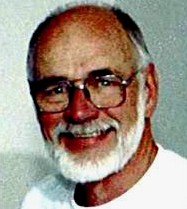 Robert Spangler
Murderer · USA · 1978
Robert Spangler was prosecuted after the deaths of his wife and children in Col…
4 victims
Robert Spangler
Murderer · USA · 1978
Robert Spangler was prosecuted after the deaths of his wife and children in Col…
4 victims
 Leslie Galloway
Murderer · USA · 2008
Leslie Galloway III, also known as Leslie Galloway and Leslie “Bo” Galloway, II…
1 victim
Leslie Galloway
Murderer · USA · 2008
Leslie Galloway III, also known as Leslie Galloway and Leslie “Bo” Galloway, II…
1 victim
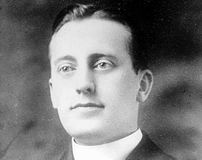 Hans Schmidt
Murderer · USA · 1913
Hans Schmidt was a Roman Catholic priest and was ordained in Germany in 1904. H…
1 victim
Hans Schmidt
Murderer · USA · 1913
Hans Schmidt was a Roman Catholic priest and was ordained in Germany in 1904. H…
1 victim
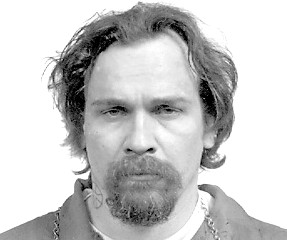 Jerry Thompson
Murderer · USA · 1991
Jerry Thompson was convicted of two counts of murder, two counts of felony-murd…
3 victims
Jerry Thompson
Murderer · USA · 1991
Jerry Thompson was convicted of two counts of murder, two counts of felony-murd…
3 victims
 Tasha Bates
Murderer · USA · 2012
Tasha Bates was the mother of two boys, Leland Bates (5) and River Bates (3). T…
2 victims
Tasha Bates
Murderer · USA · 2012
Tasha Bates was the mother of two boys, Leland Bates (5) and River Bates (3). T…
2 victims
 Luis Aguilar Perez
Murderer · USA · 1984
Luis Aguilar Perez was convicted of sexually assaulting and attempting to murde…
2 victims
Luis Aguilar Perez
Murderer · USA · 1984
Luis Aguilar Perez was convicted of sexually assaulting and attempting to murde…
2 victims
- Gender
- male
- Country
- USA
- Location
- Tarrant County, Texas, USA
- Date of birth
- —
- Characteristics
- rape
- Victim profile
- 5 women and 2 children
- Method of murder
- St abbing with knife
- Date(s) of murder
- 1974 - 1975
- Years active
- 1974–1975
- Date of arrest
- February 8, 1975 (surrenders)
- Status
-
Executed
Executed by lethal injection in Texas on February 27, 1996
Case record: Kenneth Granviel
Status and outcome
Kenneth Granviel was executed by lethal injection in Texas on February 27, 1996. He was originally sentenced to death, and his federal habeas corpus petition relief from that death sentence was denied; the federal district court denied the requested relief and dismissed the petition in August 1988, and the United States Court of Appeals for the Fifth Circuit affirmed in a decision that ended with “We affirm.”
Background
Kenneth Granviel confessed to the torture and murder of six women and one of the victim's two-year-old son on February 8, 1975.
He was described as a former machinist and declined to give a last statement. He was pronounced dead at 6:20 P.M., eight minutes after the lethal drugs began flowing into his arms.
Defense lawyers argued that Kenneth Granviel should not have been executed because he was mentally incompetent and because the state failed to provide for a defense psychiatrist at his trial, at which he raised an insanity defense.
Kenneth Granviel was tried only for the murder of 2-year-old Natasha McClendon, who was stabbed to death along with her mother and three other relatives in Fort Worth on Oct. 7, 1974.
Kenneth Granviel surrendered to the police on Feb. 8, 1975, after raping a woman and abducting another and holding several people hostage at a house in Fort Worth. He later admitted killing two female friends who had been raped and stabbed with a knife.
The offence
Kenneth Granviel was indicted for the murder of Natasha McClendon committed in the course of aggravated rape. The murder underlying the capital case was the stabbing to death of Natasha McClendon, alongside her mother and three other relatives in Fort Worth on Oct. 7, 1974.
A series of attacks included assaulting four women, fatally stabbing two others, and slaughtering two children.
The fatal stabbing for which he was executed involved tying and gagging the 2-year-old girl and four members of her family, and then stabbing them all with a butcher knife.
Investigation and confession
On February 8, 1975, Kenneth Granviel voluntarily entered the police station accompanied by his pastor, and requested to speak to an officer. He orally confessed to committing seven murders and five rapes.
He and two detectives then went to the apartment containing Kenneth Granviel’s latest victims, neither of whom was Natasha McClendon. After returning to the station, the oral confession was reduced to writing, and Kenneth Granviel was asked to sign the typed confession.
The alleged invocation of the right to counsel occurred after the voluntary oral confession and prior to signing the written confession. Kenneth Granviel stated that he wanted to ask a lawyer a legal question regarding the title to his car. He was provided a phone book and a phone. Kenneth Granviel shrugged off the phone, saying it was not important, and signed the written confession.
At trial, the defense objected to the introduction of the confession on the ground that it was given involuntarily and without the assistance of counsel. The trial court conducted a hearing outside the presence of the jury and overruled the objection, citing Jackson v. Denno, 378 U.S. 368, 84 S.Ct. 1774, 12 L.Ed.2d 908 (1964).
The federal appellate decision described that “While the right to counsel during interrogation is an important element of an effective right against self-incrimination, Granviel's statement did not invoke the right.” The appellate decision stated: “Granviel's statement unambiguously referred to matters unrelated to his confession and interrogation.”
Arrest
Kenneth Granviel was arrested on suspicion of rape in 1976.
Trial
Kenneth Granviel was indicted seven years later in July 1982 for the murder of Natasha McClendon committed in the course of aggravated rape. His trial began in March 1983.
On May 5, 1983, the jury found Kenneth Granviel guilty of capital murder.
After a separate punishment proceeding before the same jury, the jury answered affirmatively the special issues needed to impose a death sentence under Texas law (Tex.Code Crim.Proc.Ann. art 37.071 (Vernon 1981); the statute was amended after Kenneth Granviel’s trial).
Kenneth Granviel raised an insanity defense at trial.
The federal appellate decision recorded that the trial began in March 1983, and that the jury found him guilty on May 5, 1983. It also recorded that defense counsel had petitioned to appoint a court psychiatrist in connection with psychiatric testimony.
Quoted trial testimony
Kenneth Granviel testified: “I could see it happening, but there was nothing I could do about it.” He also testified: “I could see myself stabbing this little girl I used to play with, I used to buy candy for.”
Jury composition issue (prospective jurors and death penalty opposition)
Kenneth Granviel argued that two prospective jurors were improperly excused for cause based on opposition to the death penalty: the Reverend Edgar Lincoln Curry and Pamela Norene Copeland.
The appellate decision included the prosecutor’s questioning of Reverend Edgar Lincoln Curry during voir dire. The appellate decision reproduced the following exchanges:
Q. Now, earlier you said that your opinions about the death penalty were so firm that you would automatically vote against the death penalty regardless of the facts of the case?
A. Irregardless.
Q. All right. Now, is what you're telling the judge, then, that even if you were convinced beyond a reasonable doubt, for example, that the defendant acted deliberately and there was a reasonable expectation that his actions would result in the death of another, that you might answer no to that question when in fact in your heart you knew the answer was yes?
A. Oh, no, I wouldn't do that. I wouldn't lie about it. ....
Q. Now, the second question [special issue] is--we're talking about whether there's a probability he would commit criminal acts of violence?.... If you were convinced of that beyond a reasonable doubt, could you answer yes to that knowing that you have already answered yes to the first question and knowing that the two yes answers just--
A. Two yes answers would give him--
Q. -- give him the death penalty?
A. -- death penalty.
Q. Could you do that?
A. I would answer it truthfully if I was on the jury, yes.
Q. You could do that?
A. Yes.
Q. All right. Now, here is the--the oath that you'll have to take as a juror. .... And what that oath says is that you will a true verdict render according to the law and the evidence, so help you God?
A. That's right.
Q. Okay, so if you take that oath, then you're telling--I guess what you are telling us now is that even though you're--you're adamant in your opposition of the death penalty, if you take an oath to render a true verdict, then you will render a true verdict and it won't matter to you whether death results or not?
A. I'm liable to be put in the position by telling the truth of what I have heard and what I understand that would transpire as a juror would place me in this position that I couldn't--I would have to go against what I believe, staunchly believe in, and that I would demand then that he be given capital punishment and whatever you said it was, an injection or something, lethal injection, and I don't want to be placed in that position.
The appellate decision described that the district court could properly conclude that the facially inconsistent answers of Reverend Edgar Lincoln Curry did not result from any inconsistency in his personal views but from the Texas death penalty procedure. It also stated that Curry could abide by neither result created by the Texas procedure.
The appellate decision also reproduced voir dire exchanges with Pamela Norene Copeland:
Q. [by the court] Mrs. Copeland, there's a matter that we need to clear up at this point. You have told Mr. Wilson in response to his questions by the State in essence that your feeling about the death penalty is such that you could never serve on a jury in which you could vote for the imposition of the death penalty in any case, regardless of what the facts are; right?
A. I'm sorry. I'm getting confused now.
Q. Okay. I'm trying to unconfuse you. You have told Mr. Wilson that you have a very strong feeling in opposition to the death penalty in any criminal case?
Q. That you feeling is so strong in that regard that you could not serve on a jury and vote in such a manner that the death penalty would be imposed as a juror, regardless of what the facts are; right?
A. Right.
Q. Okay. You have now told Mr. Beatty that you could answer those two or three questions in the penalty phase of a capital murder case yes if the evidence said that you should answer them yes?
A. This was if I was on the jury.
Q. Okay. A. I --
Q. Uh-huh. All right. Go ahead. A. Did I just cross my answers?
Q. You sure did. We need--you have told the State you cannot and told the defense you can, and all we need to know is which way it is?
A. Okay. If I was on, which I know--I could never say that he should die, whoever, but I could listen--this is where I thought the questions were coming from. I thought I could listen to the evidence and answer these questions yes, but when it came to the point of saying I thought he should die, I can't.
The appellate decision stated that any conflict in their answers resulted from the structure of questioning required by the Texas death penalty procedure and that they were properly found by the trial court to prevent their jury service.
Sentencing
A death sentence was imposed under Texas law after the jury answered affirmatively the special issues.
Kenneth Granviel’s sentence was set aside by a federal appeals court on September 12, 1981. The court ordered imposition of a lighter sentence in the case after finding that two prospective jurors had been improperly excluded on the basis of opposition to capital punishment.
Appeals
Kenneth Granviel’s conviction was affirmed on appeal in 723 S.W.2d 141.
The United States Supreme Court denied certiorari in October 1987.
Kenneth Granviel filed his petition for writ of habeas corpus in the United States District Court for the Northern District of Texas, Fort Worth Division, on December 7, 1987. After an evidentiary hearing was held on two of his claims, the district court denied the requested relief and dismissed the petition in August 1988.
He appealed and the United States Court of Appeals for the Fifth Circuit affirmed. The case caption was: 881 F.2d 185 Kenneth Granviel, Petitioner-appellant, v. James A. Lynaugh, Director Texas Department of Corrections, Respondent-appellee. The appellate decision date was Aug. 28, 1989, and rehearing was denied Sept. 28, 1989. The appellate decision stated: “We affirm.”
Kenneth Granviel raised multiple claims, including juror excusals, exclusion of an expert witness on the deterrent effect of the death penalty, admission of psychiatric testimony, alleged violation of rights concerning confession, attorney-client privilege concerns regarding bailiff testimony, and his claimed present insanity.
Constitutional and evidentiary issues raised on appeal
Exclusion of expert witness on deterrence
During the punishment phase of the trial, the trial court refused to permit an expert witness to testify on the proposition that the death penalty does not deter crime. Kenneth Granviel contended that this exclusion prevented him from presenting mitigating evidence.
The appellate decision stated that evidence not bearing on the defendant’s character, record, or crime could be excluded and concluded that the excluded evidence was irrelevant to the defendant or his crime, so the exclusion was not constitutional error.
Psychiatric testimony and insanity defense
The appellate decision described psychiatric testimony from two psychiatrists, Drs. Holbrook and Groves.
Dr. Holbrook originally examined Kenneth Granviel to determine competency to stand trial on related charges and concluded that Kenneth Granviel was sane at the time of his examination. Dr. Holbrook died during the period between the first trial and the trial in issue, so his testimony was introduced through the trial transcript of the earlier trial.
Dr. Groves examined Kenneth Granviel when he was a juvenile. Kenneth Granviel contended admission of testimony violated his right against self-incrimination and effective assistance of counsel because he was not given Miranda warnings prior to the psychiatrists’ examinations. The appellate decision addressed fifth and sixth amendment claims separately.
The appellate decision stated that Kenneth Granviel waived any fifth amendment privilege against the introduction of psychiatric testimony by raising an insanity defense. It also stated that psychiatrists’ reports were introduced to rebut the defendant’s insanity defense and “The psychiatrists did not reveal any admissions of the defendant concerning his crime.”
For Dr. Groves, the appellate decision stated that Kenneth Granviel had no sixth amendment claim because Dr. Groves examined him in 1969, five years prior to the crime and well before adversary proceedings were initiated, so sixth amendment rights had not attached.
For Dr. Holbrook, the appellate decision described that Dr. Holbrook was initially retained by defense counsel while Kenneth Granviel was under arrest for the present murder and for a trial on charges related to one of the seven other victims. Dr. Holbrook interviewed Kenneth Granviel twice, on both occasions with defense counsel present. After these examinations, defense counsel petitioned the court to appoint Dr. Holbrook as a court psychiatrist to be paid by the State under article 46.02 of the Texas Code of Criminal Procedure. The appointment was made under the court’s discretion and the statute prohibited the court-appointed psychiatrist from testifying about statements made by the defendant.
The appellate decision described amendments to article 46.02 effective June 19, 1975, and stated that the trial court ordered Dr. Holbrook to release a copy of his report to the State pursuant to the amended statute. The appellate decision stated that Kenneth Granviel’s sixth amendment challenges were waived by counsel’s voluntary decision to seek Dr. Holbrook’s appointment as a disinterested qualified expert under the Texas procedure.
Article 46.02 and request for confidential expert assistance
The appellate decision described that Kenneth Granviel requested an independent expert who would be unavailable to the prosecution or the court. The request was denied, but the court appointed a disinterested expert whose report was available to prosecution and defense alike.
The appellate decision discussed Ake v. Oklahoma and stated that Texas procedure complied with the Constitution as it provided access to a competent psychiatrist, described the purpose of a psychiatrist’s examination, and stated that a state was not required to permit “shop around” for a favorable expert.
The appellate decision included the quote:
“A psychiatrist's examination is not an adversary proceeding. Its purpose is not to aid in the establishment of facts showing that an accused committed certain acts constituting a crime; rather its sole purpose is to enable an expert to form an opinion as to an accused's mental capacity to form criminal intent.” Stultz v. State, 500 S.W.2d 853, 855 (Tex.Crim.App.1973), quoted in Granviel, 552 S.W.2d at 115.
It also included this quoted passage:
“the raw materials integral to the building of an effective defense.”
And it included the quote from Ake:
“[W]hen a defendant demonstrates to the trial judge that his sanity at the time of the offense is to be a significant factor at trial, the State must, at a minimum, assure the defendant access to a competent psychiatrist who will conduct an appropriate examination and assist in evaluation, preparation, and presentation of the defense. This is not to say, of course, that the indigent defendant has a constitutional right to choose a psychiatrist of his personal liking or to receive funds to hire his own. Our concern is that the indigent defendant have access to a competent psychiatrist for the purpose we have discussed, and as in the case of the provision of counsel we leave to the State the decision on how to implement this right.”
Counsel and alleged right to counsel during interrogation
The appellate decision addressed Kenneth Granviel’s claim that his confession was obtained in violation of the right to counsel because the prosecutor ignored his request for counsel during interrogation. It described the February 8, 1975 events leading to his confession and stated the statement did not invoke the right to counsel, adding that Edwards v. Arizona did not render the confession involuntary. It recorded that Kenneth Granviel’s request related to a legal question regarding the title to his car and that the state was not required to provide a free attorney for that request.
Attorney-client privilege and bailiff testimony
During the punishment phase, the State offered the testimony of two bailiffs who observed Kenneth Granviel striking his attorney during a confidential conference. Kenneth Granviel argued that this violated attorney-client privilege and rendered counsel ineffective.
The appellate decision stated that confidentiality must be jealously protected, but that Kenneth Granviel’s action in striking his attorney was not related to the rendering of legal representation and therefore was not protected by attorney-client privilege or the Constitution. It also stated that attorney-client privilege protects only communications made in confidence for obtaining legal advice, quoting Wells v. Rushing.
Present insanity and execution proceedings
The appellate decision addressed the eighth amendment prohibition against executing an insane prisoner and stated that a prisoner was entitled to an adjudication of sanity prior to execution, citing Ford v. Wainwright.
Kenneth Granviel contended he was presently insane and challenged Texas procedures for determining sanity as constitutionally defective. Before his scheduled date of execution, he filed a writ of habeas corpus in the state convicting court, and the state court held a hearing at which he was represented by counsel, presented witnesses, and was permitted cross-examination. A psychiatrist was appointed, and although Kenneth Granviel refused to respond to the psychiatrists’ questions, the doctor testified that he concluded through observation alone that Kenneth Granviel was sane and competent.
The appellate decision stated that Kenneth Granviel pointed to no part of this procedure as defective other than his voluntary refusal to answer questions and concluded the state procedure constitutionally adjudicated his sanity.
It further stated that federal courts held an evidentiary hearing on present sanity and denied requested relief, and it stated “Granviel is sane.”
Other details
Kenneth Granviel was described as the longest-serving condemned inmate in Texas to be executed.
He was originally scheduled to become the state’s first prisoner to be executed by lethal injection in September 1977, but the date was blocked while lawyers challenged the constitutionality of the then-new execution method. Since then, 105 convicted killers had been executed in Texas.
Michael Newton was cited as authoring “An Encyclopedia of Modern Serial Killers - Hunting Humans Killer of 7 Executed After a 20-Year Stay On Texas Death Row,” associated with The New York Times, February 28, 1996.
In the New York Times account, Kenneth Granviel was described as a man who confessed to killing seven people, including a 2-year-old girl, by stabbing them with a butcher knife in two murderous rampages more than 21 years ago.
The New York Times account described that he was executed for the fatal stabbing of the girl and that he declined to give a last statement. It described the timing of death as pronounced at 6:20 P.M. eight minutes after lethal drugs began flowing into his arms.
The New York Times account stated that Kenneth Granviel was tried only for the murder of 2-year-old Natasha McClendon and that he testified he could not stop himself from killing Natasha and he used to play with her and buy her candy. It also stated that he surrendered after raping a woman and abducting another and holding several people hostage at a house in Fort Worth, and that he later admitted killing two female friends who had been raped and stabbed with a knife.
Spotted an error, or have more information about this case?