
Anthony Keith Johnson
Murderer Brian Kevin Rosenfeld
Murderer · USA · 1985
Brian Kevin Rosenfeld Brian Kevin Rosenfeld was sentenced to three concurrent l…
23 victims
Brian Kevin Rosenfeld
Murderer · USA · 1985
Brian Kevin Rosenfeld Brian Kevin Rosenfeld was sentenced to three concurrent l…
23 victims
 Marvin Gray
Murderer · USA · 1975
Marvin Gray was convicted killer who claimed responsibility for 23 slayings and…
23 victims
Marvin Gray
Murderer · USA · 1975
Marvin Gray was convicted killer who claimed responsibility for 23 slayings and…
23 victims
 Yahweh ben Yahweh
Murderer · USA · 1980
Yahweh ben Yahweh was born and legally named Hulon Mitchell Jr. (October 27, 19…
23 victims
Yahweh ben Yahweh
Murderer · USA · 1980
Yahweh ben Yahweh was born and legally named Hulon Mitchell Jr. (October 27, 19…
23 victims
 Russell Ellwood
Murderer · USA · 1991
Russell Ellwood was a former taxi driver. Authorities suspected him of killing…
20 victims
Russell Ellwood
Murderer · USA · 1991
Russell Ellwood was a former taxi driver. Authorities suspected him of killing…
20 victims
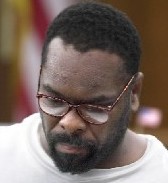 Clifton Ray
Murderer · USA · 1987
May 24, 1990 — Joycie Flowers was killed by strangling. · 1987 — Deborah Taylor…
3 victims
Clifton Ray
Murderer · USA · 1987
May 24, 1990 — Joycie Flowers was killed by strangling. · 1987 — Deborah Taylor…
3 victims
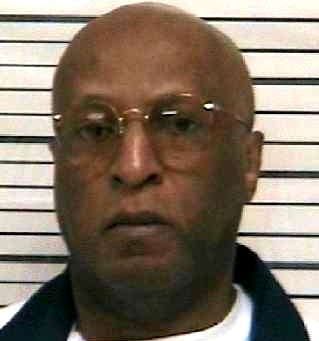 Carzell Moore
Murderer · USA · 1976
Carzell Moore was tried in the Superior Court of Monroe County, Georgia, for th…
1 victim
Carzell Moore
Murderer · USA · 1976
Carzell Moore was tried in the Superior Court of Monroe County, Georgia, for th…
1 victim
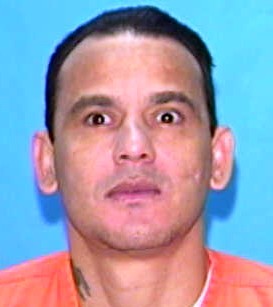 Norberto Pietri
Murderer · USA · 1988
Norberto Pietri was at Lantana Community Correctional Work Release Center await…
1 victim
Norberto Pietri
Murderer · USA · 1988
Norberto Pietri was at Lantana Community Correctional Work Release Center await…
1 victim
 Velma West
Murderer · USA · 1927
Velma West killed her husband, Thomas Edward West. She was a 21-year-old Clevel…
1 victim
Velma West
Murderer · USA · 1927
Velma West killed her husband, Thomas Edward West. She was a 21-year-old Clevel…
1 victim
- Gender
- male
- Country
- USA
- Location
- Morgan County, Alabama, USA
- Date of birth
- June 1, 1956
- Age at first offence
- 28
- Characteristics
- robbery, abuse
- Victim profile
- Kenneth Cantrell (jewelry dealer)
- Method of murder
- Shooting
- Date(s) of murder
- March 11, 1984
- Years active
- 1984
- Date of arrest
- 3 days after
- Status
-
Executed
Executed by lethal injection in Alabama on December 12, 2002
Case record
Background
Anthony Keith Johnson was convicted of capital murder for a gun battle that killed jewelry dealer Kenneth Cantrell during a robbery attempt at Cantrell’s home in Hartselle, Alabama.
Johnson served as a lookout for two other men and did not fire the shot that killed Cantrell, but he was the only one who had been charged and convicted in the case.
The offence
On the evening of March 11, 1984, Kenneth Cantrell and his wife were at their home in Hartselle, Alabama. The Cantrells had been in the jewelry business for 24 years and were conducting the business from their home at the time.
Mrs. Cantrell received a phone call from a person who identified himself as Bill Spears from Florence, Alabama, and asked to speak to Mr. Cantrell. The caller told Mr. Cantrell that he would like to purchase some jewelry from him, and they arranged a meeting a short time thereafter at the Cantrell home.
Mr. Cantrell was apparently suspicious of the caller. He asked his wife to hide his wallet and bring him his .38 caliber pistol.
When Mrs. Cantrell heard a knock at the door, which led from their carport into the combined living room and dining room area of their home, she went to answer it. She observed that the man already had the storm door open, but she had to open the door to hear what he had to say.
When she opened the door, she encountered a man between 45 and 50 years of age who identified himself as Bill Spears. She noticed that he held one hand behind his back, and she asked if he was concealing something. He said he was not and showed her his hand.
At the same time, he motioned for another man who had been hiding in the carport to come forward. The man at the door then grabbed Mrs. Cantrell. The other man, wearing a blue bandana over his face and brandishing a "real shiny" gun, announced "This is a holdup."
Mrs. Cantrell broke free from the man holding her, eluded a second attempt by the first man to grab her, and fell at her husband’s feet between the couch and coffee table. The first man crossed the room and positioned himself behind a couch he had overturned. The second man entered the house and began shooting.
During or just before the gunfight, Mr. Cantrell allegedly said, "Freeze ... I have got you covered," to which one of the men replied "No, we have got you, Cantrell."
While on the floor, Mrs. Cantrell observed that one of the men wore a pair of brown boots. She testified that only two guns were fired during the exchange, and that the shots fired at her husband appeared to come from the direction of the second intruder.
After several shots had been fired, there was a pause in the gunfire. One of the men said: "Come on in, Bubba ... we've got him."
As the two men in the room made their way to the door, but before they reached it, Mr. Cantrell fired one final shot and someone said "Oh." Mrs. Cantrell then heard the sound of shuffling feet, as if one of the intruders was being assisted out of the house. After the intruders left, Mrs. Cantrell waited a moment, looked up at her husband, and noticed that he had blood all over him and that she had blood all over her but had not been shot. She called an ambulance and police.
Kenneth Cantrell sustained six gunshot wounds during the exchange: three in the right side of his chest, one in the left side of his chest, one in the back of his right arm, and one to his right middle finger. The bullets that struck him in the chest passed through his lungs and the large arteries from the heart, causing rapid death.
Investigation
On the evening of March 12, 1984, the day after the murder, Johnson went to the home of David Lindsey, who was a friend, in Newell, Alabama. Johnson told Lindsey that he had been shot. When Lindsey inquired as to what had happened, Johnson stated, "Well you know how it is when you have got the habit."
Johnson told Lindsey that he knew Lindsey had been to Vietnam, and asked if Lindsey knew a medic or someone who could get the bullet out. Lindsey told him that he knew no one who could do that.
At Johnson’s request, Lindsey drove Johnson on the morning of March 13, 1984, to a motel in Oxford, Alabama, to meet Gene Loyd. Loyd and Johnson were glad to see each other. Loyd asked Johnson where he had been. Johnson replied that he "had to get the hell out of Hartselle." He said that he and some friends had gone into a place to "get some gold" and that he had been shot.
According to Lindsey, Johnson stated: "I got shot, but I got off a couple of rounds, and I believe I got that son of a bitch."
Lindsey returned home, heard that a murder had occurred in Hartselle, and contacted law enforcement.
Johnson was arrested on March 14, 1984, at the motel where he had been taken by Lindsey. A pair of brown boots, which Johnson claimed to own, were found at the scene of the arrest. A bullet wound was discovered in his back. That wound was 50.5 inches from the ground when Johnson was standing.
A search warrant was obtained, and the bullet was surgically removed from Johnson’s back.
The bullet removed from Johnson’s back was a .38 special C.C.I. Blazer, the same kind of bullet fired by Mr. Cantrell’s revolver. The bullet had the same characteristics as those test-fired from Mr. Cantrell’s R.G. revolver and those found at the scene, although it was impossible to make a definite determination that Mr. Cantrell’s revolver actually fired the bullet.
The bullet removed from Johnson’s back also had glass embedded in its nose. Test comparisons of the glass removed from the bullet and the glass found in the pane on the back door (through which the unaccounted-for bullet had passed) revealed that all their physical properties matched, with no measurable discrepancies. Based upon F.B.I. statistical information, it was determined that only 3.8 out of 100 samples could have the same physical properties.
Arrest
Johnson was arrested on March 14, 1984, at the motel in Oxford, Alabama, where he had been taken. A pair of brown boots, which Johnson claimed to own, was found at the scene of the arrest.
Trial
After Johnson was appointed two attorneys (Propst and DiGiulian) to represent him following his arrest as a murder suspect, he was formally charged with capital murder on March 26, 1984.
In June 1984, a Morgan County grand jury indicted Johnson for the intentional murder of Kenneth Cantrell during the course of a robbery, in violation of Ala. Code § 13A-5-40.
A year later, on June 20, 1985, a jury found Johnson guilty by a jury of capital murder as charged in the indictment.
On June 21, 1985, the jury voted nine to three to recommend that Johnson be sentenced to life imprisonment without the possibility of parole instead of death.
On November 8, 1985, the trial court rejected the jury’s recommendation and sentenced Johnson to death. The trial court found two statutory aggravating circumstances as defined at Ala. Code § 13A-5-49:
- The capital offense was committed by a person under sentence of imprisonment.
- The capital offense was committed while the defendant was engaged in the commission of a robbery.
The trial court acknowledged that there was some potentially mitigating evidence, but ruled that the aggravating circumstances were substantial and controlling.
Johnson appealed to the Alabama Court of Criminal Appeals, where he was represented by newly-appointed appellate counsel (Mays). On November 25, 1986, the Alabama Court of Criminal Appeals issued a written opinion affirming the conviction and sentence.
The Alabama Supreme Court affirmed the conviction and sentence on February 5, 1988. The United States Supreme Court denied Johnson’s petition for the writ of certiorari on October 3, 1988.
Sentencing
On November 8, 1985, after the sentencing hearing required by Ala. Code § 13A-5-47, the trial court sentenced Johnson to death.
Appeals
State post-conviction proceedings
After the direct review process was completed, Johnson’s post-conviction counsel filed a petition on April 4, 1989, under Rule 20 of the Alabama Rules of Criminal Procedure. The petition, as amended, raised a large number of claims.
The Circuit Court of Morgan County twice denied the petition, and the Alabama Court of Criminal Appeals twice remanded for express findings after a hearing.
On June 17, 1991, the trial court submitted a more specific order denying the Rule 20 petition. Johnson then appealed the denial to the Alabama Court of Criminal Appeals, which made written findings of its own and affirmed in a written opinion dated September 18, 1992 (Johnson v. State, 612 So. 2d 1288).
The Alabama Supreme Court denied Johnson’s petition for the writ of certiorari on February 19, 1993.
Federal habeas corpus
On June 7, 1993, Johnson filed a petition for habeas corpus pursuant to § 2254, asserting seven principal grounds for relief.
The district court conducted an in camera evidentiary hearing regarding communications between Johnson and his trial attorneys concerning Johnson’s participation in the events surrounding the robbery and murder. The district court also required that the trial attorneys file under seal materials containing these communications.
On July 23, 1999, the district court entered an exhaustive order considering but rejecting Johnson’s habeas objections, entered independent findings of fact, and determined that findings of the Alabama Court of Criminal Appeals were supported by the record. Johnson then sought review from the U.S. Court of Appeals for the Eleventh Circuit.
The U.S. Court of Appeals for the Eleventh Circuit considered the request for a writ of habeas corpus and affirmed, with the court stating it had reviewed the record and found Johnson’s claims without merit. The judgment was that the federal habeas relief was denied and the case was affirmed.
Outcome
Johnson was executed by lethal injection in Alabama on December 12, 2002.
At the time of execution, Johnson, age 46, met with family members and spiritual advisers in the visitation yard. Officials at Holman Prison prepared Alabama’s lethal injection chamber for its debut. The execution was scheduled for 6 p.m. at the prison near Atmore. A final statement was not given by Johnson. Johnson acknowledged the presence of his pastor and a friend in the witness room and told the warden, "They know I love them." Another recorded final statement was: "I'd just like to say to my friends I loved them. But they all know that I loved them."
The drugs were administered at 6 p.m. and Johnson was strapped to a gray gurney with his arms extended and head and shoulders tilted upward. A prison chaplain knelt at the foot of the gurney and prayed. Johnson’s eyes closed, and he mouthed words in unison with the prayer. The corrections guard reentered the execution chamber at about 6:22, and curtains were drawn across the observation window to the witness room as the body was taken away.
Other details
Juror recommendation and sentencing override
A Morgan County jury voted 9-3 to sentence Johnson to life in prison without parole, but the judge overrode the recommendation and sentenced him to death.
Final meal
Johnson’s final meal was a sandwich from a Holman Prison vending machine.
Defense cooperation and attempts to delay execution
Allegations included that investigators said Johnson had offered to cooperate in bringing others involved in the robbery and murder to trial. Another claim stated that Johnson’s testimony could not be used to convict others under Alabama law because he was considered a co-conspirator in the robbery and murder.
Quotes
Holman Warden Grantt Culliver said: "I spoke with him briefly today and he was fairly upbeat, at least as much as he could be under these circumstances," and "He seems to be calm, still hoping there will be some sort of reprieve come down."
Attorney Bryan Stevenson said: "It's always very problematic when you execute someone before the constitutional issues are settled," and: "It's always very problematic when you execute someone before the constitutional issues are settled," and "It's always very problematic when you execute someone before the constitutional issues are settled," and: "All of the investigators in the case 'concede that he was not a principal player in this death,' Stevenson said." (Statements appear in the provided material as repeated.)
Mike Ball said: "I hate the fact the others are getting a free ride."
Justice Thurgood Marshall wrote: "it approaches the most literal sense of the word ‘arbitrary’ to put one to death in the face of a contrary jury determination where it is accepted that the jury had indeed responsibly carried out its task."
Spotted an error, or have more information about this case?