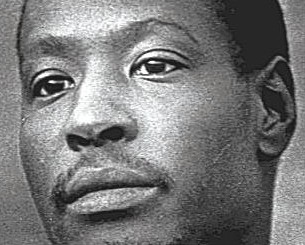
Coleman Gray
Murderer Brian Kevin Rosenfeld
Murderer · USA · 1985
Brian Kevin Rosenfeld Brian Kevin Rosenfeld was sentenced to three concurrent l…
23 victims
Brian Kevin Rosenfeld
Murderer · USA · 1985
Brian Kevin Rosenfeld Brian Kevin Rosenfeld was sentenced to three concurrent l…
23 victims
 Russell Ellwood
Murderer · USA · 1991
Russell Ellwood was a former taxi driver. Authorities suspected him of killing…
20 victims
Russell Ellwood
Murderer · USA · 1991
Russell Ellwood was a former taxi driver. Authorities suspected him of killing…
20 victims
 Robert Martines Perez
Murderer · USA · 1994
Name: Robert Martines Perez · Other name used in proceedings: Robert Martinez P…
15 victims
Robert Martines Perez
Murderer · USA · 1994
Name: Robert Martines Perez · Other name used in proceedings: Robert Martinez P…
15 victims
 Billy Frank Vickers
Murderer · USA · 1993
Billy Frank Vickers Vickers was executed by lethal injection in Texas on Januar…
14 victims
Billy Frank Vickers
Murderer · USA · 1993
Billy Frank Vickers Vickers was executed by lethal injection in Texas on Januar…
14 victims
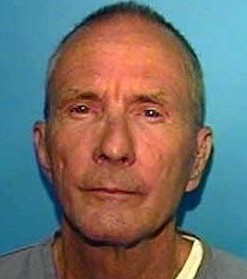 Donn Duncan
Murderer · USA · 1969
Name: Donn Duncan · Date of birth: 09/25/45 · Case number (Ninth Judicial Circu…
2 victims
Donn Duncan
Murderer · USA · 1969
Name: Donn Duncan · Date of birth: 09/25/45 · Case number (Ninth Judicial Circu…
2 victims
 Amanda Wallace
Murderer · USA · 1993
Amanda Wallace — mother of Joseph R. Wallace; defendant in Joseph’s murder; old…
1 victim
Amanda Wallace
Murderer · USA · 1993
Amanda Wallace — mother of Joseph R. Wallace; defendant in Joseph’s murder; old…
1 victim
 Claude Howard Jones
Murderer · USA · 1976
Claude Howard Jones was a Harris County native who refused to speak with report…
3 victims
Claude Howard Jones
Murderer · USA · 1976
Claude Howard Jones was a Harris County native who refused to speak with report…
3 victims
 Lianne Smith
Murderer · Spain · 2010
Lianne Smith was convicted of murdering her children Daniel and Rebecca. Smith…
2 victims
Lianne Smith
Murderer · Spain · 2010
Lianne Smith was convicted of murdering her children Daniel and Rebecca. Smith…
2 victims
- Gender
- male
- Country
- USA
- Location
- City of Suffolk, Virginia, USA
- Date of birth
- 1958
- Age at first offence
- 37
- Characteristics
- kidnapping, armed robbery, arson, rape
- Victim profile
- Richard McClelland (grocery store manager)
- Method of murder
- Shooting (.32 caliber revolver)
- Date(s) of murder
- May 2, 1995
- Years active
- 1995
- Date of arrest
- —
- Status
-
Executed
Executed by lethal injection in Virginia on February 26, 1997
Case record: Coleman Gray
Outcome
Coleman Gray was put to death by lethal injection in Virginia on February 26, 1997. The execution process took about 6 minutes.
The offence
On the evening of May 2, 1985, Coleman Gray and Melvin Tucker drove into the parking lot of a Murphy's Mart department store in Portsmouth, Virginia. They observed the store manager, Richard McClelland, inside. McClelland had recently discharged Gray's wife from her job at the store, which displeased Gray. Gray told a friend he was "going to get" McClelland.
When McClelland left work in his automobile, Gray and Tucker followed. At an intersection, Gray pulled his car in front of McClelland's and blocked the road. Armed with a .32 caliber revolver, Gray ordered McClelland into Gray's car.
Gray and his two passengers then returned to Murphy's Mart. While Tucker waited in the car, Gray forced McClelland inside the store at gunpoint. McClelland was told that if he refused to cooperate, his family would suffer. Gray and McClelland then emerged from the store with three sacks of cash containing approximately $12,000. They joined Tucker in the car and departed.
Gray drove to a service station and fueled the automobile. He removed a gas can from the trunk and filled it with gasoline as well. Gray then proceeded to a remote dirt road, stopped the car, and commanded McClelland to get out. Gray ordered McClelland to lie face down on the ground. As McClelland did so, he begged Gray not to hurt him. Gray assured McClelland he had nothing to fear, and then fired six bullets into the back of McClelland's head with the .32 caliber handgun. The shooting was execution style: the shots were fired in rapid succession, from a range of three to eighteen inches.
Gray told Tucker as they drove away from the murder scene that he had to shoot McClelland because McClelland knew him. The two men then returned to the intersection where they first abducted McClelland. Gray informed Tucker that he intended to burn McClelland's car to destroy the evidence. Gray soaked the interior of McClelland's car with gasoline from the gas can, tossed a lit match into the car, and fled. Gray and Tucker returned to Gray's apartment to count the money.
Investigation and charges
Both Gray and Tucker were subsequently indicted on various criminal counts. Tucker pleaded guilty to lesser charges in exchange for agreeing to testify against Gray.
Gray went to trial for armed robbery, abduction, arson, unlawful firearm use, and capital murder.
Trial
In a pre-trial motion, Gray's counsel asked the court to appoint a private investigator to assist the defense, but the motion was denied. Gray's counsel also moved for discovery under Rule 3A:11 of the Virginia Supreme Court. The court issued a discovery order pursuant to that Rule and included an additional provision requiring the disclosure of exculpatory evidence.
Guilt phase
On Monday, December 2, 1985, the guilt phase of Gray's trial began. Following a motion by the defense under Peterson v. Commonwealth, 225 Va. 289, 302 S.E.2d 520(Va.), cert. denied, 464 U.S. 865, 104 S.Ct. 202, 78 L.Ed.2d 176 (1983), the Commonwealth's Attorney informed the defense of evidence he planned to introduce at the penalty phase to show Gray's future dangerousness. The Commonwealth's Attorney stated that prosecution witnesses would testify that Gray told them he killed a mother and daughter named Lisa and Shanta Sorrell.
At the guilt phase, the key issue was whether Gray was the actual triggerman in the McClelland murder. Gray chose not to take the stand but his counsel argued that it was Tucker, not Gray, who shot McClelland, while Tucker asserted just the opposite.
Two witnesses for the prosecution, who had been imprisoned with Gray, testified that Gray told them he killed McClelland. On Thursday, December 5, 1985, the jury convicted Gray on all counts.
Penalty phase
That evening, the Commonwealth's Attorney informed the defense that at the penalty phase, scheduled to begin the next morning, he intended to offer evidence of the Sorrell murders in addition to the incriminating statements. The proposed evidence consisted of testimony by the police detective who investigated the murders, testimony by the state medical examiner who performed the victims' autopsies, and photographs and forensic evidence of the crime scene. Defense counsel interviewed the police detective over the telephone that night.
On Friday, December 6, the penalty phase began. During an in-chambers conference, Gray's counsel asked the court to exclude the additional Sorrell evidence on the ground that it exceeded the scope of corroborating evidence permissible under state law, and that they were unprepared to rebut it that day. The court expressed the view that the evidence was admissible at sentencing.
At the penalty phase, the prosecution first offered evidence of other criminal acts committed by Gray, including his criminal record. The Virginia Supreme Court noted that Gray's criminal record reflected thirteen felony convictions, at least nine of which were for violent crimes.
Tucker then took the stand on behalf of the Commonwealth and addressed the Sorrell murders. He testified that shortly after the McClelland murder, he and Gray were scanning the local paper for news of the McClelland investigation. According to Tucker, Gray pointed to a picture of Lisa Sorrell in the paper and declared that he had killed her. At the close of Tucker's direct examination, the defense stated that it had no questions of him.
The defense formally moved to exclude the additional Sorrell evidence, but the motion was denied. The court noted that defense counsel had been informed of the evidence the day before.
The Commonwealth called Detective Michael Slezak. Slezak testified that he discovered the body of Lisa Sorrell in the driver's seat of a burned-out automobile and found the body of three-year-old Shanta in the trunk. He also testified that an expended match was recovered from the interior of the car: the automobile, like McClelland's, was apparently ignited after the murder. Slezak identified several photographs of the crime scene, which were each admitted into evidence. He offered no opinion on who was responsible for the murders.
The defense cross-examined Slezak. The questions emphasized the highly-publicized nature of the Sorrell murders and suggested that due to the possibility of a "copycat crime," the Sorrell and McClelland murders might not have been committed by the same person.
Finally, the Commonwealth called the medical examiner, Dr. Faruk Presswalla. He testified that Lisa Sorrell was killed by six .32 caliber gunshots to the back of her head, and that Shanta died from smoke inhalation. He identified autopsy photographs, which were admitted into evidence. The prosecution introduced Dr. Presswalla's autopsy report. The defense stipulated to Dr. Presswalla's expert status and declined to cross-examine him.
The defense called seven witnesses to present mitigating evidence. They testified largely to their favorable opinions of Gray's character. Then, Gray took the stand. He denied any involvement whatsoever in the Sorrell murders. When asked whether he had anything he wished to say to the jury, he stated that his participation in the McClelland murder was limited to driving the car, and he swore that it was not he who pulled the trigger and killed McClelland.
The court instructed the jury on the aggravating factors under the Virginia death penalty statute—the vileness of the crime charged and the future dangerousness of the defendant. Upon deliberation, the jury unanimously found the existence of both aggravators and fixed Gray's sentence at death.
Sentencing
Gray received a death sentence after the jury unanimously found both aggravators during the penalty phase.
Appeals
The Virginia Supreme Court affirmed Gray's conviction and sentence, Gray, 356 S.E.2d 157. The U.S. Supreme Court denied certiorari, 484 U.S. 873, 108 S.Ct. 207, 98 L.Ed.2d 158 (1987).
Gray then instituted state habeas proceedings. The state habeas court dismissed the petition, the Virginia Supreme Court summarily affirmed the dismissal, and the U.S. Supreme Court again denied certiorari, Gray v. Thompson, 500 U.S. 949, 111 S.Ct. 2250, 114 L.Ed.2d 491 (1991).
Thereafter, Gray filed a petition for a writ of habeas corpus. The district court held an evidentiary hearing and heard testimony from trial counsel and the prosecution witnesses as to the events at sentencing. Detective Slezak testified that Timothy Sorrell, Lisa's husband, had been an initial suspect in the Sorrell murders, although upon further investigation he was not charged. The district court granted the writ and vacated Gray's sentence, finding that the prosecution had "violated the moral standards of fair play embodied in the Due Process Clause" by unfairly surprising the defense with the additional Sorrell evidence. The decision was stayed pending this appeal.
The U.S. Court of Appeals for the Fourth Circuit reversed and remanded with instructions to dismiss the petition. The case was styled:
- Coleman Wayne GRAY, Petitioner-Appellee, v. Charles E. THOMPSON, Warden, Mecklenburg Correctional Center, Respondent-Appellant.
- Coleman Wayne GRAY, Petitioner-Appellant, v. Charles E. THOMPSON, Warden, Mecklenburg Correctional Center, Respondent-Appellee.
The appellate panel included Circuit Judges HALL, WILKINSON, and WILKINS. The case was argued May 3, 1995 and decided June 28, 1995.
Judge WILKINSON wrote the opinion, in which Judge WILKINS joined. Judge HALL wrote a concurring opinion.
Fourth Circuit opinion (reversal and remand)
The Fourth Circuit held that the district court properly rejected a claim challenging the vileness factor but erred in issuing the writ based on the future dangerousness claim. The court reasoned that petitioner was not entitled to relief because the claimed rule for minimum advance notice would be novel and not compelled by existing precedent at the time his conviction became final, and the district court relied on Gardner in an incorrect way.
The Fourth Circuit also addressed other arguments, including:
- The claim that the state court's refusal to appoint a private investigator contravened due process.
- The claim that the evidence at the guilt phase was insufficient to convict him of capital murder.
- The claim that the district court erred in dismissing as procedurally defaulted claims regarding impeachment evidence involving Jeremiah Smallwood and an allegation that Smallwood perjured himself.
The court concluded that the judgment of the district court was reversed and the case was remanded with directions that the petition be dismissed.
Concurring opinion
K.K. HALL, Circuit Judge, concurred in all of the majority's opinion except Section II-B. The concurrence stated that the future dangerousness due process challenge was not procedurally barred by the "new rule" doctrine. The concurrence expressed that it was arguable that the rule Gray sought would have been dictated by Gardner v. Florida. The concurrence cited that "a legitimate interest in the character of the procedure" leads to imposition of sentence even if there might be no right to object to a particular result.
The concurrence also stated that it would have held the claim procedurally barred based on the petitioner's failure to request that evidence be developed in the state habeas proceeding, applying Keeney v. Tamayo-Reyes and requiring cause and prejudice for receiving a federal hearing.
Other details
Gray's mother and sister visited him and were required to leave at 3 pm. The account stated that Coleman Gray had no last words. The New York Times piece included that Gray was convicted in connection with the May 1985 murder of grocery store manager Richard McClelland, and that the execution took place about 12 years after the murder.
The account also stated:
- The final ruling of the U.S. Supreme Court came only 10 minutes before the execution.
- An all-white jury convicted Gray, who was black, of robbing and abducting McClelland, a white, and shooting him 6 times in the back of the head despite his pleas for mercy.
- The account stated that Gray was found guilty largely on the testimony of his accomplice, Melvin Tucker, but that Gray insisted that Tucker was the triggerman.
- The execution took place on February 26, 1997.
Spotted an error, or have more information about this case?