
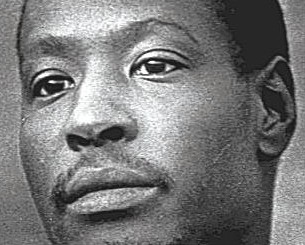
Jimmy Lee Gray
Murderer Ervil LeBaron
Murderer · USA · 1972
Ervil Morrell LeBaron (1925 to August 16, 1981) was the leader of a polygamous…
35 victims
Ervil LeBaron
Murderer · USA · 1972
Ervil Morrell LeBaron (1925 to August 16, 1981) was the leader of a polygamous…
35 victims
 Brian Kevin Rosenfeld
Murderer · USA · 1985
Brian Kevin Rosenfeld Brian Kevin Rosenfeld was sentenced to three concurrent l…
23 victims
Brian Kevin Rosenfeld
Murderer · USA · 1985
Brian Kevin Rosenfeld Brian Kevin Rosenfeld was sentenced to three concurrent l…
23 victims
 Marvin Gray
Murderer · USA · 1975
Marvin Gray was convicted killer who claimed responsibility for 23 slayings and…
23 victims
Marvin Gray
Murderer · USA · 1975
Marvin Gray was convicted killer who claimed responsibility for 23 slayings and…
23 victims
 Yahweh ben Yahweh
Murderer · USA · 1980
Yahweh ben Yahweh was born and legally named Hulon Mitchell Jr. (October 27, 19…
23 victims
Yahweh ben Yahweh
Murderer · USA · 1980
Yahweh ben Yahweh was born and legally named Hulon Mitchell Jr. (October 27, 19…
23 victims
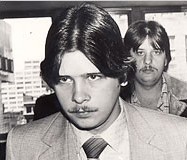 Craig Crimmins
Murderer · USA · 1980
Craig S. Crimmins was a Met stagehand. He was 21 at the time of the conviction…
1 victim
Craig Crimmins
Murderer · USA · 1980
Craig S. Crimmins was a Met stagehand. He was 21 at the time of the conviction…
1 victim
 Kemi Adeyoola
Homicide · United Kingdom · 2005
Kemi Adeyoola was convicted of murdering 84-year-old Anne Mendel. Adeyoola had…
1 victim
Kemi Adeyoola
Homicide · United Kingdom · 2005
Kemi Adeyoola was convicted of murdering 84-year-old Anne Mendel. Adeyoola had…
1 victim
 Alvie James Hale
Murderer · USA · 1983
Alvie James Hale, Jr. was convicted in the District Court of Pottawatomie Count…
1 victim
Alvie James Hale
Murderer · USA · 1983
Alvie James Hale, Jr. was convicted in the District Court of Pottawatomie Count…
1 victim
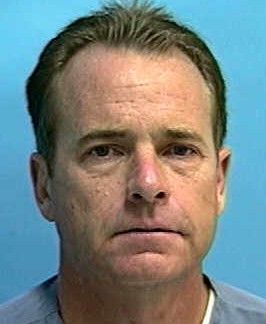 Michael Frederick Griffin
Murderer · USA · 1993
Michael Frederick Griffin · March 4, 1994 — A jury found Michael Frederick Grif…
1 victim
Michael Frederick Griffin
Murderer · USA · 1993
Michael Frederick Griffin · March 4, 1994 — A jury found Michael Frederick Grif…
1 victim
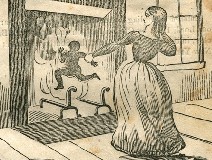 Patty Cannon
Murderer · USA · 1821
Martha “Patty” Cannon (circa 1760 – May 11, 1829) led a gang in the early 19th…
11 victims
Patty Cannon
Murderer · USA · 1821
Martha “Patty” Cannon (circa 1760 – May 11, 1829) led a gang in the early 19th…
11 victims
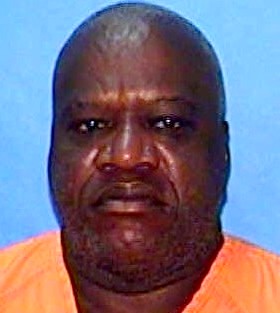 Alphonso Green
Murderer · USA · 1986
Alphonso Green (born 01/07/51) was tried in the Thirteenth Judicial Circuit, Hi…
2 victims
Alphonso Green
Murderer · USA · 1986
Alphonso Green (born 01/07/51) was tried in the Thirteenth Judicial Circuit, Hi…
2 victims
- Gender
- male
- Country
- USA
- Location
- Arizona/ Mississippi, USA
- Date of birth
- 1949
- Age at first offence
- 27
- Characteristics
- kidnapping, rape, torture
- Victim profile
- 16-year-old girl / Deressa Jean Seales (female, 3)
- Method of murder
- Asphyxiation
- Date(s) of murder
- ??? / June 25, 1976
- Years active
- 1976
- Date of arrest
- —
- Status
-
Executed
Executed by asphyxiation-gas in Mississippi on September 2, 1983
Case record: Jimmy Lee Gray
Timeline
- 1976 — Jimmy Lee Gray was convicted for the murder of three-year-old Deressa Jean Seales in a case involving kidnapping and sodomizing her.
- June 25, 1976 — Jimmy Lee Gray abducted a three-year-old girl and carried her to a remote area, where he sexually molested her before suffocating her in a muddy ditch and throwing her body into a stream.
- 1976 — Jimmy Lee Gray was indicted for capital murder.
- 1977 — The Mississippi Supreme Court reversed the conviction and remanded the case for a new trial (Gray v. State, 351 So.2d 1342 (Miss.1977)).
- 1978 — On retrial, Jimmy Lee Gray was again convicted of capital murder and sentenced to death.
- 1979 — The Mississippi Supreme Court affirmed both the conviction and the death sentence (Gray v. State, 375 So.2d 994 (Miss.1979)).
- 1980 — The Supreme Court denied Jimmy Lee Gray’s petitions for certiorari and rehearing (Gray v. Mississippi, 446 U.S. 988; rehearing denied, 448 U.S. 912 (1980)).
- July 1980 — Jimmy Lee Gray filed first applications for a writ of error coram nobis and stay of execution before the Mississippi Supreme Court.
- July 2, 1983 — The court of appeals granted Jimmy Lee Gray’s application for a stay of execution.
- July 6, 1983 — The Mississippi Supreme Court set the execution date for July 6, 1983.
- July 8, 1983 — The district court dismissed Jimmy Lee Gray’s second petition for a writ of habeas corpus (stated in the procedural history).
- August 25, 1983 — Justice WHITE denied Jimmy Lee Gray’s petitioner's application for a stay.
- August 26, 1983 — The stay was dissolved.
- September 1, 1983 — U.S. Supreme Court: the petition for writ of certiorari was denied; the application for stay of execution, scheduled for 12:01 a.m. on September 2, 1983, addressed to Justice BRENNAN and referred to the Court, was denied (U.S. Supreme Court GRAY v. LUCAS, 463 U.S. 1237 (1983)).
- September 2, 1983 — Jimmy Lee Gray was executed in Mississippi by gas chamber/asphyxiation-gas.
Background
Jimmy Lee Gray (1949 – September 2, 1983) was convicted for the murder of three-year-old Deressa Jean Seales in 1976, after kidnapping and sodomizing her. At the time of this murder, he was free on parole following a conviction in Arizona for the murder of a 16-year-old girl. Jimmy Lee Gray became the first person to be executed in Mississippi since 1976 when the death penalty was reinstated. Dan Lohwasser, a reporter for United Press International, was one of the observers who witnessed Gray’s execution, and Lohwasser’s account of Gray’s death sparked a controversy because of its graphic nature.
At the time of Jimmy Lee Gray’s execution, the gas chamber used in Mississippi had a vertical iron bar directly behind the inmate’s chair. There was no headrest or strap used to restrain Gray’s head. As Jimmy Lee Gray began breathing in the toxic gas, he started thrashing his head around, striking the iron bar repeatedly before he finally lost consciousness. Officials decided to clear the observation room eight minutes after the gas was released due to the graphic scene.
The offence
Jimmy Lee Gray abducted a three-year-old girl, carried her to a remote area, and sexually molested her. He suffocated her in a muddy ditch and threw her body into a stream. Later narrative detail stated that he attempted to drown her in a shallow creek, and that he walked away from what he thought was finished and then heard the child gurgle. The narrative also stated that the child was face down in the creek; Jimmy Lee Gray walked up to her and slammed his boot into the back of her neck, breaking it.
Investigation / confession voluntariness issues in appeal
Jimmy Lee Gray alleged that, in sentencing him, the Mississippi Supreme Court never adopted a constitutionally permissible construction of the statute providing for an aggravating circumstance that the murder was especially heinous, atrocious, or cruel. He also alleged error in failing to make an independent determination of the voluntariness of his confession. The appellate court addressed that issue by noting that the state court rejected Gray’s allegation that his confession was coerced and that the federal court was bound by this factual determination. The opinion further explained that, although the state court’s holding turned on several considerations, implicit in it was a rejection of Gray’s version of the events leading to his confession.
Trial
Jimmy Lee Gray was convicted of capital murder under Miss.Code Ann. § 97-3-19(2)(e). That statute applied by its terms to both intentional and unintentional killings that occur during the commission of certain felonies. At the sentencing phase of Gray’s bifurcated trial, the jury found beyond a reasonable doubt that Jimmy Lee Gray had killed Derissa Scales for the purpose of avoiding arrest. The appellate court treated this as equivalent to an intent finding. The appellate court concluded that, because taking a human life for a deliberate and particular purpose such as to avoid arrest is necessarily intentional murder, the court did not need to reach the constitutional question whether capital punishment for an unintentional killing comports with Eighth Amendment standards.
Sentencing
Jimmy Lee Gray received a death sentence. At the sentencing phase of a bifurcated trial, the jury found beyond a reasonable doubt that Gray killed Derissa Scales for the purpose of avoiding arrest.
Appeals
Fifth Circuit — habeas corpus petition and denial of rehearing
Jimmy Lee Gray filed a petition for panel rehearing and suggestion for rehearing en banc after the Fifth Circuit affirmed the district court’s denial of his habeas corpus petition. The Fifth Circuit reconsidered issues raised by Gray in light of Gray’s supplemented arguments and still found them to be without merit. The petition for panel rehearing was denied, and the suggestion for rehearing en banc was denied.
Key appellate points included:
- The court addressed Gray’s contention about Eighth Amendment standards for capital punishment for an unintentional killing under Miss.Code Ann. § 97-3-19(2)(e), and the court declined to reach the constitutional question because the jury finding was treated as establishing intent.
- The court addressed Gray’s contention that the jury should have been required to find beyond a reasonable doubt that attendant aggravating circumstances outweighed mitigating circumstances, and explained that this argument confused proof of facts with weighing of facts.
- The court addressed Gray’s allegation that it should have made an independent determination of voluntariness of his confession and adhered to its earlier conclusion that it was bound by the state court’s credibility choice and factual determination.
- The court addressed Gray’s contention regarding Miss.Code Ann. § 99-19-101(5)(h), explaining that the Mississippi Supreme Court had adopted a constitutionally permissible construction in Coleman v. State, quoting Spinkellink v. Wainwright’s description of capital crimes accompanied by additional acts setting the crime apart from the norm.
Verbatim quotation preserved from the appellate opinion:
“Although the (state) court's holding (that the confession was voluntary) turned on several considerations, implicit in that holding was a rejection of Gray's version of the events leading to his confession, a conclusion which the court had already made clear in its earlier recitation of the facts.” 677 F.2d at 1108 n.18.
“What is intended to be included are those capital crimes where the actual commission of the capital felony was accompanied by such additional acts as to set the crime apart from the norm of capital felonies-the conscienceless or pitiless crime which is unnecessarily torturous to the victim.” 378 So.2d at 648 (emphasis added by the state court).
U.S. Supreme Court — certiorari denied; stay denied
U.S. Supreme Court GRAY v. LUCAS, 463 U.S. 1237 (1983) reflected that the petition for writ of certiorari was denied. The application for stay of execution, scheduled for 12:01 a.m. on September 2, 1983, addressed to Justice BRENNAN and referred to the Court, was denied.
Outcome
Jimmy Lee Gray was executed in Mississippi by gas chamber/asphyxiation-gas on September 2, 1983.
Aftermath
Officials cleared the observation room eight minutes after the gas was released when Gray’s desperate gasps for air repulsed witnesses. Dennis Balske, Gray’s attorney, criticized state officials for clearing the room when the inmate was still alive. A quoted statement from David Bruck was preserved as follows:
“Jimmy Lee Gray died banging his head against a steel pole in the gas chamber while the reporters counted his moans (eleven, according to the Associated Press).”
Later revealed detail stated that the executioner was drunk during the procedure.
Other details
Procedural history in Supreme Court concurrence and dissent
The concurrence’s procedural history set out several events and references including:
- October 1976 — Jimmy Lee Gray was indicted for capital murder.
- On June 25, 1976, petitioner abducted a three-year-old girl, carried her to a remote area, after sexually molesting her, suffocated her in a muddy ditch, and threw her body into a stream.
- State, 351 So.2d 1342 (Miss.1977)).
- 1978 — On retrial, Gray was again convicted and sentenced to death.
- 1979 — The Mississippi Supreme Court affirmed the conviction and death sentence (Gray v. State, 375 So.2d 994 (Miss.1979)).
- 1980 — The Supreme Court denied petitions for certiorari and rehearing (Gray v. Mississippi, 446 U.S. 988; rehearing denied, 448 U.S. 912 (1980)).
- July 1980 — Coram nobis and stay applications before the Mississippi Supreme Court.
- After denial, habeas corpus in the Federal District Court for the Southern District of Mississippi, with an evidentiary hearing on several of Gray’s 22 claims of constitutional violation, and denial of relief.
- The Fifth Circuit affirmed and denied rehearing (Gray v. Lucas, 677 F.2d 1086; rehearing denied, 685 F.2d 139 (CA5 1982)).
- May 11, 1983 — The Mississippi Supreme Court set the execution date for July 6, 1983.
- June 22, 1983 — A second motion for stay of execution and a new application for a writ of error coram nobis were submitted to the Mississippi Supreme Court; the Mississippi Supreme Court denied relief on June 29, 1983.
- July 2, 1983 — The court of appeals granted the application for a stay of execution.
- July 8, 1983 — The district court dismissed the petition for habeas corpus.
- The court of appeals affirmed and denied petitioner's petition for rehearing; the stay was dissolved on August 26, 1983.
The procedural history also stated that the case had been in state and federal courts for seven years, tried twice in state court, reviewed by the Mississippi Supreme Court four times, and reviewed by seventeen different federal judges, with the U.S. Supreme Court previously acting on the case four times prior to Justice WHITE’s denial of a stay.
Dissenting arguments about lethal gas as cruel and unusual punishment
Justice MARSHALL, with whom Justice BRENNAN joined, dissented from denial of the stay and argued that the method of execution by exposure to cyanide gas constituted cruel and unusual punishment. The dissent included specific quoted descriptions from Dr. Richard Traystman and other affiants about the effects of cyanide gas.
“Very simply, cyanide gas blocks the utilization of the oxygen in the body's cells. ... Gradually, depending on the rate and volume of inspiration, and on the concentration of the cyanide that is inhaled, the person exposed to cyanide gas will become anoxic. This is a condition defined by no oxygen. Death will follow through asphyxiation, when the heart and brain cease to receive oxygen. "The hypoxic state can continue for several minutes after the cyanide gas is released in the execution chamber. The person exposed to this gas remains conscious for a period of time, in some cases for several minutes, again depending on the rate and volume of the gas that is inhaled. During this time, the person is unquestionably experiencing pain and extreme anxiety. The pain begins immediately, and is felt in the arms, shoulders, back, and chest. The sensation is similar to the pain felt by a person during a heart attack, where essentially, the heart is being deprived of oxygen. The severity of the pain varies directly with the diminishing oxygen reaching the tissues. "The agitation and anxiety a person experiences in the hypoxic state will stimulate the autonomic nervous system. . . . [The person ] . . . may begin to drool, urinate, defecate, or vomit. There will be a muscular contraction[ ]. These responses can occur both while the person is conscious, or when he becomes unconscious. "When the anoxia sets in, the brain remains alive for from two to five minutes. The heart will continue to beat for a period of time after that, perhaps five to seven minutes, or longer, though at a very low cardiac output. Death can occur ten to twelve minutes after the gas is released in the chamber.”
“We would not use asphyxiation, by cyanide gas or by any other substance, in our laboratory to kill animals that have been used in the experiments-nor would most medical research laboratories in this country use it.”
“When the cyanide gas reached [the prisoner], he gasped, and convulsed strenuously. He stiffened. His head lurched back. His eyes widened, and he strained as much as the straps that held him to the chair would allow. He unquestionably appeared to be in pain. "
“Periodically now, perhaps at thirty second intervals, he would convulse, alternately straining and relaxing in the chair. I noticed he had urinated. The convulsions continued for approximately ten more minutes, and you could see his chest expand, and then contract, trying to take in fresh air. These movements became weaker as the minutes ticked away. You could not tell when [he] finally lost consciousness. "
“According to prison officials, [he] died . . . approximately 12 minutes after the cyanide pellets had dropped in the chamber. Death was pronounced after the shade on our observation window had been drawn, though there was still some slight movement in the body. Id., at 1058-1059. "
“The pellets of cyanide were released by mechanical controls, and dropped into an acid jar beneath the chair. The gas rose, and seemed to hit him immediately. Within the first minute, [he] slumped down. I thought to myself how quickly cyanide really worked. "
“Within 30 seconds he lifted his head upwards again. He raised his entire body, arching, tugging at his straps. Saliva was oozing from his mouth. His eyes open, he turned his head to the right. He gazed through my window. His fingers were tightly gripping his thumbs. His chest was visibly heaving in sickening agony. Then he tilted his head higher, and rolled his eyes upward. Then he slumped forward. Still his heart was beating. It continued for another several minutes. "
“He was pronounced dead, twelve minutes after the pellets were released, by the doctor who could hear his heart through the stethoscope, die.”
The dissent also stated that the Court of Appeals accepted petitioner’s “proffered facts as proven” and that the court adopted petitioner’s description of the method as “death by cyanide gas, causing asphyxiation at the cost of protracted pain over a period that may exceed seven minutes.” It quoted and referenced prior legal principles from the Eighth Amendment context, including:
“Punishments are cruel when they involve torture or a lingering death.” In re Kemmler, 136 U.S. 436, 447 , 933 (1890).
“involve the unnecessary and wanton infliction of pain.” Gregg v. Georgia, 428 U.S. 153, 173 , 2925 (1976).
“ no court would approve any method of implementation of the death sentence found to involve unnecessary cruelty in the light of presently available alternatives.” Furman v. Georgia, 408 U.S. 238, 430 , 2824 (1972) (POWELL, J., joined by BURGER, C.J., and BLACKMUN and REHNQUIST, JJ., dissenting); see also id., at 279, 92 S.Ct. at 2747 (BRENNAN, J., concurring).
Other quoted legal-procedural text
The Fifth Circuit decision included the following verbatim statement:
“Gray's petition for panel rehearing is DENIED. Gray's petition for panel rehearing was accompanied by a suggestion for rehearing en banc. No member of this panel nor judge in regular active service on the court having requested that the court be polled on rehearing en banc (Fed.R.App.P. 35; Local Fifth Circuit Rule 16), this suggestion is DENIED.”
The Supreme Court materials also included:
“The petition for writ of certiorari is denied. The application for stay of execution, scheduled for 12:01 a.m. on September 2, 1983, addressed to Justice BRENNAN and referred to the Court is denied.”

Spotted an error, or have more information about this case?