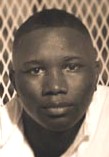
Dominique Green
Murderer Brian Kevin Rosenfeld
Murderer · USA · 1985
Brian Kevin Rosenfeld Brian Kevin Rosenfeld was sentenced to three concurrent l…
23 victims
Brian Kevin Rosenfeld
Murderer · USA · 1985
Brian Kevin Rosenfeld Brian Kevin Rosenfeld was sentenced to three concurrent l…
23 victims
 Russell Ellwood
Murderer · USA · 1991
Russell Ellwood was a former taxi driver. Authorities suspected him of killing…
20 victims
Russell Ellwood
Murderer · USA · 1991
Russell Ellwood was a former taxi driver. Authorities suspected him of killing…
20 victims
 Robert Martines Perez
Murderer · USA · 1994
Name: Robert Martines Perez · Other name used in proceedings: Robert Martinez P…
15 victims
Robert Martines Perez
Murderer · USA · 1994
Name: Robert Martines Perez · Other name used in proceedings: Robert Martinez P…
15 victims
 Billy Frank Vickers
Murderer · USA · 1993
Billy Frank Vickers Vickers was executed by lethal injection in Texas on Januar…
14 victims
Billy Frank Vickers
Murderer · USA · 1993
Billy Frank Vickers Vickers was executed by lethal injection in Texas on Januar…
14 victims
 John Douglas White
Murderer · USA · 1994
John Douglas White was a former pastor of a small Mount Pleasant church and lat…
2 victims
John Douglas White
Murderer · USA · 1994
John Douglas White was a former pastor of a small Mount Pleasant church and lat…
2 victims
 Samuel Lee McDonald
Murderer · USA · 1981
Name: Samuel Lee McDonald · Case citation: State of Missouri v. Samuel Lee McDo…
1 victim
Samuel Lee McDonald
Murderer · USA · 1981
Name: Samuel Lee McDonald · Case citation: State of Missouri v. Samuel Lee McDo…
1 victim
 James Dyral Briley
Serial killer · USA · 1979
Name: James Dyral Briley James Dyral Briley was sentenced to death for capital…
11 victims
James Dyral Briley
Serial killer · USA · 1979
Name: James Dyral Briley James Dyral Briley was sentenced to death for capital…
11 victims
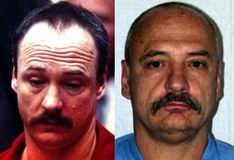 James Marlow
Serial killer · USA · 1986
James Gregory Marlow was convicted in San Bernardino County, California, of mur…
5 victims
James Marlow
Serial killer · USA · 1986
James Gregory Marlow was convicted in San Bernardino County, California, of mur…
5 victims
 Molly Midyette
Murderer · USA · 2006
Molly Midyette was convicted of child abuse resulting in death in the 2006 deat…
1 victim
Molly Midyette
Murderer · USA · 2006
Molly Midyette was convicted of child abuse resulting in death in the 2006 deat…
1 victim
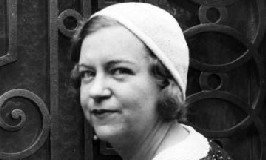 Elvira Barney
Murderer? · United Kingdom · 1932
Elvira Barney Elvira Barney was found not guilty on July 5, 1932. Michael Scott…
1 victim
Elvira Barney
Murderer? · United Kingdom · 1932
Elvira Barney Elvira Barney was found not guilty on July 5, 1932. Michael Scott…
1 victim
- Gender
- male
- Country
- USA
- Location
- Harris County, Texas, USA
- Date of birth
- May 13, 1974
- Age at first offence
- 18
- Characteristics
- crime spree, robbery
- Victim profile
- Andrew Lastrapes (male, 41)
- Method of murder
- Shooting ( Tech-9 semi-automatic gun)
- Date(s) of murder
- October 14, 1992
- Years active
- 1992
- Date of arrest
- 3 days after
- Status
-
Executed
Executed by lethal injection in Texas on October 26, 2004
Case record: Dominique Green
Background
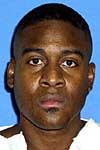
Dominique Green was sentenced to death in Texas for the capital murder of Andrew Lastrapes.
The offence
Dominique Jerome Green and three other men undertook a series of robberies in the Houston area over a period of several hours, starting on October 13, 1992, and continuing into the early morning hours of the following day. After 6 a.m. October 14, the men ended up at a convenience store. Green and the fourth man approached Andrew Lastrapes in the store parking lot and demanded his money. When Lastrapes refused, Green shot him with a Tech-9 semi-automatic gun, then took $50 from Lastrapes' wallet.
After the fatal shooting, Green and his three companions split the proceeds of their robberies and went home agreeing not to talk about what had happened.
Andrew Lastrapes was fatally shot in the chest and later died during surgery at Ben Taub Hospital.
Following the fatal shooting and for the next several days, Green continued to be involved with accomplices in additional robberies, and stolen vehicles were used in the robberies.
Investigation
Three days after the killing, a Houston police officer spotted a stolen red car traveling southbound on Highway 288. The officer pursued the vehicle until it swerved off the road into a ditch in Brazoria County. The driver continued to run on foot and was eventually found hiding in a nearby field.
A loaded Tech-9 semi-automatic gun was found in the vehicle. Firearms experts determined it to be the same gun used to kill Andrew Lastrapes.
Arrest
Green was arrested hiding in a nearby field after the vehicle crash in Brazoria County. Others in the car were also arrested.
A loaded Tech-9 semi-automatic gun, identified as the murder weapon, was found in the vehicle.
Green admitted to being present at the scene of the murder, but claimed that he was only a “lookout.”
At trial, nine victims identified Green as the person who robbed them during a 3-day crime spree.
Trial
A Harris County grand jury indicted Green for the capital murder of Andrew Lastrapes on January 5, 1992.
On July 9, 1993, a Harris County jury found Green guilty of capital murder.
Following a punishment hearing, the court sentenced Green to death on July 14, 1993.
During the punishment phase, the jury made findings on the three special issues for capital murder under Texas law.
Green was represented by defense counsel Sanford Melamed, and the defense presented mitigating evidence including testimony that Green lacked an adult figure to offer love and guidance and had been treated with indifference by his parents. The trial also included evidence about Green’s mother and Green’s experiences growing up, including evidence that Green’s mother was mentally ill and that Green was abused.
The trial included an admission from Green. After arraignment and at trial, Green admitted to being present at the scene of the murder, but claimed he was only a “lookout.”
At trial, the prosecution presented Green’s surviving robbery victims to identify him, including identification of Green’s distinctive leather coat with a fur-trimmed hood and his TEC-9 pistol.
All three of Green’s accomplices testified against him at his trial.
A letter Green wrote while in jail was introduced as evidence of future dangerousness, including the phrase "I forever be a trigga happy nigga," a quotation from a rap recording about a violent armed robbery.
Sentencing
Following the punishment hearing on July 14, 1993, the court sentenced Green to death.
Appeals
Direct appeal
On September 11, 1996, the Texas Court of Criminal Appeals affirmed Green’s conviction and sentence on direct appeal. On November 13, 1996, the Court of Criminal Appeals denied Green’s petition for rehearing.
Green appealed through Green v. State, 906 S.W.2d 937 (Tex.Crim.App. 1995) (Direct Appeal). In that matter, the Court of Criminal Appeals initially sustained Green’s first point of error, abated the appeal, and remanded the cause to the trial court so that it could enter findings of fact and conclusions of law regarding Green’s confession. After remand, in Green v. State, 934 S.W.2d 92 (Tex.Crim.App. 1996) (Direct Appeal), the Court of Criminal Appeals held that Green’s conviction was affirmed.
In Green v. State, 934 S.W.2d 92 (Tex.Crim.App. 1996), the Court of Criminal Appeals held that:
- Green did not invoke his Fifth or Sixth Amendment right to counsel with respect to subsequent custodial police questioning about the murder, even though he earlier requested counsel at his preliminary appearance in connection with a separate aggravated robbery charge.
- Evidence supported the trial court’s finding that Green did not invoke his Fifth Amendment right to counsel during custodial interrogation by police before signing a written inculpatory statement.
- Green’s confession was voluntary.
- The trial court could permissibly find that Green opened the door to evidence of extraneous robberies by questioning an alleged accomplice about splitting up robbery money.
- Green did not satisfy the burden of providing exceptionally clear evidence that the decision to prosecute was for an improper reason so as to require a full evidentiary hearing to determine whether the prosecutor had racial motivations for seeking the death penalty.
- The trial court did not abuse its discretion in the punishment stage in concluding that introduction of Green’s letter describing himself as a "trigga happy nigga," as evidence of his future dangerousness, was not unfairly prejudicial.
- The trial court did not violate the cruel and unusual punishment provision of federal and state Constitutions or due process by instructing the jury not to consider parole laws during the punishment stage.
- The instruction during the punishment stage requiring the prosecution’s proof as to special issues to exclude all reasonable doubt did not deprive Green of a fair trial.
U.S. Supreme Court
On April 28, 1997, the U.S. Supreme Court denied Green’s petition for writ of certiorari.
On October 4, 2004, the U.S. Supreme Court denied Green’s request for certiorari review.
State habeas
Green filed an application for writ of habeas corpus in the state trial court on August 29, 1997.
On May 31, 2000, the Court of Criminal Appeals denied Green’s application for writ of habeas corpus.
Federal habeas
On January 8, 2001, Green filed a federal petition for writ of habeas corpus in a Houston U.S. district court.
On February 28, 2002, the U.S. District Court dismissed Green’s federal habeas petition.
Green v. Dretke, 82 Fed.Appx. 333 (5th Cir. 2003) (Habeas). The Court of Appeals held:
- Green’s claims of ineffective assistance of counsel at the penalty phase did not make the “substantial showing of the denial of a constitutional right” required for a certificate of appealability.
- Green’s claim of constitutionally impermissible use of race at the guilt-innocence phase did not make the required showing for a certificate of appealability.
- Green failed to exhaust in state court his claim that he was denied equal protection by the prosecution’s introduction of a post-arrest letter he had written.
- Green’s claim of denial of a “full and fair hearing” at state and federal habeas proceedings did not make the required showing for a certificate of appealability.
The certificate of appealability was denied.
Requests to the U.S. Fifth Circuit
On June 9, 2003, Green requested permission to appeal from the U.S. 5th Circuit Court of Appeals.
On October 21, 2003, the 5th Circuit denied Green’s request to appeal.
Federal certiorari request and final denial before execution
On February 19, 2004, Green petitioned the U.S. Supreme Court for a writ of certiorari.
On October 4, 2004, the Supreme Court denied Green’s request for certiorari review.
Outcome
Green was executed by lethal injection on October 26, 2004 in Texas.
The execution took place in Huntsville, Texas, and Green was pronounced dead at 7:59 p.m.
Aftermath
Green’s last statement included thanks and encouragement to friends and supporters. His final words were:
"There was a lot of people that got me to this point and I can't thank them all. But thank you for your love and support. They have allowed me to do a lot more than I could have on my own . . . . I have overcame a lot. I am not angry but I am disappointed that I was denied justice. But I am happy that I was afforded you all as family and friends. I love you all. Please just keep the struggle going . . . . I am just sorry and I am not as strong as I thought I was going to be. But I guess it only hurts for a little while. You are all my family. Please keep my memory alive."
Other details
Prior criminal history
- January 6, 1990: Green was convicted of unlawfully carrying a weapon and possession of marijuana and was sentenced to placement in the Harris County Juvenile Probation Department.
- February 11, 1991: Green was convicted of burglary of a motor vehicle and burglary of a habitation and had his probation revoked.
- January 21, 1992: Green was convicted of possession of a firearm and sentenced to ninety days in jail.
Other participants and charging
Michael K. Neal and Paul George Lyman II were charged in connection with the capital murder of Andrew Lastrapes.
A fourth man, Mark Potter, was charged with aggravated robbery in connection with the slaying, but the grand jury refused to indict him.
Requests for reprieve and clemency
Green received attempts for a stay of execution and further requests were pursued in state and federal courts, including arguments based on improperly stored and catalogued evidence kept by the Houston Police Department crime lab that had recently been discovered, and claims that evidence could be in those boxes.
The Texas Board of Pardons and Paroles denied Green’s request for a commuted sentence by a 5-1 vote.
The Texas Board of Pardons and Paroles also refused to issue a 120-day reprieve in a 6-0 vote. Governor Rick Perry declined to issue a reprieve.
Harris County prosecutors said all evidence in the case had been accounted for.

Spotted an error, or have more information about this case?