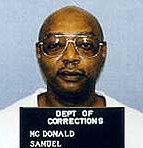
Samuel Lee McDonald
Murderer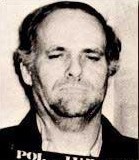 Ervil LeBaron
Murderer · USA · 1972
Ervil Morrell LeBaron (1925 to August 16, 1981) was the leader of a polygamous…
35 victims
Ervil LeBaron
Murderer · USA · 1972
Ervil Morrell LeBaron (1925 to August 16, 1981) was the leader of a polygamous…
35 victims
 Brian Kevin Rosenfeld
Murderer · USA · 1985
Brian Kevin Rosenfeld Brian Kevin Rosenfeld was sentenced to three concurrent l…
23 victims
Brian Kevin Rosenfeld
Murderer · USA · 1985
Brian Kevin Rosenfeld Brian Kevin Rosenfeld was sentenced to three concurrent l…
23 victims
 Marvin Gray
Murderer · USA · 1975
Marvin Gray was convicted killer who claimed responsibility for 23 slayings and…
23 victims
Marvin Gray
Murderer · USA · 1975
Marvin Gray was convicted killer who claimed responsibility for 23 slayings and…
23 victims
 Yahweh ben Yahweh
Murderer · USA · 1980
Yahweh ben Yahweh was born and legally named Hulon Mitchell Jr. (October 27, 19…
23 victims
Yahweh ben Yahweh
Murderer · USA · 1980
Yahweh ben Yahweh was born and legally named Hulon Mitchell Jr. (October 27, 19…
23 victims
 Russell Ellwood
Murderer · USA · 1991
Russell Ellwood was a former taxi driver. Authorities suspected him of killing…
20 victims
Russell Ellwood
Murderer · USA · 1991
Russell Ellwood was a former taxi driver. Authorities suspected him of killing…
20 victims
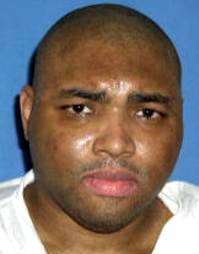 Jermaine Herron
Murderer · USA · 1997
Defendant: Jermaine Herron · Gender: Male · Race: Black · Age: 27 (executed); 1…
2 victims
Jermaine Herron
Murderer · USA · 1997
Defendant: Jermaine Herron · Gender: Male · Race: Black · Age: 27 (executed); 1…
2 victims
 Maureen McDermott
Murderer · USA · 1985
Maureen McDermott was convicted of one count of murder and one count of attempt…
1 victim
Maureen McDermott
Murderer · USA · 1985
Maureen McDermott was convicted of one count of murder and one count of attempt…
1 victim
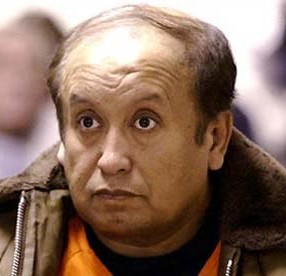 Alfonso Rodriguez
Murderer · USA · 2003
Alfonso Rodriguez, Jr. was sentenced to death on September 22, 2006. Alfonso Ro…
1 victim
Alfonso Rodriguez
Murderer · USA · 2003
Alfonso Rodriguez, Jr. was sentenced to death on September 22, 2006. Alfonso Ro…
1 victim
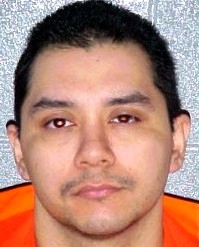 Christopher Lamar
Murderer · USA · 1996
Christopher George Theodore Lamar was sentenced to death on June 1, 2001 (ADC#…
1 victim
Christopher Lamar
Murderer · USA · 1996
Christopher George Theodore Lamar was sentenced to death on June 1, 2001 (ADC#…
1 victim
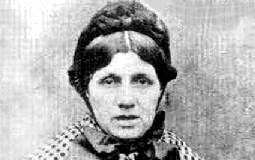 Mary Ann Cotton
Serial killer · United Kingdom · 1857
Mary Ann Cotton was executed by hanging in Durham prison on March 24, 1873. Mar…
21 victims
Mary Ann Cotton
Serial killer · United Kingdom · 1857
Mary Ann Cotton was executed by hanging in Durham prison on March 24, 1873. Mar…
21 victims
- Gender
- male
- Country
- USA
- Location
- St. Louis, Missouri, USA
- Date of birth
- November 7, 1948
- Age at first offence
- 33
- Characteristics
- robbery, convicted rapist
- Victim profile
- Robert Jordan ( off-duty St. Louis County police officer )
- Method of murder
- Shooting
- Date(s) of murder
- May 16, 1981
- Years active
- 1981
- Date of arrest
- Same day
- Status
-
Executed
Executed by lethal injection on September 24, 1997 in Missouri
Case information
- Name: Samuel Lee McDonald
- Case citation: State of Missouri v. Samuel Lee McDonald, 661 S.W. 2d 497 (Mo. banc 1983)
- Procedural posture in federal habeas proceedings: Samuel Lee McDonald appealed the denial of habeas corpus relief and later sought permission to file a successive habeas petition.
Timeline
- 1981-05-16 — Samuel Lee McDonald murdered Robert Jordan, an off-duty St. Louis County police officer, in St. Louis, Missouri.
- 1981-06-12 — McDonald was indicted for capital murder.
- 1982-02-24 — McDonald was convicted of capital murder; the jury recommended a sentence of death in St. Louis City.
- 1982-05-17 — McDonald was sentenced to death.
- 1982-05-18 — McDonald appealed his conviction to the Missouri Supreme Court.
- 1983-11-22 — The Missouri Supreme Court affirmed the conviction and sentence.
- 1985-04-01 — The United States Supreme Court declined to review McDonald’s direct appeal.
- 1985-05-02 — McDonald filed a motion for post-conviction relief.
- 1986-10-27 to 1986-10-29 — An evidentiary hearing was held in the St. Louis Circuit Court on the motion for post-conviction relief.
- 1987-01-20 — The Circuit Court of the City of St. Louis denied McDonald’s motion for post-conviction relief.
- 1988-07-26 — The Missouri Eastern District Court of Appeals affirmed the denial of post-conviction relief.
- 1989-07-07 — McDonald filed a federal petition for a writ of habeas corpus in the U.S. District Court for Eastern Missouri.
- 1995-08-11 — The U.S. District Court for Eastern Missouri denied McDonald’s habeas corpus petition.
- 1996-12-02 — The U.S. Court of Appeals for the Eighth Circuit affirmed the district court’s decision to deny McDonald’s habeas corpus petition.
- 1997-06-02 — The U.S. Supreme Court declined to review McDonald’s habeas corpus petition.
- 1997-07-14 — The Missouri State Supreme Court set an execution date of September 24, 1997.
- 1997-09-19 — The Eighth Circuit motion for authorization to file a second petition for writ of habeas corpus was submitted.
- 1997-09-22 — The Eighth Circuit filed its decision denying the motion.
- 1997-09-24 — McDonald was executed by lethal injection in Missouri.
Background
Samuel Lee McDonald was a death row inmate in Missouri state prison. He was convicted by a jury in Missouri state court of capital murder and sentenced to death. His execution was scheduled for September 24, 1997.
The offence
On the evening of May 16, 1981, Robert Jordan, an off-duty St. Louis County police officer, accompanied his eleven-year-old daughter Rochelle Jordan to the Forest Package Liquor Store to purchase snacks for the weekend. Jordan was dressed as a civilian, but he carried his concealed service revolver in compliance with his police department’s official policy.
That evening, McDonald and his girlfriend Jackqueline (Jacqueline) Blue drove around near the liquor store for several hours. Shortly before 11 p.m., McDonald parked the car a couple of blocks from the store and told Blue he would be back soon. McDonald exited the car, walked to a street corner near the Forest Package Liquor Store, and confronted Jordan and his daughter when they left the store.
McDonald drew and fired a handgun. He wounded Jordan in his chest and left arm. Rochelle Jordan ran back into the store, where she witnessed her father’s killing. McDonald stood over Jordan with his handgun pointed at Jordan. Jordan handed McDonald his wallet containing Jordan’s police badge. McDonald began to turn away, then turned back and fired another shot into Jordan’s chest.
As McDonald fled while taking the wallet, Jordan managed to fire several shots with his service revolver, striking McDonald three times. Jordan then stumbled back into the store, asked for the police, and died shortly thereafter.
McDonald made his way back to Blue’s car and instructed Blue to take him to the hospital. He soon changed his mind and asked Blue to take him to a friend’s house for medical attention, but the friend was not there. McDonald stuffed his shirt down a sewer drain and instructed Blue to take him to a veterans hospital.
At the hospital, McDonald told medical staff that he had been shot in a robbery that took place in a part of town different from where he had robbed and shot Jordan. Despite this story, police discovered that McDonald was the person who had shot and killed Jordan.
Police found Jordan’s wallet in the back of Blue’s car and retrieved McDonald’s blood-soaked shirt from the drain pipe. Police later searched Blue’s car and found Officer Jordan’s wallet and badge in the rear seat. Police also found the revolver used by McDonald in the trunk along with the rest of his clothing, and they were able to retrieve the shirt from the sewer drain.
At trial, the robbery and shooting were described by Rochelle Jordan and two other eyewitnesses as the acts of McDonald. The jury convicted McDonald of having killed Jordan “for the purpose of receiving money or any other thing of monetary value....” The jury sentenced McDonald to death.
Investigation
Police discovered that McDonald was the person who had shot and killed Jordan despite McDonald’s statement to the hospital staff about a different robbery location. Police found Jordan’s wallet and badge in Blue’s car and recovered McDonald’s blood-soaked shirt from the sewer drain. Police also found the revolver used in the killing in the trunk along with the rest of McDonald’s clothing.
Arrest
McDonald was arrested for Jordan’s murder and stood trial in Missouri state court.
Trial
Charges and verdict
A jury convicted McDonald of capital murder for killing Robert Jordan “for the purpose of receiving money or any other thing of monetary value....”
Evidence
Rochelle Jordan, who witnessed the killing from inside the store, testified that McDonald was the individual who had shot and killed her father. Two other eyewitnesses also testified that McDonald was the person who shot and killed Officer Jordan.
Jury sentencing
The jury sentenced McDonald to death. The Missouri Supreme Court affirmed both the conviction and the sentence.
Sentencing
McDonald was sentenced to death on May 17, 1982. The Missouri Supreme Court affirmed the conviction and sentence on November 22, 1983.
Appeals
Missouri Supreme Court (direct appeal)
McDonald appealed to the Missouri Supreme Court. The Missouri Supreme Court affirmed the conviction and sentence.
United States Supreme Court (direct appeal)
The United States Supreme Court declined to review McDonald’s direct appeal on April 1, 1985.
Post-conviction relief in Missouri
McDonald filed a motion for post-conviction relief on May 2, 1985. An evidentiary hearing was held in the St. Louis Circuit Court on October 27–29, 1986. The Circuit Court of the City of St. Louis denied the motion for post-conviction relief on January 20, 1987. The Missouri Eastern District Court of Appeals affirmed that denial on July 26, 1988.
Federal habeas corpus
McDonald filed a federal petition for writ of habeas corpus in the U.S. District Court for Eastern Missouri on July 7, 1989. The district court denied the habeas corpus petition on August 11, 1995. The U.S. Court of Appeals for the Eighth Circuit affirmed the denial on December 2, 1996. The U.S. Supreme Court declined to review McDonald’s habeas corpus petition on June 2, 1997.
In the federal habeas appeal, McDonald argued, among other points, that the district court erred by failing to hold an evidentiary hearing to establish his claim of ineffective assistance of trial counsel and that his constitutional rights were violated by alleged failures including not appointing a psychiatric expert, allegedly improper penalty phase argument by the state, alleged improper trial court conduct, and alleged refusal to grant relief regarding the aggravating circumstance of receiving money. The Eighth Circuit affirmed the district court’s denial of habeas corpus relief.
Issues raised in federal habeas proceedings
McDonald argued:
- the district court erred in denying an evidentiary hearing;
- he was denied assistance of a psychiatric expert during the guilt and penalty phases;
- his counsel provided ineffective assistance by failing to notify the trial court of an intent to rely on a defense of mental disease or defect, and by failing to present such an argument during the penalty phase;
- alleged misconduct by the state trial court violated due process;
- alleged constitutional violations arising from the prosecutor’s closing argument under the Eighth Amendment and due process;
- insufficiency of evidence to support aggravation that he murdered Jordan for the purpose of receiving money;
- insufficiency of evidence to support deliberation, and alleged error in refusing a judgment of acquittal;
- jury instruction issues regarding mitigating circumstances, including an instruction described as jury instruction number thirty that used the term “unanimously.”
The Eighth Circuit concluded that:
- McDonald was not entitled to an evidentiary hearing;
- his arguments regarding psychiatric expert assistance were rejected;
- the ineffective assistance of counsel arguments were rejected;
- the trial court-related claims did not rise to due process violations;
- the prosecutor’s closing argument did not warrant habeas relief;
- claims were procedurally barred where applicable and otherwise rejected; and
- the jury instruction challenged regarding mitigating circumstances did not violate Mills.
Successive federal habeas petition request (Eighth Circuit)
On September 19, 1997, McDonald submitted a motion for an order authorizing a second petition for writ of habeas corpus. On September 22, 1997, the Eighth Circuit denied the motion.
Outcome
McDonald was convicted by a jury in Missouri state court of capital murder and sentenced to death. The United States Supreme Court declined to review the direct appeal, and later declined to review habeas proceedings. The Eighth Circuit affirmed the denial of habeas corpus relief and denied authorization to file a successive federal habeas petition.
McDonald was executed by lethal injection on September 24, 1997, in Missouri.
Aftermath
The Eighth Circuit’s successive petition decision also noted that McDonald’s execution was scheduled for September 24, 1997, at 12:01 a.m. The motion for a stay of execution was denied along with the motion for authorization to file a successive federal habeas petition.
Spotted an error, or have more information about this case?