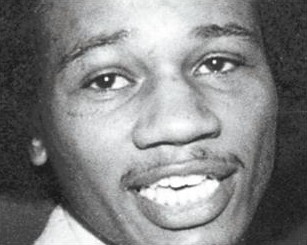
James Dyral Briley
Serial killer Donald Henry Gaskins
Serial killer · USA · 1969
Donald Henry Gaskins, also known as Donald “Pee Wee” Gaskins, was a serial kill…
200 victims
Donald Henry Gaskins
Serial killer · USA · 1969
Donald Henry Gaskins, also known as Donald “Pee Wee” Gaskins, was a serial kill…
200 victims
 Carl Eugene Watts
Serial killer · USA · 1974
Carl Eugene Watts (born November 7, 1953; died September 21, 2007), also known…
100 victims
Carl Eugene Watts
Serial killer · USA · 1974
Carl Eugene Watts (born November 7, 1953; died September 21, 2007), also known…
100 victims
 Rodney Alcala
Serial killer · USA · 1977
Rodney James Alcala (born August 23, 1943) was also known as Rodrigo Jacques Al…
100 victims
Rodney Alcala
Serial killer · USA · 1977
Rodney James Alcala (born August 23, 1943) was also known as Rodrigo Jacques Al…
100 victims
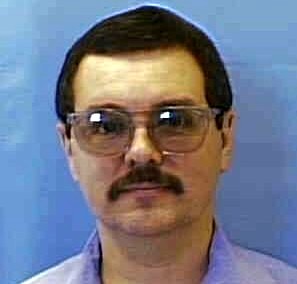 Donald Harvey
Serial killer · USA · 1970
Donald Harvey was known as an American serial killer and a self-professed “Ange…
87 victims
Donald Harvey
Serial killer · USA · 1970
Donald Harvey was known as an American serial killer and a self-professed “Ange…
87 victims
 Donald Leroy Evans
Serial killer · USA · 1975
Donald Leroy Evans (born July 5, 1957) was an American serial killer who murder…
60 victims
Donald Leroy Evans
Serial killer · USA · 1975
Donald Leroy Evans (born July 5, 1957) was an American serial killer who murder…
60 victims
 Michael Swango
Serial killer · USA · 1981
Michael Swango (Joseph Michael Swango) was a physician and American serial kill…
60 victims
Michael Swango
Serial killer · USA · 1981
Michael Swango (Joseph Michael Swango) was a physician and American serial kill…
60 victims
 Martin Bryant
Spree killer · Australia · 1996
Martin Bryant was born May 7, 1967, and was the elder of two children of Mauric…
35 victims
Martin Bryant
Spree killer · Australia · 1996
Martin Bryant was born May 7, 1967, and was the elder of two children of Mauric…
35 victims
 James T. Williams
Murderer · USA · 1995
Defendant: James T. Williams · Supreme Court decision referenced: Supreme Court…
1 victim
James T. Williams
Murderer · USA · 1995
Defendant: James T. Williams · Supreme Court decision referenced: Supreme Court…
1 victim
 Julie Schenecker
Murderer · USA · 2011
Julie Powers Schenecker was born January 13, 1961, in Muscatine, Iowa. She live…
2 victims
Julie Schenecker
Murderer · USA · 2011
Julie Powers Schenecker was born January 13, 1961, in Muscatine, Iowa. She live…
2 victims
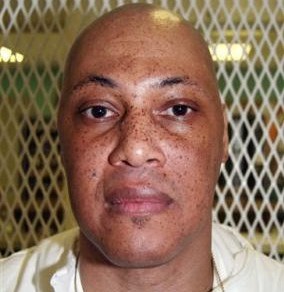 Frank Moore
Murderer · USA · 1994
Frank Moore became involved in a confrontation with Samuel Boyd and Patrick Cla…
2 victims
Frank Moore
Murderer · USA · 1994
Frank Moore became involved in a confrontation with Samuel Boyd and Patrick Cla…
2 victims
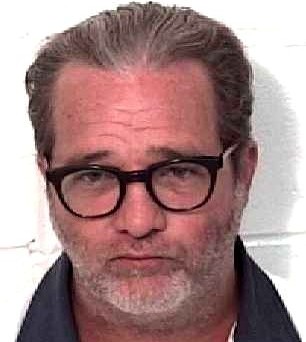 Kim Anthony McMichen
Murderer · USA · 1990
Kim Anthony McMichen was sentenced to death on August 6, 1993. He was convicted…
2 victims
Kim Anthony McMichen
Murderer · USA · 1990
Kim Anthony McMichen was sentenced to death on August 6, 1993. He was convicted…
2 victims
- Gender
- male
- Country
- USA
- Location
- Richmond, Virginia, USA
- Date of birth
- 1956
- Age at first offence
- 23
- Characteristics
- robbery, gang, rape
- Victim profile
- Men and women
- Method of murder
- Shooting
- Date(s) of murder
- 1979
- Years active
- 1979
- Date of arrest
- —
- Status
-
Executed
Executed by electrocution in Virginia on April 18, 1985
Case information
Name: James Dyral Briley
Status and outcome
James Dyral Briley was sentenced to death for capital murders committed during a spree involving robbery and rape. He appealed after the dismissal of his petition for a writ of habeas corpus by the United States District Court; the appellate court affirmed the district court. James Dyral Briley was executed by electrocution in Virginia on April 18, 1985.
Timeline
- March 12, 1979 — Linwood Briley knocked on the door of Henrico County couple William and Virginia Bucher, claimed car trouble, and was allowed into their home; Linwood pulled a gun and waved brother Anthony inside; the two Brileys tied up the couple, looted the house, doused rooms with gasoline, tossed a lit match on the fuel, and fled.
- March 21, 1979 — Michael McDuffie, a vending machine serviceman, was murdered by gang members at his suburban home; the gang shot him dead and then stole valuables.
- April 9, 1979 — The gang followed 76 year old Mary Gowen across town from her babysitting job; she was raped, robbed, and shot to death outside her home.
- July 4, 1979 — Seventeen year old Christopher Philips was spotted hanging around Linwood Briley’s parked car; the gang surrounded him, dragged him into a nearby backyard, pinned him down by three members, and Linwood Briley dropped a cinderblock on his skull, crushing it.
- September 14, 1979 — Disc jockey John “Johnny G.” Gallaher was jumped by Linwood; Gallaher was manhandled into the trunk of his own Lincoln Continental, driven to Mayo Island in the middle of the James River, shot dead at point blank range, and dumped into the river; his remains were found two days later.
- September 30, 1979 — Private nurse Mary Wilfong was followed home to her Richmond apartment; the gang surrounded her just outside the door and Linwood crushed her skull with a baseball bat; the gang then entered her apartment and looted it of valuables.
- October 5, 1979 — Blanche Page, 79, and Charles Garner, 59, were brutally murdered by gang members; Page was bludgeoned to death; Garner was fatally assaulted with a variety of weapons including a baseball bat, five knives, a pair of scissors, and a fork, with the scissors and fork left embedded in Garner’s back.
- October 19, 1979 — James Dyral Briley (J.B.) led the gang during the evening attack in which Judy Barton, her husband Harvey Wilkerson, and their five year old son Harvey were killed; Judy Barton was raped; the adult Harvey Wilkerson was fatally shot in the head; James Briley and Linwood Briley shot Barton and the five year old boy to death.
- Early 1980 — James Briley and Linwood Briley were sent to death row at Mecklenburg Correctional Center near Boydton in early 1980.
- May 31, 1984 — Linwood and J.B. Briley were ringleaders in the six inmate escape from death row on May 31, 1984.
- June 19 — The Brileys were captured on June 19 by a heavily armed group of FBI agents and police and returned to Virginia.
- June 22, 1984 — The district court dismissed the amended petition for a writ of habeas corpus on June 22, 1984.
- October 12, 1984 — Linwood Briley was put to death in Virginia’s electric chair.
- April 18, 1985 — James Dyral Briley was executed by electrocution in Virginia.
Background
James Dyral Briley was one of the Briley brothers responsible for a killing spree in Richmond, Virginia, United States in 1979. The spree terrorized the city and surrounding suburbs and struck victims described as both black and white, suburban and urban, well-to-do and humble.
The brothers were born to a stable home with two parents on the Northeast side of Richmond. They were described as ones who would help neighbors fix cars or mow lawns. A dark world was described as existing inside their house on Fourth Avenue, where the three boys collected deadly pets, including tarantulas, piranhas, Dobermans, and boa constrictors. Their father, James Briley, Sr., kept his bedroom door padlocked from the inside overnight.
In 1971, the first killing was committed by the then 16 year old Linwood by taking aim with a rifle from his bedroom window and fatally shooting elderly next door neighbor Orline Christian as she passed by her window sill. A small caliber bullet wound in her back was found upon reexamination, and Linwood admitted the crime, stating: “I heard she had heart problems, she would have died soon anyway.” Linwood was sent to reform school to serve a one-year sentence for the killing.
James Briley (J.B.) was described as being sentenced to time in juvenile hall for having pulled a gun and fired upon a police officer in the midst of a pursuit.
The offence
Crimes during the spree
The 1979 spree involved the Briley brothers and accomplice Duncan Meekins and included robberies, shootings, rape, and killings.
March 12 (Henrico County Bucher home) — Linwood Briley claimed he had car trouble and needed to use their phone, and was allowed into the home of William and Virginia Bucher; Linwood pulled a gun on the couple and waved brother Anthony inside; the two Brileys tied up the couple and looted the house, dousing each room with gasoline after picking it clean of valuables; as they left, a lit match was tossed on the fuel; they packed stolen loot including a television, cb radio, and jewelry into their trunk and sped off; the couple escaped just before the house became engulfed in flames and were the only survivors of the rampage.
March 21 (Michael McDuffie) — Michael McDuffie, a vending machine serviceman, was murdered at his suburban home; gang members shot him dead and proceeded to steal valuables.
April 9 (Mary Gowen) — Seventy-six year old Mary Gowen was followed across town from her babysitting job; she was raped, robbed, and shot to death outside her home.
July 4 (Christopher Philips) — Seventeen year old Christopher Philips was suspected of trying to break into Linwood Briley’s parked car; the gang surrounded him and dragged him into a nearby backyard; he was pinned to the ground by three members and screamed for help; Linwood Briley dropped a cinderblock on his skull, crushing it.
September 14 (John “Johnny G.” Gallaher) — Disc jockey John “Johnny G.” Gallaher was performing with his band at a South Richmond nightclub; he stepped out between sets and encountered the Briley gang; the gang decided to lie-in-wait for a victim and then jumped him; Gallaher was manhandled into the trunk of his own Lincoln Continental, driven out to Mayo Island in the middle of the James River, where remnants of an abandoned paper mill stood; he was removed from the trunk and shot dead and point blank range; his body was dumped into the river; the remains were found two days later; when arrested months later, Linwood was still wearing a ring stolen from Gallaher’s hand.
September 30 (Mary Wilfong) — Private nurse Mary Wilfong, 62, was followed home to her Richmond apartment; the gang surrounded her just outside the door; Linwood crushed her skull with a baseball bat; the gang entered the apartment and looted valuables.
October 5 (Blanche Page and Charles Garner) — Blanche Page, 79, and Charles Garner, 59, were murdered; Page was bludgeoned to death; Garner was fatally assaulted with a variety of weapons, including a baseball bat, five knives, a pair of scissors, and a fork; the pair of scissors and the fork were left embedded in Garner’s back.
The October 19, 1979 killings involving Judy Barton and Harvey Wilkerson
On the morning of October 19, James Briley had promised a judge earlier that day that he was staying out of trouble while out on parole for a 1973 robbery and malicious wounding conviction. During the night, upon seeing the gang’s presence down the street, Wilkerson—who lived with his 23 year old wife Judy Barton, who was five months pregnant, and her five year old son Harvey—closed and locked his door. This action was noticed by the gang, which walked over to Wilkerson’s front door and knocked; Wilkerson allowed the gang in due to fear of their response if he refused.
Both adults were overpowered, bound, and gagged with duct tape. Linwood Briley manhandled Judy Barton into the kitchen, where she was raped within hearing distance of the others. Duncan Meekins continued the sexual assault; Linwood dragged Barton back into the living room, briefly rummaged the premises for valuables, and then left the house. The three remaining gang members covered the victims with sheets. J.B. told Meekins, “you’ve got to get one,” and Meekins took a pistol and fatally shot the adult Harvey Wilkerson in the head. J.B. then shot Barton and the five year old boy to death.
Police in the general vicinity heard the shots and later saw gang members running down the street at high speed, but did not know where the shots had been fired. The bodies were not discovered until three days following the crime, though the gang members were soon rounded up afterwards.
Investigation and arrest
Capture after the death row escape
The Brileys were captured on June 19 by a heavily armed group of FBI agents and police. After returning to Virginia, few sought to plead for their lives to be spared.
During interrogation by police, Duncan Meekins was offered a plea agreement in return for turning state’s evidence against the Brileys. He accepted and provided a full detailing of the seventh month crime spree. As a result, he escaped the death penalty and was briefly incarcerated at a Virginia prison away from any of the Briley brothers.
Trial
Charges and convictions
James Dyral Briley was convicted in a bifurcated jury trial in the Circuit Court of the City of Richmond, Virginia, in January 1980 of:
- the capital murder of five year old Harvey Barton during the commission of an armed robbery;
- the capital murder of Judy Barton, Harvey’s mother, during the commission of or subsequent to rape; and several other non-capital crimes.
The jury recommended death for both capital murders at the penalty stage, and the state trial court imposed sentence accordingly.
During the trial, Briley did not testify. The Commonwealth relied principally on testimony from Meekins, who had entered into a plea bargain with the Commonwealth.
Sentencing proceedings
At the penalty stage of the bifurcated trial, the trial judge instructed the jury regarding punishment and the two aggravating alternatives.
The appellate opinion included the jury instruction that stated:
Ladies and gentlemen of the jury, the Court will now instruct you as to the punishment aspect of the case. You have convicted the defendant of an offense which may be punishable by death. You must decide whether the defendant shall be sentenced to death or to life imprisonment. Before the penalty can be fixed at death, the Commonwealth must prove beyond a reasonable doubt at least one of the following two alternatives: One, that, after consideration of his past criminal record, there is a probability that he would commit criminal acts of violence that would constitute a continuing, serious threat to society; or, two, that his conduct in committing the offense was outrageous and wantonly vile, horrible or inhuman in that it involved torture, depravity of mind, or aggravated battery to the victim beyond the minimum necessary to accomplish the act of murder. If you find from the evidence that the Commonwealth has proven beyond a reasonable doubt either or the two alternatives, then you shall fix the punishment of the defendant at death; or if you believe from all the evidence that the death penalty is not justified, then you shall fix the punishment of the defendant at life imprisonment. If the Commonwealth has failed to prove either alternative beyond a reasonable doubt, then you shall fix the punishment of the defendant at life imprisonment. You have, you have really found him guilty of two capital murders. This one instruction will take care of both capital murders. That's what you must find. Then I give you the forms of your verdict, which read: We, the jury, on the issues joined, having found the defendant guilty of capital murder of Judy Diane Barton, the commission of robbery while armed with a deadly weapon, and having found that, now you will have to scratch out what you do not find. In other words, you will use your pencil or pen and just scratch that out. One, after consideration of his past criminal record, that there is a probability that he would commit criminal acts of violence that would constitute a continuing, serious threat to society and/or you can find both or one. His conduct in committing the offense is outrageously or wantonly vile, horrible, or inhuman in that, it involved torture, depravity of mind, aggravated battery of the victim beyond the minimum necessary to accomplish the act of murder, and having considered the evidence in mitigation of the offense, unanimously fix his punishment at death; or, we, the jury, on the issues joined, having found the defendant guilty of capital murder of Judy Diane Barton during the commission of robbery while armed with a deadly weapon and having considered all the evidence in aggravation and mitigation of such offense, fix his punishment at imprisonment for life. In any event, your foreperson will find that verdict. You will also have another verdict on Harvey Wayne Barton, which is, and won't cross out the same thing: We, the jury, on the issues joined, having found the defendant guilty of capital murder of Harvey Wayne Barton during the commission of robbery while armed with a deadly weapon and having found that, then you must find one of these two things, or both. After consideration of his past criminal record, that there is a probability that he will commit criminal acts of violence that will constitute a continuing, serious threat to society or, and/or his conduct in committing the offense is outrageously or wantonly vile, horrible, or inhuman in that it involved torture, and that means depravity of mind, aggravated battery of the victim beyond a minimum necessary to accomplish the act of murder, and having considered the evidence in mitigation of the offense, unanimously fix his punishment at death; or, we, the jury, on the issues joined, having found the defendant guilty of capital murder of Harvey Wayne Barton during the commission of robbery while armed with a deadly weapon and having considered all the evidence in aggravation and mitigation of such offense, fix his punishment at imprisonment for life. In any event, your foreperson will sign that verdict.
The appellate opinion also included the alternative jury verdict forms read to the jury:
ALTERNATIVE JURY VERDICTS Cross out any paragraph, word or phrase which you do not find beyond a reasonable doubt. We, the jury, on the issue joined, having found the defendant guilty of capital murder of Harvey Wayne Barton [Judy Diane Barton] during the commission of robbery while armed with a deadly weapon [and/or during the commission of or subsequent to rape] and having found that, after consideration of his past criminal record that there is a probability that he would commit criminal acts of violence that would constitute a continuing serious threat to society, and/or his conduct in committing the offense is outrageously or wantonly vile, horrible or inhuman in that it involved torture (depravity of mind; aggravated battery to the victim beyond the minimum necessary to accomplish the act of murder) and having considered the evidence in mitigation of the offense, unanimously fix his punishment at death. OR We, the jury, on the issue joined, having found the defendant guilty of capital murder of Harvey Wayne Barton [Judy Diane Barton] during the commission of robbery while armed with a deadly weapon and having considered all of the evidence in aggravation and mitigation of such offense, fix his punishment at imprisonment for life.
After instructions and closing arguments, the jury retired. After three quarters of an hour, the jury returned verdicts fixing punishment for both capital murders at death. The court polled the jury, and each juror affirmed that he or she had found both aggravating circumstances to exist and agreed with the verdicts for both offenses. At no time during trial was any objection taken by the defense to the form of the instructions.
Appeals
State court proceedings
On direct appeal, the Supreme Court of Virginia affirmed Briley’s convictions and sentences (James Dyral Briley v. Commonwealth, 221 Va. 563, 273 S.E.2d 57 (1980)). Briley did not seek certiorari from the United States Supreme Court.
Briley filed for writ of habeas corpus under 28 U.S.C. Sec. 2254 in the United States District Court for the Eastern District of Virginia on March 5, 1981; the district court dismissed that petition. The federal circuit stayed execution and remanded with instructions to retain jurisdiction and hold the case in abeyance pending completion of state habeas corpus proceedings instituted on March 16, 1981.
The state circuit court dismissed all but two of Briley’s numerous collateral claims without a hearing and rejected the remaining two, including an ineffective assistance of counsel claim, following an evidentiary hearing. The Virginia Supreme Court, in an unpublished opinion refusing Briley’s petition to appeal, found no error in the rulings below, and the United States Supreme Court denied certiorari (460 U.S. 1103, 103 S.Ct. 1804, 76 L.Ed.2d 367 (1983)).
Briley filed on June 3, 1983 the amended petition for a writ of habeas corpus that was the subject of the appeal. The district court dismissed that petition on June 22, 1984.
Federal appeal decision
The appellate opinion recorded that it affirmed the district court’s dismissal, stating: “We find no merit in his contentions, and we affirm the decision of the District Court.”
Briley’s appeal argued multiple claims of error in three categories:
- constitutionality of jury instructions and other procedures at the penalty stage of the bifurcated trial;
- exclusion of prospective jurors on the basis of inability to impose the death penalty;
- ineffective assistance of counsel.
The appellate opinion addressed and rejected claims including:
- that jury instructions failed to inform the jury adequately of its option to recommend life imprisonment and its obligation to consider mitigating circumstances;
- that failure to offer a fuller explanation of mitigation rendered the sentences unconstitutional;
- that the “outrageously or wantonly vile, horrible or inhuman” aggravating circumstance was not sufficiently defined to genuinely narrow the class of persons eligible for the death penalty;
- that jury verdict forms were unconstitutionally ambiguous using “and/or,” and that the prosecutor’s argument compounded this; the appellate opinion noted that the jury had been polled and each juror affirmed both aggravating circumstances;
- that juror exclusions violated Witherspoon;
- that counsel was ineffective at both guilt and penalty stages, including allegations at the penalty stage based on mitigation evidence and failure to object to instructions.
In discussing the verdict forms and aggravating circumstances, the appellate opinion stated that the jury polled after the verdicts, and “each juror affirmed that both aggravating circumstances were present beyond a reasonable doubt,” rendering any alleged error moot.
The appellate opinion concluded with an order:
- “AFFIRMED.”
- “The stay of execution shall be dissolved upon issuance of the mandate.”
- “We direct that issuance of the mandate be stayed pending timely application for review by the United States Supreme Court.”
Sentencing
James Dyral Briley received death sentences for two capital murders: Judy Barton and her son Harvey.
Because of Virginia’s “triggerman” statute, it was described that both J.B. and Linwood received numerous life sentences for murders committed during the spree but faced capital charges only in cases where they had physically committed the actual killing of the victim. Linwood was sentenced to death for the abduction and murder of John Gallaher; J.B. received two death sentences, one each for the murders of Judy Barton and her son Harvey.
A Richmond judge presiding at one of the trials summarized the case following the verdict: “this was the vilest rampage of rape, murder and robbery that the court has seen in thirty years.”
Other details
Death row incarceration and prison events
James Briley and Linwood Briley were sent to death row at Mecklenburg Correctional Center near Boydton in early 1980. There, they were described as disruptive inmates who used guile and physical prowess to threaten fellow inmate and guard alike. A flourishing drug and weapon trade operated in the prison under their command.
They were the ringleaders in the six inmate escape from death row on May 31, 1984. During the early moments of the escape, with a coordinated effort resulting in inmates taking over the death row unit, both Brileys expressed strong interest in killing the officers they had taken hostage. They doused captive guards in lighter fluid and were prepared to toss in a lit match to complete the action. Willie Lloyd Turner stepped in front of James Briley and forbade him from doing so.
Alexandria, Virginia cop killer Wilbert Evans prevented Linwood Briley from raping a female nurse who had been taken hostage while en route to delivering medication to inmates in the unit. These events were described as being featured on I.D. Channel in Escape from Death Row.
Splitting off from their two remaining free escapees at Philadelphia, Pennsylvania, the Brileys went to live with their uncle in the north part of the city.
Anthony Briley and parole
Anthony Briley received a single life sentence, with parole eligibility, due to his limited involvement in the killings. His younger brother remains incarcerated in Virginia’s corrections system and comes up for parole consideration every few years. His applications for parole were denied by the state parole board.
Additional legal context in the appellate opinion
At the penalty stage, Virginia law required the jury to find either aggravating circumstance proven beyond a reasonable doubt before death penalty could be imposed:
- “that there is a probability [based upon consideration of the defendant's past criminal record] that the defendant would commit criminal acts of violence that would constitute a continuing serious threat to society;” or
- “that his conduct in committing the offense ... was outrageously or wantonly vile, horrible or inhuman in that it involved torture, depravity of mind or an aggravated battery to the victim.”
The appellate opinion also recorded the statutory framework and discussion of mitigating evidence consideration, as well as the arguments and counterarguments addressed by the court, including Strickland v. Washington standards for ineffective assistance of counsel.
Spotted an error, or have more information about this case?