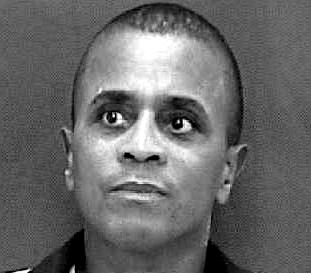
Willie James Hall
Murderer Brian Kevin Rosenfeld
Murderer · USA · 1985
Brian Kevin Rosenfeld Brian Kevin Rosenfeld was sentenced to three concurrent l…
23 victims
Brian Kevin Rosenfeld
Murderer · USA · 1985
Brian Kevin Rosenfeld Brian Kevin Rosenfeld was sentenced to three concurrent l…
23 victims
 Yahweh ben Yahweh
Murderer · USA · 1980
Yahweh ben Yahweh was born and legally named Hulon Mitchell Jr. (October 27, 19…
23 victims
Yahweh ben Yahweh
Murderer · USA · 1980
Yahweh ben Yahweh was born and legally named Hulon Mitchell Jr. (October 27, 19…
23 victims
 Russell Ellwood
Murderer · USA · 1991
Russell Ellwood was a former taxi driver. Authorities suspected him of killing…
20 victims
Russell Ellwood
Murderer · USA · 1991
Russell Ellwood was a former taxi driver. Authorities suspected him of killing…
20 victims
 Robert Martines Perez
Murderer · USA · 1994
Name: Robert Martines Perez · Other name used in proceedings: Robert Martinez P…
15 victims
Robert Martines Perez
Murderer · USA · 1994
Name: Robert Martines Perez · Other name used in proceedings: Robert Martinez P…
15 victims
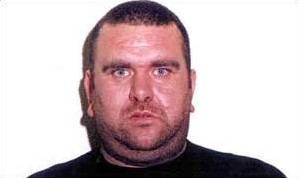 Philip John Smith
Spree killer · United Kingdom · 2000
Philip John Smith was a former fairground worker and taxi driver who was servin…
3 victims
Philip John Smith
Spree killer · United Kingdom · 2000
Philip John Smith was a former fairground worker and taxi driver who was servin…
3 victims
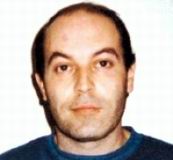 Paul Culshaw
Murderer · United Kingdom · 2004
Paul Culshaw (born 1969) was a British convicted murderer and sex offender. He…
1 victim
Paul Culshaw
Murderer · United Kingdom · 2004
Paul Culshaw (born 1969) was a British convicted murderer and sex offender. He…
1 victim
 Giselle Esteban
Murderer · USA · 2011
Michelle Hoang Thi Le was a 26-year old nursing student who disappeared on May…
1 victim
Giselle Esteban
Murderer · USA · 2011
Michelle Hoang Thi Le was a 26-year old nursing student who disappeared on May…
1 victim
 Erika Sifrit
Murderer · USA · 2002
Erika Sifrit and Benjamin Sifrit gained notoriety in 2002 for the murders of Jo…
2 victims
Erika Sifrit
Murderer · USA · 2002
Erika Sifrit and Benjamin Sifrit gained notoriety in 2002 for the murders of Jo…
2 victims
- Gender
- male
- Country
- USA
- Location
- DeKalb County, Georgia, USA
- Date of birth
- 1956
- Age at first offence
- 32
- Characteristics
- parricide
- Victim profile
- Thelma Hall, 23 (his estranged wife)
- Method of murder
- St abbing with knife
- Date(s) of murder
- July 11, 1988
- Years active
- 1988
- Date of arrest
- Same day
- Status
-
Sentenced to death
Sentenced to death on February 27, 1989
Case overview
Willie James "Bo" Hall, 40, was sentenced to death in DeKalb County in February 1989 for killing his estranged wife, Thelma Hall, 23. Thelma moved out of the family home six days before her murder.
Timeline
- July 5, 1988 — Thelma Hall moved in with a friend, Valeria Hudson.
- July 10, 1988 — Hall told his wife's sister that he was looking for Thelma and said: "I am gonna kill her," and predicted: "I couldn't get no more than ten years."
- July 11, 1988 — A 911 operator received a call from Thelma Hall that was tape-recorded; the operator heard the sound of breaking glass and listened to Thelma Hall's final words.
- September 12, 1988 — Hall was indicted.
- February 2, 1989 — A jury in the Superior Court of DeKalb County, Georgia found Hall guilty as charged on four counts.
- February 3, 1989 — Hall was sentenced to death for the murder convictions and received 20 years for burglary.
- February 8, 1989 — A motion for new trial was filed.
- March 30, 1989 — The motion for new trial was denied.
- May 4, 1989 — The case was docketed in the Supreme Court of Georgia.
- June 27, 1989 — Oral arguments were heard.
- September 11, 1989 — The Supreme Court of Georgia affirmed Hall's convictions and sentences in Hall v. State, 259 Ga. 412, 413, 383 S.E.2d 128 (1989).
- October 20, 1992 — A petition for a writ of habeas corpus was denied following an evidentiary hearing in the Superior Court of Butts County, Georgia.
- July 27, 1993 — The Superior Court of Butts County denied habeas corpus relief.
- March 1, 1994 — The Supreme Court of Georgia denied an application for a certificate of probable cause to appeal.
- April 23, 1997 — Hall filed a petition for writ of habeas corpus in the United States District Court for the Northern District of Georgia, Atlanta Division.
- August 15, 2001 — The federal district court granted partial relief as to sentence in Case No. 97-00723-CV and clarified that order again.
- August 16, 2001 — The federal district court clarified its order again.
- October 25, 2002 — The Eleventh Circuit denied relief, reversed the decision of the district court, and reinstated Hall's death sentence in Hall v. Head, 310 F.3d 683 (11th Cir. 2002).
- June 9, 2003 — Hall filed a Petition for Writ of Certiorari in the U.S. Supreme Court without necessary supporting documentation attached.
- August 4, 2003 — Hall filed a Corrected Petition for Writ of Certiorari.
- October 6, 2003 — The U.S. Supreme Court denied certiorari.
- January 27, 2004 — Attorney General Thurbert E. Baker stated the execution was scheduled at 7 p.m.
- February 3, 2004 — The seven-day execution window was scheduled to end at noon.
The offence
Hall and his wife Thelma had a tumultuous marriage. On July 5, 1988, Thelma moved in with a friend, Valeria Hudson. That weekend, Hall was observed by several persons lurking near Hudson's apartment.
On Monday morning, July 11, a 911 operator received a call from Thelma Hall. The call was tape-recorded and was played at trial. Thelma reported that someone was "trying to break in the house." The 911 operator obtained her address and asked whether she knew who it was outside her house. She responded that she did not think so. Immediately afterward, the operator heard the sound of breaking glass and then listened to Thelma Hall's final words:
No . . . Stop, stop, stop Bo . . . stop it Stop it, stop it Bo stop it, stop it the police are on the way Please, Bo, quit it Bo, stop Bo, stop it please Bo, stop it Bo, stop, stop it Stop it . . . Please Bo, please stop Stop it Oh God Stop Bo Bo, please, please Bo, please Bo, Bo stop Stop Bo please Oh God . . . Oh . . .
The police arrived within minutes and discovered Thelma Hall's body. She had been stabbed 17 times, including a series of stab wounds in a pattern about the neck like a "necklace."
Two shoe prints matching the defendant's were found on the scene along with several of his fingerprints.
Investigation
The investigation involved the tape-recorded 911 call from Thelma Hall, which was played at trial. Police arrived within minutes after the 911 call.
Arrest
Hall was indicted on September 12, 1988.
Trial
The DeKalb County Grand Jury indicted Hall for murder, felony murder (2 counts), and burglary.
A jury in the Superior Court of DeKalb County, Georgia found Hall guilty as charged on all four counts on February 2, 1989.
At sentencing on February 3, 1989, Hall received:
- a death sentence for the murder convictions
- 20 years for burglary, to run concurrent with counts 1, 2 and 3
Appeals
Direct appeal
The Supreme Court of Georgia affirmed Hall’s convictions and sentences in Hall v. State, 259 Ga. 412, 413, 383 S.E.2d 128 (1989).
In the decision, the court addressed Hall’s claims as follows:
Hall contended the voir dire examination was overly restrictive and that the trial court erred by disallowing defense questions about the recent Ted Bundy execution and about a local radio call-in show dealing with the meaning of the life imprisonment sentence, and by refusing to allow him to ask prospective jurors to specify "a reason" that would warrant a sentence less than death. The court stated there was no error.
During closing argument of the sentencing phase, the district attorney argued:
- "You may think of an analogy in certain ways about the way people sometimes felt about DUI's twenty years ago, oh, well, you know, no big deal, we will reduce it down and give a little warning. That's not the way it is anymore. And that is not the way it should be with domestic violence. . . . But let me just ask you to think that perhaps in some way in the future the public may feel somewhat the same about domestic violence as they now do about . . . vehicular homicides. Let us all hope that the public feels that way, and if it deters one person, it is worth it. . . . I am asking you to deliver a message." Hall contended these remarks impermissibly referred to matters outside of evidence and were an invocation of prosecutorial expertise. The court held it was not error to refer during closing argument to matters within the common knowledge of all reasonable people and found the analogy to DUI cases was not improper.
At the hearing on the motion for new trial, a paralegal for Hall testified that she had interviewed ten of the twelve jurors. She stated that two jurors claimed they had been convinced to change their vote from a sentence of life imprisonment to the death penalty because other jurors in the juror room informed [them] that there was no such thing as life imprisonment without parole. Hall argued this fell within an exception to the rule that jurors cannot impeach their own verdict. The court found that the events in this case did not fall within any exception and that the evidence supported the findings.
The court found that the death sentence was not imposed under the impermissible influence of passion, prejudice, or other arbitrary factor, and that it was not excessive or disproportionate to the penalty imposed in similar cases. The court listed similar cases supporting imposition of the death penalty:
- Jefferson v. State, 256 Ga. 821 (353 SE2d 468) (1987)
- Davis v. State, 255 Ga. 598 (340 SE2d 869) (1986)
- Roberts v. State, 252 Ga. 227 (314 SE2d 83) (1984)
- Berryhill v. State, 249 Ga. 442 (291 SE2d 685) (1982)
- Dick v. State, 246 Ga. 697 (273 SE2d 124) (1980)
- Amadeo v. State, 243 Ga. 627 (255 SE2d 718) (1979)
- Bowden v. State, 239 Ga. 821 (238 SE2d 905) (1977)
- Young v. State, 237 Ga. 852 (230 SE2d 287) (1976)
- Pulliam v. State, 236 Ga. 460 (224 SE2d 8) (1976)
- Dobbs v. State, 236 Ga. 427 (224 SE2d 3) (1976)
- Goodwin v. State, 236 Ga. 339 (223 SE2d 703) (1976)
- Moore v. State, 233 Ga. 861 (213 SE2d 829) (1975)
The decision included the statement: "This is a death penalty case. Willie James (Bo) Hall was convicted of murder and burglary. He was sentenced to death for the murder. We affirm."
State habeas corpus
Hall, represented by Michael Mears, filed a petition for a writ of habeas corpus in the Superior Court of Butts County, Georgia, which was denied after an evidentiary hearing on October 20, 1992.
The Superior Court of Butts County denied habeas corpus relief on July 27, 1993.
The Supreme Court of Georgia subsequently denied an application for a certificate of probable cause to appeal on March 1, 1994.
Federal habeas corpus
Hall, represented by Mildred H. Geckler, filed a petition for writ of habeas corpus in the United States District Court for the Northern District of Georgia, Atlanta Division, on April 23, 1997.
Hall raised the following issues:
- Ineffective assistance of counsel
- Denied a full and fair hearing in his state habeas proceedings
- State used peremptory challenges in a racially discriminatory manner
- Trial court erred in refusing to instruct the jury on voluntary manslaughter
- State suppressed material exculpatory evidence
- Trial court refused to provided Hall with independent expert witnesses to consult with defense counsel regarding evidence offered by the State
- District Attorney’s improper and prejudicial closing arguments
- Jurors hid their true beliefs about the meaning of a life sentence, and voted for death because the trail court would not assure them that if they voted for life Hall would remain incarcerated for life
- Death sentence imposed against Hall is racially biased
- Trial court erred when it failed to vacate the convictions for felony murder and subsequently presented those counts to the jury for sentencing consideration
- The use as evidence against him and the publication in open court before the jury of a 911 recording violated his rights
- The trial court erred in allowing the State to elicit hearsay testimony from key prosecution witnesses
- The trial court unreasonably restricted counsel’s voir dire
- Death qualification of jurors violated Hall’s rights
- Defense counsel was prevented from ascertaining whether prospective jurors would automatically vote to impose the death penalty
- Improper excusal of prospective jurors for purported scruples against the death penalty
- Trial court erred in permitting the jury to convict Hall of three counts of murder for one offense
- Mental illness prevented Hall from accepting advice of counsel and a life plea
- Cumulative error
- UAP is unconstitutional
- Death penalty is cruel and unusual punishment
Hall amended the petition on August 15, 1997.
The federal district court granted partial relief as to sentence in Case No. 97-00723-CV on August 15, 2001 and clarified that order again on August 16, 2001.
Appeal to the Eleventh Circuit
Both parties appealed the district court decision to the Eleventh Circuit. The Eleventh Circuit, in its decision of October 25, 2002, denied relief, reversed the decision of the district court, and reinstated Hall's death sentence in Hall v. Head, 310 F.3d 683 (11th Cir. 2002).
U.S. Supreme Court certiorari
Hall filed a Petition for Writ of Certiorari in the U.S. Supreme Court on June 9, 2003 without necessary supporting documentation attached. Hall then filed a Corrected Petition for Writ of Certiorari on August 4, 2003. The U.S. Supreme Court denied certiorari on October 6, 2003.
Sentencing
Hall was sentenced to death on February 3, 1989 for the murder convictions.
Hall also received 20 years for burglary, to run concurrent with counts 1, 2 and 3.
A paralegal for Hall testified at the hearing on the motion for new trial about juror votes changing from life imprisonment to death based on information allegedly shared in the jury room. The court rejected the argument in the direct appeal decision.
Outcome
State, 259 Ga. 412, 413, 383 S.E.2d 128 (1989).
The Eleventh Circuit reversed the district court and reinstated Hall’s death sentence in Hall v. Head, 310 F.3d 683 (11th Cir. 2002).
The U.S.
Aftermath
Attorney General Thurbert E. Baker announced an execution date for Willie James Hall. Baker stated that Hall was scheduled to be executed at 7 p.m. on January 27, 2004.
A Superior Court order for DeKalb County set the seven-day window in which the execution may occur to begin at noon, January 27, 2004 and to end seven days later at noon on February 3, 2004. The Commissioner of the Department of Corrections set the specific date and time for the execution as 7:00pm on January 27, 2004.
Hall concluded his direct appeal, as well as state and federal habeas corpus proceedings.
Other details
- The case was identified with docket number: 47019.
- The appellant counsel was Tony L. Axam.
- The appellee was represented by Robert E. Wilson, District Attorney; James W. Richter and Eleni Ann Pryles, Assistant District Attorneys; and Michael J. Bowers, Attorney General; and Andrew S. Ree.
- The court's decision included: Hall v. State, 259 Ga. 412, 413, 383 S.E.2d 128 (1989).
- The incident included several persons observing Hall lurking near Hudson's apartment during the weekend after Thelma moved in with Valeria Hudson.
- The crime was committed on July 11, 1988.
- Hall was convicted and sentenced to death on February 3, 1989.
- A motion for new trial was filed February 8, 1989 and denied March 30, 1989.
- The case was docketed in the Supreme Court of Georgia on May 4, 1989 and oral arguments were heard June 27, 1989.


Spotted an error, or have more information about this case?