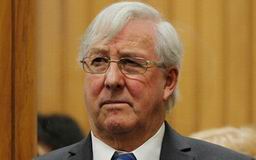
Menzies Hallett
Murderer David Tamihere
Murderer · New Zealand · 1972
David Tamihere was sentenced to life imprisonment with a 10-year non-parole per…
3 victims
David Tamihere
Murderer · New Zealand · 1972
David Tamihere was sentenced to life imprisonment with a 10-year non-parole per…
3 victims
 Gary Lawrence McKinley
Murderer · New Zealand · 1986
Gary Lawrence McKinley was sentenced to life imprisonment in June 1987 after th…
1 victim
Gary Lawrence McKinley
Murderer · New Zealand · 1986
Gary Lawrence McKinley was sentenced to life imprisonment in June 1987 after th…
1 victim
 Paul Joseph Dally
Murderer · New Zealand · 1989
Paul Joseph Dally kidnapped Karla Cardno, 13, in Lower Hutt on May 26, 1989. He…
1 victim
Paul Joseph Dally
Murderer · New Zealand · 1989
Paul Joseph Dally kidnapped Karla Cardno, 13, in Lower Hutt on May 26, 1989. He…
1 victim
 Peter Howse
Murderer · New Zealand · 1982
Peter Howse was a convicted murderer and rapist who was sentenced to life in pr…
1 victim
Peter Howse
Murderer · New Zealand · 1982
Peter Howse was a convicted murderer and rapist who was sentenced to life in pr…
1 victim
 Terry Jess Dennis
Murderer · USA · 1999
Terry Jess Dennis was a male white/Caucasian death row inmate named DENNIS, TER…
1 victim
Terry Jess Dennis
Murderer · USA · 1999
Terry Jess Dennis was a male white/Caucasian death row inmate named DENNIS, TER…
1 victim
 Robert Bryant
Mass murderer · USA · 2002
Robert Bryant lived in California before moving to Oregon. He was described as…
5 victims
Robert Bryant
Mass murderer · USA · 2002
Robert Bryant lived in California before moving to Oregon. He was described as…
5 victims
 Dwaine Little
Homicide - Murderer · USA · 1964
Name: Dwaine Little (Dwain Lee Little) · Birth year: 1948 · Little raped and ki…
5 victims
Dwaine Little
Homicide - Murderer · USA · 1964
Name: Dwaine Little (Dwain Lee Little) · Birth year: 1948 · Little raped and ki…
5 victims
 Mark Anthony Gill
Murderer · USA · 2002
Mark Anthony Gill — defendant · Ralph Lee Lape, Jr. — victim · Justin Brown — a…
1 victim
Mark Anthony Gill
Murderer · USA · 2002
Mark Anthony Gill — defendant · Ralph Lee Lape, Jr. — victim · Justin Brown — a…
1 victim
 Glenn Barker
Murderer · USA · 1982
Glenn Haslam Barker was a basketball coach for the South Brunswick Family YMCA.…
3 victims
Glenn Barker
Murderer · USA · 1982
Glenn Haslam Barker was a basketball coach for the South Brunswick Family YMCA.…
3 victims
- Gender
- male
- Country
- New Zealand
- Location
- Turangi, Waikato Region, North Island, New Zealand
- Date of birth
- 1941
- Age at first offence
- 38
- Characteristics
- alcohol, disputes, attempted rape
- Victim profile
- Rodney Tahu, 32 (service station worker)
- Method of murder
- Shooting ( .22 revolver)
- Date(s) of murder
- August 16, 1979
- Years active
- 1979
- Date of arrest
- January 2012 (32 years after)
- Status
-
Life imprisonment
Sentenced to life in prison on July 12, 2013
Case information
Name: Menzies Hallett Age: 72 Year of sentencing status: Sentenced to life in prison on July 12, 2013
Timeline
- August 16, 1979 — Rodney Tahu was shot outside a Turangi Shell service station after refusing to re-open the station for Menzies Hallett to buy oil.
- July 12, 2013 — Menzies Hallett was sentenced to life in prison by the High Court at Rotorua; the court held he would have to serve 10 years before being eligible for parole.
- May 15, 2013 — The High Court judge released reasons for refusing Hallett the defence of provocation and for allowing evidence from Hallett’s former wife.
- April 30, 2013 — Susan Sharpe gave evidence describing Hallett’s confession; Hallett made a shock retraction of an earlier admission that he had killed Rodney Tahu.
- May 1, 2013 — The jury found Menzies Hallett guilty of murdering Rodney Tahu.
- May 4, 2013 — Family and acquaintances discussed Hallett’s background and the case after the conviction.
Background
Menzies Reginald John Hallett came from a respected family; the family name was given to Halletts Bay on the eastern shore of Lake Taupo. Taupo Mayor Rick Cooper described Hallett as having been “well bred,” and said his parents were Walter “Reg” and Effie Hallett. Hallett worked in his father’s sporting goods store before he moved to Taupo.
Hallett married his first wife, Susan, in the mid-1960s and raised two daughters in Palmerston North. After their marriage broke up in the late 1970s, Susan moved to Wellington and Hallett stayed in Taupo, working as a real estate agent and living at a bach at the back of his parents’ house. Hallett was preparing to head to Palmerston North to pick up one of his daughters and some furniture when he got a letter from Susan denying him custody.
Margaret Murray was Hallett’s new partner. Margaret said Hallett was “not his usual happy self” after reading the letter, with her describing him as “positive” and “full-of-life” and then becoming “worryingly depressed.”
Hallett later became involved in life insurance and used the name John Hallett of Rotorua. He was receiving superannuation and remained connected with the real estate industry. He also ran a screenprinting business, worked as a Herald delivery agent, and later worked as a finance and mortgage broker.
Hallett met his second wife, Shona, in the late 1980s. Shona declined to be interviewed, and her brother Gary Watts said there were warning signs before the marriage. Gary Watts said that before they got married, Shona was told by Hallett that he had a “bit of a shady history,” and the couple must have “had a fair idea.” Gary Watts described Hallett as an enthusiastic photographer with “always had flash cars” and as “quite an interesting character” who “sucked us in,” while they believed he was a “genuine guy.”
Hallett later met his current wife, Joan, described as a British expat and a theatre nurse. Joan refused to comment when approached at their brick unit in Carnot St, Rotorua.
People named in background and family/professional relationships
- Colin Hair — Tahu family spokesman; married to Rodney Tahu’s widow, Hana, two years after the murder.
- Hana — Rodney Tahu’s widow.
- Rodney Tahu — the victim; described as a Turangi service station worker.
- Mark Taylor — named as “Mark Taylor/Stuff.co.nz” alongside an image caption.
- Detective Inspector Mark Loper — led the cold case after it was re-opened two and a half years before May 1, 2013.
- Justice Ailsa Duffy — sentenced Hallett on July 12, 2013; issued reasons regarding provocation and evidence admissibility.
- Fletcher Pilditch — Rotorua crown prosecutor.
- Paul Mabey QC — Hallett’s lawyer; made submissions at trial and sentencing.
- Susan Sharpe — Hallett’s former wife; main Crown witness.
- Gordon Clout — friend of Hallett; later said he would continue to support Hallett and his wife; gave statements outside court.
- Rex Hawkins — said he “vaguely knew Hallett.”
- Doug Scott — mentioned alongside Rex Hawkins as the other detective.
- Phil Gardner — Hallett’s boss at the time.
- Warwick Nunns — met Hallett in the mid-1980s and later discussed Hallett’s confession to him.
- David Jacks — former Rotorua school principal; knew Hallett as a keen drummer.
- Beverley Emmerson — met Hallett through a personal advertisement in the late 1980s.
- Gary Watts — Shona’s brother.
- Joan — Hallett’s current wife.
- Hallett’s daughters — named as two daughters; one said she did not want to stay with him; they were discussed in the custody dispute narrative.
- Warwick Nunns, Beverley Emmerson, Gordon Clout, and other friends were named as giving or discussing observations.
The offence
Setting and refusal to reopen the service station
Menzies Hallett pulled into a closed Shell service station in the early hours of August 16, 1979. The station worker, Rodney Tahu, refused to re-open so Hallett could buy oil.
Slurs and shooting
When Rodney Tahu refused, Hallett called him a “black b******” / “black bastard” (as presented in the narratives) and shot him. The court heard that the first shot missed and the second shot hit Rodney Tahu in the shoulder.
Hallett then stood over the 32-year-old father-of-two and shot him through the head. The High Court trial evidence described Hallett firing at close range.
One narrative described Hallett calling the worker a “black bastard” and firing three shots: one hit the shoulder, a second missed, and a final fatal shot was fired at Rodney Tahu’s head from close range. Another trial narrative described two shots: one in the shoulder and a second to the head, with reference to a third and final time where the Crown argued he took aim with knowledge that pulling the trigger would end the victim’s life.
Prior drinking and anger about custody dispute (context)
Hallett had been drinking and was angry about a dispute with his former wife when he arrived at the service station in Turangi. The custody dispute narrative was described as involving Susan Sharpe and their two daughters, with Susan Sharpe refusing custody-related proposals and the oldest daughter stating she did not want to stay with him.
Confession to former wife and charge (law preventing spousal evidence)
Hallett confessed to his estranged wife hours after the killing. In 1979, the law prevented people giving evidence against their spouse, so he never stood trial. After the Evidence Act 2006 removed the prohibition, police reopened the case, and Hallett was charged again with his ex-wife Susan Sharpe as the main Crown witness.
Investigation
Detective Inspector Mark Loper led the cold case after it was re-opened two and a half years before May 1, 2013. The cold case was described as one where police reviewed homicide files regularly and continued revisiting cases where people might think they had stopped being looked for.
During the proceedings, Susan Sharpe’s evidence was described as crucial due to the change in the law that removed the spousal evidence prohibition.
Arrest
Mrs Sharpe alerted the police. Menzies Hallett was arrested the next day after a stand-off with police near the Napier-Taupo Rd. He was charged with Rodney Tahu’s murder a few days later.
Trial
Jury verdict
Menzies Hallett was found guilty of murdering Rodney Tahu. The verdict followed a week and a half long trial heard in the High Court at Rotorua.
Provocation defence refusal
Judge Duffy refused the defence of provocation because no ordinary New Zealander faced with the same circumstances would have shot Rodney Tahu, a judge found. Judge Duffy found there was no evidence for a partial defence of provocation, so it was not put to the jury during Hallett’s trial in the High Court in Rotorua in April.
Judge Duffy said the defence of provocation would require considering whether Rodney Tahu’s actions or words were enough to deprive an ordinary person of the power of self-control to the point where he or she would have shot at him.
“I found it impossible to imagine any ordinary New Zealander who was met with the circumstances confronting Mr Hallett, acting in the way that the Crown's evidence portrayed,” Judge Duffy's decision said.
“In my view, faced with the conduct of Mr Tahu that night, no ordinary New Zealander would resort to firing shots in the vicinity of Mr Tahu, let alone at him.”
The defence of provocation had been repealed in December 2009, but it was available to Hallett as it was still in place when the crime took place in 1979.
Admission, retraction, and closing submissions
Crown prosecutor Fletcher Pilditch described “just two issues” for the jury: whether Hallett killed Rodney Tahu and, if so, whether he had murderous intent.
During closing, Pilditch told the court Hallett had retracted an earlier admission that he had shot and killed Rodney Tahu. The defence called no witnesses, and Hallett did not give any testimony.
During trial, Hallett admitted shooting Rodney Tahu at close range but said he hadn’t intended to kill him, then retracted that admission before the trial ended.
Susan Sharpe’s evidence and confession details
Susan Sharpe described Hallett arriving at her Wellington apartment early in the morning and telling her what he had done just a few hours earlier. She said the night before Hallett phoned her “drunk” and angry about a letter she had written denying him custody of their two daughters, which he wanted to live with him in Taupo.
The next morning, she described hearing a voice at her window:
“Sue ... Sue ...”
Susan Sharpe let Hallett in, made him a coffee, and she said that when she was wanting to leave for work, he told her there was something he needed to tell her.
“He said, 'Sue, I've killed someone ... killed someone in Turangi'.”
Sharpe said Hallett was “calm and normal” when he revealed this, leaving her in “disbelief.” She said Hallett told her he had been driving south to sort their differences out when he heard a rattle, pulled into the Turangi service station, and asked the attendant for help.
Sharpe described Hallett reacting angrily when he was refused, calling the worker a “black bastard,” and alleging that Hallett drew his pistol and fired at the worker, missing once. She stated:
“He said he'd fired another shot and the man fell over saying, 'Help, help, help,' and then he just walked over to him and shot him in the head. Hallett then "turned around and walked away ... and he couldn't look back".
Sharpe said Hallett told her what gun he had used and showed her the weapon. She said:
“He pulled it out of his belt and threw it on the bed and he said 'there it is' and it lay there for the rest of the morning.”
Sharpe said she was “very familiar” with the pistol and said Hallett had slept with it under his pillow during their honeymoon. She said Hallett suggested turning on the radio news at 8 o’clock that morning:
“to see if it really did happen or whether it was a dream”
She said Hallett made a comment that he was amazed how long it took for the body to be found.
Sharpe said Hallett began considering heading to the South Island to dump his weapons or take his own life. She described Hallett’s emotion as follows:
“A little later on, a few little tears came and a little shudder ... but that was about the sum total of his emotion.”
Sentencing
On July 12, 2013, Justice Ailsa Duffy sentenced Menzies Hallett to life in prison at the High Court at Rotorua for the 1979 murder of Rodney Tahu. The sentencing was described as having not imposed a minimum non-parole period because a 1979 court was unable to do so.
Justice Duffy said that, in effect, Hallett would not become eligible for parole until he had served 10 years.
Justice Duffy told Hallett he showed “little or no remorse” for the “cruel, senseless” murder. Justice Duffy said Hallett’s attitude had continued through the process, including refusing to discuss his offending with the pre-sentence report writer.
During sentencing, one of Rodney Tahu’s sisters read a victim impact statement on behalf of his siblings. The statement described the family living for 33 years with “the horror” of the brutal way Rodney Tahu had died and with knowing the man who did it had walked free for 33 years, and stated:
“We will never be the same again. The accused [Hallett] changed that for ever. ”
Crown prosecutor Fletcher Pilditch told the judge the murder had been particularly cruel and was described as:
“It was nothing short of an execution of the deceased.”
Hallett’s lawyer, Paul Mabey QC, told the judge Hallett had health issues and that he would “die in prison.” Mabey argued a life sentence would be “manifestly unjust” because of the time taken for the prosecution to bring the case and Hallett’s personal circumstances. Mabey referred to Hallett’s contribution to the community as a businessman before and after the murder, and said:
“If we take the 72 years, the single serious blemish was what happened in 1979.”
Justice Duffy said that could not reduce the gravity of what he had done, although she acknowledged imprisonment now was likely to have a harsher effect on Hallett than if he had been jailed as a younger man.
Appeals
No appeal information was provided.
Outcome
Menzies Hallett was found guilty of murdering Rodney Tahu at a High Court trial. He was later sentenced to life in prison on July 12, 2013.
Aftermath
Statements outside court and family impact
Outside court at sentencing, Colin Hair, married to Rodney Tahu’s widow, Hana, said the family would be able to put the case behind them. He said:
“I think justice has finally been done,''
“We will wake up tomorrow and start again.''
Asked what the Tahu family would do now the case was over, he said:
''[We will] take a breather and think about things,''
He also said:
``Justice is something that needs to be done, I'm not sure it needs to be celebrated.''
Hair said Hana was “nearby” and had been told of the sentence.
On May 1, 2013, family members were shown to be crying and leaning on one another as Hallett was found guilty. Outside court, tearful whanau hugged Detective Inspector Mark Loper.
Hair described the time since the murder and expressed a view that there were no winners or losers:
“It's been a grueling 18 months [since Hallett's arrest] and a gruelling 30 years [since the murder].”
He described taking over raising Tahu’s children and shared their grief for decades. He said there would be no celebration and said:
“I think let's for a moment go back to 1979... and I think if you'd asked anybody then, you would've said he was a good bloke, he was a man who worked hard, who was well respected in his community,”
“He loved his family and his wife and his two daughters.”
Hair said nobody could have known that a perfect stranger would turn up with a loaded firearm and shoot him. He also referred to “an anomaly in the law” that allowed Rodney Tahu’s killer to walk free until now and said:
“You have to understand that the events of the last 13 or 14 months since the arrest, the trial, the media coverage and everything has re-opened those old wounds and to some extent has rubbed them a little bit more over the last week or so but I think now we are in a position where we can put some closure to this... and we can all move on.”
Hair said he had thanked police for “tenacious work.. and not just the work the current team have done, but the original outstanding work that was done.”
Detective Inspector Mark Loper said files, especially homicide files, were reviewed regularly and described police tapping people on the shoulder after time.
Descriptions of remorse and scepticism
At sentencing, Colin Hair said he would be sceptical of expressions of remorse by Hallett. Hair said:
“It's of no consequences to us whether he does or doesn't show remorse because the reality is he's had ample opportunity to do so and hasn't,”
“Now that he has been caught and convicted it's all very well and good to make an expression of remorse but one would have to question the sincerity of that under the circumstances. ”
Hair said what made the case different was the passage of time:
“What makes this case so different is the passage of time; it's been 30-odd years to get to this point.”
Friend and community reactions
Gordon Clout said there were no celebration plans and would continue to support his friend and wife Joan. Clout said he did not know the Maori word for forgiveness but hoped Tahu’s family could find it for his friend.
A friend and associate of Hallett described him in later years. Warwick Nunns said Hallett eventually told him about the murder. Nunns described Hallett’s account as matter-of-fact and emotional, saying:
“It just came from totally out of the blue. He started off very matter-of-fact about it and he went through the tale and the narration continued and I could see he was very emotional about it. ”
“Obviously there was regret there. I think he was very regretful.”
Nunns described an inability to believe it was true and said:
“When John told me what he had done I really did see it as a total aberration. It was very hard to believe that this had happened but then of course I knew the John Hallett a few years after the event - I didn't know the person he was back then.”
Beverley Emmerson said she walked away after his confession, while earlier she described him as “credible” and “extroverted.” She was named among people who had interacted with him before the trial.
David Jacks said he had been unable to accept rumours and said:
“I'm sure there were rumours, but I couldn't accept them - he was there, he was a musician and he was a nice guy ... and we had no problems as far as we were concerned.”
Jacks described the media reaction and personal disbelief at Hallett’s face being splashed across the media.
A neighbour told the Weekend Herald that he had accidentally driven into her car and that she was surprised when he told her of his arrest while sorting out insurance details.
Defence and prosecution characterisations at sentencing and trial
Crown prosecutor Fletcher Pilditch described the Crown’s case in terms of murderous intent and emphasised retraction of admissions during closing. In one trial narrative, Pilditch’s description included the following statement:
“As the accused looked down on Mr Tahu injured on the ground, he took aim for a third and final time with a certain knowledge that pulling the trigger would end his life,” said Mr Pilditch.
“And Mr Hallett pulled the trigger.”
Pilditch also stated:
“The Crown's case is that he is guilty of nothing short of murder.”
Additional narrative about evidence admissibility
Judge Duffy’s reasons addressed allowing Hallett’s former wife’s evidence after a legal change. The narrative described that Hallett confessed after the shooting but that in 1979 law prevented Susan Sharpe giving evidence against him. It said the Evidence Act 2006 removed the prohibition and police laid a fresh charge after that change.
During the trial, Hallett objected to the evidence on the grounds the 2006 Act did not apply to his confession; the objection was rejected on the basis it was a change in procedure rather than removal of any substantive right. Hallett then objected again, saying the former wife’s evidence was inadmissible as a confidential communication; the objection was also rejected.
Other details
Quotes from family spokesman Colin Hair at sentencing
Quotes from Paul Mabey QC at sentencing
“die in prison”.
“manifestly unjust”
Quotes about the trial and admissions
Hair said that the family had lived with the “horror” of the brutal death and the knowledge the killer had walked free for 33 years, and said:
Spotted an error, or have more information about this case?