Arthur Rottman
Murderer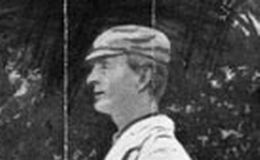 Edward Lionel Terry
Murderer · New Zealand · 1905
Edward Lionel Terry was a white supremacist and murderer. He was born at Sandwi…
1 victim
Edward Lionel Terry
Murderer · New Zealand · 1905
Edward Lionel Terry was a white supremacist and murderer. He was born at Sandwi…
1 victim
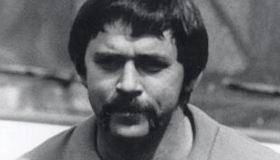 David Tamihere
Murderer · New Zealand · 1972
David Tamihere was sentenced to life imprisonment with a 10-year non-parole per…
3 victims
David Tamihere
Murderer · New Zealand · 1972
David Tamihere was sentenced to life imprisonment with a 10-year non-parole per…
3 victims
 William Dwane Bell
Murderer · New Zealand · 2001
William Dwane Bell (born 1978) was a convicted murderer in New Zealand. Bell wa…
3 victims
William Dwane Bell
Murderer · New Zealand · 2001
William Dwane Bell (born 1978) was a convicted murderer in New Zealand. Bell wa…
3 victims
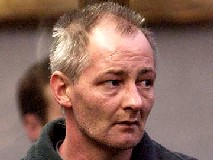 Bruce Howse
Murderer · New Zealand · 2001
Bruce Howse was the partner of Charlene Aplin and the stepfather of Saliel Apli…
2 victims
Bruce Howse
Murderer · New Zealand · 2001
Bruce Howse was the partner of Charlene Aplin and the stepfather of Saliel Apli…
2 victims
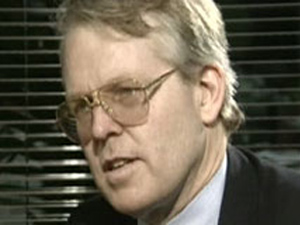 John Barlow
Murderer · New Zealand · 1994
16 February 1994 — Financial dealers Eugene and Gene Thomas, father and son, we…
2 victims
John Barlow
Murderer · New Zealand · 1994
16 February 1994 — Financial dealers Eugene and Gene Thomas, father and son, we…
2 victims
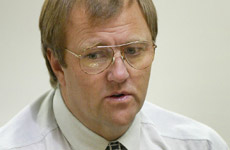 Mark Edward Lundy
Murderer · New Zealand · 2000
Mark Edward Lundy was the husband and father of the victims Christine Marie Lun…
2 victims
Mark Edward Lundy
Murderer · New Zealand · 2000
Mark Edward Lundy was the husband and father of the victims Christine Marie Lun…
2 victims
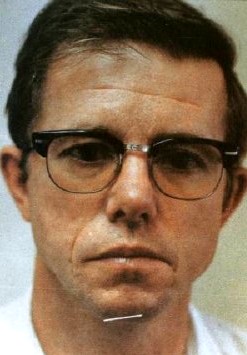 Robert Hansen
Serial killer · USA · 1973
Robert Hansen was a serial killer who abducted women and hunted them down in th…
21 victims
Robert Hansen
Serial killer · USA · 1973
Robert Hansen was a serial killer who abducted women and hunted them down in th…
21 victims
 Brenda Stokes Wilson
Murderer · USA · 2012
Brenda Stokes Wilson, 50, was a former blackjack dealer. She was accused of kil…
1 victim
Brenda Stokes Wilson
Murderer · USA · 2012
Brenda Stokes Wilson, 50, was a former blackjack dealer. She was accused of kil…
1 victim
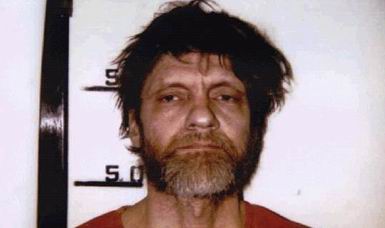 Theodore Kaczynski
Murderer · USA · 1985
Theodore John “Ted” Kaczynski (born May 22, 1942), also known as the Unabomber…
3 victims
Theodore Kaczynski
Murderer · USA · 1985
Theodore John “Ted” Kaczynski (born May 22, 1942), also known as the Unabomber…
3 victims
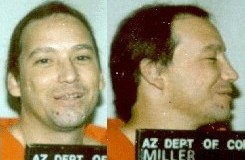 Donald Jay Miller
Murderer · USA · 1992
June 12, 1992 — Jennifer Geuder went out with her married boyfriend, Jose Luna,…
1 victim
Donald Jay Miller
Murderer · USA · 1992
June 12, 1992 — Jennifer Geuder went out with her married boyfriend, Jose Luna,…
1 victim
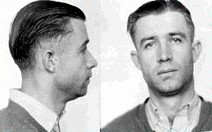 David Benjamin Knight
Murderer · USA · 1935
Howard C. Speakman and Judge Earl Anderson were involved in the case. Deputy C.…
1 victim
David Benjamin Knight
Murderer · USA · 1935
Howard C. Speakman and Judge Earl Anderson were involved in the case. Deputy C.…
1 victim
- Gender
- male
- Country
- New Zealand
- Location
- Ruahine, New Zealand
- Date of birth
- 1893
- Age at first offence
- 21
- Characteristics
- argument, alcohol
- Victim profile
- Joseph and Mary McCann and their baby son
- Method of murder
- Beating with an axe
- Date(s) of murder
- December 27, 1914
- Years active
- 1914
- Date of arrest
- —
- Status
-
Executed
Executed by hanging in Wellington at the old Terrace Gaol on March 8, 1915
Timeline
- May 1914 — Arthur Rottman arrived in New Zealand and secured employment on the “Hinemoa.”
- Before 27 December 1914 — Arthur Rottman worked on a farm near Ruahine; the McCann dairy farm became home to him.
- 27 December 1914 — After a drinking bout, Arthur Rottman was confronted by Joseph McCann; an argument ensued; later, while attempting to mend a board in the cowshed, Joseph McCann was struck by an axe.
- 28 December 1914 — A Monday; Joseph McCann promised to help Herbert Sweet with his sheep.
- 29 December 1914 — Tuesday; a neighbour found Joseph McCann dead in the cow shed; the rest of the McCann family had been discovered dead inside the house; Arthur Rottman had disappeared; the report of Rottman’s arrest later followed after a stranger’s visit to Te Karama station at Terawhiti.
- 29 December 1914 — Tuesday; Arthur Rottman called at William Kelly’s camp looking for a job, rode away, and returned two days later saying he had sold his horse for £5.
- 11 February 1915 — Arthur Rottman’s trial took place at Wanganui before Mr. Justice Chapman and a common jury.
- 13 February 1915 — Arthur Rottman was found guilty of the murders.
- 8 March 1915 — Arthur Rottman was hanged in Wellington at the old Terrace Gaol.
Background
Arthur Rottman was a German national who worked on a New Zealand ship. When war broke out in 1914, he was interned as an enemy alien and placed under restrictions becoming his nationality, including being not allowed to go more than 20 miles from his registered place of abode and being under orders to report regularly to the police. Hearing of farm work to be had at Mangaweka, he obtained a permit to travel and in a day or two began working for Mr. McCann, described as a well respected dairy farmer in that district. Rottman’s quiet behaviour earned him a good reputation in the district. He worked bailing up the cows and driving the milk to the nearby factory; about 7.45 a.m. daily milk was brought to the factory, and sometimes McCann and sometimes Rottman would drive the milk van to the factory.
The McCann family consisted of Mr. Joseph McCann, his wife Mary McCann, and an infant child, John Joseph.
John Moore of the Seamen's Mission at Wellington testified to Arthur Rottman’s “excellent character and his mild disposition.”
Arthur Rottman gave personal evidence in court. He spoke in broken English and said he was a German subject and was 21 years old. He said his father had held high office in the Prussian Civil Service and that his father drank excessively at times. He said his mother had been in a mental asylum twice. He said he arrived in New Zealand in May, 1914, and secured employment on the “Hinemoa.” He said he had two brothers, one of whom had died from brain fever. He said he had had an accident in his youth when he fell downstairs and presumably hurt his head, and he said he had also been shipwrecked.
The offence
After a drinking bout, on 27 December 1914, Joseph McCann confronted Arthur Rottman and an argument ensued. Later, while Arthur Rottman was attempting to mend a board in the cowshed, Joseph McCann was struck by an axe. In court it was established that Joseph McCann had been struck six times.
Mary McCann and her baby were also killed by an axe in the farm house. The trial proceedings described the whole McCann family as being “brutally murdered,” and the family of McCann consisted, apart from Mr. McCann, of his wife and infant child, John Joseph.
Investigation
A neighbour went to the McCann farm because the milk from the McCann farm had not, as was usual, been sent to the factory. The neighbour found Joseph McCann dead in the cow shed. Going to the house and being unable to rouse anyone, the neighbour discovered that the fate that had overtaken Joseph McCann had been visited upon the rest of the family.
Witnesses described entry to the house through a bedroom window. Gustave Kreger, a local farmer who had known the McCann family for seven or eight years, entered with Fox. He found the child lying dead on the bed and, on the floor at the foot of the bed, he noticed a heap of clothes under which he discovered the murdered body of Mary McCann. Kreger and Fox escaped quickly from the house, herded the cows, and milked them. It was stated that some had apparently not been milked since Monday.
Another witness found the axe in the grass about ten feet away from the place where Joseph McCann had been seen lying, and “blood and hair connected the weapon with the killing.” It was also stated that blood and hair connected the weapon with the killing.
Police investigation included examination for signs of spilt milk. Police Constable Essen, described later in testimony, and subsequent evidence were said to show a lack of spilt milk, which tended to suggest that Joseph McCann was probably dead when short supply was taken by Arthur Rottman to the factory.
Dr. Turnbull and police evidence described injuries. Dr. Turnbull described head injuries from which the three victims succumbed, stating each received severe blows on the head.
Arrest and flight
After the murders, Arthur Rottman took a train to Wellington and, while looking for work, stayed at a construction site where William Kelly became suspicious after reading the newspaper about the “Ruahine Axe Murders.” Kelly later contacted police and Rottman was arrested.
Earlier movement was described in testimony about Rottman’s flight. William Kelly testified that on 29 December 1914, Arthur Rottman called at Kelly’s camp looking for a job. He had a horse that day, rode away, and returned two days later saying he had sold his horse for £5, but he had not yet got the money. Rottman told Kelly that he had gone to Terawhiti to catch a boat that would take him to Pelorus where he knew he could get a job, and Kelly told him to go to Wellington and catch the Nelson boat. Rottman told Kelly that the place was lined with police locking up all Germans and said, “He said that he would drown himself before he would let the police get him.” Under pressure, Kelly agreed to let him sleep at the camp that night provided that he cleared out the next day.
Kelly testified that after newspapers arrived, he handed Rottman one and started to read the other. Rottman glanced at his and asked: “Have you read the Ruahine murder case?” Rottman then read out details, and then read about the “Hinemoa.” Kelly said this made him suspicious. Kelly testified that he later told Rottman he was going into town to see about his letters. Rottman said: “It is a strange thing you want to see about your letters so soon after reading about the murder case.” Kelly asked Rottman to come to town with him. Rottman refused and asked Kelly not to tell the police he was there, and Kelly said he nevertheless told the police.
A detective account described capture. Detective Sergeant S. Rawle stated that he went to Te Karama farm at Terawhiti with acting Detective Dempsey and Constable Pearson. From certain information received from a man there, the party went to a part of the farm covered with bush in the rear of the homestead. Rawle stated he covered a crouching man with a revolver and told him to put up his hands. Rawle recorded that the man rose and said: “I am guilty. I know what I have done.” The man was secured and was charged with the murder of the McCann family. Rawle recorded that the man said: “I am guilty.” Rawle recorded the man also added: “God punish the man who brought liquor into this country.”
Trial
Court and parties
The trial took place on 11 February 1915 at Wanganui before Mr.
The Crown Prosecutor was Mr. Marshall. The defence counsel was Mr. C. E. McKay. Mr. Marshall was described as having the well earned reputation of being as fair a prosecutor as ever occupied that position in New Zealand. It was noted in court narrative that Mr. McKay had “curiously enough” lost his life at the hands of a German in a riot at Berlin some years after the War.
Mr. Marshall warned the jury that they must omit from their consideration the fact that the prisoner was a German and must give him a fair trial, and he told them that the onus of proving the case was on him and it was not incumbent on the prisoner to prove his innocence.
Evidence for the prosecution and key testimony
A local surveyor, Mr. A. M. Roberts, produced a plan of McCann's farm and showed that the milk factory was 30 chains away from McCann’s daily milk route.
Herbert Sweet testified that Joseph McCann had promised to help with his sheep on Monday, 28 December, but did not turn up.
William Neil testified that he had spent a wild time with Rottman just before the tragedy. Neil testified that on Boxing Day he met Rottman riding along the road on one of McCann’s horses; they went on together to Rangiwahia and had a good many drinks together; by the afternoon Rottman was drunk; they stayed together well into the night; and by 10 p.m. Rottman was sober again. Neil testified that when the two returned, Rottman did not go home until he was quite sure McCann would be in bed. Neil testified that Rottman told him: “he did not want to go home till he was quite sure McCann would be in bed, otherwise there would be a row,” and that Rottman said he had not gone home in the afternoon to help with the evening milking. In cross-examination, Neil admitted he had had a good many drinks. It was also stated that Rottman had wanted to go home in the afternoon.
Albert Patchett, a cheese maker, testified that Rottman had worked for McCann from some time in September, 1914, and that sometimes McCann and sometimes Rottman would drive the milk van to the factory. Patchett testified about Sunday, the 27th, that about 9 a.m. Rottman came to the factory, said he had had a night out, and that his eyes were puffy and his face was red; he spoke rationally and said he was going home for a sleep. The next morning Rottman brought the milk about 6.30 and was the first of the suppliers to arrive. Patchett testified that when asked, Rottman said that McCann was going fleecing down at Sweet’s farm that morning, and that the weight of the milk was not up to average by about 100 lbs. Patchett testified that Rottman also said McCann had had an accident with a can, some of the milk being spilt. Patchett testified that the following day no milk came from McCann’s farm.
A factory investigation then took place. Patchett and the factory manager, Mr. Poole, walked to McCann's farm and found Joseph McCann dead in the cowshed with a deep cut in his head.
James Badland, a mail carrier, testified that he saw Rottman about 3 p.m. on Boxing Day. Badland said he did not think Rottman was drunk but said he was merry and had a drink with him. Badland testified that Rottman told him that McCann could milk the cows as it was Boxing Day. On Monday Badland saw Rottman and invited him to have a drink as Badland was going to Feilding. Badland testified that Rottman said he got home at 3 a.m. on the Sunday morning and said that as Mary McCann had locked the back door he had “had cheek enough to enter the house by the front door.” Badland testified that Rottman told him Joseph McCann was going to Feilding that day. Badland asked how the cows were to be milked, and Rottman told him that McLennan was going to drive him back so that he would be in time to attend to them. It was also stated that nothing strange was noticed in Rottman’s appearance.
Police Constable Essen of Mangaweka testified that he saw Rottman on the Monday at Mangaweka. Essen stated that Rottman remarked to him that he had been told by Mary McCann that the constable had been to the farm. Essen testified that he told Rottman about registration regulations affecting aliens, that Rottman was not to go further than 20 miles from McCann’s without a permit. Essen testified that Rottman assured him he had no intention of doing so and said he was too well off as he was. Essen testified that Rottman said the McCanns were very good to him and chatted about progress as a farm hand, including saying he could now milk 25 cows and was getting on very well.
Dr. Turnbull described medical evidence. Dr. Turnbull testified to head injuries and described the effects and possible causes of such attacks. In cross-examination, Dr. Turnbull admitted insanity might be of short duration and that epilepsy could result in homicidal tendencies, and that alcohol might bring on an epileptic fit. If no adequate motive were suggested, Dr. Turnbull said insanity would, be the cause of the act. He said an excessive number of blows might be indicative of insanity. Dr. Turnbull stated that in conditions described as “mad drunk,” subjects were delirious, violent, and often exhibited homicidal tendencies, and that its development was sudden and could be produced by very little alcohol in some subjects. Dr. Turnbull testified that family history of insanity might increase the tendency towards alcoholism. Dr. Turnbull testified that from his examination death had occurred on the Monday morning.
Confession and statement
Detective Sergeant S. Rawle’s account of capture included the statement: “I am guilty. I know what I have done.” After charging, the man repeated: “I am guilty.” The man also said: “God punish the man who brought liquor into this country.”
Constable David Crow testified that on the train Rottman made a voluntary statement. Crow testified that no inducement was offered and that the statement read as follows:
“On the morning of the 28th December I got home about 3 o'clock and went out with McCann to the cowbails. McCann was putting in a new board. I asked him to let me do it as I was a carpenter. He said, ‘You are too full.’ I said, ‘I can swing an axe, and swinging it round my head accidentally hit McCann. I then slept for two hours. When I got up I saw McCann there. I drank another bottle of whisky, wanting to kill myself. I then went to Mrs. McCann's bedroom to tell her what I had done. I don't remember anything more till I came to the cowbail and there I saw McCann. I got sober at once and put four tins of water into the milk and went to the factory.’”
During cross-examination, Mr. McKay questioned the witness, who said that Rottman did not sleep on that train journey and that the statement was at 3 a.m. The witness added that he knew he had received a telegram from Mr. Wilford, a well known Wellington lawyer who practised extensively at the criminal bar, and that the telegram read “Write nothing, say nothing, do nothing.”
Defence and mental state evidence
The defence was insanity. Mr. McKay argued that there were many forms of insanity and described delusions and fits of frenzy, and said when a person recovered from a fit of frenzy they did not know what they had done in the fit. He said the most deadly cause of insanity was alcohol and argued Rottman had been “mad drunk.” Counsel asked for a verdict of insanity and stated the result would be that prisoner would be detained in an asylum during the pleasure of the Crown.
Evidence of character was given by John Moore of the Seamen's Mission at Wellington.
Arthur Rottman testified. He said he was 21, and he said his father had held high office in the Prussian Civil Service. He testified that he did not deny he had treated Joseph McCann kindly. He said he bore out Neil’s statement except about the afternoon; he said that when he wanted to return home in the afternoon Neil argued with him about doing so. He testified that they started off but then returned to the hotel; he said he was thrown off his horse twice; he testified that he got drunk and that they went off home about 10 p.m. and he left Neil about midnight. He said he waited until about 4 a.m. when McCann came out to attend to the milking. He testified that McCann told him he did not expect him until 7 a.m. and that he had been very wild with him for not returning the evening before for milking. Rottman testified they had a drink and then milked the cows. He testified that McCann told him to go to bed and that he would take the milk to the factory. He testified he then had a good sleep and in the afternoon helped with the cows. He described what he called a “homely evening” with singing and drinking; he testified that both got drunk.
He testified he went to his bed at 1 o’clock in the morning, taking more liquor. He said next morning McCann told him he had made an awful noise through the night. Rottman testified that he went off for the cows and brought them to the cowshed, that he then remembered swinging an axe over his head, lying on the grass, and afterwards lying in the passage of the house between his and Mary McCann's room, that he looked into Mary McCann's room and saw blood, and that he felt as if a shot struck him and it made him feel quite sober. He testified that he tried to think where Joseph McCann had gone to, went out, saw the axe, and then remembered going to the factory after watering the milk. He testified he told the man at the factory that McCann had spilt the milk. He testified he then returned to the farm, fed the pigs and calves, and left hot water in the milk cans. He testified he then dressed and rode away. He agreed with witnesses about his movements after he had left the farm.
When referring to capture, Rottman testified that when he said that he was guilty he meant he was ready to go to the police station. He testified he had no grudge against the McCanns. In cross-examination he admitted he had thought he might get sacked by Joseph McCann for not returning on Boxing Day. He denied that he told the constable that the axe had struck McCann. He testified he was not sober when he went out for the cows. He testified that when he went to the house after taking the cows to the shed he did not know that Joseph McCann was dead. He testified that after a sleep he was quite sober on the Sunday afternoon. He testified that during the night he and McCann drank two gallons of beer and part of a bottle of whisky, and said both were helplessly drunk. He said he remembered swinging the axe, but that it was all a dream.
Dr. Grey Hassell, described as the Superintendent of Porirua Mental hospital, testified that he interrogated Rottman who seemed to answer questions truthfully. Dr. Hassell testified that Rottman had a bad mental history and that if a more than brutal murder was done by a young man of twenty it would suggest insanity. Dr. Hassell said three murders suggested acute homicidal mania, absence of concealment of the victims suggested insanity, and that all circumstances of the crime suggested it. Dr. Hassell testified that these insane impulses were of short duration and might be brought on by seeing an instrument with which it could be done. He testified there might be two periods: one when he remembered what he was doing and another when his memory was a blank.
Dr. Maurice agreed with the last witness, and Dr. Alex Wilson said the circumstances might well be explained by mania apotu.
Addresses and judge’s direction
Mr. McKay addressed the jury and traversed insanity at length. He described the brain as being subject to terrible and various diseases, said Rottman had had a brain storm, and said alcohol was responsible. He argued that it might have been an epileptic seizure or mania apotu. He referred to the heavy drinking bout and the lowered vitality that would follow. He said there was no motive suggested and that the death of the child alone showed insanity in the clearest terms. He said the accused’s good temper and character negated malice necessary in a crime of this character. He said the doctor’s evidence was almost decisive and that no evidence had been called by the Crown to rebut Dr. Hassell's evidence. He said Rottman had faced the jury and given evidence straightforwardly and that he was entitled to be believed. He referenced people outside and said: “I do not believe it. I don't believe that such unworthy considerations will influence you.”
Mr. Marshall addressed the jury and covered relevant facts fairly and firmly. He reminded the jury that Rottman expected to get the sack from Joseph McCann and said, “He might have had some very inadequate motive of quarrelling with his friends. Inflated with drink he might have carried his intention to give them a piece of his mind to terrible excess.” Mr. Marshall said that when Joseph McCann told Rottman he was too drunk to help with the piece of carpentering, that was “not a statement of one drunk man to another.” He referred to the doctor’s evidence of six wounds and argued Rottman might have killed Mary McCann and the baby in a ‘seeing red’ mania. He said Rottman showed no signs of frenzy just after the deed and asked for a common sense verdict. He said the accused knew what he was doing if he stated what the constable said he stated in the train.
The summing-up by the Judge was described as lengthy. The Judge agreed that a man might commit a ferocious act and not be conscious of it. He said Rottman was not insane on the Sunday, and said that of course he might have negligently swung his axe and been guilty of manslaughter. The Judge said the onus of proving insanity lay upon the defence and it must be established that Rottman did not know what he was doing when he killed the McCanns. The Judge said it was to be remembered that Rottman anticipated trouble and arranged for another job in the event of his dismissal. The Judge said the jury had to consider the whole of the facts and that they would remember the accused fled and tried to hide his tracks. The Judge said that in his statement Rottman remembered hitting Joseph McCann and going to tell Mary McCann.
Verdict and sentencing
The jury retired at 12.48 p.m. and returned at 2.10 p.m. with a verdict of Guilty of murdering the whole family.
When asked if he had anything to say why he should not receive the sentence of the law, Rottman said:
“I have received the best of treatment. At no time could there be any reason nor did they give me any for committing the crime. I know nothing of killing the poor people. Although my country is at war with yours, I have received a fair trial and if I have to die like my countrymen who are fighting I will die with good heart and leave it to that great day for Our Good Father in Heaven to judge.”
In sentencing him to death, the Judge said Rottman had been found guilty on the plainest evidence. The Judge said the verdict was entirely justified and he was in full accord with it. Rottman received no commutation of sentence and was ordered to the scaffold.
Outcome
Arthur Rottman was sentenced to death and was hanged in Wellington at the old Terrace Gaol on 8 March 1915. He did not receive commutation of sentence.
Aftermath
The narrative described how the trial occurred during a period when feeling against any German was too intense to allow for calm judgment. It was also stated that the crime was really without motive and it may well have been that he was under the influence of a passion, or frenzy, with which he had no power within himself to cope.
Spotted an error, or have more information about this case?