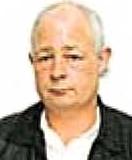
Peter Howse
Murderer David Tamihere
Murderer · New Zealand · 1972
David Tamihere was sentenced to life imprisonment with a 10-year non-parole per…
3 victims
David Tamihere
Murderer · New Zealand · 1972
David Tamihere was sentenced to life imprisonment with a 10-year non-parole per…
3 victims
 Gary Edward Ladbrook
Murderer · New Zealand · 1992
Gary Edward Ladbrook was jailed for life after he raped and suffocated Mrs Sole…
1 victim
Gary Edward Ladbrook
Murderer · New Zealand · 1992
Gary Edward Ladbrook was jailed for life after he raped and suffocated Mrs Sole…
1 victim
 Gary Lawrence McKinley
Murderer · New Zealand · 1986
Gary Lawrence McKinley was sentenced to life imprisonment in June 1987 after th…
1 victim
Gary Lawrence McKinley
Murderer · New Zealand · 1986
Gary Lawrence McKinley was sentenced to life imprisonment in June 1987 after th…
1 victim
 Menzies Hallett
Murderer · New Zealand · 1979
Name: Menzies Hallett Age: 72 Year of sentencing status: Sentenced to life in p…
1 victim
Menzies Hallett
Murderer · New Zealand · 1979
Name: Menzies Hallett Age: 72 Year of sentencing status: Sentenced to life in p…
1 victim
 Paul Joseph Dally
Murderer · New Zealand · 1989
Paul Joseph Dally kidnapped Karla Cardno, 13, in Lower Hutt on May 26, 1989. He…
1 victim
Paul Joseph Dally
Murderer · New Zealand · 1989
Paul Joseph Dally kidnapped Karla Cardno, 13, in Lower Hutt on May 26, 1989. He…
1 victim
 Ellis Wayne Felker
Murderer ? · USA · 1981
Ellis Wayne Felker (c. 1948 – November 15, 1996) was convicted of murder and re…
1 victim
Ellis Wayne Felker
Murderer ? · USA · 1981
Ellis Wayne Felker (c. 1948 – November 15, 1996) was convicted of murder and re…
1 victim
 Henry Curtis Jackson
Mass murderer · USA · 1990
Henry Curtis Jackson, Jr. was convicted in the Leflore County Circuit Court in…
4 victims
Henry Curtis Jackson
Mass murderer · USA · 1990
Henry Curtis Jackson, Jr. was convicted in the Leflore County Circuit Court in…
4 victims
 Joyce Cohen
Murderer · USA · 1986
Joyce Cohen was indicted for the first degree murder of her husband, Stanley Al…
1 victim
Joyce Cohen
Murderer · USA · 1986
Joyce Cohen was indicted for the first degree murder of her husband, Stanley Al…
1 victim
 Michael Wayne Williams
Murderer · USA · 1992
Michael Wayne Williams was sentenced to death in 1994 for the slaying of Morris…
6 victims
Michael Wayne Williams
Murderer · USA · 1992
Michael Wayne Williams was sentenced to death in 1994 for the slaying of Morris…
6 victims
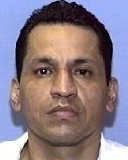 Jesse Joe Hernandez
Murderer · USA · 2001
Defendant: Jesse Joe Hernandez · Race: Hispanic · Gender: Male · Age: 47 · Educ…
1 victim
Jesse Joe Hernandez
Murderer · USA · 2001
Defendant: Jesse Joe Hernandez · Race: Hispanic · Gender: Male · Age: 47 · Educ…
1 victim
- Gender
- male
- Country
- New Zealand
- Location
- Palmerston North, Manawatu-Wanganui Region, New Zealand
- Date of birth
- 1949
- Age at first offence
- 33
- Characteristics
- serial rapist, rape, drug addict, drug dealer
- Victim profile
- H is girlfriend, Susan Keenan
- Method of murder
- Strangulation
- Date(s) of murder
- May 1, 1982
- Years active
- 1982
- Date of arrest
- —
- Status
-
Released
Sentenced to life in prison in 1983; paroled in 1995; sentenced to preventive detention in 1999
Case overview
Peter Howse was a convicted murderer and rapist who was sentenced to life in prison in 1983. He was paroled in 1995 and was later sentenced to preventive detention in 1999. He denied sexual offending.
The offence
In Palmerston North, Peter Howse beat, stabbed and strangled Susan Keenan to death after she told him she was leaving him. Howse was convicted in the High Court at Wellington of a knifepoint sex attack on a 26-year-old Canadian tourist in the Bolton St cemetery in Wellington in August 1997. The attack in August 1997 was described as the third time within the past six months that Howse was found guilty by juries of sex attack charges. Howse was found guilty of a kidnap and indecent assault of a 17-year-old girl in 1991 after he and his brother, Bruce, snatched her off the streets of Palmerston North and bundled her into the back seat of his car. The trial evidence included that on the way, Howse discussed the sex acts the victims would make her perform, and Howse said: "Pull over and we'll get down to business," but the car became stuck in mud. Howse was also found guilty of a sex attack on a teenager in the earlier two trials described as attacks on two teenagers on the same day in March last year near Palmerston North. A rape charge brought against Howse a year after his 1995 parole was thrown out of court when DNA evidence did not match his DNA. Howse’s March activities were described: his car was seen trailing a schoolbus out of Palmerston North, stopping to watch girls get off; he followed one of them down a side road and nudged her with his car, causing her to fall back against the bonnet; he chased her and grabbed her arm, but a passing van stopped and she was able to get a ride. Howse also picked up a young woman hitch-hiking home at night, took her to an isolated country rest area and for two hours physically and sexually assaulted her; the woman escaped rape only because he could not get an erection. At one stage, Howse asked her how old she was and, when she replied 17, said: "That's good, I've done this to other girls but none as young as you." After an incident in Bolton St cemetery, when it was over he told the Canadian tourist: "Sorry to bother you."
Investigation and evidence
Police argued against Howse’s parole in 1995 on the basis that he kidnapped a teenager and indecently assaulted her while on weekend leave in 1991 from his life sentence. In the rape charge brought a year after his 1995 parole, the charge was quickly thrown out of court when DNA evidence did not match his DNA. A jury found Howse guilty in the High Court at Wellington after three hours 30 minutes of deliberation.
Arrest and custody
Howse was recalled to continue serving his life sentence for murder after the earlier sex-attack trials. After being found guilty in the High Court at Wellington of the August 1997 knifepoint sex attack, Howse was remanded to appear for sentence on February 19. Howse was in custody and would be sentenced on February 19 after the High Court finding.
Trial
A jury in the High Court at Wellington found Howse, 50, guilty on Tuesday of the knifepoint sex attack of a Canadian woman in the Bolton St cemetery in Wellington in August 1997. Howse’s name was suppressed until the third trial so the juries would not know of the previous cases. The earlier two trials were described as sex attacks on two teenagers on the same day in March last year near Palmerston North. By the start of the third trial, Howse had been sentenced to a total of 10 years for those attacks. Howse left the dock and said: "There's no justice here, that's for sure." At his 1991 kidnap and indecent assault trial, a jury found Howse guilty of kidnap and indecent assault and he was sentenced to two years in jail.
Sentencing
Peter Howse was sentenced to life in prison in 1983. In 1991, he received a sentence of two years in jail for kidnap and indecent assault, and he was recalled to finish serving his life sentence. After the earlier two sex-attack trials, Howse’s sentences were described as totalling 10 years, and he was recalled to finish serving his life sentence for murder. In 1999, Howse received an open-ended prison sentence after being found guilty of a third sex attack while on parole; he was sentenced to preventive detention in 1999. Justice Minister Tony Ryall was not available for comment when approached about the case.
Parole and parole board proceedings
Howse was paroled in 1995. Justice Heron said Howse was granted parole in 1995 on the advice of specialist reports and psychological assessments, together with information showing Howse had a strong support network in the community, suggested he had made real progress. Justice Heron said it was regrettable the estimation of risk was wrong, and that it highlighted difficulties in predicting which offenders could be safely released, noting that very few life imprisonment inmates commit further serious offences. Howse served 13 years of his life sentence when paroled and had been eligible for parole several years earlier but had failed to convince the board. The board exercised wider powers conferred by 1993 legislation.
On November 2, Howse appeared before the Parole Board and he was denied parole. A psychological report placed him at "high risk of further offending". The Parole Board said the problem centred on his acceptance of what he had done in the past, and said: "He accepts that he has been violent and had a serious drug and alcohol problem. He says he has this for many years. He denies any sexual offending, and that covers a number of different victims across a period of time. "He is also confident that there was not adequate evidence to convict him on the sexual charges and so there is a sense of injustice which lies with him as well." As Howse denied all sexual offending, he had not been able to attend programmes aimed at rehabilitating rapists. The board referred to an "excellent report" it received from officials at Howse's undisclosed prison, where he was described as "compliant and polite". The board considered implementing a postponement order, meaning Howse might not be able to seek parole next year, but the board deferred the issue and would consider it again when he reappeared for parole in 12 months’ time.
The Parole Board apologised to victims of attacks by Howse while he was on parole. Justice Heron, the board chairman, said the board acted in good faith and its assessment of risk in granting Howse parole was proved wrong, and: "For that the board expresses deep regret to Howse's victims," Police argued against Howse’s parole in 1995 because he kidnapped and indecently assaulted a teenager while on weekend leave in 1991 from his life sentence, imposed for the murder of his de facto wife in 1982. Police had warned the Parole Board that Howse would strike again and said: "Howse is a danger to the community in general and to females in particular. His victims are terrified of him and genuinely fear for their safety." Detective Darrell Stroud said: "The question I feel that should be asked is, if 10 years' jail could not rehabilitate this man, what have the last two years done?" Justice Thorp (now Sir Thomas), the Parole Board chairman in 1995, said last night he regretted that Howse had re-offended after being freed, and: "I remember Howse, but not very well. It is not appropriate to go into the pros and cons." Asked if he had regrets that Howse had offended again, Sir Thomas said: "Of course. You have regrets every time it happens, but you can't get them all right." The deputy chairman was district court judge Bruce Buckton, who said he could not recall Howse, and: "We deal with an awful lot of these people and I am not even sure I was at the hearing,". Other members of the board in 1995 included Corrections Department chief executive Mark Byers (who refused to comment) and others who could not be contacted, including Auckland regional forensic services director David Chaplow, Manukau Urban Maori Authority chief executive June Jackson, Maori resource teacher Mrs A Motutere, Pacific Island Affairs Advisory Council member Mahe Tupouniua (who had since returned to Tonga), and Christchurch Polytechnic Maori elder Hohua Tutengaehe (who had since died). A question about names of parole board members was met with a refusal from board secretary John Meek, who said: "You want to publicise these people and I'm not prepared to help you do that,"
Appeals
The Court of Appeal quashed a sentence on a technicality and allowed Howse free in April 1982 after Howse was jailed for 2 and a half years for stabbing Susan Keenan in the chest.
Background
Howse’s criminal career began as a juvenile delinquent in the 1960s and progressed to burglaries and assaults, many on women. In 1979, Howse appeared in Palmerston North District Court on a charge of assaulting the woman he was living with. Judge Joe Watts caused an uproar when he said while sentencing Howse to six months’ periodic detention: "The only reason I will not send you to jail this time is that the woman assaulted was your de facto wife, and by that very fact she is no good and I'm not too upset you assaulted her." After that woman left him, she introduced him to Susan Keenan. Howse and Miss Keenan lived together until 1981 when Howse was jailed for 2 and a half years for stabbing her in the chest; the Court of Appeal quashed the sentence on a technicality and allowed Howse free in April 1982. Twenty-four days later, on May 1, Howse beat, stabbed and strangled Miss Keenan to death at her home in Palmerston North after she told him she was leaving him. A former flatmate of Miss Keenan made a warning after Howse’s life sentence: "I'm just wondering what's going to happen in 10 or 15 years' time when he gets out of prison. I'll be worrying about my own safety." Pastor John Walton testified against Howse and said: "He's actually a very dangerous guy to be out in society," Howse served nine years in prison before being allowed out on weekend leave by the Parole Board in August 1991.
Howse had more than 80 convictions dating back to the early 1960s, with many convictions for assaults on women. He was described as having a serious drug and alcohol problem and as denying any sexual offending.
Other details
Howse had a younger brother, Bruce Howse. In 1991, Bruce Howse was involved with Peter Howse in kidnapping and indecently assaulting a 17-year-old girl, and in 2002 Bruce Howse was jailed for life with a minimum 28-year non-parole period for the murder of his step-daughters Saliel Aplin, 12, and Olympia Jetson, 11. After Howse’s parole in 1995, a young woman accused him of rape, and the charge was thrown out by a High Court jury in 1996; the young woman said she was angry no one had told her of Howse’s record when he came to live with her and her mother after being paroled in 1995, and she said: "I thought he had been in for murder, which he told us was in self-defence, but it wasn't till much later that I found out he had also kidnapped a girl when he was on weekend leave in 1991, and also the true facts of the murder," She said: "I was a real danger to the community." and: "No rehabilitation has worked -- and he's had a lot of counselling in prison. He should never be allowed out again. They should lock him up and throw away the key." A family member of one victim described in 1991 reported that the victim escaped when Howse's car became stuck in mud, and said: "(One victim) came to see us after it happened and she cried and I cried. " "I couldn't help but think this girl shouldn't have had to go through all that. I should have been able to do something to stop it." The mother of the 1991 teenage kidnap victim also said she was horrified but not surprised to hear Howse had attacked other women, and said: "The parole system is sick to let people like that out of jail," "We inquired to see if there was anything we could do to stop him being paroled but all avenues were blocked." She said she sat through one of Howse's recent trials staring with hate at the back of his head, and: "I focused hard on trying to transmit pain to him but it didn't seem to work." She said: "I alternated between wanting to yell out, `He's murdered his wife' and wanting to stick a knife in him." A father of a schoolgirl who was knocked down by Howse in March last year said he wanted Parole Board members to be held personally responsible for people they let out of jail, and said: "There's too many of these cases happening," "This should not be allowed to happen again." He also said: "There's a lot sympathy for the perpetrator these days and very little for the victims and their families." Labour justice spokesman Phil Goff called for an inquiry into the Parole Board's decision and said he would be asking for a parliamentary inquiry into the parole system, and: "It is impossible to comprehend how the Parole Board could get it so wrong. " "There's no excuse for how they could have made a mistake of this magnitude. It totally undermines public confidence in the parole system," Justice Heron said he was released in good faith by the 1995 board on the advice of specialists and that psychological assessments and information showing Howse had a strong support network suggested progress. Justice Heron said it was an indication of how seriously the board viewed the further charges against Howse that he was recalled to serve his life sentence before he stood trial on those charges. A psychological report placed Howse at "high risk of further offending". Howse worked in the prison garden. The board chairman in the November 2 proceedings was Justice Heron, and he made the Parole Board’s “deep regret” statement to victims. Families of two of Howse’s victims called for an inquiry into why he was allowed out of jail to attack again, and they were joined by the young woman whose rape accusation was thrown out by a High Court jury in 1996.
Spotted an error, or have more information about this case?