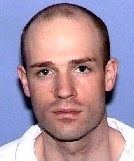
Randy Halprin
Murderer Russell Ellwood
Murderer · USA · 1991
Russell Ellwood was a former taxi driver. Authorities suspected him of killing…
20 victims
Russell Ellwood
Murderer · USA · 1991
Russell Ellwood was a former taxi driver. Authorities suspected him of killing…
20 victims
 Robert Martines Perez
Murderer · USA · 1994
Name: Robert Martines Perez · Other name used in proceedings: Robert Martinez P…
15 victims
Robert Martines Perez
Murderer · USA · 1994
Name: Robert Martines Perez · Other name used in proceedings: Robert Martinez P…
15 victims
 Billy Frank Vickers
Murderer · USA · 1993
Billy Frank Vickers Vickers was executed by lethal injection in Texas on Januar…
14 victims
Billy Frank Vickers
Murderer · USA · 1993
Billy Frank Vickers Vickers was executed by lethal injection in Texas on Januar…
14 victims
 Julius Ricardo Young
Murderer · USA · 1993
Julius Ricardo Young was executed by lethal injection in Oklahoma on January 14…
2 victims
Julius Ricardo Young
Murderer · USA · 1993
Julius Ricardo Young was executed by lethal injection in Oklahoma on January 14…
2 victims
 Miyuki Ishikawa
Murderer · Japan · 1944
Miyuki Ishikawa (石川 ミユキ, Ishikawa Miyuki; born 1897; date of death unknown) was…
169 victims
Miyuki Ishikawa
Murderer · Japan · 1944
Miyuki Ishikawa (石川 ミユキ, Ishikawa Miyuki; born 1897; date of death unknown) was…
169 victims
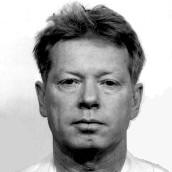 Benjamin Boyle
Murderer · USA · 1979
Benjamin Herbert Boyle was convicted for the murder of Gail Lenore Smith, and h…
2 victims
Benjamin Boyle
Murderer · USA · 1979
Benjamin Herbert Boyle was convicted for the murder of Gail Lenore Smith, and h…
2 victims
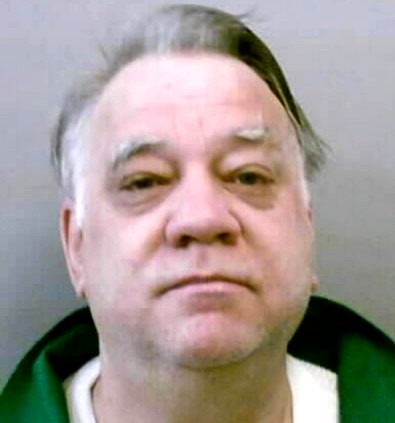 Luke Williams
Murderer · USA · 1991
Luke Williams was convicted of murdering his wife, Linda Williams, and his 12-y…
2 victims
Luke Williams
Murderer · USA · 1991
Luke Williams was convicted of murdering his wife, Linda Williams, and his 12-y…
2 victims
 Martha Freeman
Murderer · USA · 2005
Martha Freeman was convicted, together with Rafael DeJesus Rocha-Perez, of firs…
1 victim
Martha Freeman
Murderer · USA · 2005
Martha Freeman was convicted, together with Rafael DeJesus Rocha-Perez, of firs…
1 victim
- Gender
- male
- Country
- USA
- Location
- Dallas County, Texas, USA
- Date of birth
- September 13, 1977
- Age at first offence
- 23
- Characteristics
- escape
- Victim profile
- Aubrey Hawkins, 29 ( Irving police officer )
- Method of murder
- Shooting
- Date(s) of murder
- December 24, 2000
- Years active
- 2000
- Date of arrest
- —
- Status
-
Sentenced to death
Sentenced to death on June 12, 2003
Case identification
- Randy Halprin (Randy Ethan Halprin), TDCJ Number 999453
- Date of birth: 09/13/1977
- Name: Randy Halprin
- Court: Court of Criminal Appeals of Texas
- Case number: No. AP-74,721
- Appellant: Randy Ethan Halprin
- Respondent: The State of Texas
- Trial court: Hervey, J.
- Delivery of opinion: June 29, 2005
- Publication status: Publish
Timeline
- 12/24/2000 — Randy Ethan Halprin, age 23, and six codefendants fatally shot a 31 year old white male police officer in Irving, Texas, while on escape from the TDCJ Connally Unit.
- 12/13/2000 — Randy Halprin escaped from custody.
- 01/20/2001 — A friend of Wade Holder watched “America’s Most Wanted” and told Wade that the Texas 7 were staying in his RV park.
- 01/21/2001 — The friend reported suspicious activities to local authorities.
- 01/21–23/2001 — The Texas Seven were apprehended as a direct result of the television show “America’s Most Wanted.”
- 01/21/2001 — The El Paso County Sheriff’s Department SWAT team found Garcia, Rodriguez, and Rivas in a Jeep Cherokee in the RV Park and captured them at a nearby gas station.
- 01/23/2001 — Authorities received information on the whereabouts of the last two; they were hiding out in a Holiday Inn in Colorado Springs, Colorado.
- 01/24/2001 — In the early hours of January 24, local KKTV television anchorman Eric Singer was taken into the hotel and interviewed Newbury and Murphy by telephone on camera.
- January 2007 — A court-ordered psychiatric evaluation concluded that Michael Anthony Rodriguez was mentally competent to decide to forgo further appeals.
- 06/12/2003 — Randy Ethan Halprin was sentenced to death.
- 06/23/2004 — Rivas v. State (No. 74,143) was delivered; it affirmed Rivas’s conviction and sentence on direct appeal.
- 08/14/2008 — Michael Anthony Rodriguez was executed.
- 2008 — Rodriguez announced that he wished to forgo any further appeal (beyond the appeal to the Texas Court of Criminal Appeals, mandatory in all death-penalty cases).
Background
The Texas 7 were a group of prisoners who escaped from the John Connally Unit near Kenedy, Texas on December 13, 2000.
The group was composed of the following Texas state prisoners:
- Joseph C. Garcia
- Randy Ethan Halprin (age 23 at the offense)
- Larry James Harper (deceased by suicide)
- Donald Keith Newbury
- Patrick Henry Murphy, Jr. (39)
- George Rivas (ringleader)
- Michael Anthony Rodriguez (executed in 2008) At the time of the breakout, George Rivas, the reported ringleader of the Texas Seven, was serving 18 consecutive 15-to-life sentences.
Michael Anthony Rodriguez was serving a 99-to-life term.
Larry James Harper, Joseph Garcia, and Patrick Henry Murphy, Jr., were all serving 50 year sentences.
Donald Keith Newbury was serving a 99-year sentence.
Randy Halprin was serving a 30-year sentence for injury to a child.
The offence
On 12/24/2000, in Irving, Texas, Halprin and six codefendants fatally shot a 31 year old white male police officer while on escape from the TDCJ Connally Unit.
After that incident, appellant was charged with capital murder.
Investigation and escape
On December 13, 2000, the seven carried out an elaborate scheme and escaped from the John B. Connally Unit, a maximum-security state prison near the South Texas city of Kenedy.
At the time of the breakout, the reported ringleader was George Rivas.
Using several ploys, the seven overpowered and restrained nine civilian maintenance supervisors, four correctional officers and three uninvolved inmates at approximately 11:20 a.m.
Once a victim was subdued, the offenders removed some clothing, tied the victim up, gagged the victim and placed the victim in an electrical room behind a locked door.
The attackers stole clothing, credit cards, and identification from their victims.
The group also impersonated prison officers on the phone and created false stories to ward off suspicion from authorities.
After that, three of the group made their way to the back gate of the prison, some disguised in stolen civilian clothing. They pretended to be there to install video monitors. One guard at the gatehouse was subdued, and the trio raided the guard tower and stole numerous weapons.
Meanwhile, four offenders who stayed behind made calls to prison tower guards to distract them.
The group stole a prison maintenance pick-up truck, drove it to the back gate, picked up their cohorts, and drove away from the prison.
Crime spree
The white prison truck was found in the parking lot of the Wal-Mart in Kenedy, Texas.
The Texas 7 went into San Antonio right after breaking out of the complex.
Realizing that they were running out of funds, they robbed a Radio Shack in Pearland, Texas on December 14 at around 2 AM.
They entered an adjacent computer software store, knocked down the flimsy sheetrock wall to the other side, and went into Radio Shack undetected.
They tethered the Radio Shack safe to their truck, dragged the large safe outside the building, and caused damage to the parking lot and pavement.
On December 19, four of the members checked into an Econo Lodge motel in Farmers Branch, Texas (under assumed names), and they decided to rob an Oshman’s Sporting Goods in nearby Irving, Texas.
On December 24, 2000, they held up the store and stole 44 guns.
A customer standing outside the store noticed the commotion inside and called police.
Irving police officer Aubrey Hawkins responded to the call.
After arriving, he was almost immediately ambushed. His autopsy would show that he had sustained eleven gunshots and his body had been run over by the fleeing gang.
After Hawkins’ murder, a $100,000 reward was offered to whoever could snare the group, and the reward would climb to $500,000 before the group was apprehended.
Capture
A friend of Wade Holder, the owner of the Coachlight Motel and R.V. Park in Woodland Park, Colorado, watched “America’s Most Wanted” on January 20 and told Wade that they were staying in his RV Park.
Wade Holder believed the Texas 7, who were being compared to Angel Maturino Resendiz, were in his trailer park.
When he confirmed this, he reported the suspicious activities to local authorities the next day on January 21.
The El Paso County Sheriff’s Department SWAT team found Garcia, Rodriguez, and Rivas in a Jeep Cherokee in the RV Park and captured them at a nearby gas station.
Authorities then found Halprin and Harper in an RV; Halprin surrendered peacefully, but Harper was found dead after a standoff. Harper had shot himself in the chest and left temple with a pistol.
The surviving four members were taken into police custody.
On January 23, authorities received information on the whereabouts of the last two; they were hiding out in a Holiday Inn in Colorado Springs, Colorado.
A deal brokered between the two, Newbury and Murphy, allowed them to make live TV appearances before they were arrested.
In the early hours of January 24, local KKTV television anchorman Eric Singer was taken into the hotel where on camera he interviewed the two by telephone.
Both Newbury and Murphy harshly denounced the criminal justice system in Texas, with Newbury adding: “the system is as corrupt as we are.”
Other participants
Authorities found out that a woman named Patsy Gomez conspired with a man named Raul Rodriguez, the father of Michael Rodriguez, to help the Texas 7.
Appellant’s trial
Appellant and six other prison inmates escaped from prison in December 2000.
These prison escapees murdered a police officer during a robbery at an Oshman’s sporting goods store on Christmas Eve 2000.
As a result of this incident, appellant was charged with capital murder.
A jury convicted appellant of this offense.
The trial court sentenced appellant to death pursuant to the jury’s answers to the special issues submitted at the punishment phase.
Appellant raised nineteen points of error.
Appeals
Direct appeal
The Court of Criminal Appeals of Texas affirmed the conviction and sentence.
The opinion stated: “We affirm.”
Hervey, J., delivered the opinion for a unanimous Court.
Point of error one
Appellant asserted that the trial court improperly excluded mitigating evidence in violation of Article 37.071(f)(4), Tex. Code Crim. Proc., which requires that the jury be instructed that it “shall consider mitigating evidence to be evidence that a juror might regard as reducing the defendant’s moral blameworthiness.”
Appellant also asserted that the trial court improperly excluded this mitigating evidence in violation of the Eighth Amendment to the United States Constitution.
In these points of error, appellant argued that the trial court erroneously excluded mitigating evidence in the form of a document offered as defense exhibit 39.
Appellant argued that this document “gave weight and credence to part of [his] mitigation argument: that is, he was not the leader of the Texas Seven; he was not a principal in the decision to break out of prison; and, he was not a principal in the decision to robb [sic] Oshmans.”
The top of the document stated: “TDCJ Connally Unit.”
It ranked appellant the lowest of the Texas Seven in leadership qualities.
The identity of the person who prepared the document was unknown.
The document declared:
Ranking of Offenders by Leadership/Personality Characteristics
After conducting interviews with civilian workers, correctional officers, and several inmates who worked closely with the escapees, a consensus was developed of which offender was the leader and which one may be the weakest. It was unanimous decision that RIVAS[ (2) ] was the leader and the weakest was determined to be [APPELLANT]. The following are ranked in order from highest (leadership) to the lowest (follower). . . . . . . . . . 7. [APPELLANT]-was quiet and never exhibited leadership qualities. Was consistently worried about whether his work was acceptable to the civilian workers. Very submissive characteristic. This worrisome attitude was seen to escalate a month before the escape. One civilian worker speculated whether [APPELLANT] was undergoing some type of depression.
During the punishment phase, the trial court sustained the prosecution’s hearsay objection to the document each time appellant offered it into evidence.
During proceedings outside the presence of the jury, defense counsel made the following record:
[DEFENSE]: Judge, out of the presence of the jury, I'll make a record as to Defense Exhibit No. 39 that's been admitted for record purposes at this point. We've talked about that quite a bit during the course of the trial and I just want to state for the record that Defense Exhibit 39 at the top says, it's ranking of offenders by leadership slash personality characteristics. It says that "After conducting interviews with civilian workers, correctional workers, and several inmates that work closely with the escapees, a consensus was developed of which offender was the leader and which one may be the weakest" and talks about what the decision was. It ranks the offenders from the highest to the lowest, starting with Rivas as the highest and [appellant] as the lowest. First of all, Your Honor, this document is a part of the discovery that the State gave to us. It has a distinctive number of 1550 on the bottom, which indicates what number of document it is that the State gave to us. This is not a document that was subpoenaed by the defense. It was given to us by the State. Because it says that it's a summary that was compiled after talking to several different people, civilian workers, correctional officers, and inmates, it's not going to be the document of any one particular person. It's going to be a TDC document. Now, witness Moczygemba, who was a TDC civilian worker who was taken down in the escape, testified that he remembered they were asked to do this type of ranking. Also another TDC worker who was taken down in the escape, and that would be-that would be Mr. Burgess, also seemed to remember being asked that sort of information. The document clearly says "TDCJ Connally Unit" on the top of it. Now, yesterday [the defense] tried to offer that exhibit through the witness who came from the Inspector General's Office, Elizabeth Mullen. Ms. Mullen also testified that that appeared to be a TDCJ document. It says TDCJ Connally Unit on the top. Ms. Mullen said what they do, their job at the Inspector General's Office, is to investigate all of these types of matters and compile documents, reports, and such that are related to matters such as the escape. And she says, I just don't recognize this one. Now, she also testified that, you know, she's told by her general counsel not to come here and, you know, give anything to the defense that the defense may have subpoenaed until she talks to the State first. Judge, one thing I did omit, Mr. S.O. Woods, a former TDCJ employee, said he went to the Inspector General's Office, he reviewed the several documents that they had, the boxes of documents that he had, and he recalled seeing this document amongst those papers.
[TRIAL COURT]: [Defense counsel], I don't believe that's an issue. It's a TDCJ document. No question about its authenticity. That's not the issue. The issue is that the conclusions on the entire document are all from hearsay from unnamed sources. That's the problem with the document.
[PROSECUTION]: We didn't know who made it, either.
[TRIAL COURT]: You don't know who the author is, you don't know where the conclusions came from, you can't go back and find out any of the source information that that ultimate opinion comes from. So I have reviewed 39, I understand your objections. No question about its authenticity. It's simply not admissible because of hearsay.
[DEFENSE]: Well, Judge, our objection would be-I mean, our premise would be that you do have some evidence from Moczygemba and Bender where the data came from, that it's a business record of TDCJ, and that the proper sponsoring witness for that would be Ms. Mullen, except that she says I just don't recognize this particular one. So that puts us in the position of having to rely on the State for our sponsoring witness for the document, but having that sponsoring witness say, well, I just don't recognize this particular one, even though Mr. Woods says that he saw it amongst those papers in the Inspector General's Office.
[TRIAL COURT]: The record is clear as to the Court's ruling. Sheriff, find us a jury.
[DEFENSE]: Judge, just so I'm clear, is the Court saying that that document offered through Ms. Mullen is objected to by the State as hearsay and, therefore, the Court is not admitting it as a business document made during the course and scope of the record keeping duties of TDC?
[TRIAL COURT]: It may be a business record, but it's all hearsay. We find that the trial court did not abuse its discretion to decide that the document did not meet the business records exception to the hearsay rule. There is no evidence showing who prepared the document or whether it is a record of regularly conducted activity.
The appellate court stated that appellant presented other mitigating evidence that was cumulative of the mitigating evidence contained in the document.
The opinion included testimony and descriptions for other witnesses:
- A TDCJ civilian employee, Moczygemba, testified that he would rank appellant’s intelligence “at the very bottom.”
- Another TDCJ civilian employee, Burgess, testified that appellant was not “a leader type.”
- Appellant testified at length that he was a follower and not a leader and that his participation in the victim’s murder was minimal.
Appellant’s counsel also argued appellant’s lack of intelligence and leadership qualities to the jury during closing jury arguments at the punishment phase.
Under these circumstances, the appellate court held that any error in excluding the document was harmless.
Points of error one and two were overruled.
Points of error three through ten, fourteen and seventeen
Appellant claimed the trial court erroneously denied challenges for cause to ten veniremembers during voir dire to select the primary jury panel.
The appellate court found that appellant had one peremptory challenge remaining when he accepted the twelfth juror, Dalton, and that appellant suffered no harm.
The appellate court cited Johnson v. State, 43 S.W.3d 1, 7 (Tex.Cr.App. 2001).
Points of error three through ten, fourteen and seventeen were overruled.
Points of error eleven through thirteen
Appellant claimed the trial court erroneously denied challenges for cause to three veniremembers during alternate juror selection.
The appellate court determined that appellant had not shown that any of the two alternate jurors (Hoyer and Railsback) participated in any jury deliberations in his case, so appellant suffered no harm.
Points of error eleven through thirteen were overruled.
Points of error fifteen, sixteen, eighteen and nineteen (commitment questions)
Appellant challenged prosecution commitment questions during voir dire.
In point of error fifteen, appellant objected to an improper commitment question from the prosecution to veniremember Russell.
The prosecution asked:
Q. [PROSECUTION]: Let me give you some other examples of some people say it could be or could not be. If a person knows right from wrong, so they're not insane, but, let's say, they may have a mental illness, a mental birth defect, maybe they're mentally retarded. There's been a lot in the media lately about the execution of someone who is mentally retarded. And you can see how Special Issue No. 3 [the mitigating evidence special issue] could take that into account, that yeah, they're guilty, they killed the police officer. Yeah, they're probably going to be dangerous. They intended for someone to die. But their makeup, they've been that way since birth through no fault of their own. You can see the documentation if someone is mentally retarded. People say irregardless of those other decisions, that's why we get to No. 3, that could be, maybe to some people, mitigating.
The defense objected:
[DEFENSE]: Excuse me, Mr. D'Amore. Your Honor, because of the legal nature of the Supreme Court rulings involving that recently, we object to that as an improper commitment question under Standifer [sic].
The trial court overruled:
[TRIAL COURT]: Overruled.[ (8) ]
Points of error fifteen, sixteen, eighteen and nineteen included additional exchanges; for each veniremember, the opinion described what questions were asked and whether objections were preserved, along with the trial court rulings (“Be denied.” “Be overruled.” “Overruled.”)
In point of error sixteen, the prosecution’s questions to veniremember O’Brien included:
Q. [PROSECUTION]: That by itself right there, if we just stop for a minute, I can take a gun out and shoot my partner here ten times and laugh about it and that's murder. It's not capital murder, but it's an intentional murder. I could get anywhere from five years in the penitentiary at the low end to 99 years or life at the high end or anywhere in between. Okay? That's for intentional murder.[ (9) ]
And:
Q. [PROSECUTION]: Different type of intentional murder could be the unplugging of a life support machine in the hospital of a family member out of love instead. Intentional murder, did it on purpose, knew they were going to die, but you did it out of love so that person wouldn't be in pain.
And:
Q. [PROSECUTION]: Go down the street, kill a neighbor out in the front yard. Intentional murder, not self-defense, not an accident. Then you find out that neighbor gave drugs to that person's child and killed him, drug dealer, that type of a situation. You see, it could encompass a wide variety of the different situations what intentional murder is. I use those as examples not to commit you in any way, but to kind of have you see intentional murder can encompass a lot of different situations. Does that make sense? A. [O'BRIEN]: Yes.
In point of error eighteen, the prosecution’s questions to veniremember Hamblin included:
Q. [PROSECUTION]: Now, of course, that, I think that wide range of punishment recognizes the wide range of circumstances that murder can be committed under. Maybe a situation where I turn to Mr. D'Amore, I don't like his tie today, and I shoot him ten times in the head, and, you know, he falls down and, you know, I dance around all happy about it. It's a brutal, heinous, intentional murder. There's nothing really plus, it's not a capital murder. You know, it could be something like that, that's an intentional murder. Or it could be an aged spouse, okay, who pulls the life support plug-
The defense objected:
[DEFENSE]: Excuse me, Mr. Wirskye. We will object, Your Honor. That's clearly not something encompassed within the allegations contained in the indictment. It's an improper example to try to qualify the juror, potential juror, on the minimum range of punishment. We also think it's a violation of Standifer [sic], it's a commitment question, so we kindly object.
The trial court ruled:
[TRIAL COURT]: Be denied.
A further example was given:
Q. Obviously, we can't commit you to what you would do in certain instances. I just want to kind of give you some examples. A mercy killing, some people call it. You know, an aged spouse pulls the life support plug to put their longtime spouse out of misery. That would also be an intentional murder.
The defense objected again:
[DEFENSE]: We would also object, that certainly would also be aiding suicide. We're going to object to that, but certainly it wouldn't even be in the range of a murder offense, so we object once again that it's an improper example to be given.
The trial court again ruled:
In point of error nineteen, the prosecution’s question to veniremember McGinnis included:
Q. [PROSECUTION]: You know, you could have a really heinous murder, just a regular murder, pull a gun out and kill Mr. D'Amore because I don't like his tie. You may want to give me life for that. And you could have a knowing or intentional murder. An elderly spouse pulls the plug on life support for a long-time spouse.
The defense objected:
[DEFENSE]: We object to that example, Judge. It's a violation of Standifer [sic] and it doesn't qualify here anyway.
The trial court overruled:
[TRIAL COURT]: Be overruled. Do you understand he's just giving you examples, Mr. McGinnis? A. [MCGINNIS]: I understand that. [TRIAL COURT]: I figured you did. We can't talk about the facts of this case, so we just give hypotheticals. Does that make sense to you. A. Yes, sir.
The opinion concluded that any error was harmless because none of these four veniremembers sat on appellant’s jury.
Points of error fifteen, sixteen, eighteen and nineteen were overruled.
Outcome of direct appeal
The appellate court affirmed the judgment of the trial court.
“The judgment of the trial court is affirmed.”
Sentencing
Appellant was sentenced to death pursuant to the jury’s answers to the special issues submitted at the punishment phase.
Sentencing status: Sentenced to death on June 12, 2003.
Other details
Appellant’s prior record and occupation
- Prior prison record: #786259 on a 30 year sentence from Tarrant County for 1 count of Injury to a Child.
- Prior prison record indicates the escape occurred while serving that sentence.
- Prior occupation: Maintenance, Laborer.
- Native county: Collin.
- Native state: Texas.
- Education level: 11.
- Age at receiving: 25.
- County listed for the offense: Dallas.
- Race and gender of victim: White/Male.
- Victim count: 1 police officer (Aubrey Hawkins).
Additional court-related details about the appellant’s mitigation evidence
- Defense Exhibit 39 ranked offenders by leadership/personality characteristics.
- The appellate opinion stated: “It appears that this document was prepared just after the escape as an aid to law enforcement to apprehend the escapees.”
Appellate notes included within the opinion
The opinion included notes tied to the document and witnesses:
- A note explained that Rivas was one of the Texas Seven and was convicted of capital murder and sentenced to death; it referenced “Rivas v. State , No. 74,143 (Tex.Cr.App. No. 74,143, delivered June 23, 2004) (not designated for publication).”
- The opinion included the legal rule about “records of regularly conducted activity” from Tex. R. Evid. 803(6) and its definition.
- The opinion included witness testimony exchanges:
- Moczygemba testimony included: “He was right at the very bottom.”
- Burgess testimony included: “Not very good.”
- Burgess also said appellant “was-just in my opinion he was not a leader type, just that's my opinion.”
- The opinion noted that appellant’s counsel argued appellant met “George Rivas” and was described as “a follower,” without leadership qualities.
Juror selection issue notes
The appellate opinion included that appellant did not state in his brief whether he challenged these veniremembers for cause, or whether he exercised peremptory challenges, or whether any of them actually sat on his jury.

Spotted an error, or have more information about this case?