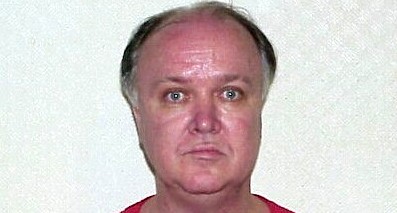
David Skaggs
Murderer Ervil LeBaron
Murderer · USA · 1972
Ervil Morrell LeBaron (1925 to August 16, 1981) was the leader of a polygamous…
35 victims
Ervil LeBaron
Murderer · USA · 1972
Ervil Morrell LeBaron (1925 to August 16, 1981) was the leader of a polygamous…
35 victims
 Brian Kevin Rosenfeld
Murderer · USA · 1985
Brian Kevin Rosenfeld Brian Kevin Rosenfeld was sentenced to three concurrent l…
23 victims
Brian Kevin Rosenfeld
Murderer · USA · 1985
Brian Kevin Rosenfeld Brian Kevin Rosenfeld was sentenced to three concurrent l…
23 victims
 Marvin Gray
Murderer · USA · 1975
Marvin Gray was convicted killer who claimed responsibility for 23 slayings and…
23 victims
Marvin Gray
Murderer · USA · 1975
Marvin Gray was convicted killer who claimed responsibility for 23 slayings and…
23 victims
 Yahweh ben Yahweh
Murderer · USA · 1980
Yahweh ben Yahweh was born and legally named Hulon Mitchell Jr. (October 27, 19…
23 victims
Yahweh ben Yahweh
Murderer · USA · 1980
Yahweh ben Yahweh was born and legally named Hulon Mitchell Jr. (October 27, 19…
23 victims
 Russell Ellwood
Murderer · USA · 1991
Russell Ellwood was a former taxi driver. Authorities suspected him of killing…
20 victims
Russell Ellwood
Murderer · USA · 1991
Russell Ellwood was a former taxi driver. Authorities suspected him of killing…
20 victims
 Gary Lawrence
Murderer · USA · 1994
Gary Lawrence (DOB: 06/29/57) was tried in the First Judicial Circuit, Santa Ro…
1 victim
Gary Lawrence
Murderer · USA · 1994
Gary Lawrence (DOB: 06/29/57) was tried in the First Judicial Circuit, Santa Ro…
1 victim
 Thomas Selmayr
Murderer · Germany · 2011
March 21, 2011 — Police investigated the deaths of two girls, aged eight and 11…
2 victims
Thomas Selmayr
Murderer · Germany · 2011
March 21, 2011 — Police investigated the deaths of two girls, aged eight and 11…
2 victims
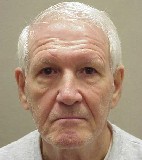 Robert Reldan
Murderer · USA · 1974
Name: Robert Reldan Robert Reldan was sentenced to life in prison on two counts…
8 victims
Robert Reldan
Murderer · USA · 1974
Name: Robert Reldan Robert Reldan was sentenced to life in prison on two counts…
8 victims
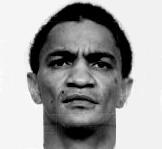 Dwight Adanandus
Murderer · USA · 1988
Dwight Adanandus (offender #940) was executed by lethal injection in Texas on O…
1 victim
Dwight Adanandus
Murderer · USA · 1988
Dwight Adanandus (offender #940) was executed by lethal injection in Texas on O…
1 victim
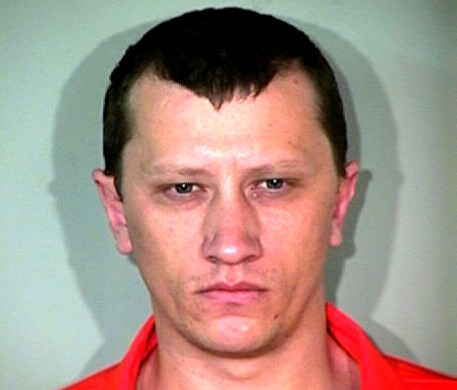 Beau John Greene
Murderer · USA · 1995
Beau John Greene was sentenced to death on August 26, 1996. Greene wrote a lett…
1 victim
Beau John Greene
Murderer · USA · 1995
Beau John Greene was sentenced to death on August 26, 1996. Greene wrote a lett…
1 victim
- Gender
- male
- Country
- USA
- Location
- Barren County, Kentucky, USA
- Date of birth
- J une 2, 1950
- Age at first offence
- 31
- Characteristics
- robbery, history of mental illness, alcohol
- Victim profile
- Herman and Mae Matthews
- Method of murder
- Shooting
- Date(s) of murder
- May 6, 1981
- Years active
- 1981
- Date of arrest
- 8 days after
- Status
-
Died in custody
Died in prison in November 2009
Case information
David Leroy Skaggs (DOB 6-2-50) was charged with Murder for the deaths of Herman and Mae Matthews occurring on May 6, 1981. He was convicted by a Kentucky jury of two counts of capital murder, one count of first degree robbery, and one count of first degree burglary.
Skaggs entered the home of Mae and Herman Matthews, an elderly Glasgow, Kentucky couple, on May 6, 1981 and shot and robbed them. During the ensuing investigation, police led to Skaggs in Columbus, Indiana, and he was arrested eight days later in Indiana. Skaggs made two confessions and other inculpatory statements. He also led police to the murder weapon and Mae Matthews’s purse.
The jury ultimately recommended the death sentence for the murder convictions.
Timeline
- May 6, 1981 — Herman and Mae Matthews were shot and killed in their home near Glasgow, Kentucky; Skaggs entered their home and shot and robbed them.
- Eight days later (year not specified) — Skaggs was arrested in Indiana.
- February 23, 1982 — The guilt phase of the trial commenced.
- June 23, 1982 — The court convened a second penalty phase hearing before a new jury.
- July 13, 1982 — The court entered a final sentence of death.
- 1995 — Skaggs filed a federal habeas petition pursuant to 28 U.S.C. § 2254.
- July 22, 1998 — The district court denied Skaggs’s petition for habeas relief, granted him in forma pauperis status for appeal, and issued a certificate of probable cause.
- October 31, 2000 — The United States Court of Appeals for the Sixth Circuit decided and filed its decision in David Leroy Skaggs, Petitioner-appellant, v. Phil Parker, Warden, Respondent-appellee (No. 98-6249).
- 2000 — The death sentence was reversed by the 6th Circuit Court of Appeals and a new sentencing phase was undertaken.
- April 2002 — A new sentencing phase was undertaken by Davis in Barren Circuit Court, resulting in the jury recommending the death sentence.
- November 5, 2009 — Skaggs was moved from death row in Eddyville to a care facility at the Kentucky State Reformatory in LaGrange due to complications from cancer.
- November 2009 — Skaggs died in prison.
The offence
On May 6, 1981, Herman and Mae Matthews were shot and killed in their home near Glasgow, Kentucky.
At the penalty phase, the court instructed the jury on aggravating circumstances:
- For the death of Herman Matthews, the court instructed on:
- that Skaggs was engaged in committing a first-degree robbery at the time Herman Matthews was killed; and
- that Skaggs’s act of killing Herman Matthews was intentional and also resulted in the death of Mae Matthews.
- For the death of Mae Matthews, the court instructed on: that Skaggs was engaged in committing a first-degree robbery and first-degree burglary at the time Mae Matthews was killed.
The court also instructed the jury on mitigating factors including emotional disturbance and whether Skaggs could appreciate the criminality of his conduct or conform his conduct to the requirements of the law in light of his mental disease or defect.
Investigation and arrests
The ensuing investigation led police to Skaggs in Columbus, Indiana. Several days later, law enforcement officials transported Skaggs to Kentucky where he was arraigned. Skaggs was arrested eight days later in Indiana.
Skaggs made two confessions and other inculpatory statements during the period in which he was transported to Kentucky. Skaggs also led police to the murder weapon and Mae Matthews’s purse.
Trial
Charges and verdicts
Skaggs was convicted by a Kentucky jury of:
- two counts of capital murder,
- one count of first degree robbery, and
- one count of first degree burglary.
Guilt phase (February 23, 1982)
The guilt phase commenced on February 23, 1982.
Before trial, Skaggs informed the Barren County Circuit Court that he intended to introduce evidence of his mental illness. The court appointed two psychiatrists to evaluate Skaggs:
- Dr. Lawrence P. Green, who was to evaluate Skaggs and provide both the Commonwealth and the defense with a copy of his report; and
- Dr. William J. Kernohan, appointed as a “defense psychiatrist” to provide his report only to Skaggs’s counsel.
Dr. Kernohan refused to evaluate Skaggs, resulting in a court order for Skaggs to be evaluated by Dr. Pran Ravani of the Kentucky Correctional Psychiatric Center (“KCPC”). Skaggs objected to the court order and requested an independent psychiatrist for his defense. Skaggs’s attorneys selected Elya Bresler, who claimed to be a licensed clinical and forensic psychologist, and the court approved payment of $1,000 for Bresler’s services.
Bresler evaluated Skaggs in preparation for the insanity defense at trial. Bresler testified that Skaggs suffered from a “depressive disorder” and “paranoid personality disorder,” and that these would have affected Skaggs’s ability to understand the criminality of his actions and to distinguish right from wrong. The testimony was described as rambling, confusing, and incoherent to the point of being comical.
The Commonwealth presented Dr. Ravani’s testimony. Dr. Ravani testified that Skaggs had a history of alcohol abuse, displayed a “schizophrenic trend,” and could appreciate the difference between right and wrong. The jury rejected Skaggs’s insanity defense and returned verdicts of guilty on all charges.
First penalty phase and mistrial
The court proceeded to the penalty phase after the jury’s guilty verdicts. Defense counsel chose not to call Bresler because his performance was so poor during the guilt phase. The jury could not agree on an appropriate penalty for the two murder convictions, resulting in a mistrial.
Second penalty phase (June 23, 1982)
On June 23, 1982, the court convened a second penalty phase hearing before a new jury.
The Commonwealth reintroduced much of the same evidence introduced at the guilt phase, and the testimony of witnesses was essentially the same. The Commonwealth introduced, over defense objections, Skaggs’s prior criminal record, including convictions of non-assaultive offenses.
Defense counsel called Skaggs’s father, Roland Skaggs, who testified that his son was born in an “insane asylum,” was raised by his grandmother, and started getting into criminal trouble only after leaving home.
Defense counsel recalled Bresler despite his previous poor performance. Bresler again testified that Skaggs suffered from a depressivedisorder and a paranoid personality disorder which would have impaired his capacity to appreciate the nature of his conduct and to conform his conduct to the requirements of the law.
On rebuttal, the Commonwealth called Dr. Ravani again, who testified that despite Skaggs’s “schizophrenic trend,” Skaggs had the substantial capacity to resist an impulse to violate the law.
At the conclusion of the penalty phase, the jury recommended death, and the court entered a final sentence of death on July 13, 1982.
Sentencing
Skaggs was sentenced to death on the murder convictions and received:
- twenty years each on the robbery convictions, and
- twenty years on the burglary conviction.
The court entered the final death sentence on July 13, 1982.
Skaggs filed several motions for a new trial based on newly discovered evidence, and all were denied:
- One motion was based on discovery by appellate counsel that Bresler had completely falsified his credentials, was not a licensed clinical or forensic psychologist, and had no academic degrees or training as a psychologist; his post-secondary education consisted of two years of college as an English major.
- A second motion for a new trial offered additional evaluations of two psychiatric experts who examined Skaggs in preparation for his federal habeas petition:
- Dr. Charles Yont, a certified psychologist, stated that Skaggs was mildly retarded and functioned at the level of a twelve- or thirteen-year-old.
- Dr. Eric Engum, a clinical neuropsychologist, determined Skaggs’s intelligence quotient (“I.Q.”) of 64 indicated that Skaggs was borderline mentally retarded and that Bresler’s testimony was “so far below the standard of care as to totally misrepresent Mr. Skaggs to the jury . . . .”
The trial court acknowledged Bresler’s lack of credentials but overruled Skaggs’s motions.
Appeals and habeas corpus
Kentucky appellate proceedings
Skaggs appealed to the Kentucky Court of Appeals. The appeals from both orders were consolidated and the judgments of the trial court were affirmed. The Kentucky Supreme Court granted discretionary review and unanimously affirmed Skaggs’s conviction and sentence. The United States Supreme Court denied certiorari.
Federal habeas corpus (28 U.S.C. § 2254)
On January 19, 1996, Skaggs filed a federal habeas petition pursuant to 28 U.S.C. § 2254, raising numerous assignments of error.
The district court held an evidentiary hearing limited to Skaggs’s claim of ineffective assistance of counsel. On July 22, 1998, the district court denied Skaggs’s petition for habeas relief, granted in forma pauperis status for appeal, and issued a certificate of probable cause.
On appeal to the United States Court of Appeals for the Sixth Circuit, the court addressed whether Skaggs received ineffective assistance of counsel in violation of his Sixth Amendment rights at the penalty phase. The Sixth Circuit concluded that trial counsel provided ineffective assistance of counsel at the penalty phase and reversed the district court’s denial of the habeas petition.
The Sixth Circuit stated it reversed the district court’s denial and remanded with instructions to issue a writ of habeas corpus vacating Skaggs’s death sentence unless the Commonwealth conducted a new penalty proceeding within 180 days of remand.
Grounds discussed in the ineffective-assistance analysis
The Sixth Circuit concluded that counsel’s performance at the guilt phase did not fall below an objective standard of reasonableness under Strickland. It focused on penalty phase performance.
The court held that defense counsel’s decision to call Bresler at the second penalty hearing fell below an objective standard of reasonableness because counsel had observed Bresler’s earlier performance and because counsel failed to present other competent mitigating evidence. The court also discussed that the deficient performance resulted in essentially no mitigating evidence at sentencing.
During the evidentiary hearing, Boyce provided testimony quoted verbatim about Bresler and counsel’s decisions:
A:[H]e was awful. He was incoherent. He was talking about things that didn't make sense. You couldn't stop him. You couldn't reel him back in. People in the audience were laughing at him. So Joe [Kirwin] and I talked afterwards. Our initial intent had been to recall him at the penalty phase. We discussed it and decided we would be in better shape not calling him than we would be if we called him. So we did not recall him at the penalty phase.
Boyce also testified:
Q: Between the mistrial and the retrial of the penalty phase, what efforts or discussions were had as far as getting an expert witness in the [second] penalty phase?
A: Joe and I talked about what to do, again about Elliott [sic] Bresler, who had been such a bad witness. Ultimately we decided since we had such a difficult time getting any money or the right to call or have David [ Skaggs ] evaluated by our own expert, that it was unlikely that Judge Waldon would give a summons for another witness, another expert witness. And our only reason could be that we didn't think that our expert turned out to be very competent on the stand. So we decided we would ask the judge for more money so Elliott [sic] Bresler could come back, thinking that probably the judge would deny that. But he granted it, and so we ended up recalling [Bresler] for the retrial.
During Bresler’s cross-examination during the penalty phase, the prosecution questioned him. The dialogue was quoted verbatim:
Commonwealth: The last time we talked, I was interested that a great number of famous people you thought were psychotic, great - great people like Einstein.
Bresler: I never said that Einstein was psychotic.
Commonwealth: You remember what you told me about that?
Bresler: I said he had some eccentricities. I said he had some eccentricities. First of all, I would never say anyone was psychotic, unless I had examined them. I do not make value judgments.
Commonwealth: You, obviously, hadn't had an opportunity to examine Dr. Einstein?
Bresler: I knew Einstein personally, but I never examined him, and he had some eccentricities.
Commonwealth: And I believe the Secretary of the Interior, you said, similarly, Mr. Watts?
The Sixth Circuit also quoted from Dr. Engum’s report describing the findings about Bresler’s evaluations:
[W]ith regard to the most significant issues; namely intelligence, the presence or absence of indicia of organic brain damage, and the presence or absence of a major psychosis (schizophrenia, affective disorder, or organic brain syndrome with psychosis), Mr. Bresler's findings were erroneous, improper, not supported by the data, and arguably misrepresentative of the client.
The Sixth Circuit quoted additional language from Dr. Engum’s report:
Bresler's obvious incompetence so detracted from the proceedings that the jury was either not allowed to hear or never had a chance to consider the more subtle aspects of Mr. Skaggs 's psychological development, personality status, present level of cognitive functioning, emotional status, or potential for long term adjustment in a penal facility . . . .
The Sixth Circuit also quoted further language from Dr. Engum’s report:
Mr. Skaggs suffers from significant compromise in almost all areas of cognitive function. . . . In fact, considering the four most sensitive indicators of brain dysfunction in terms of level of performance, . . . Mr. Skaggs 's scores were clearly in the brain damaged range in each instance. . . . Accordingly, the results of comprehensive neuropsychological assessment clearly reflect a pattern of results consistent with some form of organic brain syndrome. The primary elevations of the clinical profile reflect an individual who may be in a borderline psychotic condition with severe disturbances of thought, mood, and behavior. Such individuals typically harbor intense feelings of insecurity and inferiority. They lack self-confidence and self-esteem and feel guilty about perceived failures. In addition, there are strong paranoid features which suggest that this client has lived under the fear of attack and humiliation. There appears to be a constant sense of threat of being attacked. . . . There is also an associated constant effort to define what is the appropriate behavior in a particular situation. The extreme elevation of the Schizophrenia Scale further bolsters the assumption that the clinical profile accurately reflects Mr. Skaggs 's current level of functioning. . . . The elevation on the Schizophrenia Scale appears to reflect an individual who is confused, withdrawn, suspicious, and socially isolated. Such an elevation is often associated with active psychotic thought processes, extremely poor judgment, and significant impairment in reality testing. It is likely that this individual experiences unusual perceptual events, possible hallucinatory activity, and unusual ideas that may include magical thinking or delusional beliefs.
The Sixth Circuit quoted from Dr. Engum’s report again:
Mr. Bresler determined that Mr. Skaggs was performing within the average range of intellectual functioning, a finding that is definitely belied by [ Skaggs 's] most recent intelligence testing. Mr. Bresler was also completely negligent and totally incompetent in terms of evaluating Mr. Skaggs 's overall neuropsychological status. While this examiner cannot definitely diagnose Mr. Skaggs as suffering from an underlying organic brain syndrome, a simple quantitative analysis of his neuropsychological testresults reveals significant compromise in brain-behavior relationships. By ineffectively evaluating the client, by arriving at clearly erroneous diagnostic impressions, by positing criminal insanity when none existed, by failing to identify Mr. Skaggs 's low borderline intellectual functioning, by failing to identify Mr. Skaggs 's neuropsychological deficits, and by producing a report which contained what may be charitably termed psychobabble, . . . Mr. Skaggs 's psychological status was misrepresented and the salient features were omitted from the jury's purview. Furthermore, defense counsel failed to prepare or present any other meaningful mitigation evidence that might have compensated for their use of Bresler, or aided the jury in understanding Mr. Skaggs 's actual mental status.
The Sixth Circuit also included a quotation from Gregg v. Georgia:
If an experienced trial judge, who daily faces the difficult task of imposing sentences, has a vital need for accurate information about a defendant and the crime he committed in order to be able to impose a rational sentence in the typical criminal case, then accurate sentencing information is an indispensable prerequisite to a reasoned determination of whether a defendant shall live or die by a jury of people who may never before have made a sentencing decision.
Resentencing
After the reversal in 2000, a new sentencing phase was undertaken by Davis in Barren Circuit Court in April 2002. That phase again resulted in the jury recommending the death sentence.
Outcome and aftermath
Skaggs died in prison in November 2009.
A report by Commonwealth’s Attorney Karen M. Davis stated that she received notification that death row inmate David Leroy Skaggs passed away slightly before 3:00 am. The Department of Corrections advised Davis that Skaggs had been moved from death row in Eddyville on November 5, 2009 to a care facility at the Kentucky State Reformatory in LaGrange due to complications from cancer.
Davis stated:
“each prosecutor that has been involved with this case – Mr. Redford, Mr. Patton, and myself - has always pledged to the family to do whatever it takes to see that the jury’s sentence of death was upheld and that their parents were not forgotten. I am hopeful that the family of Herman and Mae Matthews can now have some semblance of closure regarding this heinous crime.”
Skaggs was described as a death row inmate in the period leading up to his death.

Spotted an error, or have more information about this case?