
Edward Harbison
Murderer Brian Kevin Rosenfeld
Murderer · USA · 1985
Brian Kevin Rosenfeld Brian Kevin Rosenfeld was sentenced to three concurrent l…
23 victims
Brian Kevin Rosenfeld
Murderer · USA · 1985
Brian Kevin Rosenfeld Brian Kevin Rosenfeld was sentenced to three concurrent l…
23 victims
 Marvin Gray
Murderer · USA · 1975
Marvin Gray was convicted killer who claimed responsibility for 23 slayings and…
23 victims
Marvin Gray
Murderer · USA · 1975
Marvin Gray was convicted killer who claimed responsibility for 23 slayings and…
23 victims
 Yahweh ben Yahweh
Murderer · USA · 1980
Yahweh ben Yahweh was born and legally named Hulon Mitchell Jr. (October 27, 19…
23 victims
Yahweh ben Yahweh
Murderer · USA · 1980
Yahweh ben Yahweh was born and legally named Hulon Mitchell Jr. (October 27, 19…
23 victims
 Russell Ellwood
Murderer · USA · 1991
Russell Ellwood was a former taxi driver. Authorities suspected him of killing…
20 victims
Russell Ellwood
Murderer · USA · 1991
Russell Ellwood was a former taxi driver. Authorities suspected him of killing…
20 victims
 Levi Jaimes Jackson
Homicide · USA · 1992
Levi Jaimes Jackson was a defendant in a carjacking case involving the 40-year-…
1 victim
Levi Jaimes Jackson
Homicide · USA · 1992
Levi Jaimes Jackson was a defendant in a carjacking case involving the 40-year-…
1 victim
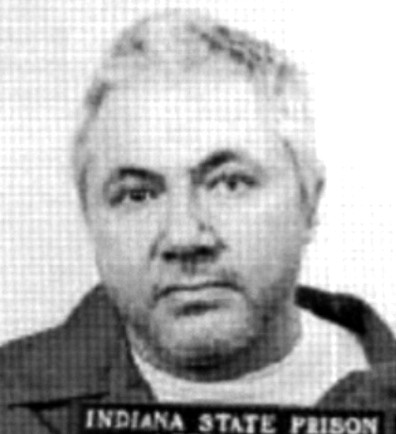 Arthur Paul Baird
Murderer · USA · 1985
Arthur Paul Baird II — defendant (appellant); husband of Nadine Baird; son of K…
3 victims
Arthur Paul Baird
Murderer · USA · 1985
Arthur Paul Baird II — defendant (appellant); husband of Nadine Baird; son of K…
3 victims
 Adam Sapikowski
Homicide · USA · 2005
Adam Sapikowski was a Chapel Hill teenager who pleaded guilty to second-degree…
2 victims
Adam Sapikowski
Homicide · USA · 2005
Adam Sapikowski was a Chapel Hill teenager who pleaded guilty to second-degree…
2 victims
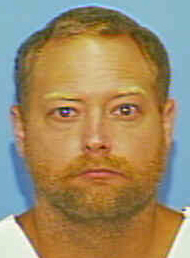 David M. Brewer
Murderer · USA · 1985
David M. Brewer was convicted and sentenced to death for aggravated murder. Joe…
1 victim
David M. Brewer
Murderer · USA · 1985
David M. Brewer was convicted and sentenced to death for aggravated murder. Joe…
1 victim
 Sajal Barui
Homicide · India · 1993
Sajal Barui was a convicted criminal who was serving a life sentence in prison…
3 victims
Sajal Barui
Homicide · India · 1993
Sajal Barui was a convicted criminal who was serving a life sentence in prison…
3 victims
- Gender
- male
- Country
- USA
- Location
- Chattanooga, Tennessee, USA
- Date of birth
- 1955
- Age at first offence
- 28
- Characteristics
- robbery, murder for hire, murder-for-hire
- Victim profile
- Edith Russell
- Method of murder
- “Massive multiple skull fractures with marked lacerations of the scalp and head, expelling brain tissue and literally crushing the victim’s face and disfiguring her beyond recognition”
- Date(s) of murder
- January 15, 1983
- Years active
- 1983
- Date of arrest
- February 21, 1983
- Status
-
Sentenced to death
Sentenced to death in 1985; conviction and sentence were affirmed on direct appeal; federal habeas corpus petition was denied and the denial was affirmed on appeal in 2005; execution dates were later stayed, with a stay until January 2008
Case overview
Edward Jerome (“E.J.”) Harbison was convicted of first-degree murder, second-degree burglary, and grand larceny and was sentenced to death. His conviction and sentence were affirmed by the Supreme Court of Tennessee. After unsuccessful direct appeal and state post-conviction proceedings, Harbison filed a petition for a writ of habeas corpus in the United States District Court for the Eastern District of Tennessee, and the denial of that petition was affirmed on appeal by the United States Court of Appeals for the Sixth Circuit.
Timeline
- January 15, 1983 — Frank Russell returned home from work and discovered that his wife, Edith, had been murdered; Mrs. Russell’s body was found inside an apartment rented at the back of the Russells’ Chattanooga, Tennessee, house.
- February 21, 1983 — Schreane was taken into custody and questioned; Harbison was arrested; Harbison made a taped statement confessing to killing Mrs. Russell.
- March 2001 — The district court dismissed Harbison’s federal habeas corpus petition as meritless.
- April 29, 2005 — The United States Court of Appeals for the Sixth Circuit decided and filed the opinion affirming the denial of Harbison’s habeas petition.
- October 1997 — Documents received from the Chattanooga Police Department were obtained through public-records requests; it was determined that documents in the police file were not in the district attorney’s file.
- June 2001 — After the district court denied Harbison’s petition, he filed a motion to reopen his state post-conviction proceeding and later requested treatment as a petition for a writ of error coram nobis.
- March 2004 — After an evidentiary hearing, the state court dismissed the motion to reopen and dismissed a petition for writ of error coram nobis as not timely filed.
- May 20, 1996 — The Tennessee Court of Criminal Appeals affirmed the dismissal of Harbison’s post-conviction petition.
- May 11, 2004 — Harbison moved to supplement the record with new state-proceeding evidence and/or to hold in abeyance pending resolution of the state-court appeal; the motions were denied.
- 19 September 2007 — United States District Judge Aleta A. Trauger barred the state of Tennessee from executing Harbison under its lethal injection protocol.
- 24 September 2007 — The state filed a motion in the Tennessee Supreme Court seeking to vacate Harbison’s execution date; the state stated the Department of Correction needed additional time and would not be in a position to go forward on September 26, 2007.
- 25 September 2007 — The Tennessee Supreme Court granted the motion and set a new execution date of 9 January 2008; one judge dissented, arguing execution could proceed by electrocution; the U.S. Supreme Court agreed to consider the constitutionality of lethal injections in a case brought by two Kentucky death row inmates.
The offence
On January 15, 1983, Frank Russell returned home from work and discovered that his wife, Edith (Mrs. Russell), had been murdered. The Russells rented an apartment at the back of their Chattanooga, Tennessee, house to a tenant who was away on vacation, and Mrs. Russell’s body was found inside this apartment.
Medical examiners determined that the cause of death was “massive multiple skull fractures with marked lacerations of the scalp and head, expelling brain tissue and literally crushing the victim’s face and disfiguring her beyond recognition.” Mrs. Russell was last seen that afternoon at a neighborhood market, where witnesses spoke with her between approximately 2:30 and 2:45 p.m.
Bags of groceries and ignition keys were found in Mrs. Russell’s car, which was parked in the driveway, when her body was discovered near midnight. Nothing in the record indicated a precise time of death.
The porch lights were off. Her husband said she always left the outside lights on for protection. The Russells’ house and the rented apartment were burglarized.
Missing items included “an RCA XL-100 television, two cable television converters, a quartz heater, a Polaroid 210 camera, a silver Cross pen and pencil set, a jeweler’s loupe, a jewelry box, antique jewelry, a marble vase, and Mrs. Russell’s purse.”
At Harbison’s trial, he testified that he had not killed Mrs. Russell and that he was not at the Russell house on the day of the murder. He testified that he was at his girlfriend’s home that afternoon and evening.
Harbison also testified that his confession was coerced. He asserted that the police threatened to arrest his girlfriend and take away her children if he did not confess. He further testified that the police told him what to say and that his taped confession, which was played to the jury, had been altered. He also testified that he had purchased the jeweler’s loupe at a pawn shop.
In his taped statement, Harbison confessed to killing Mrs. Russell and stated that after he drove his girlfriend home from work, he and Schreane went to the Russell home, determined it was empty, and used a screwdriver to break into the residence. He stated that while he and Schreane were carrying stolen items from the house and the apartment to their car, Mrs. Russell returned home. Harbison contended he thought she was reaching for a gun, so he grabbed her. He stated that he hit her with the marble vase, “at the most” two times.
At trial, Harbison was convicted and sentenced to death for the murder, burglary, and grand larceny.
Investigation
Russell’s car when her body was discovered near midnight.
The police later found the quartz heater, the Polaroid camera, the pen and pencil set, and the jeweler’s loop in the residence of Janice Duckett, who was Harbison’s girlfriend and co-defendant David Schreane’s sister.
The jeweler’s loop was found in Harbison’s shaving kit.
In an adjacent unoccupied apartment, police found Mrs. Russell’s purse, a jewelry box, and two large paper bags containing antique glassware and brassware. The stolen television was found in the residence of Schreane’s girlfriend.
Schreane was taken into custody and questioned on February 21, 1983, when he led police to the missing marble vase. Chemical testing revealed the presence of blood on the vase.
Debris vacuumed from the carpet in Harbison’s car revealed crystalline calcite fragments consistent with the marble vase.
Harbison was arrested on February 21, 1983, and in a taped statement confessed to killing Mrs. Russell.
During the habeas proceedings, records from the Chattanooga Police Department contained information about Ray Harrison, who was initially a suspect. The police files indicated that Harrison had a motive to burglarize and/or murder Mrs. Russell.
Ray Harrison told a detective that he had tried to sell Russell a ring the previous week but she did not buy it. Harrison’s cousin confirmed that he had given a ring to Ray Harrison a week before Edith’s murder and that Harrison was supposed to sell the ring for him. Ray Harrison’s wife told police that Edith Russell had taken the ring to a jeweler for an appraisal and purportedly determined that it contained a fake diamond.
The police interview with Ray Harrison’s brother-in-law indicated that “Ray Harrison and (his cousin) were mad at Edith Russell because they believed that she had ‘switched rings on Ray.’”
The police files also described connections between Harrison and Schreane. The file indicated that Harrison associated with men who lived in the Lynn house across the street from the Russells. Schreane previously had admitted that he was smoking marijuana with Linda Lynn in a parked car in front of the Lynn house on the day of the murder, establishing a tenuous connection between Harrison and Schreane.
The police files further indicated that Harrison previously had been involved in a similar burglary in which a home owner returned and a struggle ensued.
The police files also contained information about Schreane, including that Schreane implicated Harbison in the crime. Prior to Harbison’s detainment, Schreane told a witness that Harbison, who was dating Schreane’s sister, had attempted to start a relationship with Schreane’s girlfriend when Schreane was arrested on an unrelated offense.
A witness stated Schreane asserted that Harbison had killed Mrs. Russell and that he would “be up there with him for that murder case.”
Arrest and confession
Harbison was arrested on February 21, 1983. In a taped statement, he confessed to killing Mrs. Russell.
Harbison’s confession included his description of driving his girlfriend home, going with Schreane to the Russell home, breaking into the residence with a screwdriver, grabbing Mrs. Russell because he thought she was reaching for a gun, and striking her with the marble vase, “at the most” two times.
Trial
Harbison testified that he had not killed Mrs. Russell and that he was not at the Russell house on the day of the murder, asserting instead that he was at his girlfriend’s home that afternoon and evening.
He testified that his confession was coerced and that the police had threatened to arrest his girlfriend and take away her children if he did not confess.
He further testified that the police told him what to say and that his taped confession had been altered. He testified that he purchased the jeweler’s loupe at a pawn shop.
William Carter and Vaughn Miller represented Harbison at trial. Before trial, they made the following discovery requests for exculpatory evidence: a motion for discovery (4/13/1983), a motion for exculpatory evidence (4/13/1983), and a motion to compel disclosure (10/21/1983).
Harbison presented mitigation evidence at sentencing through his mother, who testified briefly that he was a good son, was regularly employed, and completed the eleventh grade of school.
After Harbison’s trial attorneys filed a motion for new trial, Harbison requested new counsel, and the court appointed Rodney Strong. Strong filed an amendment to the motion for new trial adding allegations of ineffective assistance of counsel. Strong argued that the trial attorneys made no effort to locate witnesses to pursue Harbison’s alibi defense.
The conviction and sentence were affirmed by the Supreme Court of Tennessee.
Sentencing
Harbison was sentenced to death.
At sentencing, Harbison’s trial attorneys presented little mitigation evidence. The only witness offered was Harbison’s mother, who testified briefly that he was a good son, was regularly employed, and completed the eleventh grade of school.
Post-conviction proceedings and habeas corpus
After the Supreme Court of Tennessee affirmed the conviction and sentence, Harbison filed a post-conviction petition in the trial court.
Harbison argued that Strong was ineffective because he did not argue that Harbison’s trial attorneys were ineffective for failing to investigate Harbison’s family background for purposes of mitigation.
At the post-conviction hearing, Harbison presented evidence of a previously undisclosed family tragedy: when Harbison was a child, his fourteen-year-old sister shot and killed her two young children. The sister was committed to a state hospital and committed suicide. Harbison, his mother, and another sister testified that the family was affected by these events. Harbison stated that he “couldn’t rightly say ... what kind of impact it had on [him].”
The evidence included testimony that Harbison’s trial attorneys had never asked about the family background. Carter testified that he and Miller did not complete a significant investigation into Harbison’s family background and only discussed in passing a possible psychological examination for Harbison. Carter also acknowledged that they had only briefly prepared Harbison’s mother for her sentencing testimony during a break at trial.
The trial court dismissed Harbison’s post-conviction petition as being without merit.
The Tennessee Court of Criminal Appeals affirmed this decision on May 20, 1996, in Harbison v. State, No. 03C01-9204-CR-00125, 1996 WL 266114. The Supreme Court of Tennessee denied further review.
In February 1997, Harbison moved in federal district court for appointment of counsel and stay of execution; these motions were granted.
Appointed counsel made a public-records request for Chattanooga Police Department records relating to the Russell murder. These documents were received in October 1997, and it was determined that documents in the police file were not in the district attorney’s file.
The police files contained evidence about Ray Harrison, including that Harrison previously was represented by Rodney Strong, who later was appointed Harbison’s appellate counsel. The police files indicated that Harrison, upon Strong’s advice, refused to take a polygraph examination concerning Russell’s murder. Strong did not disclose to Harbison his prior representation of Harrison.
The police files also indicated that Harrison’s wife told David Boss that Harrison admitted he was at the Russell house at the time of the murder and that “He was in the house, he didn’t kill her but ... when the door opened they ran.” Boss told the police Harrison was “shaky and ‘scared to death’” the day after the murder.
Another witness stated that Harrison’s wife was concerned because she could not find the jacket Harrison was wearing on the day of the murder.
The files also described Harrison’s disagreement with Mrs. Russell the week before the murder concerning a ring that he attempted to sell to her; Mrs. Russell took the ring to an appraiser who determined the ring was fake. Harrison suspected Mrs. Russell switched the real ring for a fake one.
The files indicated Schreane’s actions and statements, including that Schreane’s motive and proximity to Harbison were part of the record of investigation.
Harbison filed a petition for writ of habeas corpus in November 1997, asserting twenty-six claims, including a Brady claim, a conflict-of-interest claim based on appellate counsel’s prior representation of a suspect in the case, and an ineffective-assistance-of-appellate-counsel claim for failing to raise trial-counsel ineffectiveness regarding investigation of Harbison’s family background on direct appeal.
The district court dismissed the petition in March 2001 as meritless. The district court granted certificates of appealability for issues relating to an alleged Brady violation, ineffective assistance of appellate counsel, and conflict of interest of appellate counsel.
This court granted a certificate of appealability for an additional issue: whether appellate counsel labored under a conflict of interest.
After the district court denied Harbison’s federal petition, he filed motions in June 2001 to reopen his state post-conviction proceeding and later requested conversion into a petition for writ of error coram nobis. In March 2004, the state court dismissed the motion to reopen and dismissed the coram nobis petition as not timely filed.
Harbison sought to supplement the federal record with new state proceeding evidence in May 2004, and the motions were denied.
Appeals (Sixth Circuit)
On April 29, 2005, the United States Court of Appeals for the Sixth Circuit affirmed the denial of the habeas corpus petition. The court held that the denial of Harbison’s petition was affirmed.
Ineffective assistance of appellate counsel
Harbison argued that Rodney Strong was ineffective because Strong failed to argue on direct appeal that Harbison’s trial attorneys were ineffective for failing to investigate and present evidence of Harbison’s family background.
The Tennessee Court of Criminal Appeals had dismissed the claim on the merits, considering that the trial attorneys had no knowledge that Harbison or his family members had a history of mental illness and noting that the mental illness information in the post-conviction evidence related to Harbison’s family rather than directly to Harbison himself.
The state court analyzed the claim under Strickland v. Washington and concluded that the trial attorneys’ performance was not deficient. It therefore held that Strong’s performance was not ineffective and that Harbison was not prejudiced by the alleged failure to raise the ineffective assistance claim on direct appeal.
The Sixth Circuit agreed with the state court determination and concluded that Harbison did not demonstrate prejudice sufficient for ineffective assistance.
Harbison did not demonstrate prejudice for the sentencing mitigation evidence. At the post-conviction hearing, testimony regarding his sister’s murder of her children and her suicide was described as vague and not addressing manifestations of impact, and Harbison testified he “couldn’t rightly say ...
Brady claim and procedural default
The Sixth Circuit addressed Harbison’s Brady claim, which was based on alleged withholding of police reports and exculpatory evidence.
The district court concluded that Harbison’s Brady claim was procedurally defaulted, and the Sixth Circuit agreed.
The court explained that after Tenn. Code Ann. § 40-30-202(c) (then in effect) prohibited more than one post-conviction petition attacking a single judgment, Harbison had been unable to file a second post-conviction petition in 1997. The court also discussed limitations on reopening post-conviction proceedings under Tenn. Code Ann. § 40-30-217 and discussed timing rules for coram nobis petitions.
The Sixth Circuit held that because Harbison failed to demonstrate cause for his failure to argue the Brady claim before the state courts, the claim could not be considered on its merits. The court further discussed prejudice and concluded Harbison had not demonstrated prejudice.
The Sixth Circuit also addressed contentions about Harrison-related evidence and Schreane-related evidence, stating in part that Harbison’s confession was strong evidence of guilt and that the new evidence was unlikely to overcome it.
Conflict of interest of appellate counsel
Harbison argued that Strong rendered ineffective assistance due to a conflict of interest because Strong had previously represented Harrison, who was initially a suspect. The Sixth Circuit held that Harbison failed to demonstrate prejudice and stated that a possibility of conflict was insufficient absent relevant impairment.
The court also addressed that it could not comment on matters not part of the district court record.
Holding
For the foregoing reasons, the Sixth Circuit affirmed the district court’s denial of the writ.
Dissenting opinion (Clays dissent)
Judge Clay dissented. The dissent stated it would have held that the district court should have granted Harbison’s petition on the ground that the prosecution violated Brady v. Maryland.
The dissent described Harbison’s trial counsel’s pre-trial discovery requests and asserted that the state did not produce evidence contained in Chattanooga Police Department records favorable to the defense. The dissent referenced excerpts from Detective Larry Foster’s file indicating that Ray Harrison had a motive to burglarize and/or murder Edith Russell.
The dissent quoted or described multiple entries and interviews from Detective Foster’s file, including that:
- Ray Harrison tried to sell Russell a ring the previous week but she did not buy it.
- Harrison’s cousin confirmed giving the ring to Ray Harrison for sale.
- Ray Harrison’s wife told police Russell determined the ring contained a fake diamond.
- Detective Foster’s interview indicated Ray Harrison and Benny Goins were mad at Edith Russell because they believed she had “switched rings on Ray.”
- Another entry suggested Harrison and David Schreane were together on the day of the murder.
- The dissent also described statements about Schreane smoking marijuana with Linda Lynn in front of the Lynns’ house during the afternoon of the murder.
- The dissent described statements attributed to David Boss about what Charlene Harrison told him, including that Ray Harrison did not kill Russell but that “they ran” when the door opened.
- The dissent described Boss’s statements that Harrison was “a little scared and shaky” and “scared to death,” and it referenced a statement that Harrison asked whether the police were coming back with a search warrant.
The dissent also discussed Detective Foster’s file entries regarding an alleged jailhouse statement by Schreane to a witness named Omenys West, including that Schreane said the brother-in-law (Harbison) was “the one that killed the woman out there on, in St. Elmo,” and it also discussed an interview summary stating Schreane told West that if he did not stop, Schreane would “put the murder in St. Elmo on him.”
The dissent concluded that the non-disclosure undermined confidence in Harbison’s guilty verdict, and it stated that Harbison had shown cause and actual prejudice sufficient to excuse procedural default.
The dissent further argued that due process required consideration of the merits where the prosecution withheld Brady material.
Outcome and later execution-related proceedings
Harbison was sentenced to death in 1985 for the murder of Edith Russell in 1983, and he was on death row for more than 20 years.
He was due to be executed in Tennessee on 26 September (year referenced as 2007). He received a stay of execution until January 2008.
On 19 September 2007, United States District Judge Aleta A. Trauger barred the state of Tennessee from executing Harbison under its lethal injection protocol adopted earlier in 2007.
The protocol described involved three drugs: sodium thiopental, pancuronium bromide, and potassium chloride. The court described the role of each drug and concluded the protocol posed a “substantial risk” that the prisoner would not be unconscious when the second and third drugs were administered. The court also stated there was no check for consciousness and concluded that pending execution would violate the constitutional ban on “cruel and unusual” punishment.
Governor Bredesen was quoted as responding: “She’s kind of created a Catch-22 for us. She decries the lack of medically trained personnel involved in the execution, and of course it's very hard to get trained medical personnel to participate in any fashion… I think this is the wrong decision in this case. I think she's trying to push us into uncharted territory, which I'm going to have to think carefully about. And I think she's made it very difficult to fix the three-drug protocol.”
Judge Trauger had not issued a stay of execution.
On 24 September 2007, the state filed a motion in the Tennessee Supreme Court asking that the execution date be vacated, stating that the Commissioner of the Department of Correction needed “additional time” to determine how to respond and that the Department would “not be in a position to go forward with the execution of Mr Harbison on September 26, 2007.”
On 25 September 2007, the Tennessee Supreme Court granted the motion and set a new execution date of 9 January 2008. One judge dissented, arguing that under state law the execution could go ahead by electrocution and that the governor could issue a temporary reprieve to allow the state time to decide what to do.
In another development on 25 September 2007, the U.S. Supreme Court agreed to consider the constitutionality of lethal injections in a case involving two Kentucky death row inmates challenging the three-drug execution process.
Other details
- Harbison’s case was associated with the name Edward Jerome Harbison and “E.J.” Harbison.
- Harbison was described as black and aged 52.
- After unsuccessful direct appeal and state post-conviction proceedings, Harbison filed federal habeas corpus.
- The Sixth Circuit panel included SILER, CLAY, and COOK, Circuit Judges. SILER delivered the opinion, and CLAY delivered a separate dissenting opinion.
- During the federal proceedings, the Sixth Circuit stated that its denial of Harbison’s petition was affirmed.


Spotted an error, or have more information about this case?