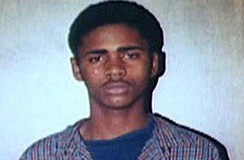
Aaron Hardin
Homicide Jack Kevorkian
Homicide · USA · 1990
Jack Kevorkian (born May 26, 1928) was a controversial American pathologist. He…
130 victims
Jack Kevorkian
Homicide · USA · 1990
Jack Kevorkian (born May 26, 1928) was a controversial American pathologist. He…
130 victims
 David Koresh
Homicide · USA · 1993
David Koresh (born Vernon Wayne Howell; August 17, 1959 – April 19, 1993) led t…
79 victims
David Koresh
Homicide · USA · 1993
David Koresh (born Vernon Wayne Howell; August 17, 1959 – April 19, 1993) led t…
79 victims
 Todd Hall
Homicide · USA · 1996
Todd Hall was described by neighbors as "mentally slow" and was said to have su…
9 victims
Todd Hall
Homicide · USA · 1996
Todd Hall was described by neighbors as "mentally slow" and was said to have su…
9 victims
 Joshua Jenkins
Homicide · USA · 1996
Joshua Jenkins was a 15-year-old American killer who killed five members of his…
5 victims
Joshua Jenkins
Homicide · USA · 1996
Joshua Jenkins was a 15-year-old American killer who killed five members of his…
5 victims
 Joseph Ernest Atkins
Murderer · USA · 1969
Joseph Ernest Atkins was convicted of the 1985 murders of his father Benjamin A…
3 victims
Joseph Ernest Atkins
Murderer · USA · 1969
Joseph Ernest Atkins was convicted of the 1985 murders of his father Benjamin A…
3 victims
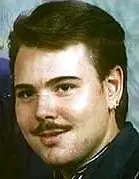 Brian Lee Cherrix
Murderer · USA · 1994
January 27, 1994 — Tessa Van Hart worked as a pizza delivery person on Chincote…
1 victim
Brian Lee Cherrix
Murderer · USA · 1994
January 27, 1994 — Tessa Van Hart worked as a pizza delivery person on Chincote…
1 victim
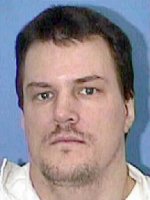 Troy Albert Kunkle
Murderer · USA · 1984
Troy Albert Kunkle was convicted of capital murder and sentenced to death for t…
1 victim
Troy Albert Kunkle
Murderer · USA · 1984
Troy Albert Kunkle was convicted of capital murder and sentenced to death for t…
1 victim
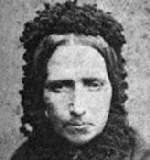 Maria Swanenburg
Serial killer · Netherlands · 1880
Maria Catherina Swanenburg (Leiden 9 September 1839 - Gorinchem 11 April 1915)…
27 victims
Maria Swanenburg
Serial killer · Netherlands · 1880
Maria Catherina Swanenburg (Leiden 9 September 1839 - Gorinchem 11 April 1915)…
27 victims
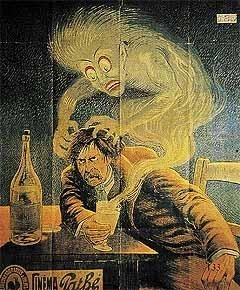 Jean Lanfray
Homicide · Switzerland · 1905
Jean Lanfray (1873/74 – February 26, 1906) was a Swiss laborer. He was convicte…
3 victims
Jean Lanfray
Homicide · Switzerland · 1905
Jean Lanfray (1873/74 – February 26, 1906) was a Swiss laborer. He was convicte…
3 victims
 Ricky Don Blackmon
Murderer · USA · 1987
Ricky Don Blackmon was convicted of capital murder and sentenced to death by le…
3 victims
Ricky Don Blackmon
Murderer · USA · 1987
Ricky Don Blackmon was convicted of capital murder and sentenced to death by le…
3 victims
- Gender
- male
- Country
- USA
- Location
- Louisville, Kentucky, USA
- Date of birth
- 1984
- Age at first offence
- 15
- Characteristics
- juvenile (15)
- Victim profile
- Andre Hardin, 13 (his brother)
- Method of murder
- Shooting
- Date(s) of murder
- December 27, 1999
- Years active
- 1999
- Date of arrest
- —
- Status
-
Released
Sentenced to 22 years in prison on February 7, 2001; released on probation on January 2, 2006
Case record: Aaron Hardin
Background
Aaron Hardin was 15 years old when he was tried as an adult for the killing of his younger brother, Andre Hardin. Andre was 13 years old.
The incident occurred in Louisville, KY, in the Hardin family home.
The offence
On the evening of December 27, 1999, teenage brothers Aaron and Andre Hardin were playing a video game in their Louisville home along with their friend, Michael Graham. The game had been set up for two players, and it was Andre’s Christmas gift received only two days before.
The three boys took turns playing in the small bedroom that Andre and Aaron shared. After Aaron and Michael had played several matches against each other, Michael played against Andre. Aaron wanted another turn and tried to wrestle the video game’s controller away from his younger brother. Aaron wrapped the controller’s cord around his body to prevent Aaron from taking the game away. The brothers began to wrestle, and both Aaron Hardin and Michael Graham said the fight was mostly “goofing around” between the boys, with tickling and laughing. Andre retained control of the video game and began to play a match with Michael Graham.
Suddenly, while Andre and Michael were concentrating on their game, a single shot rang out. The bullet entered Andre Hardin’s jaw and ripped through his head, eventually lodging in his brain.
After Aaron Hardin stopped his brother from bleeding, Aaron ran next door to summon his mother and the youth made a frantic 911 call for help. In that call, Aaron reported the shooting was a “drive-by,” claiming the bullet that struck Andre had entered the Hardin house from the outside.
Andre Hardin died before ever regaining consciousness.
Investigation
Emergency medical technicians arrived at the scene but were denied access to the victim until police made sure that there was no shooter present at the scene.
Paramedics struggled to save Andre while police combed the area for clues. Aaron stuck to his drive-by story while police searched for clues.
Aaron was placed in the back of a police car so that he could be questioned as a witness.
After Andre was taken to the hospital, and after authorities failed to find any signs that a bullet had penetrated the Hardin house, police began questioning Aaron’s story. He was taken to police headquarters, where he eventually confessed what had really happened. Aaron said the bullet that ripped through his brother had come from Aaron’s own gun.
Aaron told authorities that the weapon had been on a chair in the bedroom and that when he picked it up, it went off.
Immediately following the shooting, Aaron had disposed of his gun by throwing it in a neighbor’s backyard. It was snowing the night Andre was shot, and the gun was soon covered by fresh snow.
A few days after his arrest, Hardin—after being released from custody and placed under house arrest—led police to the spot, and the weapon was recovered.
Arrest and charging
Following the shooting, Aaron Hardin had originally been held on suspicion of assault. He was then charged with the murder of his brother.
A few weeks later, Aaron Hardin’s case was officially transferred out of juvenile court and placed before a Jefferson County grand jury.
Trial
Aaron Hardin was tried as an adult in Circuit Court. A Kentucky law allowed juveniles as young as fourteen to be tried as adults in Circuit Court if there was probable cause to believe they used a firearm to commit a felony.
Aaron Hardin was tried before Judge James Shake for felony murder and possession of a handgun by a minor, a misdemeanor. If convicted, he faced life in prison.
Prosecution’s case
Prosecutors said Aaron Hardin intentionally or wantonly shot his younger brother because he did not want to relinquish control of the video game he had been playing. They presented the case as a cold-blooded killing.
When Aaron first admitted responsibility for his brother’s death, Aaron told authorities he found his firearm along railroad tracks near the Hardin home. He said he had planned to get rid of the weapon ever since he obtained it and insisted that he knew nothing about guns.
Later, Aaron conceded that he had obtained the weapon “on the street” from another individual.
Police found a Pop Tarts box under the defendant’s bed containing two spent cartridge shells. Prosecutors claimed the shells indicated Hardin fired the weapon prior to the fatal shooting. Aaron denied that.
Lead prosecutor Paul Dzenitis said that Aaron Hardin was enraged that Andre Hardin would not share his video game; Dzenitis said Aaron picked up his weapon, aimed it at his brother, and purposely pulled the trigger.
Prosecutors argued that even if Aaron did not mean to intentionally kill Andre, the wanton indifference displayed by discharging a firearm so close to his brother constituted murder. They said ballistics tests indicated the gun was no more than two feet from Andre’s head.
Prosecutors said extensive testing of the firearm in question showed that dropping the gun, slamming it against a wall, or even hitting it with a rubber mallet would not cause the Smith and Wesson revolver to fire. They said only a human finger pulling the trigger could have made the gun fire, proving the shooting had to be intentional.
Defense’s case
The defense conceded that Aaron Hardin shot Andre Hardin but argued that Aaron’s earlier lies were those of a frightened boy with no police record.
The defense contended that Aaron’s denials were intended to protect him not from the police, but from his parents. The defense described Aaron’s fear as being of what his mother might do to him when she discovered his role in the shooting.
Represented by lawyer Gwendolyn Horton, the defense said the shooting was a tragic accident caused not by malice or wantonness, but because Aaron was trying to protect his brother.
According to the defense, Aaron was listening to his CD player as Andre played the video game with Michael Graham. The defense claimed Aaron noticed a gun sitting on a chair by his bed that Andre knew nothing about.
The defense said Aaron decided to put the weapon away before Andre noticed it and perhaps tried to play with it. The defense said that as soon as Aaron picked up the gun, it discharged and fired the single bullet that caused his brother’s death.
The defense emphasized that Aaron and Andre had a loving fraternal relationship and said that any horseplay before the shooting involved giggling and tickling rather than violence.
Prosecutors claimed the spent cartridges found under Aaron’s bed were evidence of a warm relationship. The defense responded that the shells were picked up on the street by the defendant to give to his brother, who apparently collected them.
Despite the prosecution’s ballistic tests indicating the weapon could not fire unless the trigger was intentionally pulled, the defense argued that guns do occasionally discharge accidentally.
Stakes under Kentucky law
Under Kentucky law, Hardin faced conviction of murder in two ways: intentional murder or wanton murder.
For intentional murder, jurors needed to believe the evidence showed Aaron Hardin intentionally shot his brother.
For wanton murder, jurors needed to find Aaron had extreme indifference to human life leading to circumstances causing Andre Hardin’s death.
Kentucky law prohibited the death penalty for defendants under age 16, and murder was described as a capital offense in Kentucky. The defense stated that Hardin faced up to life in prison if convicted of murder.
Jurors were given the opportunity to consider two lesser charges: second-degree manslaughter and reckless homicide.
In addition to the murder charge, Aaron Hardin faced a charge of possession of a handgun by a minor.
Verdict
On December 15, 2000, the jury of eight men and four women took less than two hours to find Hardin not guilty of intentional murder, but guilty of wanton murder. The jury also convicted the teen of possession of a handgun by a minor.
Sentencing
Three days later, the same jury decided whether to recommend a sentence of life in prison or a term anywhere between 20 and 50 years.
During the sentencing phase, testimony was heard from several witnesses, including Hardin’s parents. The jury recommended a 22-year sentence for murder and an additional one-year term for the possession conviction.
Aaron Hardin addressed the court and said:
"I want to say that I'm sorry for what happened, and I do believe that people do deserve a second chance," Aaron Hardin said as he addressed the court. "I'm sorry about what happened. I know it was a horrible crime . . . my brother was everything to me," Aaron Hardin said just before being formally sentenced by Judge Shake on Feb. 7, 2001. "Don't nobody know how I feel, not one person . .. I live with the nightmares, the dreams, going to sleep crying, waking up crying . . . can't nobody feel like that, only me."
Judge Shake gave Aaron Hardin what he termed “the best chance for you to avoid spending a very large part of your life in an adult prison,” and sentenced him to a juvenile facility until his 18th birthday.
Once Hardin turned 18, the judge could not return him to prison by granting probation or a conditional discharge. The judge had the option of sending Hardin back for six months for further treatment or transferring Hardin to an adult prison to serve the remainder of the 22-year sentence.
Aaron Hardin was sentenced on February 7, 2001.
Appeals
No appeal information was provided.
Outcome
Aaron Hardin was sentenced to 22 years in prison on February 7, 2001.
Aaron Hardin was released from prison on probation on January 2, 2006.
His probation had been revoked once after he admitted to smoking marijuana.
A statement attributed to Hardin’s father, Raphael Allen, said:
"It's been a six-year ordeal," said Hardin’s father, Raphael Allen. "It's been very, very hard." Allen added that Aaron Hardin feels plenty of remorse for what happened in 1999. "He's written to us and he's thought about his little brother," Allen said. "It's been hell on earth."
Other details
Indictment after release
On April 19, 2006, a grand jury indicted a Louisville man on burglary and assault charges.
A local woman claimed Hardin held her down while his girlfriend beat her up in February.
The indictment was described as something that could send Aaron Hardin back to prison for more than a decade.
The text said Hardin turned himself in to police last month.
It said that in January, Hardin had been granted shock probation for a second time after a conviction for killing his brother over a video game.
A statement attributed to Hardin’s mentor, community activist Christopher 2X, said:
"We're worried about the future for him," said Hardin's mentor, community activist Christopher 2X. "This indictment is very serious. The charges are very serious, and they have to be taken that way."
Spotted an error, or have more information about this case?