
Scott Harberts
Murderer?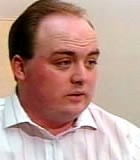 Richard Allen Williams
Murderer? · USA · 1992
Boone County Prosecutor Kevin Crane dismissed the charges in August 2003 after…
10 victims
Richard Allen Williams
Murderer? · USA · 1992
Boone County Prosecutor Kevin Crane dismissed the charges in August 2003 after…
10 victims
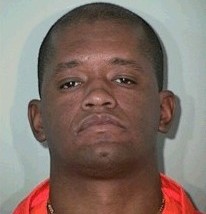 Andre Minnitt
Murderer? · USA · 1992
Andre Minnitt was convicted of crimes connected to the El Grande Market slaying…
3 victims
Andre Minnitt
Murderer? · USA · 1992
Andre Minnitt was convicted of crimes connected to the El Grande Market slaying…
3 victims
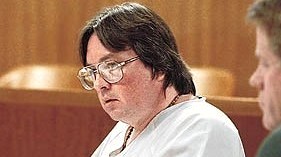 Floyd Tapson
Murderer? · USA · 1987
Floyd Tapson was convicted by a jury in the Thirteenth Judicial District Court,…
3 victims
Floyd Tapson
Murderer? · USA · 1987
Floyd Tapson was convicted by a jury in the Thirteenth Judicial District Court,…
3 victims
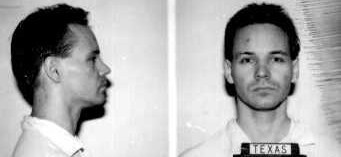 Michael Roy Toney
Murderer? · USA · 1985
Michael Roy Toney (December 29, 1965 – October 3, 2009) · Name as recorded: Mic…
3 victims
Michael Roy Toney
Murderer? · USA · 1985
Michael Roy Toney (December 29, 1965 – October 3, 2009) · Name as recorded: Mic…
3 victims
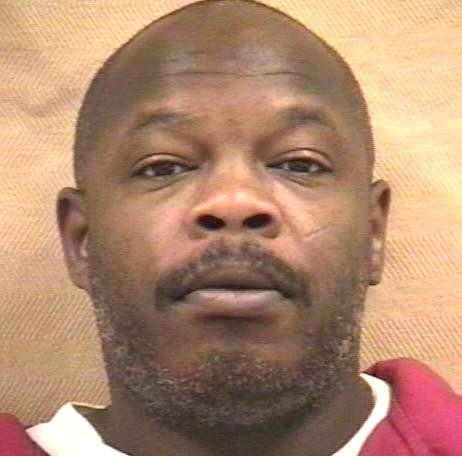 Glen Edward Chapman
Murderer? · USA · 1992
Defendant: Glen Edward Chapman Legal case references: In the Supreme Court of N…
2 victims
Glen Edward Chapman
Murderer? · USA · 1992
Defendant: Glen Edward Chapman Legal case references: In the Supreme Court of N…
2 victims
 Kristina Fetters
Homicide · USA · 1994
Kristina Joy Fetters was a resident of Orchard Place, a residential facility fo…
1 victim
Kristina Fetters
Homicide · USA · 1994
Kristina Joy Fetters was a resident of Orchard Place, a residential facility fo…
1 victim
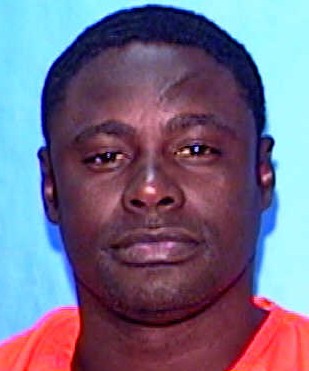 Michael Coleman
Murderer · 1998
Name: Michael Coleman Date of birth: 07/24/61 Jurisdiction: First Judicial Circ…
4 victims
Michael Coleman
Murderer · 1998
Name: Michael Coleman Date of birth: 07/24/61 Jurisdiction: First Judicial Circ…
4 victims
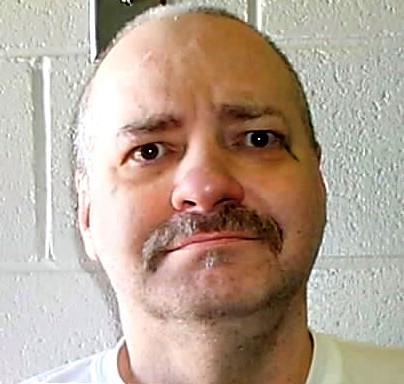 Thomas Creech
Serial killer · USA · 1967
Defendant: Thomas Creech (also referred to as Thomas Eugene Creech) Jurisdictio…
10 victims
Thomas Creech
Serial killer · USA · 1967
Defendant: Thomas Creech (also referred to as Thomas Eugene Creech) Jurisdictio…
10 victims
 Morris Odell Mason
Murderer · USA · 1978
Morris Odell Mason was a Virginia prisoner who was executed by electrocution in…
2 victims
Morris Odell Mason
Murderer · USA · 1978
Morris Odell Mason was a Virginia prisoner who was executed by electrocution in…
2 victims
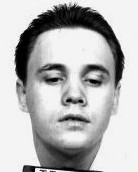 Charles Douglas Raby
Murderer · USA · 1992
October 15, 1992 — Charles Douglas Raby was convicted of killing Edna Franklin;…
1 victim
Charles Douglas Raby
Murderer · USA · 1992
October 15, 1992 — Charles Douglas Raby was convicted of killing Edna Franklin;…
1 victim
- Gender
- male
- Country
- USA
- Location
- Clackamas County, Oregon, USA
- Date of birth
- November 1, 1962
- Age at first offence
- 27
- Characteristics
- rape, convicted rapist, child abuse
- Victim profile
- Kristina Lynn Hornych, 2
- Method of murder
- S mothered
- Date(s) of murder
- July 14, 1989
- Years active
- 1989
- Date of arrest
- Same day
- Status
-
Released
Sentenced to death in 1994; conviction overturned in September 2000; released in 2006
Case record: Scott Harberts
Overview
Scott Dean Harberts was convicted by a jury of three counts of aggravated murder for the death of a child. The jury sentenced him to death, and he remained incarcerated for five years before his trial. The Oregon Supreme Court reversed his 1994 conviction and vacated the sentence of death. The remand to the circuit court instructed the court to dismiss the accusatory instrument with prejudice. He was released in 2006.
People
- Scott Dean Harberts — defendant
- Kristina Lynn Hornych — victim; a 2-year-old girl
- Kevin Hornych — victim’s father
- Sylvia Mangus Hornych — Kevin Hornych’s girlfriend; later married Kevin Hornych after the killing
- Debbie Holfeld — Oregon City; dropped off her daughter to stay the night at Kevin Hornych’s home
- William Timothy Lyons — former attorney for Harberts
- Terry Gustafson — former Clackamas County District Attorney
- Gordon Huiras — Oregon City Police Chief; led the multiagency investigation
- Rawson — paramedic who testified
- Detective Harvey — polygraph intern who administered the polygraph examination
- Detective Harvey’s related testimony and interrogation — used during the polygraph process
- Detective Erickson — investigating detective who searched the father and girlfriend’s bedroom; died in 1992
- Graber — investigator who testified without contradiction
- Cyrus Lawrence — juror; remembered evidence about no forced entry
- Wallace P. Carson Jr. — Chief Justice
- Gillette, Van Hoomissen, Durham, Leeson, and Riggs — justices listed in the opinion’s panel
- LEESON, J. — authored the reversal opinion
- VAN HOOMISSEN, J., dissented — wrote the dissent
- Eric Cumfer — Salem lawyer; began representing Harberts in 1994 after his sentence was appealed; also quoted
- Sally Avera — Public Defender
- David Groom — Deputy Public Defender
- Robert B. Rocklin — Assistant Attorney General
- Hardy Myers — Attorney General
- Virginia L. Linder — Solicitor General
- David B. Thompson — Assistant Attorney General
- Timothy Sylwester — assistant attorney general in charge of criminal appeals at the time
- Andy Eglitis — Clackamas County Deputy District Attorney; involved in the first suppression appeal and later process
- Wallace P. Carson Jr. — declined to discuss whether the Supreme Court used its discretion to hurry the pretrial appeal
- Kristina Lynn Hornych’s father (Kevin Hornych) — gave trial testimony and later hid drug paraphernalia per his testimony
- Sylvia Mangus Hornych — gave police statements and later testified that she could not remember
The offence
Harberts was connected to the death of Kristina Lynn Hornych, a child who was raped, beaten, sodomized, and smothered. Her cause of death was stated as head trauma, smothering, or a combination of the two. The case involved aggravated murder and three counts.
During the events in the home, Harberts was described as:
- being present in the house and treated as a member of the family after moving in several months earlier
- performing cardiopulmonary resuscitation and continuing to perform chest compressions after paramedics arrived
- being arrested for harassing a police officer when he kept trying to reach the victim after police arrived
Polygraph-related statements
After the detectives told Harberts the victim was dead, he repeatedly denied killing her. Detectives asked him to take a polygraph examination. The polygraph intern Detective Harvey administered the examination, which lasted approximately four hours. Afterward, Detective Harvey told Harberts she believed he had killed the victim. Harberts responded that although he did not remember killing the victim and could not believe he would do something like that, if the polygraph had indicated he had killed her, he was “going along with what the polygraph said.” The decision in the Supreme Court later described the judgment’s reversal as occurring because the jury had not heard Harberts’ incriminating reply.
Investigation
Investigators focused on Harberts after he failed the polygraph. The Oregon City Police Chief Gordon Huiras, who led the multiagency investigation, said:
- “Once you had a suspect who failed the polygraph, the focus of your investigation is going to be on that suspect.”
The investigation described included shortcomings:
- Police reports did not explain why officers never searched Kevin Hornych or seized their clothing or took scrapings from under their fingernails.
- The officer who questioned them and later searched their bedroom died before trial.
- Police later took hair and blood samples from Hornych that yielded inconclusive results; DNA testing was not available in 1989.
- Police did not search the garage or the cars at the home.
- Police failed to seize evidence, including a bloody hair conditioner bottle in the bathroom that could have yielded fingerprints.
- The drug paraphernalia Hornych later admitted hiding in a utility room was not found.
- Police did not search for the drug paraphernalia described as hidden in a utility room.
State and local investigators’ view of culpability
- Terry Gustafson said:
- “We had no direct evidence that linked him (Harberts) to the murder,” and
- “We had no direct evidence that linked him (Harberts) to the murder.”
- Lyons, Harberts’ defense lawyer, said that evidence including the bloody hair conditioner bottle was not seized and that the drug paraphernalia admitted hidden in the utility room was never found.
- Harberts’ defense included challenging elimination of the father and girlfriend as suspects.
Quotes used to describe investigation limitations
- Huiras said:
- “You can always think of other things you could have done.”
- Huiras also said:
- “We’re also convinced, like the jury was, that the guilty party was convicted.”
Arrest and pretrial custody
Harberts was arrested and placed in jail on July 14, 1989. He remained in jail and his trial did not begin until July 12, 1994, nearly five years later.
A breath test showed that more than five hours after his arrest, Harberts was still too drunk to legally drive. Approximately three hours later he took the polygraph test and was taken to the hospital to give blood and hair samples. Before the nurse, Harberts talked with two police officers about the polygraph.
Harberts’ statements to police officers before nursing
- Harberts said:
- “I can’t believe liquor made me do something like that”
- “I can’t believe it.”
- One officer asked:
- “What?”
- Harberts responded:
- “Killed my best friend’s daughter,”
- adding something about the polygraph test saying that he did it.
- The officer asked Harberts what he thought.
- Harberts paused and said:
- “I probably did.”
Trial
Harberts’ trial began July 12, 1994 and ended with conviction on all three counts.
Jury and deliberation evidence
A juror, Cyrus Lawrence of Portland, said he remembered testimony about there being no forced entry into the house helped persuade him to vote for a guilty verdict. Lawrence said:
- “Thinking back, what the prosecution had there I felt was in my mind evidence that he did it,” and
- “I couldn’t tell you specific details of what swayed me one way or another.”
Evidence described at trial (as later referenced by the Supreme Court)
The Supreme Court’s reversal cited conflicting stories about cigarette-related items in the bathroom:
- Hornych told police in 1989 he had dropped Doral cigarettes when he first saw his daughter’s body on the bathroom floor; in the 1994 trial he testified the cigarettes had fallen out of his pocket the night before when he had taken Kristina to use her potty chair.
- Sylvia Mangus Hornych, who married Kevin Hornych after the killing, told police in 1989 that she—not Kevin—took Kristina to the bathroom that night; during the trial in 1994, she testified that she could not remember.
The Supreme Court wrote that:
- “Successfully impeaching their credibility could have established some doubt about whether the police properly had eliminated the father and the father’s girlfriend as suspects,” and
- “Instead, the passage of time gave Hornych and his girlfriend a believable reason for telling a different story five years later.”
Paramedic testimony (Rawson)
Rawson testified and said:
- “Well, he several times stated things like: Don’t let my baby die, and loudly. He was really agitated. And at the time I assumed he was the father, because the other -- the other man and lady were just kind of standing off on the side, not really too excited. They kept telling him to settle down. So I just -- you know, at the time assumed that he was the father and he was quite upset, and rightfully so.”
Sentencing
The jury sentenced Harberts to death on October 27, 1994.
Appeals and legal challenge
Automatic and direct review
The Supreme Court decision was filed September 14, 2000.
The case was described as an “automatic and direct review” of a judgment of conviction and a sentence of death imposed by the Circuit Court of Clackamas County. The opinion identified:
- Robert Morgan as the judge.
- Argued and submitted March 10, 1999.
- Docket identifiers: (CC 89-0557; SC S41741).
Supreme Court majority ruling
The Supreme Court, authored by LEESON, J., ruled:
- “The judgment of conviction is reversed, and the sentence of death is vacated.”
- “The case is remanded to the circuit court with instructions to dismiss the accusatory instrument with prejudice.”
The ruling concluded that the state violated the Oregon constitutional right to be brought to trial “without delay,” given the nearly five-year delay from arrest to trial while Harberts was held in jail solely on pending charges and the prejudice to defense.
Speedy-trial analysis summarized in the decision
The Supreme Court held that under Article I, section 10 of the Oregon Constitution, the state violated the “without delay” requirement. It reasoned that the record showed:
- five years between arrest and trial, during which Harberts was held in jail solely on the pending charges
- many months of unreasonable delay
- personal prejudice and prejudice to the defense caused by the five-year delay
- an affirmative duty to bring him to trial without further delay after statements were barred from court in 1993
Key instruction on remand
The Supreme Court ordered dismissal of the charges:
- “dismiss the accusatory instrument with prejudice.”
Dissent
VAN HOOMISSEN, J. dissented.
The dissent described the majority’s conclusion as flawed and argued against dismissal with prejudice. The dissent addressed:
- length of delay
- reasons for delay including interlocutory appeal justification
- prejudice to defendant and to the defense
- the assertion of the right to speedy trial
The dissent’s position included statements such as:
- “In my view, there was strong justification for the state’s appeals.”
- “In my view, the majority holding results not in justice being administered ‘completely and without [unreasonable] delay,’ but, rather, in justice being completely denied.”
The dissent also quoted the trial court’s findings, including that it found:
- “There is no compelling and cogent evidence that suggests defendant’s ability to defend himself and receive a fair trial has been impaired.”
- “The position by the defendant that defendant’s ability to receive a fair trial because of the extraordinary delay has been impaired is a reach on the part of the defendant as solid evidence supporting that position is not apparent to the court.”
- and that Detective Erickson’s death “has not materially adversely affected the defendant’s chances of receiving a fair trial and presenting the kind of defense he would have presented…”
Outcome
The Oregon Supreme Court reversed Harberts’ 1994 murder conviction and vacated the death sentence. The case was remanded with instructions to dismiss the accusatory instrument with prejudice. Harberts was released in 2006.
Other details
Defendant’s drinking and admitted alcoholic status
Harberts was described as an admitted alcoholic and as having drunk nearly a half-gallon of Southern Comfort whiskey the night before. A breath test and blood alcohol findings were referenced:
- The trial court found that his blood alcohol level at the time he made statements was “approximately .16 to .18.”
- The trial court found he had consumed cocaine and had limited sleep and was fatigued when he made the statements.
Harberts’ claimed memory lapse and admission style response
In describing the ambiguous reply and polygraph context, the narrative stated that Harberts said:
- “Oh yes, I could. If you say I did, I probably did,”
- “I just don’t remember. I wish I knew why I’d do such a vicious thing.”
Pretrial procedural sequence in the Supreme Court decision
- The trial court suppressed Harberts’ statements in March 1990.
- The Court of Appeals reversed the suppression in November 1991.
- The Oregon Supreme Court held in February 1993 that statements were voluntary but remanded for a ruling on whether references to the polygraph could be separated from the statements.
- The trial court excluded the statements a second time in May 1993 due to direct linkage to the polygraph.
- The state sought to appeal; later moved to dismiss the appeal.
- A timeline included that on January 21, 1994, the state moved to dismiss the appeal stating it no longer wished to pursue it.
- The Court of Appeals granted the dismissal three days later.
- On April 11, 1994, Harberts wrote to the State Court Administrator inquiring about the status of the case and stating he had been in jail awaiting trial since July 14, 1989.
- In response, the trial court scheduled the trial for July 7, 1994.
- On May 23, 1994, Harberts moved to dismiss the charges for lack of a speedy trial.
- The trial court denied the motion on June 17, 1994.
- After the denial, Harberts petitioned for a writ of habeas corpus on June 28, 1994, and it was denied approximately a week later on July 6, 1994.
Motion and trial chronology as described in the opinion
- The Supreme Court described that Harberts was indicted for murder on July 20, 1989.
- The trial originally scheduled to begin on January 3, 1990 did not begin until July 12, 1994.
Testimony and statements regarding CPR and police intervention
Harberts was described as repeatedly performing chest compressions and becoming upset when paramedics asked him to step aside. One paramedic asked for him to step aside; when officers arrived police asked him to sit in a chair and stay there. When he did not, and again tried to reach the victim, he was arrested for harassing a police officer. The Supreme Court decision included the paramedic’s account that the police arrested him “just to get him away from us.”
Quotes from the trial court suppression discussion as used in the Supreme Court record
The Supreme Court included the trial court suppression context and holdings, including that the statements were polygraph evidence and were inadmissible as a matter of law. It also stated the trial court found that it could not “sanitize” or edit the statements because they were “inextricably linked and wedded” to Harberts’ understanding of the results and what Detective Harvey told him.
Harberts’ new charges mentioned while awaiting retrial
The case narrative stated that as Harberts awaited trial later that month on new charges that he sexually abused three children before his 1989 murder arrest, his former attorney said he was uncertain about guilt. His former attorney William Timothy Lyons said:
- “I have never had any evidence to convince me that he did it,”
- and “That’s an odd position to be in 11 years later.”
Timeline
- July 14, 1989 — Scott Dean Harberts was arrested and placed in jail.
- July 20, 1989 — Harberts was indicted for murder.
- March 5, 1990 — The trial court suppressed Harberts’ inculpatory statements.
- November 1991 — The Oregon Court of Appeals reversed the suppression order.
- February 1993 — The Oregon Supreme Court held Harberts’ statements were voluntary and remanded for the polygraph reference issue.
- May 27, 1993 — The trial court again suppressed Harberts’ statements.
- January 21, 1994 — The state moved to dismiss the second suppression appeal.
- January 1994 (three days after January 21, 1994) — The Court of Appeals granted the state’s motion and dismissed the second appeal.
- April 11, 1994 — Harberts wrote to the State Court Administrator about the status of the case and stated he had been in jail since July 14, 1989.
- May 23, 1994 — Harberts moved to dismiss the charges for lack of a speedy trial.
- June 17, 1994 — The trial court denied Harberts’ motion to dismiss.
- June 28, 1994 — Harberts petitioned for a writ of habeas corpus in the Oregon Supreme Court.
- July 6, 1994 — The Oregon Supreme Court denied the habeas petition.
- July 12, 1994 — Harberts’ trial began.
- October 27, 1994 — The jury convicted Harberts of all three counts and he was sentenced to death.
- March 10, 1999 — Oral arguments were held in the Oregon Supreme Court.
- September 14, 2000 — The Oregon Supreme Court filed its decision reversing the conviction and vacating the sentence of death; remanded with instructions to dismiss the accusatory instrument with prejudice.
- September 2000 — The conviction was overturned.
- 2006 — Harberts was released.
Spotted an error, or have more information about this case?