Stuart Harling
Murderer Dale Cregan
Murderer · United Kingdom · 2012
Dale Christopher Cregan (born 6 June 1983) was convicted in the United Kingdom…
4 victims
Dale Cregan
Murderer · United Kingdom · 2012
Dale Christopher Cregan (born 6 June 1983) was convicted in the United Kingdom…
4 victims
 Rahan Arshad
Murderer · United Kingdom · 2006
Rahan Arshad (born 1970) was a taxi driver. He lived at Turves Road, Cheadle Hu…
4 victims
Rahan Arshad
Murderer · United Kingdom · 2006
Rahan Arshad (born 1970) was a taxi driver. He lived at Turves Road, Cheadle Hu…
4 victims
 Anthony Smith
Murderer · United Kingdom · 2001
Anthony Smith was a former sergeant in the Coldstream Guards. He had left the C…
3 victims
Anthony Smith
Murderer · United Kingdom · 2001
Anthony Smith was a former sergeant in the Coldstream Guards. He had left the C…
3 victims
 Arthur Simpson-Kent
Murderer · United Kingdom · 2015
Name: Arthur Simpson-Kent · Age at sentencing: 49 · Age at time of offence (as…
3 victims
Arthur Simpson-Kent
Murderer · United Kingdom · 2015
Name: Arthur Simpson-Kent · Age at sentencing: 49 · Age at time of offence (as…
3 victims
 David John Copeland
Murderer · United Kingdom · 1999
David John Copeland was born in Isleworth, in the London Borough of Hounslow, a…
3 victims
David John Copeland
Murderer · United Kingdom · 1999
David John Copeland was born in Isleworth, in the London Borough of Hounslow, a…
3 victims
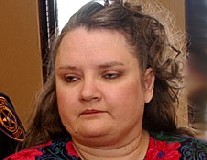 Vickie Dawn Jackson
Serial killer · USA · 2000
Vickie Dawn Jackson was a former nurse who received a life sentence after plead…
10 victims
Vickie Dawn Jackson
Serial killer · USA · 2000
Vickie Dawn Jackson was a former nurse who received a life sentence after plead…
10 victims
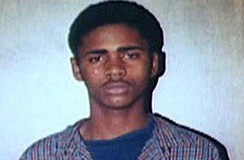 Aaron Hardin
Homicide · USA · 1999
Aaron Hardin was 15 years old when he was tried as an adult for the killing of…
1 victim
Aaron Hardin
Homicide · USA · 1999
Aaron Hardin was 15 years old when he was tried as an adult for the killing of…
1 victim
 Jon Nödtveidt
Murderer · Sweden · 1997
Jon Andreas Nödtveidt (June 28, 1974 – August 16, 2006) was a lead guitarist an…
1 victim
Jon Nödtveidt
Murderer · Sweden · 1997
Jon Andreas Nödtveidt (June 28, 1974 – August 16, 2006) was a lead guitarist an…
1 victim
- Gender
- male
- Country
- United Kingdom
- Location
- Hornchurch, Essex, England, United Kingdom
- Date of birth
- 1988
- Age at first offence
- 18
- Characteristics
- rape, dismemberment
- Victim profile
- Cheryl Moss, 33
- Method of murder
- Stabbing with knife ( 72 times)
- Date(s) of murder
- April 6, 2006
- Years active
- 2006
- Date of arrest
- —
- Status
-
Life imprisonment
Sentenced to life in prison (minimum 20 years) on June 28, 2007
Case record: Stuart Harling
STATUS and sentencing
Stuart Harling was sentenced to life in prison (minimum 20 years) on June 28, 2007.
Timeline
- April 6 last year — Harling stabbed Cheryl Moss 73 times.
- June 19, 2007 — Harling told a jury he did not know why he stabbed Cheryl Moss to death.
- June 28, 2007 — Harling was jailed for life for murdering a nurse after a trial.
- June 29, 2007 — Coverage described Harling as having been convicted the previous day and sentenced on that day.
Background
Stuart Harling lived in a virtual world shaped by ultra violent computer games and violent websites. He turned away from his family and abandoned a career in accountancy as he immersed himself in this fantasy world. He had been described as a loner.
Harling had told psychiatrists he dreamed of becoming a serial killer after watching a documentary about American multiple murderer Richard Ramirez, who claimed 13 victims in the Los Angeles area. Harling researched other serial killers and became obsessed with weapons and violence. He spent endless days on the internet, including talking to paedophiles in chatrooms and researching murderers including Dennis Nielsen, Colin Ireland and Daniel Gonzalez. He was also described as having an obsessive interest in serial killers and weapons, with research that included serial-killer searches for Essex, Romford, Barking, and Havering.
Harling had been a church altar boy and a promising pupil aged 11 at Campion Grammar School in Hornchurch, where he impressed teachers with academic talent. Teachers also noticed a “bizarre” sense of humour and problems interacting with other children.
At school, term reports demanded more concentration and contributions in class. Harling skipped schoolwork and spent whole days on his games console. He left school at 16 and completed an accountancy course at Havering College. After that, he shut himself away and cut himself off from his family, fantasising about rape and torture.
The case materials described his games collection and their violent content, including “Manhunt,” in which players scored points for gruesome executions that were replayed in movie-style clips. “Manhunt2” was described as becoming the first computer game to be banned in the UK for more than a decade earlier in the month.
Harling was described as having been bullied at school. He dreamed of staging a massacre and of picking off children responsible, comparing his fantasy to a shooting at Columbine High School. He also described a fantasy story titled “Murder at Upminster Bridge” about the rape and murder of a black woman at a train station, which he saved in a secret computer file.
He was also described as having fantasised about rape and written a blog about killing a black woman. He was described as having “10 GCSEs” and lived with his parents. He was also described as a former scout leader.
The offence
Harling stabbed nurse Cheryl Moss outside St George’s Hospital. The attack happened as she took a cigarette break on a secluded path in the hospital grounds.
Harling wore a wig and sunglasses. He was armed with a razor-sharp hunting knife. He stabbed Mrs Moss 73 times, with injuries including blows that split open her skull. Many of the injuries were inflicted while she lay on the ground and was too badly injured to defend herself.
One account described that the jury was asked to decide if Harling murdered her in cold blood or while suffering from a mental disorder. The jury heard that the attack was so swift and violent that she probably did not have time to scream.
The case materials described Harling as having targeted her at random after spotting her having a cigarette. He dumped his “kit” in the park nearby.
Cheryl Moss had worked at the hospital for more than ten years. She was married to Peter, for just 18 months. Terence Ewart’s birthday was also mentioned in relation to plans for Cheryl Moss to meet family later that day.
Cheryl Moss was described as an auxiliary nurse and as 5ft 1in (1.55 metres) tall. She was described as having been stabbed and slashed more than 70 times near St George’s Hospital, in Hornchurch, Essex. Another account described her as being stabbed and slashed 72 times, and that she was already dead when found by her colleagues.
Investigation and arrest
Police were soon at Harling’s door because he had inadvertently left his address in the bloodied murder kit.
After the attack, hospital staff found Mrs Moss after an alarm was raised by a dog walker.
In prison before his trial, Harling told an officer he killed Mrs Moss because he was “bored.”
Trial
Harling denied murder and faced a trial in which the jury rejected his claims of diminished responsibility. The jury convicted him of murder by a majority of ten to one.
During the trial, Harling insulted the judge and absented himself from proceedings. He hurled abuse at the judge and prosecutor Brian Altman. He was kept in his cell for most of the trial after he hurled abuse, but the court materials described him refusing to come up from the Old Bailey cells to hear the jury convict him by a 10 to one majority. He also threw papers out of the dock. He threatened the prosecution while in custody and was removed from court on one occasion for threatening to shoot the prosecution with a machine gun.
Harling was described as admitting the killing but claiming he was guilty only of manslaughter on diminished responsibility grounds. He blamed his 16-year-old sister for “grassing” on him to police and during the trial ordered his parents not to watch proceedings from the public gallery. He also sent a threatening letter to a 17-year-old witness who found his bag.
Harling made a claim in court that he had murdered Mrs Moss as the first part of a plan to stage a coup in Equatorial Guinea.
Expert evidence included testimony from psychiatrists. Psychiatrist Anthony Payne said: “He seemed to want infamy. He wanted media attention where he was portrayed as the victim.” Dr Philip Joseph said: “I can’t think of a more dangerous teenager in the country.” Dr Andrew Payne told the court: “He seemed to want infamy. He wanted media attention where he was portrayed as the victim.”
Harling’s barrister was described as Michael Wolkind, QC, who called several psychiatrists. Dr Philip Joseph said Harling had either an Asperger’s syndrome, which was described as a form of autism, or a personality disorder. Dr Philip Joseph disputed suggestions by prosecutor Brian Altman, QC, that Harling was feigning mental illness and said: “The suggestion of him pretending to be mad is completely opposed to what he is trying to do - to appear to be a normal person.” Prosecutor Brian Altman argued that Harling knew exactly what he was doing right up to the killing, pointing to knife and knife-fighting manual purchases on eBay.
Professor Digby Tantam replied when asked by the judge about whether it was rare for people with Asperger’s to carry out physical assaults: “No. Violence occurs with people with Asperger’s no more than with the general population but when it does happen it tends to be directed at strangers.”
Harling’s account included statements made to the court. Harling told the court: “I went out that day with the knife and other stuff because I was bored,” and added: “I remember stabbing her in the back. I only stopped because my wig fell off. I was kinda surprised when I heard she was dead. It doesn’t really bother me. I’d do it again.” He then added: “It kinda ruined my day.”
In another jury statement, Harling said: “I remember stabbing her in the back while she was on the floor there,” and: “It was like seeing a film.” He described ambushing Cheryl Moss as she took a break near woods behind St George’s Hospital, Hornchurch, east London, in April 2006.
Harling’s evidence included descriptions of waiting for her after she finished speaking on her mobile phone. He said: “I thought I would try to get a glint of the sun on [the knife] so it was clearly seen. She noticed me and she said ‘oh no’. I was still running. I started stabbing her in the back.”
Harling also said: “It kinda ruined my day.” Another statement recorded that Harling revealed he had felt nothing when he killed Mrs Moss, describing it “as if she was just another animation on a computer screen.”
Prosecution counsel Brian Altman told the court: “He was just a cold-blooded killer who acted out his fantasy.” He added: “She turned out to be the tragic, unfortunate person who the defendant came across that day.” He further stated: “She was just in the wrong place at the wrong time.” Earlier, Brian Altman said: “He murdered because he wanted to, for sexual or other gratification or perhaps to see what it was like to kill like so many of his heroes who he had clearly been researching,” and: “Perhapshe wanted to be the first serial killer in his town, having two days before the killing done internet searches including ‘serial killer Essex’, ‘serial killer Romford’, ‘serial killer Barking’, ‘serialkiller Havering’.”
During the sentencing stage, Judge Brian Barker told Harling: “You have demonstrated to us that your destructive and deadly actions appear to have meant little to you.” He added: “Cheryl Moss had the misfortune to stumble across your path.”
The judge also sent Harling’s evidence and papers to the Parole Board after sentencing.
Sentencing
Harling was sentenced in his absence after he refused to go into court. The judge, Common Serjeant of London Brian Barker, said Harling had indicated there was an indication that others might be hurt if he was forced to go into the dock.
Judge Brian Barker’s sentencing remarks included: “You have demonstrated to us that your destructive and deadly actions appear to have meant little to you.” and: “Cheryl Moss had the misfortune to stumble across your path.”
Harling was sentenced to life in prison with a minimum of 20 years.
The court heard that Harling had told a prison officer that he could kill again if he was bored.
Appeals
No appeal information was included in the provided material.
Outcome
The jury convicted Stuart Harling of murder, rejecting his claims of diminished responsibility.
Aftermath
Outside court, Mrs Moss’s devastated husband Peter was described as saying: “The brutality of Cheryl’s murder was very shocking.” He also said: “This evil person should never be released.”
In a statement after the trial, Peter said: “This evil person should never be released.” He also said: “True justice should be life for a life, and until this deterrent is used it is unlikely that violent crime and murder will subside.”
Detective Chief Inspector John Macdonald said: “I have no doubt that if Harling had not been arrested, he would have gone on to commit other murders.”
Brian Altman said the murder “had been a most frenzied and ferocious murderous attack” and that “She had been brutally stabbed to death.” He stated: “It robbed the community of a vibrant and contributing member with so much of her life in front of her.” He added: “He was just a cold-blooded killer who acted out his fantasy.” He stated: “She turned out to be the tragic, unfortunate person who the defendant came across that day.” He also said: “She was just in the wrong place at the wrong time.”
Another account described that the computer at Harling’s house showed obsessive interest in serial killers and weapons and that on the morning after the killing Harling explored various news websites for details of the killing he had carried out.
Other details
In the ten months before the killing, Harling put together a “murderkit” by buying items on eBay, including a hunting knife, leather gloves, sunglasses, an Adidas jacket, and a witch’s wig.
Harling learned killing skills from a CD instruction manual titled “Hand toHand Combat, Knife Fighting and Self Defence” used to train the US marine corps. He took long walks alone in Hornchurch Country Park and the walks were described as becoming “dry-runs” for murder.
Harling was described as having tried to steal a car and having planned to threaten the nurse to get her car keys as part of a plot to overthrow an African government. Another account described that he was researching a military coup in Equatorial Guinea with 150 other people.
Harling was described as initially claiming injuries suffered during the attack resulted from a fall. Later, he claimed mental abnormality and suggested Asperger’s syndrome with a schizoid personality disorder or a psychotic illness.
Michael Howlett of mental health charity the Zito Trust said: “It’s an interesting case and not one that can easily be tied in with the Mental Health Bill.” He also said: “If there’s nothing previous in his life in terms of mentally ill behaviour, if he’s relatively intelligent with GCSEs, then maybe it’s come out of the blue and it could be the first time that he’s displayed problems.” He further stated: “Up until that day perhaps nobody was any the wiser until the police got into his computer and saw that he was a disturbed human being.” He said: “There’s a question as to whether this guy should have been seen by somebody.” and: “But it’s not a crime to be a loner and unpopular at school.”
Michael Howlett said: “He could get worse.” He stated: “The authorities are going to have to deal with him carefully and appropriately.” He added: “If he just goes to prison then he could be out in 10 years, and where he could actually get substantially worse.” He stated: “If there’s any issue with him then they need to work out what it is.” He said: “He does seems highly disturbed. The question is why, and since when.”
A spokeswoman for the National Autistic Society said: “It does not make a person more likely to intentionally commit a crime.” She also said: “In many cases, individuals with autism are unusually concerned to keep the letter of the law, due to the nature of the disability.” She added: “However, a person with autism may come to the attention of the police and other services through misunderstandings related to their social and communication difficulties, and through a lack of appropriate support.”
In September? (October 2004 mentioned in the material), teenager Paul Smith was jailed for life for murdering a 10-year-old girl, Rosie May Storrie, at a Christmas party in Leicestershire. The material stated that Paul Smith suffered from Asperger’s Syndrome but there was no suggestion that the killing was directly related to the condition.

Spotted an error, or have more information about this case?