
Dr. Teet Härm
Murderer?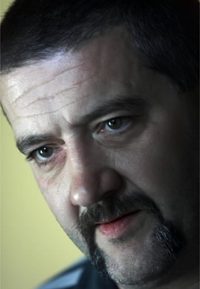 Mark Brandon Read
Murderer? · Australia · 1979
Mark Brandon “Chopper” Read (born 17 November 1954) was an Australian ex-convic…
19 victims
Mark Brandon Read
Murderer? · Australia · 1979
Mark Brandon “Chopper” Read (born 17 November 1954) was an Australian ex-convic…
19 victims
 Richard Allen Williams
Murderer? · USA · 1992
Boone County Prosecutor Kevin Crane dismissed the charges in August 2003 after…
10 victims
Richard Allen Williams
Murderer? · USA · 1992
Boone County Prosecutor Kevin Crane dismissed the charges in August 2003 after…
10 victims
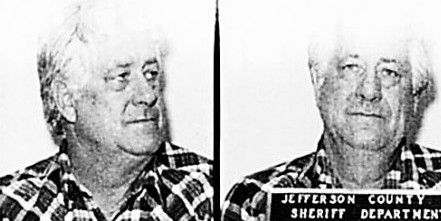 Thomas McCormick
Murderer? · USA · 1975
Thomas McCormick recruited homeless men from a Denver church mission to work on…
8 victims
Thomas McCormick
Murderer? · USA · 1975
Thomas McCormick recruited homeless men from a Denver church mission to work on…
8 victims
 Andre Minnitt
Murderer? · USA · 1992
Andre Minnitt was convicted of crimes connected to the El Grande Market slaying…
3 victims
Andre Minnitt
Murderer? · USA · 1992
Andre Minnitt was convicted of crimes connected to the El Grande Market slaying…
3 victims
 Floyd Tapson
Murderer? · USA · 1987
Floyd Tapson was convicted by a jury in the Thirteenth Judicial District Court,…
3 victims
Floyd Tapson
Murderer? · USA · 1987
Floyd Tapson was convicted by a jury in the Thirteenth Judicial District Court,…
3 victims
 Michael Tisius
Murderer · USA · 2000
early June 2000 — Michael A. Tisius and Roy Vance were cellmates at the Randolp…
2 victims
Michael Tisius
Murderer · USA · 2000
early June 2000 — Michael A. Tisius and Roy Vance were cellmates at the Randolp…
2 victims
 Terry Ratzmann
Mass murderer · USA · 2005
Terry Michael Ratzmann was an American mass murderer who killed seven members o…
7 victims
Terry Ratzmann
Mass murderer · USA · 2005
Terry Michael Ratzmann was an American mass murderer who killed seven members o…
7 victims
 James Rodden
Murderer · USA · 1983
James Rodden (James Edward Rodden Jr.) · Terry Trunnel (victim) · Joseph Arnold…
2 victims
James Rodden
Murderer · USA · 1983
James Rodden (James Edward Rodden Jr.) · Terry Trunnel (victim) · Joseph Arnold…
2 victims
 Nevelyn Stokes
Mass murderer · USA · 1999
Nevelyn Stokes set fire to a woman’s apartment in the 1400 block of Salisbury a…
6 victims
Nevelyn Stokes
Mass murderer · USA · 1999
Nevelyn Stokes set fire to a woman’s apartment in the 1400 block of Salisbury a…
6 victims
 Harold Loughans
Murderer · United Kingdom · 1943
Harold Loughans was associated with Mrs Rose Ada Robinson’s pub, The John Barle…
1 victim
Harold Loughans
Murderer · United Kingdom · 1943
Harold Loughans was associated with Mrs Rose Ada Robinson’s pub, The John Barle…
1 victim
 Maggie Young
Homicide · USA · 1965
Maggie Young was a despondent, mentally ill mother who had been treated for a m…
5 victims
Maggie Young
Homicide · USA · 1965
Maggie Young was a despondent, mentally ill mother who had been treated for a m…
5 victims
- Gender
- male
- Country
- S weden
- Location
- Stockholm , S weden
- Date of birth
- 1953
- Age at first offence
- 31
- Characteristics
- mutilation, rape
- Victim profile
- Women (seven prostitutes, his wife and a Japanese student)
- Method of murder
- Strangulation
- Date(s) of murder
- 1984 - 1987
- Years active
- 1984–1987
- Date of arrest
- October 28, 1987
- Status
-
Acquitted / overturned
Conviction overturned by the High Court; acquitted on retrial
Case record: Dr. Teet Härm
Status
The District Court jury returned a guilty verdict, but the High Court overturned the conviction before it could be confirmed by the judge. A retrial resulted in acquittals.
People involved
- Dr. Teet Härm — defendant; forensic pathologist
- Dr. Thomas Allgren (also referenced as Thomas Allgen and Allgren) — defendant; forensic pathologist / family doctor and dermatologist (as stated)
- Catrine/Catrina/Katrina da Costa — victim (prostitute and heroin addict as stated); her remains were found in multiple parts; the head and some internal organs were missing and were never found
- Annika Mors — victim
- Kristine Cravache/Cravache — victim
- Lena Grans — victim
- Cats Falk — victim
- Lena Bofors — missing / person who dropped information to police (as stated)
- Lena Manson — missing / victim as stated
- Lota Svenson / Lola Svenson — missing / victim as stated
- Tazunga Toyonaga / Tazugu Toyonaga — victim (Japanese student as stated)
- Katrina da Costa — victim mentioned in the status narrative as being decapitated with a power saw in the presence of Härm’s five-year-old daughter (as stated)
- Christine (Härm’s wife) — found hanging in their bedroom six years prior to Härm’s arrest (as stated)
- Ann-Catherine (Härm’s first wife) — found hanging in their bedroom; death ruled as suicide by the coroner (as stated)
- Agda (not her real name) — Härm and Allgren’s alleged young daughter; described as aged two at the time of the murder; later referred to as Karin Allgren in parts of the text
- Karin / Karin Allgren — child witness referred to as five-year-old at testimony in parts of the text, and as a young child in other passages
- Leif GW Persson — head of research at the Swedish National Police Board; involved from the beginning (as stated)
- Hanna Olsson — journalist who led a campaign for a retrial (as stated)
- Anders Angell — lawyer representing the suspects (as stated)
- Lennart Sjöberg — psychologist; professor at the school of economics at Stockholm University (as stated)
- Michael Newton — author referenced by the text
- Mihkel Kärmas — television journalist based in Estonia (as stated)
- Jovan Rajs / Rajs — supervisor at the forensic department who performed post-mortem examination and later gave a statement (as stated)
- Stanislaw Gonerka — Polish butcher; released from a psychiatric institution; served a sentence for a 1974 murder; died in 1987 (as stated)
- Christine Allgen / Christina Allgen — Allgren’s estranged wife (as stated)
- Dr. Lars Thomas — referenced in one narrative as a suspect associated with rape and murder of Catarina/Catrine da Costa and as the father alleged to have abused his daughter
Timeline
- 1982 — Härm’s wife Christine was found hanging in their bedroom six years prior to Härm’s arrest; elsewhere described as Härm’s first wife Ann-Catherine was found hanging and the death was ruled suicide by the coroner
- July 19, 1984 — the dissected body of Catrine de Costa was found in garbage bags on a police sports ground
- June 10, 1984 — Catrine da Costa was last seen on Malmskillnadsgatan
- August 1 (year not explicitly repeated, in the narrative sequence) — another body was found; Kristine Cravache, age 27, was found naked and strangled
- one week later (after July 19, 1984 in the narrative sequence) — 26-year-old prostitute Annika Mors was found dead in a public park
- March 1985 — bodies of missing prostitutes were found: Lena Grans and Cats Falk were found in a car submerged near the sea near Hamarby
- January 7, 1986 — Tazunga Toyonaga, a Japanese student, was found in Copenhagen; she had been strangled and mutilated
- October 28, 1987 — Härm was arrested and charged with the murder of seven prostitutes, his wife and the Japanese student
- December 1984 — Härm was arrested for both murders in December; his house was searched and police recovered items including a knife in a leather sheath; after five days of questioning he was released without charge
- May (year not explicitly stated in the second-trial narrative, but indicated as a retrial after the High Court overturned the first conviction) — retrial was held and both defendants were acquitted of murder
- 16 September 1988 — jury convicted Härm and sentenced him to life in prison (as stated in one narrative); elsewhere the end of the murder trial is described as September 16, 1988
The offence
Murders and mutilation
- The jury and later narratives addressed the murder of Catrine/Catrina/Katrina da Costa, described as a prostitute in the red light district.
- Catrine da Costa was last seen on June 10, 1984; parts of her remains were discovered in bin bags near Solna, north of Stockholm, close to the Department of Forensic Medicine at the Karolinska Institute.
- Almost three weeks later, another bin bag full of da Costa’s body parts was discovered less than a mile away.
- The head and some internal organs were missing and have never been found.
- The text describes mutilation and dismemberment, including a passage stating the decapitation of Katrina da Costa with a power saw in the presence of Härm’s five-year-old daughter; the child later recreated the crime for police by plucking the head from a doll.
- Another passage refers to decapitation and cutting up, including the quoted statement: "They threw the head away. . . and then the lady was chopped up."
Other victims mentioned
- Annika Mors — found dead in a public park; described as savagely raped, strangled, and mutilated.
- Kristine Cravache — found naked and strangled.
- Over the next few weeks, multiple women were described as having disappeared: Lena Grans, Cats Falk, Lena Bofors, Lena Manson, and Lota Svenson/Lola Svenson.
- Lota Svenson/Lola Svenson — missing; described as never found in one narrative segment.
- Tazunga Toyonaga / Tazugu Toyonaga — Japanese student; described as strangled and mutilated.
- A further disappearance is mentioned: Lena Boyers — a body was never recovered, and her disappearance was attributed to Härm’s work in the narrative.
Investigation
Initial forensic involvement and case development
- Dr. Härm was called in after the finding of body parts and reconstructed the body “except for the head and one breast which could not be found.”
- Dr. Härm was described as identifying the body through fingerprints.
- In one passage, Dr. Härm indicated that the incisions suggested the perpetrator had medical training.
Hypothesis about perpetrators
- In the narrative, early discussion included whether the work resembled a butcher’s work or a surgeon’s dissection.
- Jovan Rajs performed the post-mortem examination on da Costa’s body parts and initially told police that based on the incisions, the perpetrator could have been a butcher.
- Rajs later claimed that, after a second examination, the incisions used to dissect da Costa “had probably been made by someone skilled in dissecting human, rather than animal, corpses.”
Surveillance and background checking
- A check of a white VW / white Volkswagen Rabbit led police to Dr. Härm.
- Police searched his home and found a picture of his wife choking to death; his wife was described elsewhere as having hung herself.
Photo shop lead
- In autumn 1987, a married couple who owned a photo shop close to the Karolinska Institute contacted the police.
- They said that years before, in the summer of 1984, they had developed and processed prints of a film roll containing images of a body cut into pieces.
- The couple told police that the customers were two young men who claimed the pictures were part of a top secret investigation.
- The owners were shown line-ups with the two doctors; they identified Allgen and, to a lesser extent, Härm.
Evidence admissions and statements mentioned
- One narrative claims that the senior prosecutor ruled that evidence from scores of prostitutes who had encountered Härm was inadmissible because the women were ‘unreliable’, and that the prosecutor made derogatory comments to the press about them.
- A statement attributed to Rajs appears verbatim in the narrative:
‘I think if you do not establish his guilt, then you might as well all go and hang yourselves.’
Arrest
- October 28, 1987 — Härm was arrested and charged with the murder of seven prostitutes, his wife, and the Japanese student (as stated).
- December 1984 — Härm was arrested for both murders; police recovered items including a knife in a leather sheath; after five days of questioning he was released without charge (as stated).
- October 1987 — the narrative states Härm was arrested for a second time more than three years after discovery of body parts; Allgen was also arrested for child abuse and murder of Catrine da Costa (as stated).
Trial
First murder trial and verdict
- At the end of the murder trial, the jury returned a guilty verdict at the District Court.
- Before the verdict could be confirmed by the judge, a number of jurors gave interviews to the press.
- The High Court overturned the conviction due to that circumstance and ruled that the two doctors were free to go.
- One passage states: “On 16 September, 1988, the jury convicted Haerm of the de Costa murder and sentanced him to life in prison. Allgen was also sentanced to life.”
- Another passage states: “Both Haerm and Allgren were found guilty of one murder, prostitute Catrine de Costa, and were both given life sentences.”
Evidence and child testimony
- The text refers to a prosecution lead witness described as Härm’s five-year-old daughter, and also describes that the child was two at the time of the murders in another segment.
- A dispute-like framing appears in one part of the narrative around the credibility of recollections, including:
"They threw the head away. . . and then the lady was chopped up."
Charges and convictions referenced in different passages
- Multiple narrative passages describe murder convictions and life sentences for Catrine da Costa.
- One narrative also references a separate set of charges involving child abuse and incestuous acts, and describes Allgren as pleading guilty to incest charges and admitting his part in the de Costa murder.
- The text contains a passage stating that Allgen/Härm were not sentenced because the statute of limitations had run out for the crime of cutting up the body.
Sentencing
- The text states that in the first trial, Härm and Allgren were given life sentences for the murder of Catrine/Catrina da Costa.
- Another passage states that the trial judge announced a belief that they were guilty of cutting up the body, but they could not be sentenced because the statute of limitations had run out.
Appeals
- The High Court overturned the conviction after jurors gave interviews to the press before the verdict was confirmed by the judge.
- Another passage describes the Swedish Supreme Court as overturning the trial on a technicality.
- The narrative also states that the judge’s remarks were later contested through legal attempts, and that Härm’s and Allgren’s licences to practise medicine were withdrawn in 1991.
Outcome
- High Court overturned the conviction, and the two doctors were ruled free to go.
- A retrial was ordered.
- At the end of the second trial, Härm and Allgen were acquitted of murder.
- In one passage, the court wrote that reasonable cause existed to find the defendants guilty, yet both men were released.
Aftermath
Releases, compensation, and professional consequences
- After the High Court overturning the first conviction, the doctors were ruled free to go.
- The text states that Härm and Allgen sued the Swedish government for 40 million krona for financial compensation and to clear their names.
- The Attunda District Court ruled that the doctors were not entitled to financial compensation.
- Kammarrätt withdrew Härm and Allgen’s licences to practise medicine in 1991.
- Since then, the narrative states there had been numerous legal attempts to strike the remarks of the judge.
- The narrative states neither suspect had been employed since first arrested.
Additional claims and ongoing debates
- The text describes continuing public outrage and debates, including claims about media-led campaigning and symbolic issues.
- Lennart Sjöberg is quoted in paraphrase-like wording and also includes verbatim quotes:
‘a bit obsessed’ ‘The feminists really put pressure on the prosecutors to retry the doctors,’ ‘They believed that the case was symbolic of powerful men getting away with abusing helpless women.’ ‘The child was only 18 months old when she was supposed to witness the cutting up,’ ‘and yet she was supposed to be able to, some two years later, give credible evidence to child psychologists that is used against the doctors in court? Unbelievable.’
- Leif GW Persson is quoted:
‘When I first heard about the case and the apprehension of Teet Härm, I was sceptical,’ ‘I spent thousands of hours studying this investigation and I am convinced that both the doctors accused are innocent. There is no evidence whatsoever. [The investigation was run by] lousy and biased cops, and the media was running berserk.’
- Mihkel Kärmas is quoted:
‘Teet fits the Hannibal Lecter of Sweden image,’ ‘He is a tabloid editor’s wet dream.’
- Anders Angell is quoted:
‘I have always viewed this case as a gross miscarriage of justice,’ ‘and I do believe that Ann-Catherine’s father, who always thought Teet was perverted, simply made up his mind that his son-in-law was guilty of the styckmordet when he read about it in the press.’
- Another quote from Anders Angell appears:
‘These men have been branded as the most notorious killers of our time and yet they are totally innocent.’
- A quote attributed to Härm appears in the narrative:
‘I’m innocent and my life has been totally ruined by all this slander,’ ‘It has been impossible for me to get any kind of work after what happened to me due to all those rumours that were spread about me all over the country and abroad.’
Discussion of limitations and inability to re-try
- The text states that the statute of limitations ran out, meaning no one could ever be tried again for the crime.
Alternate suspect discussed
- Stanislaw Gonerka is described as serving a sentence for murder in 1974 and strangling and cutting up a young woman; the head had never been found.
- Police knew Gonerka to be very dangerous, particularly when drunk, but dismissed him as a suspect for “unknown reasons.”
- The narrative states Gonerka died in 1987 and that the Prosecutor General applied for a search order to obtain tissue samples held at Karolinska hospital from Gonerka.
- It says skin samples were taken at the time of his death to see if they matched a number of hairs found with da Costa’s remains in bin bags.
Wife-related investigation
- The text mentions a new investigation into the death of Härm’s wife Christine, found hanging in their bedroom six years before Härm’s arrest.
Other details
Naming variations and witness description
- The narrative includes multiple naming variations for:
- Teet Härm / Teet Haerm / Teet Harm / Dr. Teet Härm
- Allgren / Allgen
- The young witness is referred to as being Härm’s daughter and also as being Allgren’s daughter, with uncertainty expressed in the narrative.
- The text also references a passage about the identity of the young witness being uncertain within the narrative.
Additional narrative claims contained in the text
- One section contains a quoted description attributed to the writer “This surgery was done in a very professional manner. . . the person who did this must have medical training.”
- Another quoted item is included in the narrative as a description of medical knowledge and cutting:
"It's obvious this man has a scalpel and knows how to use it . . . You don't find that kind of cutting edge on an ordinary knife. He knows precisely where all the internal organs are. Which makes it easy for him to remove the heart, the liver, the kidneys or the womb."
- The text includes references to Härm as having been fired from his job and later setting up in private business (as stated), and describes a knife found in a leather sheath during a house search (as stated).
- The text contains references to a reported “suicide by strangulation” interest, to porn consumption, and to purchasing prostitutes in the period described; these appear as narrative assertions.
Related legal developments mentioned
- The text states that Härm and Allgen had been committed for psychiatric evaluation, with detectives estimating additional slayings might be charged later (as stated).
Spotted an error, or have more information about this case?