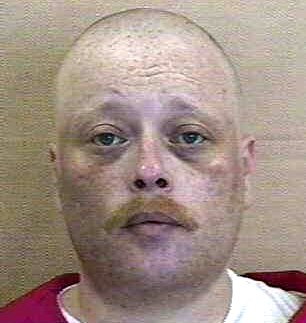
Bobby Lee Harris
Murderer Brian Kevin Rosenfeld
Murderer · USA · 1985
Brian Kevin Rosenfeld Brian Kevin Rosenfeld was sentenced to three concurrent l…
23 victims
Brian Kevin Rosenfeld
Murderer · USA · 1985
Brian Kevin Rosenfeld Brian Kevin Rosenfeld was sentenced to three concurrent l…
23 victims
 Russell Ellwood
Murderer · USA · 1991
Russell Ellwood was a former taxi driver. Authorities suspected him of killing…
20 victims
Russell Ellwood
Murderer · USA · 1991
Russell Ellwood was a former taxi driver. Authorities suspected him of killing…
20 victims
 Robert Martines Perez
Murderer · USA · 1994
Name: Robert Martines Perez · Other name used in proceedings: Robert Martinez P…
15 victims
Robert Martines Perez
Murderer · USA · 1994
Name: Robert Martines Perez · Other name used in proceedings: Robert Martinez P…
15 victims
 Billy Frank Vickers
Murderer · USA · 1993
Billy Frank Vickers Vickers was executed by lethal injection in Texas on Januar…
14 victims
Billy Frank Vickers
Murderer · USA · 1993
Billy Frank Vickers Vickers was executed by lethal injection in Texas on Januar…
14 victims
 John Raymond Travers
Murderer · Australia · 1986
John Raymond Travers (born February 27, 1967) was an Australian murderer. He wa…
1 victim
John Raymond Travers
Murderer · Australia · 1986
John Raymond Travers (born February 27, 1967) was an Australian murderer. He wa…
1 victim
 Thomas Paul West
Murderer · USA · 1987
Defendant: Thomas Paul West · Victim: Don Bortle (Donald Bortle / Donald Bortle…
1 victim
Thomas Paul West
Murderer · USA · 1987
Defendant: Thomas Paul West · Victim: Don Bortle (Donald Bortle / Donald Bortle…
1 victim
 Justin Geiger
Murderer · USA · 2006
Justin R. Geiger, 20, was believed to have taken his own life with a gunshot to…
2 victims
Justin Geiger
Murderer · USA · 2006
Justin R. Geiger, 20, was believed to have taken his own life with a gunshot to…
2 victims
 Robert McConnell
Murderer · USA · 2002
Robert Lee McConnell was 33 at the time he pleaded guilty and was sentenced to…
1 victim
Robert McConnell
Murderer · USA · 2002
Robert Lee McConnell was 33 at the time he pleaded guilty and was sentenced to…
1 victim
- Gender
- male
- Country
- USA
- Location
- Onslow County, North Carolina, USA
- Date of birth
- January 29, 1966
- Age at first offence
- 25
- Characteristics
- robbery, alcohol, drug addict
- Victim profile
- John Redd (his employer)
- Method of murder
- St abbing with knife
- Date(s) of murder
- August 20, 1991
- Years active
- 1991
- Date of arrest
- —
- Status
-
Life imprisonment
Sentenced to death in 1992; resentenced to life in prison on April 8, 2003
Case identity
Bobby Lee Harris was convicted in North Carolina and received a death sentence for the Onslow County murder of John Redd. Harris was later resentenced to life in prison on April 8, 2003.
The offence
John Redd, owner of a commercial fishing business, was robbed and stabbed in the back before being thrown overboard in August 1991. Testimony at trial indicated that Harris and a co-worker who worked at Redd’s fishing business conspired to rob Redd so they could go to Georgia to avoid other legal problems in North Carolina. The plan was originally described as tying Redd up, but Harris stabbed Redd three times in the back. Harris indicated that Redd was taken to shore, made comfortable, and told that help would be sent. Evidence described by the high court indicated that Redd had been dumped into the water and made it to shore on his own before bleeding to death. Redd was found 10 hours after he was stabbed and lived long enough to speak to authorities.
After the stabbing, Harris entered the victim’s house and stole two guns and some beer, then drove to Georgia. When Harris learned that the employer had died, he turned himself in and gave a full confession.
People
- Bobby Lee Harris — defendant
- John Redd — victim; owner of a commercial fishing business
- Joe Simpson — Harris’s co-worker; arrested with Harris for the murder of John Redd
- Timothy Merritt — lead counsel for Harris during the proceedings; removed from the case after being too ill to continue due to multiple myeloma
- Charles K. Medlin, Jr. — second counsel; appointed after Merritt was removed
- Charles H. Henry — appointed to replace Merritt; given only six weeks to prepare for the penalty phase
- Theodis Beck — Correction Secretary who set an execution date
- Durham Superior Court Judge Wade Barber — vacated the death sentence and later stayed execution pending a hearing
- Judge Joe Freeman Britt — trial judge during sentencing
- Justices Exum and Frye — N.C. Supreme Court justices who wrote a dissent
- RALEIGH — location named in the execution-date announcement text
- Walter B. Jones Hospital — facility mentioned in relation to Harris’s hospitalization after an adolescent overdose and detox placement; also mentioned in the context of court-ordered treatment
Investigation / arrest
Harris and Joe Simpson were arrested for the murder of their boss, John Redd, in 1991.
Trial
Harris was convicted in Onslow County Superior Court on July 29, 1992. He received the death sentence for the Aug. 20, 1991 murder of John Redd.
The trial record included testimony that Harris and Simpson talked for several weeks about robbing their boss and stealing his truck. The account also described that, after the three had been drinking aboard a boat, Harris grabbed his employer’s knife and stabbed him three times in the back, taking his wallet and keys. The wounded man pleaded, and the narrative included the reported exchange:
"Don't kill me," said the wounded man.
"I'm not going to kill you, the man replied.
The narrative also stated that Harris gave the employer a drink, lit a cigarette for him, and helped him ashore, leaving him on a bed of oyster shells. After entering the employer’s house, Harris stole two guns and some beer and drove to Georgia. The employer was rescued 10 hours later and identified his assailant before dying of his wounds. When Harris learned the employer had died, he turned himself in and gave a full confession.
Sentencing
Harris received multiple sentences:
- A death sentence for the Aug. 20, 1991 murder of John Redd.
- A 40-year sentence for robbery with a dangerous weapon.
- A 40-year sentence for second degree burglary.
- A 10-year sentence for larceny of firearms.
- A 10-year sentence for auto larceny.
The narrative of the trial included statements about how the Supreme Court characterized the murder:
"We are impressed by the callousness exhibited by the defendant,"
One Supreme Court justice called the murder "spur of the moment," and a majority refused to overturn the death sentence.
During sentencing, Justices Exum and Frye wrote a dissent arguing that Harris should have been sentenced to life imprisonment. The dissent stated that Harris’s death sentence was unfair and disproportionate given Harris’s conduct and mitigating circumstances found by the jury. The dissent emphasized slight evidence of planning and included a remark about North Carolina juries:
"have consistently returned life sentences under similar circumstances."
Defence counsel and mitigating evidence
Lead counsel Timothy Merritt was removed from the case because he was suffering from multiple myeloma, a severe form of bone cancer and was too ill to continue. Second counsel Charles K. Medlin, Jr. had graduated from law school only three years earlier. A new attorney, Charles H. Henry, was appointed to replace Merritt and was given only six weeks to prepare for the penalty phase of the trial. The jury did not learn that Harris’s I.Q. is just 73, described as a mere three points above being mentally retarded. Records were described as showing Harris adapted well to prison life and did not present a danger in prison, but those records were described as never presented to the jury. The jury also did not learn that, as an adolescent stationed with his family in Germany, Harris overdosed and was hospitalized and placed in detox.
The narrative described Harris’s background as including a violent and dysfunctional home environment during childhood, with physical and emotional abuse common in his childhood, which led to alcohol and drug abuse at an early age. It further stated that a few months prior to the crime, Harris’s sister-in-law had him involuntarily committed because his drug abuse was so out of control. Harris was sent to Walter B. Jones Hospital for 45 days and then placed on court-ordered outpatient treatment. The narrative stated that at the time of the offense, county medical health officials and court personnel had not followed up despite Harris’s continued residence in Onslow County. It stated that some records documenting these facts arrived at the defense counsel’s office a month after the jury had returned its punishment verdict. It also stated that no court had held a hearing on whether Harris’s trial was unfair because his attorneys failed to show the jury all of the compelling facts about his mental health and background. Observers believed that the trial judge showed a pro-death penalty bias during the sentencing phase, and the judge identified was Joe Freeman Britt, described as the former district attorney for Robeson County and included a description of his death-row record prior to becoming a Superior Court Judge:
"the world's deadliest prosecutor."
Appeals / post-conviction developments
Harris’s execution was stayed multiple times and later the death sentence was vacated.
- A stay of execution was upheld by the NC Supreme Court on 1/18/2001.
- On 1/17/2001, execution was stayed by Durham Superior Court Judge Wade Barber pending the outcome of a hearing set for Feb. 20.
- On 1/17/2001, witnesses were named for Harris’s execution.
- On 12/4/2000, an execution date was set for Jan. 19, 2001.
- On 10/22/01, Judge Wade Barber vacated Harris’s death sentence; the murder conviction was allowed to stand; Harris awaited re-sentencing.
The narrative included a description of dissent from N.C. Supreme Court justices and noted that Harris’s execution was scheduled despite calls for a moratorium. It stated that in December, a study commission in the state legislature recommended a two-year moratorium on executions and a bill to ban the execution of mentally retarded defendants. It also described that hearings were planned around those recommendations.
Execution-date announcement and planned schedule
An execution date announcement described that:
- Correction Secretary Theodis Beck set Jan. 19 as the execution date for death row inmate Bobby Lee Harris.
- The execution was tentatively scheduled for 2 a.m. at Central Prison.
- Harris was described as 34 at the time of the announcement.
- Harris’s death sentence conviction was described as occurring on July 29, 1992 in Onslow County Superior Court.
- The murder for which Harris was sentenced to death was described as the Aug. 20, 1991 murder of John Redd.
The narrative described that the state planned to execute Harris at 2 a.m. on January 19, 2001.
Timeline
- 04/08/03 — Harris was resentenced to life in prison.
- 10/22/01 — Judge Wade Barber vacated Harris’s death sentence; the murder conviction was allowed to stand; Harris awaited re-sentencing.
- 1/18/2001 — Stay of execution upheld by the NC Supreme Court.
- 1/17/2001 — Execution stayed by Durham Superior Court Judge Wade Barber pending the outcome of a hearing set for Feb. 20.
- 1/17/2001 — Witnesses named for Harris’s execution.
- 12/4/2000 — Execution date set for Jan. 19, 2001.
- July 29, 1992 — Harris was convicted in Onslow County Superior Court; he received the death sentence.
- Aug. 20, 1991 — John Redd was murdered (robbed and stabbed in the back before being thrown overboard); Harris was later sentenced for this murder.
- August 1991 — Redd was robbed and stabbed before being thrown overboard.
- Feb. 20 — Hearing date referenced for the stay matter (year not explicitly stated in the text).
- Jan. 19, 2001 — Execution date referenced; execution described as tentatively scheduled for 2 a.m.
Other details
The narrative included details about juror mitigation and trial history:
- It stated that Harris voluntarily surrendered himself, gave a full confession, and expressed remorse for the crime.
- It described that jurors heard some mitigating evidence but that the debilitating illness of one of Harris’s lawyers prevented the jury from learning more reasons to spare Harris’s life.
- It described that Joe Simpson’s murder charge was dropped as part of a plea bargain and that his projected release date was August 2006, according to Department of Corrections records.
- It stated that no court had held a hearing on whether Harris’s trial was unfair because attorneys failed to show the jury compelling facts about mental health and background.
The narrative also included a segment format about the case, describing “Case 6” and asking questions about which defendants “deserve” death, followed by the described account of the stabbing and subsequent events, including the employer being rescued 10 hours later and identifying his assailant before dying.

Spotted an error, or have more information about this case?