
Thomas Paul West
Murderer Brian Kevin Rosenfeld
Murderer · USA · 1985
Brian Kevin Rosenfeld Brian Kevin Rosenfeld was sentenced to three concurrent l…
23 victims
Brian Kevin Rosenfeld
Murderer · USA · 1985
Brian Kevin Rosenfeld Brian Kevin Rosenfeld was sentenced to three concurrent l…
23 victims
 Yahweh ben Yahweh
Murderer · USA · 1980
Yahweh ben Yahweh was born and legally named Hulon Mitchell Jr. (October 27, 19…
23 victims
Yahweh ben Yahweh
Murderer · USA · 1980
Yahweh ben Yahweh was born and legally named Hulon Mitchell Jr. (October 27, 19…
23 victims
 Russell Ellwood
Murderer · USA · 1991
Russell Ellwood was a former taxi driver. Authorities suspected him of killing…
20 victims
Russell Ellwood
Murderer · USA · 1991
Russell Ellwood was a former taxi driver. Authorities suspected him of killing…
20 victims
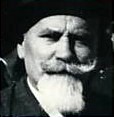 Michael Onufrejczyc
Murderer · United Kingdom · 1953
Michael Onufrejczyc was a Pole known locally as “Whiskers”. He was a highly dec…
1 victim
Michael Onufrejczyc
Murderer · United Kingdom · 1953
Michael Onufrejczyc was a Pole known locally as “Whiskers”. He was a highly dec…
1 victim
 Penny Bjorkland
Murderer · USA · 1959
Rosemarie Diane “Penny” Bjorkland (1941-?) — defendant; US murderer who killed…
1 victim
Penny Bjorkland
Murderer · USA · 1959
Rosemarie Diane “Penny” Bjorkland (1941-?) — defendant; US murderer who killed…
1 victim
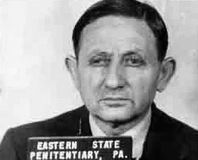 Morris Bolber
Serial killer · USA · 1932
Morris Bolber was prosecuted as part of a Philadelphia poison-murder ring invol…
50 victims
Morris Bolber
Serial killer · USA · 1932
Morris Bolber was prosecuted as part of a Philadelphia poison-murder ring invol…
50 victims
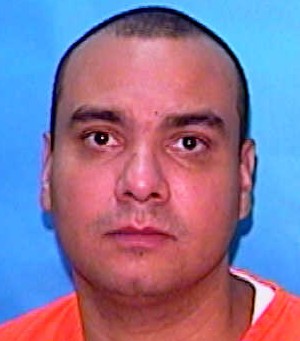 Luis Caballero
Murderer · USA · 1995
Luis Caballero was born on 09/23/73. He was indicted in the Seventeenth Judicia…
1 victim
Luis Caballero
Murderer · USA · 1995
Luis Caballero was born on 09/23/73. He was indicted in the Seventeenth Judicia…
1 victim
 Dale R. Anderson
Murderer · USA · 1978
Dale R. Anderson was sentenced to life imprisonment on May 11, 1990. Anderson d…
7 victims
Dale R. Anderson
Murderer · USA · 1978
Dale R. Anderson was sentenced to life imprisonment on May 11, 1990. Anderson d…
7 victims
 Sylvia Seegrist
Murderer · USA · 1985
Sylvia Wynanda Seegrist (born July 31, 1960) was an American woman diagnosed wi…
3 victims
Sylvia Seegrist
Murderer · USA · 1985
Sylvia Wynanda Seegrist (born July 31, 1960) was an American woman diagnosed wi…
3 victims
- Gender
- male
- Country
- USA
- Location
- Pima County, Arizona, USA
- Date of birth
- April 28, 1959
- Age at first offence
- 28
- Characteristics
- robbery, drug addict, alcohol
- Victim profile
- Donald Lee Bortle, 53
- Method of murder
- Beating ( blunt force injuries to his head)
- Date(s) of murder
- July 12, 1987
- Years active
- 1987
- Date of arrest
- —
- Status
-
Executed
Sentenced to death on August 1, 1988; executed by lethal injection in Arizona on July 19, 2011
Case record: Thomas Paul West
Parties
- Defendant: Thomas Paul West
- Victim: Don Bortle (Donald Bortle / Donald Bortle), a Tucson man outside Tucson
Background
Thomas Paul West was a convicted killer who was sentenced to death and later executed in Arizona. He had been living in Arizona for a short time before the offense and had moved to Arizona from Illinois in June 1987. West worked as a drywaller. He grew up in Kankakee, Illinois. West had a daughter.
West had a substance abuse problem and was described as taking large amounts of drugs around the time of the murder and immediately thereafter. Defense counsel successfully excluded evidence of this drug activity from trial but introduced it during sentencing to establish the extent and effects of West’s substance abuse.
West was evaluated for possible brain damage from substance abuse and purported head injuries; the evaluation concluded that the test results were more consistent with low educational status and may have some evidence of a learning disability than with cognitive impairment.
At sentencing, the prosecution sought the death penalty and presented aggravating factors including a prior crime involving violence, expectation of pecuniary gain, and that the murder was especially cruel and heinous.
The offence
West moved from Glendale to Tucson and met Don Bortle. Bortle had advertised electronics and other items for sale. West and some friends went to Bortle’s trailer outside Tucson to buy electronic goods that Bortle had advertised for sale.
West returned to Bortle’s trailer and tied Bortle up, beat him, and stole numerous items. West then stole Bortle’s car and took the stolen goods to Phoenix, where he intended to sell them. While in Phoenix, West told friends what he had done.
One of West’s friends called the Pima County Sheriff’s Office, and deputies checked on Bortle. On July 17, 1987, a deputy entered Bortle’s trailer and found Bortle’s bound and gagged body. Bortle had died from blunt force injuries to his head. The medical examiner later testified that Bortle had been beaten severely about the face with a blunt instrument and probably had bled to death within 45 minutes to an hour. A knife was found in the trailer, but there was no evidence that the victim had been stabbed. Because of the body’s decomposed condition, the medical examiner estimated the time of death as between three and seven days, placing the killing between Saturday, July 11 and Wednesday, July 15.
Investigation and arrest
Patty had contacted the Pima County Sheriff’s Department. Detective Petropoulos spoke to Patty several times during the morning of Friday, July 17, used the information she provided to contact Polly, and interviewed Polly. During the interview, the detective noticed the map to the victim’s house. After obtaining the map, the detective called the number written on the map, received no response, and went to the victim’s home to investigate.
Detective Petropoulos entered the trailer and found the victim’s decomposing body in the north bedroom. The victim’s hands and feet were tied behind his back with a vacuum cleaner cord and a lamp wire.
After fleeing Arizona, West was arrested in Illinois during a traffic stop soon after the crime. Some time after 3:00 a.m. on Saturday, July 18, Sergeant Mark Wilkans of the Hodgkins, Illinois, police department stopped a vehicle for speeding. West was one of two passengers in the car. After arresting the driver for driving under the influence, Wilkans asked West for identification. Having none, West gave Wilkans his name and birth date. Wilkans radioed this information to his base, and he was informed that West was wanted in Arizona for murder. Wilkans arrested West.
A search of the car at the Hodgkins police station yielded boxes that West had brought from Arizona. The boxes were inventoried and contained electronic equipment later identified as having been taken from the victim. On Monday, July 20, Detective Petropoulos arrived in Illinois and took custody of West and the stolen property. He sealed the boxes and mailed them to Tucson, where he obtained a warrant and searched them.
Trial
West was charged in Arizona state court with first degree felony-murder, second degree burglary, and theft.
The trial began on March 8, 1988. The verdict was returned on March 17, 1988. The sentencing court presiding judge was G. Thomas Meehan. The prosecutor was Kenneth J. Peasley.
A jury trial was held, and West did not testify. The jury returned guilty verdicts on all three counts: first degree felony murder, second degree burglary, and theft.
The Arizona Supreme Court later addressed multiple issues, including jury “death qualifying,” admissibility of evidence seized in Illinois, exclusion of evidence about the victim’s alleged suicidal tendencies, admission of a gruesome photograph, and various sentencing and constitutional challenges.
Sentencing
The sentencing occurred on August 1, 1988, and West was sentenced to death for the murder.
The sentencing included aggravating circumstances:
- Prior convictions involving violence / a prior felony involving the use of violence upon another
- Pecuniary gain
- Especially heinous/cruel/depraved
The trial court found the murder was also especially heinous within A.R.S. § 13-703(F)(6), including that:
- the victim was hogtied, bound and beaten repeatedly,
- death was not immediate and the victim was left dying in a position unable to seek assistance,
- the defendant knew or had reason to know that the deceased was dying or had suffered serious physical injuries.
The trial court found mitigating circumstances existed only as substance abuse and emotionally deprived childhood, but concluded the mitigating circumstances were not sufficiently weighty to call for leniency.
West declined a final / special meal. He was also described as having no last words prior to execution.
Aggravating and mitigating findings (as described in later proceedings)
- At sentencing, the trial court found three aggravating circumstances: prior felony involving violence, expectation of pecuniary gain, and especially cruel and heinous circumstances.
- The trial court found emotionally deprived childhood and substance abuse problem as mitigating, but not sufficiently so as to outweigh aggravating factors.
- The Arizona Supreme Court later stated that the sentencing judge correctly found the murder to be especially heinous and also that aggravating factors outweighed mitigating factors, and that sentence of death was appropriate.
Appeals
Direct appeal (Arizona Supreme Court)
In State v. West, 176 Ariz. 432, 862 P.2d 192 (Ariz. 1993), the Arizona Supreme Court affirmed the convictions and sentences. The court held that:
- evidence that the victim had threatened suicide was properly excluded as irrelevant, as evidence negated any possibility that victim killed himself,
- a photograph of the victim was relevant and admissible to corroborate testimony and to show that death resulted from underlying felony,
- there was no obligation to instruct the jury on premeditated murder theory withdrawn by the state,
- aggravating factors outweighed mitigating factors, and the sentence of death was appropriate.
Habeas appeal (Ninth Circuit)
In West v. Ryan, 608 F.3d 477 (9th Cir. 2010), the Ninth Circuit reviewed West’s federal habeas claim for ineffective assistance of sentencing counsel. The Court of Appeals held:
- West was diligent in pursuing his mental impairments claim in state court as required for an evidentiary hearing on his habeas petition, but
- West failed to raise a colorable claim that sentencing counsel’s performance fell below an objective standard of reasonableness, and thus was not entitled to an evidentiary hearing. The judgment denying habeas relief was affirmed.
Outcome
West was sentenced to death and later executed.
Aftermath
Arizona executed Thomas Paul West on July 19, 2011 by lethal injection in Arizona. He was pronounced dead at 11:10 a.m. in the execution setting described in later reporting. He did not have last words or a final meal before being executed. Witnesses described the execution as quiet, and he was described as sending a message to his attorneys using pre-arranged hand signals and flashing a peace sign before closing his eyes.
Final actions related to clemency were described as follows: Arizona’s clemency board voted 3-2 to allow the execution. Two of the five members moved enough to suggest commutation to life in prison; the other board members prevailed.
During later appellate discussion, it was noted that the Arizona Supreme Court issued the warrant for his execution in late May, and that Arizona executes convicted killer(s) in the years described in later reporting.
Timeline
- June 26, 1987 — Polly and defendant went to the victim’s home to buy electronic items; Polly bought a VCR, a video camera, and a typewriter.
- Mid-July 1987 — West broke into the victim’s home, beat him, bound his limbs, stole his car and other items, and left him to die.
- Saturday, July 11 — Estimated killing timeframe start (based on medical examiner estimate).
- Wednesday, July 15 — Estimated killing timeframe end (based on medical examiner estimate).
- July 12, 1987 — West returned to the trailer, tied Bortle up, beat him, and stole numerous items.
- July 17, 1987 — A deputy entered Bortle’s trailer and found Bortle’s bound and gagged body.
- Saturday, July 18 — Sergeant Mark Wilkans stopped the speeding vehicle; West was arrested after being found wanted in Arizona.
- Monday, July 20 — Detective Petropoulos arrived in Illinois, took custody of West and the stolen property, sealed the boxes, and mailed them to Tucson.
- March 8, 1988 — Start of trial.
- March 17, 1988 — Verdict.
- April 19, 1988 — Notice of aggravating factors was given to West.
- May 4, 1988 — Initial sentencing hearing.
- June 6, 1988 — Sentencing hearing rescheduled to June 6 after West agreed it could be delayed.
- August 1, 1988 — Sentencing; West was sentenced to death.
- September 30, 1993 — Arizona Supreme Court affirmed in a published opinion (State v. West, 176 Ariz. 432, 862 P.2d 192).
- May 6, 1998 — West filed a timely petition for a writ of habeas corpus in district court.
- 2010 — Ninth Circuit decided West v. Ryan, 608 F.3d 477.
- July 19, 2011 — West was executed by lethal injection in Arizona.
Other details
Identifying details mentioned in later reporting
- West was described as 52 at execution and as having DOB: 04/28/1959.
- West was described as Caucasian (defendant and victim described as Caucasian in an inmate entry).
Criminal history and sentencing evidence references
- The sentencing proceedings included a prior manslaughter conviction in Illinois described as a 1981 manslaughter conviction.
- The record contained conflicting information on whether the conviction was for voluntary or involuntary manslaughter.
- The Arizona Supreme Court addressed proof of the prior violent felony and concluded the aggravating factor was adequately proved under the proceedings described.
Expert testimony and mitigation evidence described in later habeas discussion
- Dr. Allender evaluated West over a two-day period and concluded the test results were more consistent with low educational status who may have some evidence of a learning disability than with cognitive impairment from head injuries or substance abuse.
- Hickey testified that West’s chemical dependency began at age ten, significantly impaired judgment, and that addicts cannot reason normally and make increasingly bad decisions as addiction progresses.
- Hickey testified that West’s father was an alcoholic and that West witnessed physical violence in the family from an early age.
Quotes
Detective Chief Inspector Alan Reid, who led the investigation, said: “What this tells me is that Mr. Bortle was not the one who snuck up on Mr. West. Mr. Bortle didn't see it coming,” Unklesbay said.
West said: “I did not realize I hurt him that bad.”
West said: “I thought he was up and walking around and safe by the time I got to the end of the block.”
West said: “As ridiculous as it was and as hollow as it sounds, I really am sorry for your loss,” West said.
Defense attorney Dale Baich said: “peace” sign.
Wardlaw said: “We all know . . . the drug was unlawfully obtained.”
Bill Lamoreaux said: “Judge Wardlaw’s statement is not a representation on behalf of the court and does not suggest wrongful conduct on the part of ADC.”
Judge Kim Wardlaw took a Corrections Department attorney to task when he assured her that the protocol would be followed, and she said: “The whole problem that’s being questioned here is that ADC says that every time, and something else happens,” Wardlaw said.

Spotted an error, or have more information about this case?