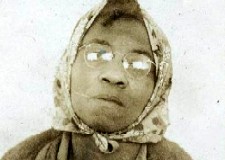
Vernice Ballenger
Murderer Bobbie Sue Terrell
Murderer · USA · 1984
Bobbie Sue Dudley Terrell was a Pinellas County nurse and worked as the night s…
12 victims
Bobbie Sue Terrell
Murderer · USA · 1984
Bobbie Sue Dudley Terrell was a Pinellas County nurse and worked as the night s…
12 victims
 Angela Johnson
Murderer · USA · 1993
Angela Jane Johnson was convicted in federal court of aiding and abetting the m…
5 victims
Angela Johnson
Murderer · USA · 1993
Angela Jane Johnson was convicted in federal court of aiding and abetting the m…
5 victims
 Catherine May Wood
Murderer · USA · 1987
Catherine May Wood was an American caregiver who worked at the Alpine Manor Nur…
5 victims
Catherine May Wood
Murderer · USA · 1987
Catherine May Wood was an American caregiver who worked at the Alpine Manor Nur…
5 victims
 Amy Bishop
Murderer · USA · 1986
Amy Bishop — biology professor and perpetrator · James Anderson — Bishop’s husb…
4 victims
Amy Bishop
Murderer · USA · 1986
Amy Bishop — biology professor and perpetrator · James Anderson — Bishop’s husb…
4 victims
 Debra Sue Tuggle
Murderer · USA · 1974
Debra Sue Tuggle was an African American woman born in Arkansas. She had a hist…
4 victims
Debra Sue Tuggle
Murderer · USA · 1974
Debra Sue Tuggle was an African American woman born in Arkansas. She had a hist…
4 victims
 John Joseph Romano
Murderer · USA · 1985
John Joseph Romano was convicted of killing jeweler Roger Joel Sarfaty during t…
2 victims
John Joseph Romano
Murderer · USA · 1985
John Joseph Romano was convicted of killing jeweler Roger Joel Sarfaty during t…
2 victims
 Marcus Shrader
Serial killer · USA · 1974
Marcus Shrader was a Navy corpsman who was stationed at Camp Lejeune at the tim…
4 victims
Marcus Shrader
Serial killer · USA · 1974
Marcus Shrader was a Navy corpsman who was stationed at Camp Lejeune at the tim…
4 victims
 Adam Moss
Mass murderer · USA · 2001
Adam Moss Adam Moss killed Leticia Aguilar, 31; her five children, and Ron Fish…
7 victims
Adam Moss
Mass murderer · USA · 2001
Adam Moss Adam Moss killed Leticia Aguilar, 31; her five children, and Ron Fish…
7 victims
 Marybeth Davis
Murderer · USA · 1981
Marybeth Davis (born c. 1952) was an American nurse convicted in 1997 of the mu…
2 victims
Marybeth Davis
Murderer · USA · 1981
Marybeth Davis (born c. 1952) was an American nurse convicted in 1997 of the mu…
2 victims
 Damon Matthews
Murderer · USA · 2003
Damon Matthews (TDCJ Number 999476) was convicted of capital murder in Harris C…
1 victim
Damon Matthews
Murderer · USA · 2003
Damon Matthews (TDCJ Number 999476) was convicted of capital murder in Harris C…
1 victim
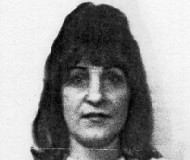 Cindy Lou Landress
Murderer · USA · 1988
Cindy Lou Landress — appellant/defendant · Leonard Fowler — victim, found dead…
1 victim
Cindy Lou Landress
Murderer · USA · 1988
Cindy Lou Landress — appellant/defendant · Leonard Fowler — victim, found dead…
1 victim
- Gender
- female
- Country
- USA
- Location
- Leake County, Mississippi, USA
- Date of birth
- February 6, 1937
- Age at first offence
- 46
- Characteristics
- arson
- Victim profile
- Myrtle Ellis, 75 (her aunt)
- Method of murder
- Beating
- Date(s) of murder
- July 10, 1983
- Years active
- 1983
- Date of arrest
- —
- Status
-
Died in custody
Sentenced to death on January 13, 1993; conviction vacated and sentence of death by lethal injection vacated; remanded for a new trial; died in prison on April 1, 2002
Case record: Vernice Ballenger
Overview
Vernice Ballenger was convicted by a jury in the Circuit Court of Leake County, Mississippi, for the capital murder of Myrtle Ellis while engaged in the commission of the crime of robbery. Ballenger was sentenced to death by lethal injection. On post-conviction review, the Mississippi Supreme Court vacated Ballenger’s conviction of capital murder and sentence of death by lethal injection and remanded for a new trial consistent with the opinion. Ballenger later died in prison.
Timeline
- January 10, 1983 — Head, Ritter, Mac and Ballenger met at Ballenger's house in Carthage, Mississippi, and later drove to Ellis's house and back.
- July 20, 1983 — Myrtle Ellis died at University Hospital in Jackson at 9:57 p.m.
- September 2, 1992 — Ballenger was indicted by a Leake County, Mississippi, grand jury for the capital murder of Myrtle Ellis while engaged in the commission of the crime of robbery.
- January 12, 1993 — Ballenger was convicted by a jury in the Circuit Court of Leake County, Mississippi, for the capital murder of Myrtle Ellis while engaged in the commission of the crime of robbery.
- January 13, 1993 — Ballenger was sentenced to death by lethal injection.
- September 21, 1995 — Ballenger's conviction and sentence were affirmed by the Mississippi Supreme Court on direct appeal (Ballenger v. State, 667 So.2d 1242 (Miss.1995)).
- November 22, 1995 — The opinion was modified on motion of the State.
- February 8, 1996 — Ballenger's petition for rehearing was denied.
- June 22, 2000 — The Mississippi Supreme Court issued the en banc decision in Ballenger v. State, No. 97-DR-00749-SCT.
- April 1, 2002 — Ballenger died in prison.
Background
Vernice Ballenger asked her estranged husband, Mac Ballenger (“Mac”), to rob her elderly aunt, Myrtle Ellis (“Ellis”). Mac told her he would not do it personally but knew someone who would. Mac recruited James Head (“Head”), who agreed to the robbery and in turn brought in Ronald Ritter (“Ritter”) to help.
The reason for the robbery arose from an automobile wreck earlier in the year involving Ellis. Ellis was admitted to the hospital, where she was found to have a substantial sum of money on her person. The accident and the fact that Ellis was carrying a large amount of money were reported in the newspaper.
Ballenger traveled from her home in Leake County, Mississippi, to Greenville, Mississippi, where her estranged husband Mac was living, and asked him to rob Ellis.
The offence
Ballenger and her accomplices planned and carried out a robbery at Ellis’s house, followed by arson intended to prevent Ellis from identifying her assailants.
Head, Ritter, Mac and Ballenger met at Ballenger’s house in Carthage, Mississippi on July 10, 1983. They made trips to Ellis’s house to look at the house and its surroundings. On the first trip, Ballenger, Mac, Head and Ritter just drove by Ellis’s house and then returned to Ballenger’s house. A short time later, Ballenger drove Head and Ritter back to Ellis’s house, but they were scared off when they spotted a hunter in the woods. They returned again to Ballenger’s house.
On the third trip, Mac drove Head and Ritter to Ellis’s house. Before they left, Ballenger gave them a pistol and a rifle. When they arrived, Head and Ritter went inside while Mac stayed on the porch. Ritter asked Ellis where her money was and Ellis replied she did not have any. Ritter slapped Ellis, and Ellis said she did not have money because the hospital or the bank had taken it. Ritter stepped away and Head began beating Ellis. Head and Ritter searched the house but found no money.
Mac retrieved a doll from Ellis’s car thinking money might be hidden in it. Head became enraged, threw Ellis across the room, kicked her, and the three men left. On the way back, Head ripped the doll apart and found no money, so he threw it out the window.
After returning to Ballenger’s house, Mac, Ritter and Head told Ballenger what had happened. Ballenger became concerned that Ellis or someone else might recognize her van. Ballenger suggested that Ellis’s house be burned down with Ellis in it to ensure that Ellis could not identify her assailants.
Ritter, Head and Ballenger returned to Ellis’s house. Head was dropped off to start the fire while Ritter and Ballenger drove down the road, turned around and picked up Head. There was no smoke coming from the house, so Ballenger said someone would have to go back. Ritter volunteered and intended to get Ellis out of the house before he burned it. When Ritter arrived, Ellis was already lying outside. There was a pile of clothes on the floor, and Ritter threw a match on them to start a fire. The three then returned to Ballenger’s house.
Subsequently, Ritter and Head returned to Greenville.
Investigation
A fire truck was called to Ellis’s house.
Carolyn Wilcher, a justice court judge in Leake County, Mississippi, testified that at the time Ellis’s house was burned down she worked at the Madden hospital and her husband was a volunteer fireman who responded to the fire. Wilcher followed the fire truck to the Ellis house to see if she could help. When she arrived, the house was in flames. Someone found Ellis beside a shed and laid her out beside the road away from the flames. Ellis was unconscious, her head was swollen and she was bruised, and her clothes had been partially ripped off and she was very dirty.
Ellis was taken to the emergency room at the hospital in Madden and later transferred to University Hospital in Jackson. Ellis regained consciousness and declined to identify her assailants. Ten days later, on July 20, 1983, Ellis died as a result of the injuries she sustained. Ellis died at University Hospital at 9:57 p.m. on July 20, 1983.
William Featherston performed the autopsy on Ellis. He stated there was no skull fracture, but there was evidence of injury to the head and brain and some evidence of hemorrhage. Featherston said the head injuries were not fatal. Featherston examined Ellis’s chest area and found fractures of the upper four ribs on both Ellis’s left and right sides, a fracture of the breastbone, and tearing of the mammary artery along the margin of the breastbone. He stated:
"And, this blood had collapsed her right lung and then pushed the heart and the left lung over into the left side of the chest cavity, and that, the hemorrhage and the displacement of the internal organs, is what produced her death."
Featherston stated that in his opinion these injuries were consistent with Ellis being struck or kicked in the chest area. He stated there was no evidence of any injury due to fire or being burned.
Bobby Brown, a member of the Carthage Police Department, was a deputy with the Leake County Sheriff's Department in July of 1983 and was involved in the investigation of the fire and Ellis’s death. Brown testified that they began looking for a light colored custom van with markings on the side. Two or three days after the fire, a van fitting that description was located and determined to belong to Ballenger. Brown testified that at the time it was located, a picture was taken of the van. Brown identified the picture and it was offered for identification by the State. The picture was put into evidence when Mac Ballenger identified it as being of the van owned by Ballenger in July 1983. After taking the picture, Brown went back to try to match the tires on the van with tracks found at Ellis’s house. Brown testified that since the picture had been taken, new tires had been put on the van and the van had been repainted.
Arrest
No arrest details were provided.
Trial
Ballenger was convicted by a jury in the Circuit Court of Leake County, Mississippi, on January 12, 1993, for the capital murder of Myrtle Ellis while engaged in the commission of the crime of robbery.
The trial included testimony from Mac Ballenger, Head, Ritter, and others including Carolyn Wilcher.
At one point during testimony, Ritter described Ballenger’s statements after the accomplices returned and told her what had happened:
"Ballenger [w]anted to know what happened over there, and we told her, and she wanted to know what did we do, how did we do it. We just pulled up in the driveway and got out and went in. She said, "What do you mean you just pulled up in the driveway and went in?" Said, "Somebody could have seen the van sitting in front of the house." Said, "Where's the woman at?" "Well, the woman's at the house. She's in the house now, is unconscious." And, she said, "Is she alive?" and we said, "Yeah." She said, "Well," and it started out, she was over there before in the van and the woman would know the van, and if she seen Mac or anybody; she would know that Vernice was tied into it, so couldn't leave the situation like that. Said we would have to kill the woman. Ballenger suggested that Ellis' house be burned down with her in it."
Sentencing
A separate sentencing hearing was conducted and on January 13, 1993, Ballenger was sentenced to death by lethal injection.
Appeals
On September 21, 1995, Ballenger’s conviction and sentence were affirmed by the Mississippi Supreme Court on direct appeal (Ballenger v. State, 667 So.2d 1242 (Miss.1995)). The opinion was modified on motion of the State on November 22, 1995, and Ballenger’s petition for rehearing was denied on February 8, 1996.
Ballenger filed post-conviction claims. The Mississippi Supreme Court described that the amended and supplemented motion contained forty-seven (47) claims as a basis for post-conviction relief, and that the arguments fell into five categories: (1) trial court error; (2) prosecutorial misconduct; (3) evidentiary insufficiency; (4) new evidence; and (5) ineffective assistance of counsel. The Court stated it addressed only the controlling issue because the conviction and sentence were vacated.
Ballenger argued that the trial court committed fundamental error by failing to instruct the jury on the elements of robbery. The Court stated that this issue had been considered and rejected on direct appeal, including procedural bars regarding proposed jury instructions D-22 and D-29. The Court then discussed Hunter v. State and Shaffer v. State as intervening authority and found that Ballenger’s claim overcame the procedural bar.
The Mississippi Supreme Court held that the State had a duty to ensure that the jury was properly instructed on the elements of the underlying crime of robbery. The Court cited Hunter v. State and included the following quoted language from Hunter:
"Indeed, no instruction on the elements of the underlying offense was given. The defendant offered a confusing instruction, which was properly refused. The State did not offer an instruction on the elements of the underlying offense of robbery. This Court holds that the State had a duty to ensure that the jury was properly instructed on the elements of the underlying crime. It is hornbook criminal law that before a conviction may stand the State must prove each element of the offense. Not only is this a requirement of the law of this State, due process requires that the State prove each element of the offense beyond a reasonable doubt. Neal v. State, 451 So.2d 743, 757 (Miss.1984). A logical corollary of this principle is that, because the State has to prove each element of the crime beyond a reasonable doubt, then the State also has to ensure that the jury is properly instructed with regard to the elements of the crime. See also Hosford v. State, 525 So.2d 789, 792 (Miss.1988) (quoting Adams v. State, 202 Miss. 68, 75, 30 So.2d 593 (Miss.1947) (“In conducting a criminal case, the prosecuting attorney must be fair and impartial, and see that defendant is not deprived of any constitutional or statutory right.”) (emphasis in original)). “Just as the State must prove each element of the offense, the jury must be correctly and fully instructed regarding each element of the offense charged.” Neal, 451 So.2d at 757, n. 9. Failure to submit to the jury the essential elements of the crime is “fundamental” error. Screws v. United States, 325 U.S. 91, 107, 65 S.Ct. 1031, 1038, 89 L.Ed. 1495 (1945). In capital murder cases, the trial court is “required to instruct just as fully regarding the definition of [the underlying crime] as it [is] on murder.” Id. Indeed, “[i]t is axiomatic that a jury's verdict may not stand upon uncontradicted fact alone. The fact must be found via jury instructions correctly identifying the elements of the offense under the proper standards.” “Where the jury had incorrect or incomplete instructions regarding the law, our review task is nigh unto impossible and reversal is generally required.” Henderson v. State, 660 So.2d 220, 222 (Miss.1995) (citations omitted). It is rudimentary that the jury must be instructed regarding the elements of the crime with which the defendant is charged. Therefore, even though the defendant did not present an acceptable instruction, the State was obligated to do so. Reversal on this issue is warranted. See Henderson v. State, 660 So.2d 220, 222 (Miss.1995); Neal v. State, 451 So.2d 743, 757 n. 9 (Miss.1984); see also Watson v. State, 465 So.2d 1025, 1031 (Miss.1985)."
The dissenting opinion included additional quoted language from direct appeal and other cases. The dissent stated that on direct appeal the Court held:
“[s]ince instruction D-22 was never brought to the attention of the trial court and instruction D-29 was properly refused, it was incumbent upon Ballenger to request an appropriate instruction regarding the elements of robbery.”
The dissent also quoted:
“The case law does not impose upon a trial court a duty to instruct the jury sua sponte, nor is a court required to suggest instructions in addition to those which the parties tender.”
The dissent further included:
“While no single instruction did include all elements of robbery, some of the elements are listed in Instructions, S-1A, S-2 and S-8. Surely, these instructions assisted the jury which obviously believed beyond a reasonable doubt that Hunter robbed and killed Brewer.”
Outcome
The Mississippi Supreme Court vacated Ballenger’s conviction of capital murder and sentence of death by lethal injection and remanded for a new trial consistent with the opinion.
The post-conviction relief granted included: “POST-CONVICTION RELIEF GRANTED; CONVICTION OF CAPITAL MURDER AND SENTENCE OF DEATH BY LETHAL INJECTION VACATED; REMANDED FOR A NEW TRIAL CONSISTENT WITH THIS OPINION.”
The majority stated it was unnecessary to address the remaining issues because the conviction and sentence were vacated under the controlling issue.
Aftermath
Ballenger died in prison on April 1, 2002.
Other details
- The case was styled “Ballenger v. State of Mississippi,” No. 97-DR-00749-SCT, and was decided June 22, 2000 en banc.
- The opinion listed attorneys for appellant: Robert B. McDuff, Jackson, and Fritz Byers, Toledo, OH.
- The opinion listed counsel for appellee: Office of the Attorney General by Marvin L. White, Jr., Attorney for Appellee.
- The opinion included multiple names among justices concurring or dissenting, including a dissent by SMITH, J., joined by MILLS, COBB and DIAZ, JJ.
- Carolyn Wilcher testified as a justice court judge in Leake County, Mississippi, and as having worked at the Madden hospital with her husband a volunteer fireman during the response to the fire.

Spotted an error, or have more information about this case?