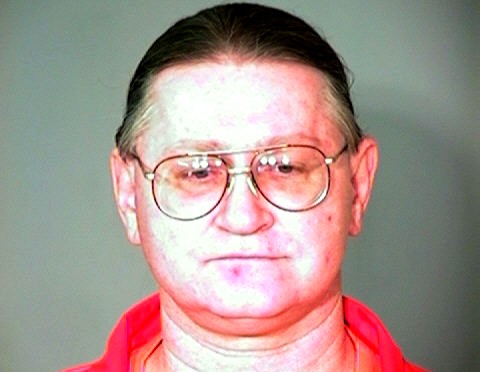
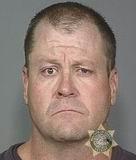
James Harrod
Murderer Brian Kevin Rosenfeld
Murderer · USA · 1985
Brian Kevin Rosenfeld Brian Kevin Rosenfeld was sentenced to three concurrent l…
23 victims
Brian Kevin Rosenfeld
Murderer · USA · 1985
Brian Kevin Rosenfeld Brian Kevin Rosenfeld was sentenced to three concurrent l…
23 victims
 Yahweh ben Yahweh
Murderer · USA · 1980
Yahweh ben Yahweh was born and legally named Hulon Mitchell Jr. (October 27, 19…
23 victims
Yahweh ben Yahweh
Murderer · USA · 1980
Yahweh ben Yahweh was born and legally named Hulon Mitchell Jr. (October 27, 19…
23 victims
 Russell Ellwood
Murderer · USA · 1991
Russell Ellwood was a former taxi driver. Authorities suspected him of killing…
20 victims
Russell Ellwood
Murderer · USA · 1991
Russell Ellwood was a former taxi driver. Authorities suspected him of killing…
20 victims
 Robert Martines Perez
Murderer · USA · 1994
Name: Robert Martines Perez · Other name used in proceedings: Robert Martinez P…
15 victims
Robert Martines Perez
Murderer · USA · 1994
Name: Robert Martines Perez · Other name used in proceedings: Robert Martinez P…
15 victims
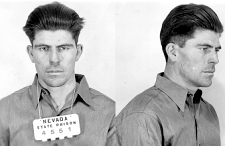 Raymond Plunkett
Murderer · USA · 1942
Raymond Plunkett was executed in the Nevada State Prison on June 30, 1944. He w…
1 victim
Raymond Plunkett
Murderer · USA · 1942
Raymond Plunkett was executed in the Nevada State Prison on June 30, 1944. He w…
1 victim
 Virginia Larzelere
Murderer · USA · 1991
Virginia Gail Larzelere (white) was born on 12-27-1952 and was 38 years old at…
1 victim
Virginia Larzelere
Murderer · USA · 1991
Virginia Gail Larzelere (white) was born on 12-27-1952 and was 38 years old at…
1 victim
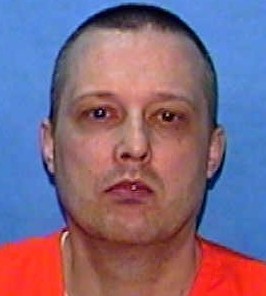 Robin Lee Archer
Murderer · USA · 1991
Robin Lee Archer was tried in the First Judicial Circuit, Escambia County, Case…
1 victim
Robin Lee Archer
Murderer · USA · 1991
Robin Lee Archer was tried in the First Judicial Circuit, Escambia County, Case…
1 victim
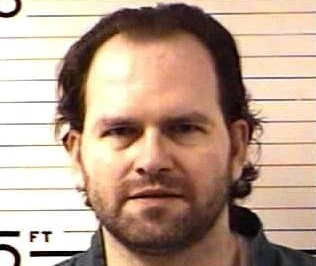 James Genrich
Murderer · USA · 1991
James Genrich was a Colorado man who was convicted of killing two people in 199…
2 victims
James Genrich
Murderer · USA · 1991
James Genrich was a Colorado man who was convicted of killing two people in 199…
2 victims
- Gender
- male
- Country
- USA
- Location
- Maricopa County, Arizona, USA
- Date of birth
- December 27, 1953
- Age at first offence
- 35
- Characteristics
- murder for hire, inheritance
- Victim profile
- Jeanne Tovrea
- Method of murder
- Shooting
- Date(s) of murder
- April 1, 1988
- Years active
- 1988
- Date of arrest
- September 14, 1995
- Status
-
Sentenced to death
Sentenced to death on May 27, 1998.
Background
James Cornell Harrod was convicted of murdering Jeanne Tovrea. The prosecution believed Harrod broke into Jeanne Tovrea’s house and shot her five times in the head. The prosecution’s theory was that Tovrea’s step-son hired Harrod to kill Tovrea for a four million dollar inheritance.
Ed Tovrea Sr. married Jeanne Tovrea in 1973. Jeanne had an adult daughter from a previous marriage, Debbie Luster. Ed had three children, Ed Jr., Georgia, and Priscilla. When Ed Sr. died in 1983 his estate was worth approximately $8 million. His will provided that each of his children would receive $200,000, distributed in monthly payments of $1,500. Jeanne received certain real estate, and various outright gifts of stock and personal property listed in the will. The remainder of Ed Sr.’s estate was put into a Qualified Terminable Interest Property, or Q-tip, trust. Jeanne was entitled to all of the income from the trust during her lifetime and the trustees were permitted to invade the corpus of the trust for her benefit; upon her death the trust would pass to Ed Sr.’s three children. At the time of Jeanne’s death, the Q-tip trust was worth approximately $4 million.
The offence
Just before 1:00 a.m. on the morning of April 1, 1988, Phoenix Police Officers responded to an alarm call at Jeanne Tovrea’s home. A kitchen window and its weather-stripping had been completely removed and was sitting on a chair on the patio; an arcadia door was open. Jeanne was found dead in her bed with the comforter covering her body. She had been shot five times in the head with a .22 caliber gun; twice through a pillow and three times at close range. Several drawers from a jewelry case had been removed and set on furniture and Jeanne’s purse had been dumped out on the kitchen counter. The rest of the house appeared undisturbed.
Investigation
Police collected fingerprints at the kitchen window point of entry and inside the house.
The investigation stalled until January 1994, when an anonymous tipster watched an Unsolved Mystery TV program on the killing and identified the voice of suspect "Gordon Phillips" on Jeanne's answering machine as that of Harrod.
Several months later, a second tip led police to Harrod’s former wife, Anne Costello, who told police that Harrod told her he was paid $100,000 to kill Jeanne because her stepson, Ed (Hap) Tovrea, wanted her dead so he could inherit from his late father's estate.
Police said Harrod was flush with unexplained cash after the murder. Harrod’s fingerprints matched 18 fingerprints taken at the scene.
Police discovered a money trail, phone records, and a bogus business deal linking Harrod with Hap Tovrea.
Arrest
James Harrod was arrested for his involvement in the murder of Jeanne Tovrea on September 14, 1995. Investigators had developed evidence including bank records showing large money transfers from Ed Tovrea Jr. to Harrod; telephone records showing calls between Ed Jr. and James Harrod; and statements to friends regarding the jewelry and credit cards which were missing.
After being offered immunity, Anne Costello told police:
- Harrod told her that he had been hired by Ed Jr. to coordinate a hit on Jeanne for $100,000;
- Harrod told her that he had posed as Gordon Phillips to interview Jeanne before her death;
- when Harrod left their house on March 31, he said he was going to supervise the murder and told her that it was done when he returned on the morning of April 1;
- Harrod spoke to Ed Jr. on the telephone the morning of April 1;
- Harrod and Anne suddenly had large sums of money that were unaccounted for;
- Harrod received Fed Ex boxes full of cash from Ed Jr.;
- and Harrod kept Jeanne’s jewelry and credit cards in their house for a time before burying them in the desert.
Latent fingerprints from Jeanne’s kitchen counter, the outside of the window pane, the inside of the window pane, and a gate on her property were all matched to inked prints of James Harrod on the date of his arrest.
Trial
A jury convicted Harrod of both premeditated murder and felony murder of Jeanne Tovrea on November 18, 1997.
Proceedings included:
- Presiding Judge: Honorable Ronald S. Reinstein
- Prosecutor: Paul Ahler
- Start of Trial: October 15, 1997
- Verdict: November 18, 1997
During the penalty phase, the defense argued that Harrod did not kill for money.
Prosecutor(s) were listed as unknown in the case summary, and Defense lawyer(s) listed were Lynn Burns and Lawrence Matthew James Cornell.
Sentencing
Aggravating Circumstances:
- Pecuniary gain
Mitigating Circumstances included:
- Lack of a criminal record
- Adjustment to incarceration
- Family issues
A judge sentenced Harrod to death on May 27, 1998.
This Court affirmed his conviction and death sentence in 2001. State v. Harrod, 200 Ariz. 309, 26 P.3d 492 (2001) (Harrod I).
In 2002, the United States Supreme Court remanded the case for further consideration in light of Ring v. Arizona, 536 U.S. 584 (2002) (Ring II). Harrod v. Arizona, 536 U.S. 953 (2002).
The Arizona Supreme Court vacated the judgment and remanded for resentencing in 2003. State v. Harrod, 204 Ariz. 567, 65 P.3d 948 (2003) (Harrod II).
The latest sentencing proceeding began on September 13, 2005. During the penalty phase, Harrod provided evidence, and the jury was instructed on the following mitigating circumstances:
- uncharged co-perpetrator
- impact of execution on defendant’s family and friends
- lack of criminal history
- mental abuse by father during childhood
- alcoholic father
- past good conduct and character
- absence of other violent acts
- commission of the offense was out-of-character
- educational accomplishments
- good behavior during pre-trial incarceration
- good behavior during post-sentencing incarceration
- good conduct during trial
- love for and of family
- and divorced parents.
On October 12, 2005, the jury found that the State had proved beyond a reasonable doubt the pecuniary gain aggravating factor. The jury found that the mitigation evidence was not substantial enough to call for leniency and determined that Harrod should be sentenced to death. The trial judge subsequently sentenced Harrod to death by lethal injection on October 26, 2005.
Appeals
The Arizona Supreme Court upheld Harrod’s conviction but overturned his death sentence based on the United States Supreme Court’s Ring decision. The case was remanded for re-sentencing.
Previously Vacated:
- Re-sentenced to Death 10/28/05
- State of Arizona v. James Cornell Harrod CR-05-0461-AP
Outcome
No charges have been brought against Tovrea’s step-son.
Aftermath
Harrod was listed as an inmate, Inmate 136270.
Spotted an error, or have more information about this case?