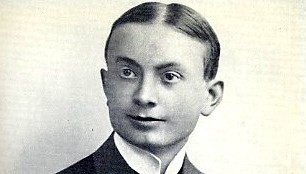
Karl Hau
Murderer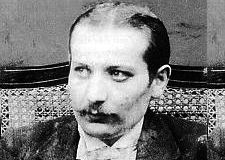 Mathias Kneibl
Murderer · Germany · 1900
Mathias Kneißl was known as Robber Kneißl (in German Räuber Kneißl , in Austro-…
2 victims
Mathias Kneibl
Murderer · Germany · 1900
Mathias Kneißl was known as Robber Kneißl (in German Räuber Kneißl , in Austro-…
2 victims
 Stacey Eugene Johnson
Murderer · USA · 1993
Stacey Eugene Johnson v. State of Arkansas · Defendant: Stacey Eugene Johnson ·…
1 victim
Stacey Eugene Johnson
Murderer · USA · 1993
Stacey Eugene Johnson v. State of Arkansas · Defendant: Stacey Eugene Johnson ·…
1 victim
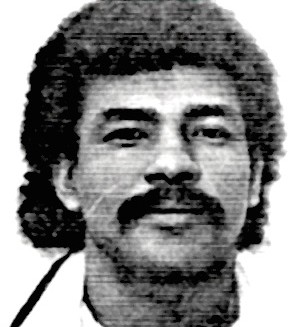 Jose Roberto Villafuerte
Murderer · USA · 1983
Jose Roberto Villafuerte was convicted of the 1983 murder of his girlfriend, Am…
1 victim
Jose Roberto Villafuerte
Murderer · USA · 1983
Jose Roberto Villafuerte was convicted of the 1983 murder of his girlfriend, Am…
1 victim
 Kipland Kinkel
Homicide · USA · 1998
Name: Kipland Kinkel Kipland Kinkel killed his parents at home and then opened…
4 victims
Kipland Kinkel
Homicide · USA · 1998
Name: Kipland Kinkel Kipland Kinkel killed his parents at home and then opened…
4 victims
- Gender
- male
- Country
- Germany
- Location
- Baden-Baden, Germany
- Date of birth
- February 3, 1881
- Age at first offence
- 25
- Characteristics
- inheritance, murder for hire, motive unclear
- Victim profile
- Josephine Molitor (his mother-in-law)
- Method of murder
- Shooting
- Date(s) of murder
- November 6, 1906
- Years active
- 1906
- Date of arrest
- 3 days after
- Status
-
Died in custody
Sentenced to death in 1907; commuted to life in prison in 1914; released in September 1924; committed suicide by shooting himself in Tivoli, Italy, on March 12, 1926
Case overview
Karl Hau was accused of the murder of his mother-in-law, Frau Josephine Molitor. Frau Molitor was against the marriage between her daughter, Lina Molitor, and Hau, and believed that no good could come of the union. The trial was described as a sensation, and riots erupted in Karlsruhe, Germany, when a guilty verdict was announced.
Timeline
- Nov. 6, 1906 — Frau Josephine Molitor was killed at her villa in Baden-Baden after receiving a telephone message about a parcel waiting at the post office; she and her younger daughter, Olga, went to retrieve the package, and a gunman fired a shot piercing her heart.
- July 17, 1907 — Karl Hau faced a jury.
- July 22, 1907 — A guilty verdict was announced; riots erupted in the streets of Karlsruhe, Germany.
- 1914 — Hau’s death sentence was commuted to life in prison.
- September 1924 — Hau was released under one condition that he must not write about the case.
- March 12, 1926 — A man living in Tivoli, Italy, shot himself; authorities confirmed the fingerprints matched those of fugitive Karl Hau.
The offence
Frau Josephine Molitor received a telephone message at her villa in Baden-Baden telling her that a parcel was waiting for her at the post office. She and her younger daughter, Olga, set off to retrieve the package. As they turned onto a deserted street, there was a flash; Frau Molitor fell to the ground dead, with a bullet piercing her heart. Her daughter screamed, which brought police and a crowd of curious people. The postmortem showed that the gunman had been no more than 3 feet away when he fired the fatal shot. Some people said they saw a man run from the scene, with differing descriptions of his height. All agreed the assailant looked young and appeared to be wearing a phony beard.
Investigation
Suspicion fell immediately on Karl Hau as the son-in-law. Several factors were said to support his guilt, including that the housemaid who answered the telephone thought the voice announcing the parcel at the post office was Hau. Additional suspicion was based on circumstances surrounding visits to the Molitor household and events before and after the murder.
Frau Josephine Molitor’s household events before the killing included a visit where Hau, his wife, and their young daughter came to stay in the summer of 1906. The couple had traveled a long way and had settled in Washington, D.C., after their wedding. Hau continued his studies there, graduated with high honors, established a respectable law practice, and secured a prestigious position teaching Roman law at George Washington University. In the summer of 1906, the Haus headed for Europe, partly on business and partly to visit Molitor.
Hau took a side trip to Constantinople to seal a deal over Turkish oil; the deal fell through. When Hau joined his wife at his mother-in-law’s place in July, he was broke and begged the wealthy widow Molitor to bail him out; she said no. The family stayed on at the villa for a few more months, with relations cordial but cool. In late October, Hau announced it was time to head back to America. He packed his wife and child to travel by train to London and then a liner back to the United States. In Frankfort, he abruptly told his wife that he had business to conduct and that she should go on ahead and wait for him at the Hotel Cecil in London.
After the murder, police tried to find Hau in Frankfort but had missed him by a day. Some guests at the hotel where he stayed recalled that he wore a black beard, while others insisted he was clean-shaven. In Frankfort, police learned that he had hired a hairdresser to fashion a phony beard for him. Police discovered that he had taken the train to Baden-Baden at 11 in the morning and returned to Frankfort on the 10 p.m. train. Police also focused on a telegram he sent to his wife that day: "Arrive tomorrow night. Don't betray address."
When Hau arrived in London on Nov. 9, police were waiting for him. After his arrest, he behaved like a madman, raving that he was the favorite son of the sultan of Turkey. By January, he had regained his reason and was on his way to Germany.
Arrest
Karl Hau was arrested when he arrived in London on Nov. 9, with police waiting for him.
Trial
A jury trial began when Karl Hau faced the jury on July 17, 1907. The prosecution and defense presented different explanations for events tied to the murder.
The Frankfort barber testified that Hau had hired him to make a false beard, which the defendant picked up on Nov. 6. The prosecutors said the motive was money. Lina’s dowry was gone, but she stood to inherit substantial property upon the death of her mother.
Hau’s attorneys sought to raise reasonable doubt, casting suspicion on other people and offering explanations for details including his false beard and his travels that brought him to Baden on the day of the killing. The defense stated that Hau had been lured to Baden by love, and that there had been a clandestine affair with Olga, his wife’s sister.
Hau admitted making the telephone call summoning his mother-in-law to the post office, but he insisted his motive was only to get her out of the house so he could be alone with his beloved Olga.
Crowds gathered outside the courthouse as the public was affected by the defense story. At the end of the five-day trial, when the verdict came in on July 22, 1907, people stormed the entrance. The mob cast the Molitor women as the villains and threw rocks through the windows at the hotels where the family stayed during the trial.
Sentencing
At the end of the trial, Karl Hau was sentenced to death in the traditional manner—beheading by ax—following the guilty verdict announced on July 22, 1907. Hau appealed, citing dozens of shortcomings in the prosecution’s case. His conviction was upheld, but his sentence was commuted to life in prison in 1914.
Appeals
Karl Hau appealed, citing dozens of shortcomings in the prosecution’s case. His conviction was upheld, but his sentence was commuted to life in prison.
Outcome
Karl Hau was sentenced to death in 1907. In 1914, his death sentence was commuted to life in prison. In September 1924, he was released under one condition: he must not write about the case. Hau defied the condition of his parole by penning a book, and a warrant was issued for his arrest. He vanished, and no one knew what had become of him until March 12, 1926.
On March 12, 1926, a man living in Tivoli, Italy, shot himself. The man called himself Stau, but authorities confirmed that the fingerprints of the suicide matched those of fugitive Karl Hau.
Aftermath
During the period after the trial, Lina Hau was described as developing concerns about domestic financial matters. Her late father left her $50,000, which she promptly turned over to her husband upon their marriage. Lina’s lawyers could not find a cent. In June, Lina visited her husband in jail, and they talked for a long time. Guards noticed that she seemed despondent when she left. Lina traveled by train from Karlsruhe to Pfaeffikon, Switzerland, and upon arrival went for a swim in one of the beautiful mountain lakes; a boater later pulled her lifeless form from the water. In her suicide note, Lina said she could not bear to be separated from her husband, "notwithstanding his awful deed."

Spotted an error, or have more information about this case?