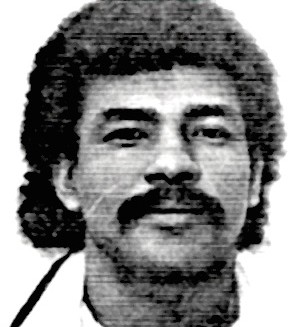
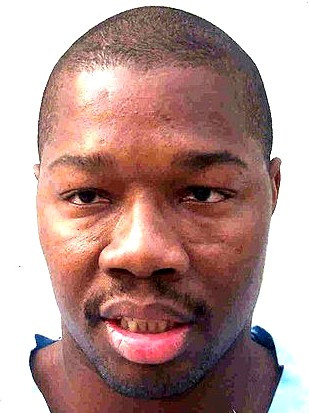
Jose Roberto Villafuerte
Murderer Brian Kevin Rosenfeld
Murderer · USA · 1985
Brian Kevin Rosenfeld Brian Kevin Rosenfeld was sentenced to three concurrent l…
23 victims
Brian Kevin Rosenfeld
Murderer · USA · 1985
Brian Kevin Rosenfeld Brian Kevin Rosenfeld was sentenced to three concurrent l…
23 victims
 Marvin Gray
Murderer · USA · 1975
Marvin Gray was convicted killer who claimed responsibility for 23 slayings and…
23 victims
Marvin Gray
Murderer · USA · 1975
Marvin Gray was convicted killer who claimed responsibility for 23 slayings and…
23 victims
 Yahweh ben Yahweh
Murderer · USA · 1980
Yahweh ben Yahweh was born and legally named Hulon Mitchell Jr. (October 27, 19…
23 victims
Yahweh ben Yahweh
Murderer · USA · 1980
Yahweh ben Yahweh was born and legally named Hulon Mitchell Jr. (October 27, 19…
23 victims
 Russell Ellwood
Murderer · USA · 1991
Russell Ellwood was a former taxi driver. Authorities suspected him of killing…
20 victims
Russell Ellwood
Murderer · USA · 1991
Russell Ellwood was a former taxi driver. Authorities suspected him of killing…
20 victims
 Sylvester & Gavin Beukes
Mass murderers · Namibia · 2005
The Kareeboomvloer massacre occurred on the Kareeboomvloer farm in the Hardap R…
8 victims
Sylvester & Gavin Beukes
Mass murderers · Namibia · 2005
The Kareeboomvloer massacre occurred on the Kareeboomvloer farm in the Hardap R…
8 victims
 Ronald Howard Moen
Murderer · USA · 1986
Ronald Howard Moen was born on 2/23/37. He was the husband of Judith Moen. On M…
2 victims
Ronald Howard Moen
Murderer · USA · 1986
Ronald Howard Moen was born on 2/23/37. He was the husband of Judith Moen. On M…
2 victims
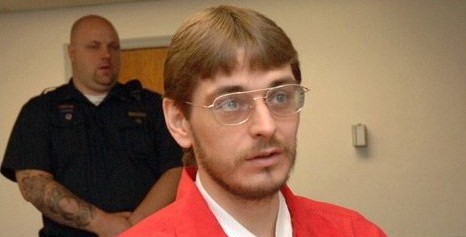 Michael Lambert
Murderer · USA · 1990
Michael Lambert was executed by lethal injection on June 15, 2007 in Delaware.…
1 victim
Michael Lambert
Murderer · USA · 1990
Michael Lambert was executed by lethal injection on June 15, 2007 in Delaware.…
1 victim
 Brian Dugan
Serial killer · USA · 1983
Brian Dugan (born September 23, 1956) was an American rapist and serial killer…
3 victims
Brian Dugan
Serial killer · USA · 1983
Brian Dugan (born September 23, 1956) was an American rapist and serial killer…
3 victims
 Eli Stutzman
Serial killer · USA · 1977
Eli Stutzman — accused; offender; later committed suicide on January 31, 2007.…
5 victims
Eli Stutzman
Serial killer · USA · 1977
Eli Stutzman — accused; offender; later committed suicide on January 31, 2007.…
5 victims
- Gender
- male
- Country
- USA
- Location
- Maricopa County, Arizona, USA
- Date of birth
- December 2, 1952
- Age at first offence
- 31
- Characteristics
- rape
- Victim profile
- Amelia Schoville, 47 (his girlfriend)
- Method of murder
- Asphyxiation
- Date(s) of murder
- February 1983
- Years active
- 1983
- Date of arrest
- February 22, 1983
- Status
-
Executed
Executed by lethal injection in Arizona on April 22, 1998
Case overview
Jose Roberto Villafuerte was convicted of the 1983 murder of his girlfriend, Amelia Schoville.
Villafuerte was arrested near Ash Fork on February 22, 1983 after a disturbance. He had been driving a car belonging to Amelia Schoville. He told authorities that Schoville was his girlfriend and that they had fought the day before in his Phoenix trailer.
When Phoenix police officers went to the trailer, they found Schoville’s body on a bed. She was clad only in a blouse, bra, and panties, and her hands were tied behind her back. A strip of bedding bound one of her ankles to her hands, and her head was wrapped in a sheet, a bedspread, and long thermal underwear, all of which were bloodstained. A ball made of a tightly wrapped strip of bed sheet was found in her throat. Lab tests showed the presence of seminal fluid. Schoville died as a result of gagging.
State prosecutors said Villafuerte viciously beat Schoville, leaving her blood-soaked body tied up on a bed while she was still alive. They said it took 47-year-old Amelia Schoville, the mother of three, 24 hours to die, finally gagging on the rolled-up strip of sheet in her mouth.
Villafuerte admitted to beating Schoville. He insisted that he told two friends to untie her after he left the trailer, and that “they were the ones who raped her and left her to die.” Villafuerte spent more than 14 years on death row before his execution.
Timeline
- February 22, 1983 — Villafuerte was arrested near Ash Fork in connection with a disturbance while driving a car belonging to Amelia Schoville.
- July 11, 1983 — Start of trial.
- July 18, 1983 — Verdict.
- September 9, 1983 — Sentencing.
- August 30, 1994 — The Arizona Supreme Court suspended Judge Goodfarb in August 1994 for using a racial epithet and profane comments. (Listed here as August 30, 1994, as given in the record.)
- April 1, 1998 — The Arizona Superior Court rejected Villafuerte’s Vienna Convention claim in rejecting his third Post-Conviction Relief petition.
- April 15, 1998 — Robert Grady signed an affidavit in Florida acknowledging living in a trailer park near Villafuerte for a time in 1983.
- April 20, 1998 — The U.S. Court of Appeals, Ninth Circuit denied the petition for authorization to file a successive habeas corpus petition and denied the motion for a stay of execution.
- April 22, 1998 — Villafuerte was executed by lethal injection in Arizona; he was reported to have died at 12:18 a.m. (Pacific time).
Background
Villafuerte was a Honduran national who was married to another at the time. One version of his story said that “Robert” and “Fernando” and perhaps one other person were there when he left, and that he had asked them to release the victim when she had calmed down.
Villafuerte told the police and his lawyer that he had loosely bound Schoville to keep her from calling the police and had then left in the trailer. He later said he told two friends to untie her after he left the trailer.
The offence
Amelia Schoville was found dead in Villafuerte’s Phoenix trailer on a bed.
Schoville had been bound and gagged:
- Her hands were tied behind her back.
- A strip of bedding bound one of her ankles to her hands.
- Her head was wrapped in a sheet, a bedspread, and long thermal underwear, all bloodstained.
State prosecutors said Villafuerte beat Schoville and left her tied up on a bed while she was still alive, and that she died after 24 hours, finally gagging on the rolled-up strip of sheet in her mouth.
Investigation and evidence
Police located Schoville’s body after going to Villafuerte’s Phoenix trailer.
Lab tests showed seminal fluid.
Police and Villafuerte’s lawyer attempted to locate the people Villafuerte named as present when he left, including “Robert” and “Fernando,” but Villafuerte refused to provide descriptions of them. Ultimately, they were not found and did not testify at trial.
Trial
The proceedings included the following stated details:
- Presiding Judge: Paul LaPrade
- Prosecutor: James Minter
- Start of Trial: July 11, 1983
- Verdict: July 18, 1983
- Sentencing: September 9, 1983
The record indicated aggravating and mitigating circumstances:
- Aggravating Circumstances: Especially cruel/depraved
- Mitigating Circumstances: None
Sentencing
Villafuerte was sentenced to die for murdering Amelia Schoville.
The sentencing details stated that Villafuerte was sentenced to die by lethal injection for the 1983 slaying of Amelia Schoville. Prosecutors said she was viciously beaten, tied up, and later died after gagging. The record stated that her hands were tied behind her back and that her thumbs were tied together with shoe laces; her head was wrapped in long underwear and bloody bedding. The record also stated that she died from asphyxiation after gagging on a bed sheet stuffed down her throat.
Appeals
Villafuerte’s execution came following last-minute activity. A flurry of last-minute activity included an unprecedented meeting by a state panel that rules on such cases, and the Board of Executive Clemency voted 4-1 to reject his appeal after hearing a plea by Honduran President Carlos Fuerte by telephone. The Vatican also asked for clemency in a letter to the board.
The Board had voted the same way earlier in the day.
Villafuerte filed a petition in the U.S. Court of Appeals, Ninth Circuit seeking authorization to file a successive petition for writ of habeas corpus in the district court under 28 U.S.C. § 2244(b)(3). The petition and motion for stay were denied.
Ninth Circuit petition (successive habeas authorization)
The case was identified as:
- United States Court of Appeals, Ninth Circuit
- 142 F.3d 1124
- 97 Cal. Daily Op. Serv. 2964
- 98 Daily Journal D.A.R. 4071
- Jose Roberto Villafuerte, Petitioner-Appellant, v. Terry Stewart, in his capacity as Director of the Arizona Department of Corrections; and Grant Woods, Attorney General of the State of Arizona, Respondents-Appellees.
- No. 98-80303.
- April 20, 1998.
The Ninth Circuit panel was:
- FLETCHER, THOMPSON and T.G. NELSON, Circuit Judges.
The Ninth Circuit addressed three proposed issues:
- Violation of Villafuerte’s rights under the Vienna Convention on Consular Relations, April 24, 1963, 21 U.S.T. 77.
- Lack of a fair hearing on his second petition for Post-Conviction Relief due to the racial bias of the judge.
- Newly discovered evidence providing a basis to assert his actual innocence.
Vienna Convention claim
The record stated that it was undisputed Arizona officials did not notify Villafuerte of his right to consult with officials of the Honduran consulate when he was arrested in February 1983.
The Ninth Circuit stated that Article 36 required the detaining state to inform a detained foreign national of the right to consult with consulate officials and, if requested, to inform consular officials of the arrest and detention and allow consular officials to visit and consult with the prisoner.
Villafuerte contended the claimed breach should be the subject of his proposed habeas petition. The Ninth Circuit explained that the similar argument by a Paraguayan national sentenced to death in Virginia had been rejected in Breard v. Greene on the basis of procedural default for failure to raise it in state court. Villafuerte’s attempt to distinguish his claim failed in the court’s analysis.
The Ninth Circuit stated that Villafuerte presented the Vienna Convention claim to Arizona courts but not until his third Post-Conviction Relief petition, filed February 26, 1998, and that the Arizona Superior Court rejected the claim on April 1, 1998 as procedurally defaulted.
The Ninth Circuit then stated that the proposed claim could not pass through the “new rule” gateway of § 2244(b)(2) because the Convention was in effect since 1969 and rights were not new or previously unavailable. The court also stated that failure to inform Villafuerte of his Vienna Convention rights did not meet the requirements of § 2244(b)(2)(B).
Judge Goodfarb claim
The record stated that Villafuerte’s second PCR petition in state court was heard by Superior Court Judge Stanley Z. Goodfarb.
After Judge Goodfarb filed a 65-page order denying relief, Villafuerte moved to disqualify him on the basis that he was prejudiced in favor of John Rood, Villafuerte’s trial counsel, who was the subject of claims of ineffective assistance of counsel. The motion was referred to another judge, which denied it and sent the case back to Judge Goodfarb. The Arizona Supreme Court denied review of Judge Goodfarb’s order, without comment.
The record stated that on Villafuerte’s prior appeal, the Ninth Circuit had affirmed the district court’s denial of relief on that claim, citing Villafuerte, 111 F.3d at 632.
The record stated that the Arizona Supreme Court suspended Judge Goodfarb in August 1994 for using a racial epithet and profane comments, citing Matter of Goodfarb, 179 Ariz. 400, 880 P.2d 620 (1994).
Villafuerte’s counsel had brought the suspension to the court’s attention in a supplemental brief just prior to oral argument and asked the Ninth Circuit to take judicial notice as further proof of Judge Goodfarb’s bias; the Ninth Circuit declined to consider the issue, citing Villafuerte, 111 F.3d at 633.
The record stated that Villafuerte’s proposed new claim was that Judge Goodfarb was a racist, that he was therefore biased against Villafuerte, and that Villafuerte was denied due process in his state PCR proceeding. The court stated that Villafuerte offered no proof that Judge Goodfarb was a racist other than the Matter of Goodfarb decision.
The record described that Matter of Goodfarb involved the judge’s use of profanity on several occasions and use of the term “fucking niggers” on one occasion in an unrelated case. The Arizona Supreme Court specifically noted that the racial slur had “occurred more than four years before the hearing and no comparable incident had since been reported to the Commission,” citing 880 P.2d at 621.
The Ninth Circuit said Villafuerte sought to present the claim through the second “gateway” provided by § 2244(b)(2). The Ninth Circuit stated the standard required the claim to rely on a factual predicate that could not have been discovered previously through due diligence and that the facts underlying the claim, if proved, would be sufficient to establish by clear and convincing evidence that, but for constitutional error, no reasonable factfinder would have found the applicant guilty. The Ninth Circuit stated the minimal showing of Judge Goodfarb’s claimed bias had nothing to do with Villafuerte’s actual innocence and said evidence of Villafuerte’s guilt was sufficient to support the verdict. The Ninth Circuit concluded that the proposed claim did not present a prima facie showing of actual innocence and must be rejected.
Newly discovered evidence claim
Villafuerte told police and his lawyer he had bound the victim and left her in the trailer.
The record stated that according to one version of his story, “Robert” and “Fernando” and perhaps one other person were there when he left, and that he asked them to release the victim when she had calmed down.
Attempts to locate “Robert” and “Fernando” were hampered by Villafuerte’s refusal to provide descriptions. They were not found and did not testify at trial.
The record stated that before the hearing on Villafuerte’s second PCR petition, an investigator working for Villafuerte’s lawyer found Robert Grady in prison in California. Grady spoke to her about events generally surrounding his knowledge of Villafuerte but refused to give a written statement. Grady did not testify by deposition or in person at the hearing, and the investigator’s proffered hearsay statement was rejected at that hearing.
The record stated that on April 15, 1998, Robert Grady signed an affidavit in Florida. In it, he acknowledged living in a trailer park near Villafuerte for a time in 1983. He said that Villafuerte was having a consensual sexual relationship with the victim and that she at times lent Villafuerte her car. The record quoted the affidavit: “In 1983, I was a transient with no known address and spent much time hitchhiking across the country.”
The Ninth Circuit stated that the 1998 Robert Grady statement was never presented at trial but not because of anything wrong done by Villafuerte’s lawyer, the police, or the prosecution; it stated he was simply not available.
The Ninth Circuit stated that when Grady was located prior to the hearing on the second PCR petition, Villafuerte’s counsel did not try to arrange for his appearance at the hearing or depose him or otherwise try to preserve his testimony for use in that proceeding.
The Ninth Circuit stated there was nothing in the record to show a trial error by anyone associated with the case and that Villafuerte had not shown a constitutional error as required by the statute. It stated the Grady evidence was not presented at trial due to Grady’s peripatetic lifestyle, not as a result of an error of any kind or constitutional error.
The Ninth Circuit stated the claim did not meet the actual innocence standard of § 2244(b)(2), and even if the Grady testimony could be considered, it did not provide a prima facie showing of actual innocence. The Ninth Circuit stated that Grady’s affidavit was silent on a critical factor central to Villafuerte’s story: that “Roberto and Fernando were there when he left and therefore must have bound her in the manner that led to her death.”
The Ninth Circuit concluded that the petition for authority to file a successive petition for writ of habeas corpus in the district court and the motion for a stay of the execution were denied.
Outcome
Villafuerte’s execution occurred by lethal injection in Arizona on April 22, 1998.
The record stated that officials said Jose Roberto Villafuerte, convicted for the 1983 murder of his girlfriend, died by lethal injection at 12:18 a.m. (Pacific time) while strapped to a table at the state prison complex southeast of Phoenix.
The record stated that witnesses reported he showed no remorse, saying that he “loved everybody,” and telling his victim’s son that he would “be with the lord.”
The record stated he had maintained his innocence to the end.
Aftermath and clemency
The record stated that Villafuerte’s case marked the 2nd time in 8 days that a foreigner was executed in the United States despite opposition by the countries involved. It referenced Paraguayan national Angel Francisco Breard, 32, who died by lethal injection in Virginia for the 1992 murder of a woman.
The record stated that Villafuerte’s appeals included an argument that the Honduran consul was not notified when he was arrested. On Tuesday Honduran officials unsuccessfully pressed their request that the execution be halted because state officials ignored an international treaty. The U.S. State Department acknowledged in a letter that Arizona officials did violate the Vienna Convention on Consular Relations, but the letter did not urge that the execution be stopped.
The record stated that Villafuerte also sought reconsideration based on a new witness he claimed could shed new light on the case.
The record stated that the execution stirred concern about an American backlash, prompting the U.S. Embassy in Honduras to seek and receive protection Tuesday from riot police. It also stated that chants of “Gringo trash, get out of Honduras” were heard outside the embassy as about 100 women staged a peaceful demonstration before the execution.
The record stated that Villafuerte spent his last hours meeting with Honduran officials and his attorney.
Sentencing and legal citations
The record included the following published opinions:
- State v. Villafuerte, 142 Ariz. 323, 690 P.2d 42 (1984).
The record referenced:
- Villafuerte v. Stewart, 111 F.3d 616 (9th Cir. 1997).
- Breard v. Pruett, 134 F.3d 615, 621-22 (4th Cir.), cert. denied.
- Breard v. Greene.
- 28 U.S.C. § 2244(b)(3) and 28 U.S.C. § 2244(b).
- Vienna Convention on Consular Relations, April 24, 1963, 21 U.S.T. 77.
Other details
Villafuerte’s last meal was listed as:
- One broiled chicken
- Nine corn tortillas
- Two tomatoes
- One can of jalapenos
- Two cans of Pepsi
- One four-ounce plate of rice
The record stated that he was 45 years old at the time of execution and that Schoville was 47 years old. It also stated Schoville was the mother of three.
The record stated that Villafuerte was found sleeping in a dry river bed near Schoville’s car a day after he said they fought in the trailer.
One of Schoville’s sons, Rick Schoville of Phoenix, said Villafuerte should have been put to death years ago. Rick Schoville also said: “I feel that he has tried to make a mockery of the system this whole time.”
Spotted an error, or have more information about this case?