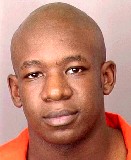
Yokamon Hearn
Murderer Russell Ellwood
Murderer · USA · 1991
Russell Ellwood was a former taxi driver. Authorities suspected him of killing…
20 victims
Russell Ellwood
Murderer · USA · 1991
Russell Ellwood was a former taxi driver. Authorities suspected him of killing…
20 victims
 Robert Martines Perez
Murderer · USA · 1994
Name: Robert Martines Perez · Other name used in proceedings: Robert Martinez P…
15 victims
Robert Martines Perez
Murderer · USA · 1994
Name: Robert Martines Perez · Other name used in proceedings: Robert Martinez P…
15 victims
 Billy Frank Vickers
Murderer · USA · 1993
Billy Frank Vickers Vickers was executed by lethal injection in Texas on Januar…
14 victims
Billy Frank Vickers
Murderer · USA · 1993
Billy Frank Vickers Vickers was executed by lethal injection in Texas on Januar…
14 victims
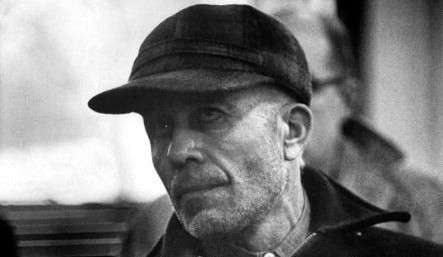 Edward Gein
Homicide · USA · 1954
Edward Gein was sentenced to life imprisonment in 1968. He was found not guilty…
2 victims
Edward Gein
Homicide · USA · 1954
Edward Gein was sentenced to life imprisonment in 1968. He was found not guilty…
2 victims
 William Richard Stevens
Murderer · USA · 1977
William Richard Stevens offered to pay Corey Milliken to murder Stevens’s wife,…
3 victims
William Richard Stevens
Murderer · USA · 1977
William Richard Stevens offered to pay Corey Milliken to murder Stevens’s wife,…
3 victims
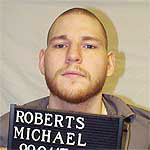 Michael Shane Roberts
Murderer · USA · 1994
Michael Shane Roberts was sentenced to death for the murder of his neighbor and…
1 victim
Michael Shane Roberts
Murderer · USA · 1994
Michael Shane Roberts was sentenced to death for the murder of his neighbor and…
1 victim
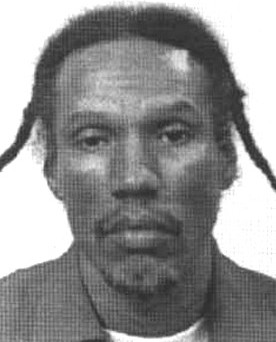 Gregory Resnover
Murderer · USA · 1980
Gregory Resnover was convicted of conspiracy to commit murder and murder in Ind…
1 victim
Gregory Resnover
Murderer · USA · 1980
Gregory Resnover was convicted of conspiracy to commit murder and murder in Ind…
1 victim
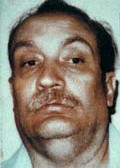 Philip Carl Jablonski
Spree killer · USA · 1978
Philip Carl Jablonski was born in 1946. His correspondence biography stated tha…
5 victims
Philip Carl Jablonski
Spree killer · USA · 1978
Philip Carl Jablonski was born in 1946. His correspondence biography stated tha…
5 victims
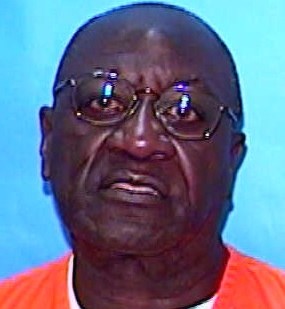 Theodore Rodgers
Murderer · USA · 2001
Theodore Rodgers was sentenced to death on June 16, 2004 for the murder of his…
1 victim
Theodore Rodgers
Murderer · USA · 2001
Theodore Rodgers was sentenced to death on June 16, 2004 for the murder of his…
1 victim
- Gender
- male
- Country
- USA
- Location
- Dallas County, Texas, USA
- Date of birth
- November 6, 1978
- Age at first offence
- 20
- Characteristics
- carjacking, robbery
- Victim profile
- Frank Meziere, 26
- Method of murder
- Shooting
- Date(s) of murder
- March 26, 1998
- Years active
- 1998
- Date of arrest
- —
- Status
-
Executed
Sentenced to death on December 31, 1998; executed by lethal injection in Texas on July 18, 2012
Overview
Yokamon Laneal Hearn was convicted of capital murder and sentenced to death for the abduction, carjacking, and fatal shooting of Frank Meziere. Hearn was executed by lethal injection in Texas on July 18, 2012.
Background
Hearn was an indigent Texas inmate. During the punishment phase of his trial, the jury learned that Hearn had been involved in numerous prior offenses, including burglaries of four habitations, arson, an aggravated robbery, an aggravated assault, a sexual assault, a terroristic threat combined with unlawful carrying of a weapon, a criminal trespass to steal a bicycle, and a schoolyard assault over another bicycle.
Hearn was known to his friends as “Yogi,” and he was 19 at the time of Meziere’s murder. The record also described Hearn as having a lengthy record that included burglary, robbery, assault, sexual assault, and weapons possession.
The offence
On March 25, 1998, Hearn and three accomplices drove to North Dallas with several firearms. At a coin-operated car wash in North Dallas, Hearn saw Frank Meziere cleaning his car. With the assistance of his accomplices, Hearn abducted Meziere and stole his car.
Hearn forced Meziere at gunpoint into his own car, then drove him to a deserted area. Two other companions, Dwight Burley and Teresa Shirley, followed in a second car. Hearn and Delvin Diles then shot Meziere several times in the head and upper body. Evidence established that Meziere had twelve bullet wounds from 9 mm and .22-caliber weapons, and that he was shot in the face. Meziere died as a result of multiple close-range gunshot wounds to the head.
After the shooting, Hearn and the accomplices took Meziere’s wallet and personal items and fled in Meziere’s vehicle. Hearn also kept Meziere’s license. Meziere’s abandoned car was later found in a shopping center parking lot.
At trial, Teresa Shirley testified as an eyewitness and accomplice. Hearn and his companions were caught on videotape by a security camera at a convenience store adjacent to the car wash. A witness testified at trial that Hearn later bragged at a party about the shooting.
Investigation and arrest
Evidence during the trial established that Hearn and his accomplices were caught on videotape by a security camera at a convenience store adjacent to the car wash. Hearn and Delvin Diles were arrested just after midnight at a room in the Delux Inn, after police acted on a tip in March of 1998.
Meziere’s body was discovered the next morning by a city electrician, in a roadside field. A patrol officer later discovered Meziere’s abandoned Mustang in a shopping center parking lot. Another account described witnesses spotting Meziere’s body about 6 a.m. and described his car being found about an hour later. Police determined that Hearn and Diles carjacked Meziere when he pulled into a carwash.
People involved
Defendant
- Yokamon Laneal Hearn (male, Black)
Victim
- Frank Meziere, 23 (also described as a 26 year old white male in incident description), of Plano (suburban Dallas area stockbroker)
Co-defendants and accomplices
- Delvin Diles, 19: pleaded guilty to capital murder and was sentenced to life in prison.
- Dwight Burley, 20: pleaded guilty to aggravated robbery and received a 10-year sentence.
- Teresa Shirley, 19: pleaded guilty to aggravated robbery and received a 10-year sentence; testified as an eyewitness and accomplice.
Timeline
- March 25, 1998 — Hearn and three accomplices drove to North Dallas with several firearms and approached Frank Meziere as he prepared to wash his car at a coin-operated car wash.
- March 26, 1998 — Hearn forced Meziere into his car at gunpoint, drove him to a deserted area, and shot him multiple times in the head and upper body; Hearn and the accomplices took Meziere’s wallet and personal items and fled in Meziere’s vehicle.
- Next morning after March 26, 1998 — Meziere’s body was discovered in a roadside field; Meziere’s abandoned Mustang was later discovered in a shopping center parking lot.
- March 31, 1998 — Hearn was indicted in the 282nd District Court of Dallas County, Texas, for the capital offense of murdering Frank Meziere on or about March 26, 1998.
- December 11, 1998 — Hearn was sentenced to death.
- October 3, 2001 — Texas Court of Criminal Appeals affirmed Hearn’s conviction and sentence.
- November 17, 2003 — The U.S. Supreme Court denied Hearn’s petition for writ of certiorari.
- March 4, 2004 — The 5th U.S. Circuit Court of Appeals granted a stay of execution, and the case involved a claim regarding mental retardation under Atkins v. Virginia.
- June 23, 2003 — The 5th U.S. Circuit Court of Appeals denied Hearn’s request for a certificate of appealability (COA).
- July 11, 2002 — U.S. District Court granted summary judgment for the Director and denied Hearn’s request for federal habeas relief.
- July 18, 2012 — Hearn was executed by lethal injection in Texas; he was pronounced dead at 6:37 p.m. after the lethal dose began at 6:12 p.m., and he made a final statement.
- 2008 — Burley and Shirley were discharged after receiving 10-year sentences.
Trial
A jury convicted Hearn of capital murder and sentenced him to death. During trial, evidence included videotape from a security camera at a convenience store adjacent to the car wash. Teresa Shirley testified as an eyewitness and accomplice.
During the punishment phase, the jury learned of numerous prior offenses involving burglaries of four habitations, arson, an aggravated robbery, an aggravated assault, a sexual assault, a terroristic threat combined with unlawful carrying of a weapon, a criminal trespass to steal a bicycle, and a schoolyard assault over another bicycle.
Sentencing
Hearn received a death sentence. The sentencing date in the record was December 11, 1998, and the status field also reflected sentencing as occurring on December 31, 1998.
Appeals
Direct appeal
On October 3, 2001, the Texas Court of Criminal Appeals affirmed Hearn’s conviction and sentence.
After direct appeal, the U.S.
State post-conviction (habeas corpus)
Hearn filed an initial application for writ of habeas corpus in the state trial court on December 14, 2000. On August 1, 2001, the trial court issued findings of fact and conclusions of law recommending that habeas relief be denied. On November 14, 2001, the Texas Court of Criminal Appeals adopted the trial court’s findings and conclusions and denied habeas corpus relief in an unpublished order.
Hearn later filed a successive application for state post-conviction relief on March 2, 2004, claiming he was mentally retarded and that his death sentence was cruel and unusual punishment under the Eighth Amendment. On March 3, 2004, the Texas Court of Criminal Appeals dismissed the application on the ground that it constituted an abuse of writ, finding he failed to make a prima facie showing of mental retardation.
In Ex parte Hearn, 310 S.W.3d 424 (Tex. Crim. App. 2010), the Court of Criminal Appeals dismissed a subsequent application for habeas corpus based on a claim of mental retardation, holding that the evidence before the court did not demonstrate significantly subaverage intellectual functioning.
Federal habeas corpus
- Hearn filed a petition for a writ of habeas corpus in the U.S. District Court for the Northern District of Texas on March 4, 2002.
- On July 11, 2002, the district court granted the state’s motion for summary judgment and denied Hearn’s request for federal habeas relief.
- On August 13, 2002, the district court denied Hearn’s application for a Certificate of Appealability (COA).
- On December 22, 2002, Hearn filed an application for COA and supporting brief in the 5th U.S. Circuit Court of Appeals.
- On June 25, 2003, the 5th U.S. Circuit Court of Appeals denied Hearn’s request for COA.
The U.S. Supreme Court denied certiorari on November 17, 2003.
Atkins-related stay and appointment of counsel
In a Fifth Circuit matter, Hearn sought appointment of counsel to prepare an application for authority to file a successive federal habeas corpus petition and sought a stay of execution pending disposition. The Fifth Circuit granted the motions for appointment of counsel and stay, and the preliminary stay ordered March 4, 2004 was extended.
Hearn’s execution was stayed pending resolution of proceedings consistent with that order, and the case was remanded for appointment of counsel and furnishing reasonably necessary services to prepare an application for authority to file an Atkins claim.
COA denial
In Hearn v. Cockrell, 73 Fed.Appx. 79 (5th Cir. 2003), the Fifth Circuit denied Hearn’s application for a certificate of appealability as to four issues:
- ineffective assistance of counsel related to appointment of defense counsel,
- a Batson v. Kentucky challenge to the prosecutor’s peremptory challenge,
- refusal to instruct the jury regarding parole eligibility,
- a challenge to the jury venire as violating the right to a representative cross-section of the community.
Outcome
Hearn was sentenced to death and was executed in Texas by lethal injection.
Final statement
Hearn made a final statement: “I’d like to tell my family that I love y’all and I wish y’all well. I’m ready.”
Aftermath
Texas Department of Criminal Justice modified its lethal injection protocol from a three-drug combination used since 1982 to a single dose of pentobarbital due to the expiration of pancuronium bromide. An account also described that Hearn did not appear to have unusual reactions, closed his eyes, and began snoring before passing.
Family members of Frank Meziere were described as being among witnesses to the execution, and Jason January read a statement on behalf of the Meziere family. The statement included the following quoted text: “We have been asked many times if this execution would give the family closure. There is no closure when you lose your child, especially in the violent and senseless way we lost Frank,” January read.
“A life ending at age 23 for no reason other than someone else’s greed is hard to understand.”
“We have lost a son, a brother, a grandson and a friend to many, many people. We did not come today to view this execution as revenge or to even the score. What this has done is give our family and friends the knowledge that Mr. Hearn will not have the opportunity to hurt anyone else. He will not have the opportunity to take another life.”
Spotted an error, or have more information about this case?