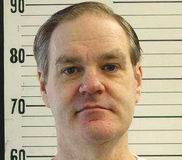
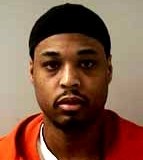
William Richard Stevens
Murderer Ervil LeBaron
Murderer · USA · 1972
Ervil Morrell LeBaron (1925 to August 16, 1981) was the leader of a polygamous…
35 victims
Ervil LeBaron
Murderer · USA · 1972
Ervil Morrell LeBaron (1925 to August 16, 1981) was the leader of a polygamous…
35 victims
 Brian Kevin Rosenfeld
Murderer · USA · 1985
Brian Kevin Rosenfeld Brian Kevin Rosenfeld was sentenced to three concurrent l…
23 victims
Brian Kevin Rosenfeld
Murderer · USA · 1985
Brian Kevin Rosenfeld Brian Kevin Rosenfeld was sentenced to three concurrent l…
23 victims
 Marvin Gray
Murderer · USA · 1975
Marvin Gray was convicted killer who claimed responsibility for 23 slayings and…
23 victims
Marvin Gray
Murderer · USA · 1975
Marvin Gray was convicted killer who claimed responsibility for 23 slayings and…
23 victims
 Yahweh ben Yahweh
Murderer · USA · 1980
Yahweh ben Yahweh was born and legally named Hulon Mitchell Jr. (October 27, 19…
23 victims
Yahweh ben Yahweh
Murderer · USA · 1980
Yahweh ben Yahweh was born and legally named Hulon Mitchell Jr. (October 27, 19…
23 victims
 Toni Jo Henry
Murderer · USA · 1940
Toni Jo Henry (January 3, 1916 - November 28, 1942) was also known as Annie Bea…
1 victim
Toni Jo Henry
Murderer · USA · 1940
Toni Jo Henry (January 3, 1916 - November 28, 1942) was also known as Annie Bea…
1 victim
 Kenneth Bernard Rouse
Murderer · USA · 1991
Kenneth Bernard Rouse was convicted by a North Carolina jury of first-degree mu…
1 victim
Kenneth Bernard Rouse
Murderer · USA · 1991
Kenneth Bernard Rouse was convicted by a North Carolina jury of first-degree mu…
1 victim
 Robert Jurado
Murderer · USA · 1991
Robert Jurado Jr. was sentenced to death on October 13, 1994. · May 15, 1991 —…
1 victim
Robert Jurado
Murderer · USA · 1991
Robert Jurado Jr. was sentenced to death on October 13, 1994. · May 15, 1991 —…
1 victim
 Gerald Lee Mitchell
Homicide · USA · 1985
Gerald Lee Mitchell (offender, #838) was executed by lethal injection on Octobe…
2 victims
Gerald Lee Mitchell
Homicide · USA · 1985
Gerald Lee Mitchell (offender, #838) was executed by lethal injection on Octobe…
2 victims
 Kathleen Dorsett
Murderer · USA · 2010
Kathleen Dorsett was an elementary school teacher and an Ocean Township woman.…
1 victim
Kathleen Dorsett
Murderer · USA · 2010
Kathleen Dorsett was an elementary school teacher and an Ocean Township woman.…
1 victim
- Gender
- male
- Country
- USA
- Location
- Davidson County, Tennessee, USA
- Date of birth
- March 1, 1956
- Age at first offence
- 21
- Characteristics
- parricide, murder for hire
- Victim profile
- ??? / His wife Sandra Jean Stevens, 45, and her mother, Myrtle Wilson, 75
- Method of murder
- Strangulation - Stabbing with knife
- Date(s) of murder
- 1977 / December 22, 1997
- Years active
- 1977–1997
- Date of arrest
- —
- Status
-
Sentenced to death
Sentenced to death on July 23, 1999
Background
William Richard Stevens offered to pay Corey Milliken to murder Stevens’s wife, Sandra (Sandi) Jean Stevens, and Stevens’s mother-in-law, Myrtle Wilson. The plan involved making the murders look like they were committed in furtherance of a burglary. Stevens and Milliken had known each other for approximately one year.
Stevens had marital problems with his wife, and he knew that another divorce would “wipe him out.” Stevens had a nine-year-old son, John, and the plan included using John as another alibi.
Stevens was adopted into a family of five children. Evidence was presented in mitigation about Stevens’s family upbringing and his relationship with his son John. Stevens’s sister, Chris Baumann, testified that Stevens had a good childhood and was part of a “normal family.” Robert Rasmus, Stevens’s foster brother, testified to a “great family upbringing” for all five children and stated that Stevens had done a wonderful job raising his son John and had turned his life around after his first conviction in 1977. On cross-examination, Rasmus admitted that Stevens had also been convicted of felony escape during his incarceration for second degree murder.
Stevens’s ex-wife, Vickie Stevens, testified that Stevens was a good husband and father during most of their marriage, that after the divorce he made all child support payments, and that she remained loving and supportive as their father relationship. She also expressed her wish that Stevens be spared the death penalty for the sake of their son.
Roger Cooper, the sales manager of a mobile home company, testified that he employed Stevens in 1989 for approximately one year. Cooper stated that during that time he knew Stevens to be a hard-working and dedicated employee, and he trusted Stevens enough to give him a key to his own home. Several of Stevens’s neighbors testified about helpful conduct in the community, including that Stevens loaned money to neighbors, checked in on elderly, sick, or alone neighbors, and voluntarily fixed trailers without requiring payment.
The State presented evidence in the penalty phase of Stevens’s conviction in 1977 for second degree murder.
The offence
On December 22, 1997, Stevens and Corey Milliken were implicated in the planned murders of Sandra (Sandi) Jean Stevens and Myrtle Wilson.
Stevens solicited Corey Milliken, age eighteen, to kill Sandra Stevens, age forty-five, and Myrtle Wilson, age seventy-five. Stevens also involved Milliken’s brother, Shawn Austin, age fifteen at the time, who lived with their mother and step-father three trailers down from Stevens. Austin and his brother often worked for Stevens assisting him with putting underskirting on mobile homes.
According to Austin’s testimony, in the fall of 1997 Stevens approached both brothers and asked whether they would kill Stevens’s ex-wife, Vickie Stevens, and Stevens instructed them to “get a rifle” and shoot her when she came out of her trailer. Stevens told the boys that if Vickie Stevens were dead, Stevens would get full custody of his then nine-year-old son, John, and would get “her car, her trailer and her land.” Stevens then changed his mind around Thanksgiving and offered to pay Milliken and Austin $2,500 apiece if they would instead kill Stevens’s current wife, Sandra (Sandi) Stevens, and Stevens’s mother-in-law, Myrtle Wilson. Stevens and his wife were having marital problems, and Stevens knew that another divorce would “wipe him out.” Stevens told the boys he would get the money either from the proceeds of Ms. Wilson’s life insurance policy or from the proceeds of a yard sale.
Stevens instructed Austin to act as a “lookout,” while Milliken would kill the victims in their trailer. Stevens preferred that the victims be shot; however, if the boys could not find a gun with a silencer, Milliken was to kill them using a knife.
Austin decided he did not want to be the “lookout,” but agreed to provide an alibi for Stevens. Austin would not be paid for this participation, and therefore the entire $5,000 would be paid to Milliken.
Stevens took pains in planning and instructing Milliken on how the murders were to take place. Stevens told Milliken to kill Myrtle Wilson first because Sandra Stevens would not hear anything, stating that Sandra Stevens kept her door shut and the fan running in her bedroom. Stevens told Milliken that on the eve of the murders the trailer would be unlocked and the burglar alarm would not be set. As an extra precaution, Stevens would give Milliken a key to the trailer.
Stevens instructed that after Milliken killed the victims, Milliken was to steal certain items, including some of Mrs. Stevens’s jewelry, and then “destroy” the trailer to make it look like a robbery had occurred. Stevens took Milliken on a walk-through of the trailer and specified which items were to be stolen, which items were to be “trashed,” and which items were to remain untouched, including “the TV and the dishes and [his] Star Trek collection.”
Stevens also instructed how Milliken was to get rid of the evidence. Stevens told Milliken that Milliken was to take the stolen jewelry and put it in a bag, then throw the murder weapon on top of a nearby school building and throw the bag of stolen items into the river. Stevens told Milliken that after disposing of the evidence, he would go to Stevens’s girlfriend’s house to establish an alibi.
According to the plan, on the morning of the murders Stevens and Austin would leave together to go to work, and Milliken would commit the crimes while they were gone. Stevens told Austin that if he were questioned by the police, he was to tell them that he saw Mrs. Stevens wave to them as they left for work.
Stevens also told the brothers that if anybody got caught, “everybody was on their own.” Stevens instructed them not to take lie detector tests or “snitch on the other person.”
A few days before December 22, 1997, Stevens told the brothers the murders needed to be committed on the twenty-second because Stevens’s ex-wife was going to have back surgery at that time and Stevens would have his nine-year-old son John staying with him, who would act as another alibi. Milliken agreed to commit the murders on that date.
At approximately 4:45 on the morning of Monday, December 22, Austin went over to Stevens’s trailer where Stevens and his young son were waiting. Milliken was still asleep after staying up late the night before following an argument with his mother and step-father. Sandra Stevens and Ms. Wilson were still asleep in their rooms and did not see Stevens and the two boys leave for work. The group drove approximately ninety miles to their jobsite at New Johnsonville and stopped for breakfast along the way. After arriving, Stevens decided it was too muddy to work on the trailer, so they returned home, arriving back at the trailer park at around 8:30 a.m.
Stevens gave a taped statement on the day of his arrest. Stevens said that when he walked up to the front door of his trailer, he observed that the door was ajar. Stevens stated that when he stepped inside, he noticed that the Christmas tree was lying on its side and that “stuff was laying all over,” and he “knew something was wrong.” He stated that he looked toward his bedroom and saw his wife’s leg “laying across the bed,” and Stevens “immediately assumed that both his wife and his mother-in-law were dead.” Stevens stated that he never went into either bedroom to actually check on the women and that he never saw his mother-in-law’s body. Stevens stated that he “just ran out” with his son and Austin and went to Austin’s trailer to call the police.
Stevens and Milliken were convicted in connection with these murders.
Investigation
On December 22, 1997, police were dispatched to Stevens’s mobile home in Nashville in response to a 911 call made by Stevens and Corey Milliken. When officers arrived, they found the murdered bodies of Sandra (Sandi) Jean Stevens, Stevens’s wife, and Myrtle Wilson, Stevens’s mother-in-law.
The police concluded that Corey Milliken was hired by Stevens to kill the women and to make the murders look like they were committed in furtherance of a burglary.
Officer Gary Clements and Officer John Donnelly of the Metro Police Department were the first officers to arrive. After entering the trailer and finding the two bodies, the officers sealed off the crime scene and canvassed the area for witnesses and searched for physical evidence. Officer Clements met Milliken in his trailer during their conversation and noticed blood spots on Milliken’s t-shirt, blood under his nails, and fresh gouge marks on his cheek and wrist. Officer Clements turned Milliken over to detectives for further questioning.
Milliken confessed to committing the murders by himself and provided a detailed description of the murders and the crime scene.
Officer Clements discovered that the underpinning on a nearby trailer had been pulled loose. Under that trailer, officers found a green canvas bag. The contents included a white, blood-stained Miami Dolphins t-shirt; several pieces of jewelry; an eight-inch long butcher knife or kitchen knife; prescription medication lying loosely in the bag; a thirty-five millimeter camera; and a black camera bag.
Detectives Pat Postiglione and Al Gray testified about the homicides. They found no sign of forced entry. They described the crime scene as staged, aside from the appearance of a struggle “in and about the bed area” in Ms. Wilson’s room. Detective Gray explained that dresser drawers were pulled open without items appearing disturbed; clothes were taken out of the closet and dumped onto the floor while still on their hangers; and Christmas presents were unwrapped without items appearing stolen. Detective Gray also testified that the Christmas tree looked as if it were “gently pushed over,” and none of the glass ornaments were broken or scattered on the floor, which would most likely have happened had there been a struggle.
Detective Gray testified that certain rooms, described as “very valuable area[s] of the trailer,” remained undisturbed. Both victims were found lying in their beds. Ms. Wilson was wearing a nightgown that had been pulled above her waist and her underwear was on the floor. There was substantial blood on her body, on the bed, and on several items in the room.
Dr. Emily Ward, a pathologist with the Davidson County Medical Examiner’s Office, performed autopsies. Dr. Ward’s examination of Ms. Wilson revealed she died from stab wounds and manual strangulation. Dr. Ward testified that Ms. Wilson’s stab wounds were relatively superficial and did not pierce any vital organs but resulted in considerable lost blood.
Dr. Ward’s examination of Sandra Stevens revealed she died as a result of ligature strangulation. Dr. Ward testified that Mrs. Stevens was completely nude and left in a “displayed” position, lying on her back with her legs spread apart. Dr. Ward testified there was blood on Mrs. Stevens’s knees, indicating that the murderer killed Ms. Wilson first and transferred some blood onto Mrs. Stevens. Dr. Ward also testified that pornographic magazines were placed around Mrs. Stevens’s body and a photo album containing nude photos of the victim, presumably taken by Stevens during their marriage. Dr. Ward testified there was no evidence of blood on these items.
Dr. Ward testified about a small, superficial tear in Mrs. Stevens’s vagina. Dr. Ward testified that she thought it was a post-mortem change in the skin, likely occurring while the body was being moved for examination. Dr. Ward conceded on cross-examination that the decedent could have been sexually assaulted after death, but Dr. Ward did not believe this was the case because there was no bruising, swelling, or hemorrhaging around the tear.
The State introduced testimony from Chris Holman as evidence that Stevens hired Milliken. Holman testified that around the end of October, Milliken approached him and asked if Holman knew where Milliken could get a gun with a silencer. Holman stated he told Milliken he “wasn’t into that anymore.” Holman testified that three weeks prior to the murder, Milliken approached him again and asked if Holman would help murder Stevens’s wife and mother-in-law. Holman testified that Milliken told him they would go into the house and “make it look like it was a burglary,” and that Holman would “split even” the $5,000 Milliken was supposed to be paid. Holman refused.
Lane Locke testified that he was Stevens’s cellmate at the Davidson County Criminal Justice Center for approximately three weeks. Locke testified that during that time Stevens discussed his case at great length because Stevens wanted to benefit from Locke’s “legal knowledge,” stating that Locke was formerly a police officer and a certified paralegal. Locke testified that Stevens described his marital problems and said he did not want to go through another divorce because he had “his life in order and felt like . . . a divorce would wipe him out.” Locke testified that Stevens discussed his relationship with Milliken, describing Milliken as a “big, dumb kid” and a source of conflict between Stevens and his wife. Locke testified that based on what Stevens told him, Locke stated it appeared that Stevens “led Corey around quite a bit.” Locke also testified that Stevens did not want to attend his wife’s funeral and never showed any remorse or emotion over his wife’s death.
Locke testified that Stevens was very upset when he returned from his preliminary hearing. Locke quoted Stevens as saying: “Shawn [Austin] is just as guilty as the rest of us, and he's the only one that's gonna get away with it. I can't believe those idiots thought I was gonna pay them.”
Michael Street testified that Stevens asked him if Street would “intimidate Corey Milliken or have him killed in one form or fashion” because, Stevens said, “Corey was the only person that could put [him] in prison for the rest of [his] life.” Street testified that Stevens told him that Stevens had hired another inmate to “try to do it,” but the plan fell through. Street refused the request.
The State introduced letters between Stevens and Charles Randle, another inmate, in which Stevens offered Randle money to harm or intimidate Milliken in jail. Evidence was introduced that Stevens obtained several hundred dollars in money orders made payable to Charles Randle.
Evidence was also presented that Stevens was taking money from Myrtle Wilson, including testimony from Wilson’s son Larry Wilson. Larry Wilson testified that for over three years before the murders were committed he invested and monitored Wilson’s finances totaling $83,000. Larry Wilson testified that a month before she was killed, Wilson expressed concern that she “didn't have the funds that she thought she should.” Shortly after the murders, Larry Wilson examined his mother’s financial information and discovered a check written on June 10, 1997, made payable to Stevens for four thousand dollars. Larry Wilson testified the check was questionable because it was printed rather than handwritten, because Wilson never printed her checks, because the printing was “way too clear” given Wilson’s feeble condition and shaky hand, and because Wilson recorded the amount as forty dollars not four thousand.
Doris Trott, a hairdresser who had worked with the victims since 1992, testified about conversations with Wilson early in the fall of 1997. Trott testified that during those conversations Wilson complained that Stevens never repaid money he often borrowed. Trott testified that later in the fall Wilson told Trott that Stevens asked her to sign a ten-thousand dollar life insurance policy, which Wilson refused.
The defense presented evidence about Milliken’s sexual infatuation with Sandra Stevens. Shawn Austin testified that his brother told him Stevens showed him pictures of Stevens’s wife in lingerie and in the nude, and that Stevens told Milliken that Stevens wanted to have sex with both of them at the same time.
Trial
Stevens’s trial included the presentation of guilt-phase proof describing the murders and the solicitation of Milliken. In imposing the death penalty, the jury found two aggravating circumstances: prior violent felony and murder for hire. At the close of proof, the jury was instructed on statutory aggravating circumstances for each of two counts of murder: (1) Stevens was previously convicted of the felony of second degree murder; and (2) Stevens employed another to commit the murders of his wife and mother-in-law for the promise of remuneration.
The proof established that when police arrived at Stevens’s mobile home in Nashville after a 911 call made by Stevens and Corey Milliken, they found the bodies of Sandra (Sandi) Jean Stevens and Myrtle Wilson. Police concluded Milliken was hired by Stevens to kill the women and make the murders look like they were committed in furtherance of a burglary.
The defense theory at trial was that Milliken committed sexual murder as an act of aggression precipitated by an argument with his mother and step-father the night before the crimes.
Billy Stevens, Milliken’s step-father, testified that he and Milliken argued the night before the crimes and that at one point he “grabbed” Milliken after Milliken “got smart with his mother.” Billy Stevens testified that Milliken ran out of the house but returned by the time Billy Stevens left for work early the next morning. Billy Stevens also testified about previous arguments.
William Byers, Sandi Stevens’s ex-husband, testified that he talked to her shortly before she died. He testified she said Stevens explicitly refused to give her a divorce. He also testified she expressed dislike for Corey Milliken and described Milliken as the source of many heated arguments between Stevens and herself. Byers testified she wrote that Milliken was the “wedge” driving her and Stevens apart.
Stevens’s wife’s diary described her unhappiness in the marriage and her increasing distrust of Stevens’s fidelity. She wanted to “get out” of the marriage while still loving Stevens.
Crime scene expert Gregg McCrary testified for the defense that the display of pornographic magazines around Mrs. Stevens could “best be interpreted as an attempt to further humiliate or degrade” the victim and that this “goes to the motive of a sex crime.” McCrary defined a sex crime as primarily a crime of violence in which the perpetrator uses sex to punish, humiliate, and degrade the victim.
Sentencing
In the penalty phase, the State presented evidence of Stevens’s conviction in 1977 for second degree murder. The State presented victim impact evidence through testimonies of family members who discussed the devastating effect of the murders of Myrtle Wilson and Sandi Stevens on their lives.
The defense presented mitigation testimony from Stevens’s family members, co-workers, and neighbors. The jury was instructed to consider all mitigating evidence, including Stevens’s work history, family history and close familial relationships, positive role in the community, any other aspect of Stevens’s background, character, or record, and any aspect of the circumstances of the offense favorable to Stevens and supported by the evidence.
The jury found that the State proved the two statutory aggravating circumstances beyond a reasonable doubt and that the two aggravating circumstances outweighed mitigating circumstances beyond a reasonable doubt. On July 23, 1999, Stevens was sentenced to death for each of the two murder convictions.
Outcome
Stevens was sentenced to death on July 23, 1999.
Other details
Officers found no sign of forced entry. Aside from the struggle described “in and about the bed area” in Ms. Wilson’s room, the crime scene appeared staged. Dresser drawers were pulled open, clothes were dumped from the closet onto the floor while still on their hangers, Christmas presents were unwrapped, the Christmas tree appeared “gently pushed over,” and valuable rooms remained undisturbed.
Dr. Ward testified that she thought the small, superficial tear in Mrs. Stevens’s vagina was a post-mortem change in the skin, likely occurring while the body was being moved for examination, and she conceded on cross-examination that the decedent could have been sexually assaulted after death. Dr. Ward did not believe this was the case due to the absence of bruising, swelling, or hemorrhaging around the tear. Pornographic magazines and a photo album containing nude photos of the victim were placed around Mrs. Stevens’s body, and Dr.
Spotted an error, or have more information about this case?