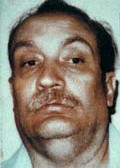
Philip Carl Jablonski
Spree killer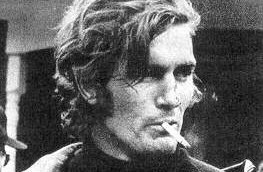 Paul John Knowles
Spree killer · USA · 1974
Paul John Knowles (April 17, 1946 – November 18, 1974) was an American spree ki…
35 victims
Paul John Knowles
Spree killer · USA · 1974
Paul John Knowles (April 17, 1946 – November 18, 1974) was an American spree ki…
35 victims
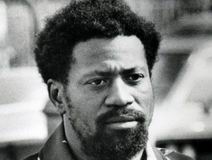 Bobby Joe Maxwell
Spree killer · USA · 1978
Name: Bobby Joe Maxwell Sex: M Race: B Type: T Motive: PC-nonspecific Method of…
11 victims
Bobby Joe Maxwell
Spree killer · USA · 1978
Name: Bobby Joe Maxwell Sex: M Race: B Type: T Motive: PC-nonspecific Method of…
11 victims
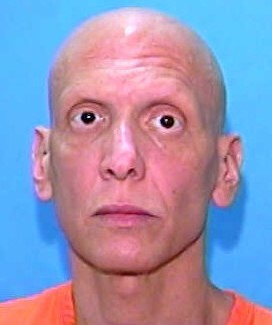 Manuel Pardo
Spree killer · USA · 1986
Manuel Pardo, Jr. was a former police officer who was convicted of nine counts…
9 victims
Manuel Pardo
Spree killer · USA · 1986
Manuel Pardo, Jr. was a former police officer who was convicted of nine counts…
9 victims
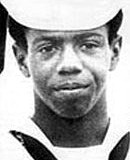 Mark Essex
Spree killer · USA · 1973
Mark James Robert Essex was a Navy veteran who engaged in a shooting and arson…
9 victims
Mark Essex
Spree killer · USA · 1973
Mark James Robert Essex was a Navy veteran who engaged in a shooting and arson…
9 victims
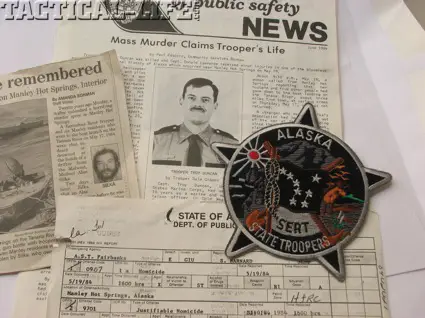 Michael Alan Silka
Spree killer · USA · 1984
Michael Alan Silka was killed during a shoot-out with the police on May 19, 198…
9 victims
Michael Alan Silka
Spree killer · USA · 1984
Michael Alan Silka was killed during a shoot-out with the police on May 19, 198…
9 victims
 Obie Weathers
Murderer · USA · 2000
Name: Obie Weathers · TDCJ number: 999396 · Date of birth: 08/11/1981 · Age at…
1 victim
Obie Weathers
Murderer · USA · 2000
Name: Obie Weathers · TDCJ number: 999396 · Date of birth: 08/11/1981 · Age at…
1 victim
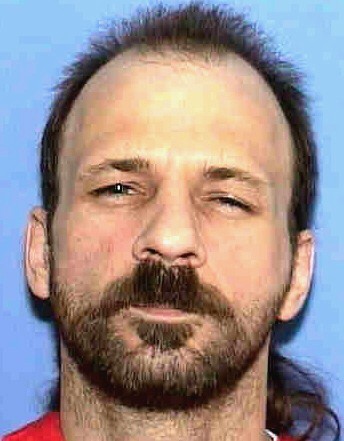 Tracy Hansen
Murderer · USA · 1987
Tracy Alan Hansen was convicted of gunning down Mississippi Highway Patrolman D…
1 victim
Tracy Hansen
Murderer · USA · 1987
Tracy Alan Hansen was convicted of gunning down Mississippi Highway Patrolman D…
1 victim
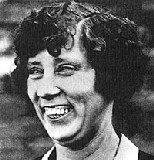 Eva Rablen
Murderer · USA · 1929
Eva Rablen was accused in 1929 in Northern California of getting rid of her dea…
1 victim
Eva Rablen
Murderer · USA · 1929
Eva Rablen was accused in 1929 in Northern California of getting rid of her dea…
1 victim
 Debra Lynn Baker
Murderer · USA · 1990
Debra Lynn Baker was convicted of Jerry Sternadel’s murder. She received 10 yea…
1 victim
Debra Lynn Baker
Murderer · USA · 1990
Debra Lynn Baker was convicted of Jerry Sternadel’s murder. She received 10 yea…
1 victim
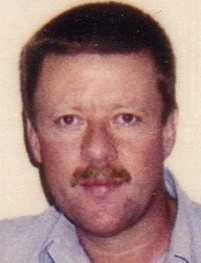 Steve Henley
Murderer · USA · 1985
Steve Henley was convicted in Tennessee of the 1985 murders of Fred Stafford an…
2 victims
Steve Henley
Murderer · USA · 1985
Steve Henley was convicted in Tennessee of the 1985 murders of Fred Stafford an…
2 victims
- Gender
- male
- Country
- USA
- Location
- California/Utah, USA
- Date of birth
- January 3, 1946
- Age at first offence
- 32
- Characteristics
- rape, necrophilia, mutilation
- Victim profile
- Melinda Kimball ( his first wife ) / Fathyma Vann, 38 / Spadoni Jablonski, 46 (his second wife) and her mother, Eva Peterson, 72 / Margie Rogers, 58
- Method of murder
- Shooting / St abbing with knife
- Date(s) of murder
- 1978 / 1991
- Years active
- 1978–1991
- Date of arrest
- April 28, 1991
- Status
-
Sentenced to death
Sentenced to death in California on 1994; California Supreme Court upheld the death sentence on appeal in January 2006
Case record: Philip Carl Jablonski
Background
Philip Carl Jablonski was born in 1946. His correspondence biography stated that his date of birth was January 3rd 1946, that he was 58 years old, and that he had been on death row for 11 years (Aug.1994). His correspondence materials described him as a “Caucasian male,” 58 years old, and a professional artist, photography, amateur poet, writer, masseur, and college educated. He stated his home town as Joshua Tree, CA and named interests including cats, dogs, parrots, horses, and teddy bears. He wrote: “I am very understanding and loving.” He also wrote: “People describe me as a gentle giant.” His correspondence address was “C-02477 San Quentin State Prison San Quentin, CA 94974 USA”.
Jablonski’s wife was Carol Spadoni Jablonski (46). Carol Spadoni met and married Jablonski in 1982 after answering a newspaper ad placed while Jablonski was serving time. By the time Jablonski got out of prison in September 1990, Carol Spadoni had come to fear him and did not want him near her. A further detail described the basis of the earlier incarceration: she married him while he was serving time for having murdered his wife, Melinda Kimball, in July 1978 near Palm Springs, California. In addition, the background described that prosecutors presented evidence showing Jablonski’s history of violence against women stretching at least back to his first marriage in 1968, involving a series of assaults and rapes against his wives, lovers and other women.
The defense presented witnesses in the penalty phase to testify to the difficulty of Jablonski’s upbringing and the constant physical abuse he and other family members suffered at the hands of a “gun-toting, alcoholic father.”
Jablonski claimed he suffered as a result of traumas he experienced in childhood and during his military service in Vietnam. The correspondence biography included statements about seeking “a second chance” and “unconditional correspondence on mature and honest level,” and that he was “not a rude person.”
The offence
On April 22, 1991, Jablonski was charged with the death of Fathyma Vann, 38, in Indio, California. The account stated that Vann was a fellow student at the local community college that Jablonski attended to satisfy conditions of his parole. She was found shot in the head and sexually assaulted, lying naked in a shallow ditch in the Indio desert with the words “I Love Jesus” carved in her back. The account stated her body had been subjected to other mutilations, including the cutting off of her ears and removal of her eyes.
On April 23, 1991, Jablonski’s wife, Carol Spadoni Jablonski (46), and her mother, Eva Peterson (72), were murdered at their home in Burlingame, California. The account stated that Spadoni was shot, suffocated with duct tape, and then stabbed. It stated that Peterson was sexually assaulted and shot.
The account also stated that Jablonski was charged with the robbery and subsequent murder of Margie Rogers, 58, in Grand County, Utah, on April 27, 1991. The account stated that he was captured the following day in Kansas.
The account described that prosecutors linked Jablonski to multiple killings and sexual assaults of women, including:
- attacks on 10 other women, including his first wife, his sister, his mother, and another girlfriend;
- the killings of a girlfriend with whom he had a child;
- a college classmate; and
- a woman who worked at a truck stop.
It further stated that prosecutors said Jablonski killed Carol Spadoni and her mother Eva Petersen after Spadoni told his parole officer she was scared of Jablonski and did not want him coming back to San Mateo County to live with her.
Investigation
Among the prosecution evidence was a tape seized from Jablonski’s car in which he described the murders. The account stated that the tape also described two other murders: Fathyma Vann in Indio a day before the Burlingame slayings, and Margie Rogers in Utah a day before his capture in Kansas. The account also stated that among the evidence found in Jablonski’s car at his arrest was “a tape recording in his voice describing the murders and his sexual assault upon Petersen.”
The account stated that Dr. George Wilkinson, a court-appointed psychiatrist, testified during the proceedings, and that the trial judge admitted Wilkinson’s testimony over defense objection.
Trial
A jury in 1994 decided Jablonski was legally sane at the time of the murders and recommended he be put to death.
Jablonski was convicted of two counts of first degree murder, with special circumstances of multiple murder, murder in the commission or attempted commission of rape and sodomy, and prior murder.
The prosecution presented evidence, including the tape seized from his car describing the murders and sexual assault. The account stated that Spadoni was shot, suffocated with duct tape, and stabbed; and her mother was shot after being sexually assaulted.
The account stated that the defense unsuccessfully challenged Jablonski’s competence and later his sanity.
The account quoted or described expert testimony from Dr. George Wilkinson:
- Wilkinson testified that he interviewed the defendant on five occasions and reviewed extensive background material.
- Wilkinson testified that Jablonski suffered from posttraumatic stress disorder, “transient” psychotic episodes triggered by “overpowering aggressive or sexual feelings” that “cannot be expressed,” and had a passive/aggressive personality with “intense feelings of inadequacy.”
- Wilkinson testified that he was a sexual sadist.
- Wilkinson concluded that defendant engaged in malingering behavior and attacked the defense contention that he was schizophrenic.
- Wilkinson said that based on a study of over 300 murderers, he concluded that Jablonski was a serial killer, which Wilkinson defined as someone who has the need to kill in order to release internal tensions.
- Wilkinson testified that was the reason he made the tape recording and made notes about the murders in his address book.
The account stated that the trial judge admitted Wilkinson’s testimony over defense objection, finding that the probative value outweighed any prejudice.
The account included that the defense argued an alleged issue about the use of a “serial killer” phrase by the prosecution’s mental health expert, and that this argument was rejected on appeal.
The account said that Justice Carlos Moreno, writing for the California Supreme Court, explained that testimony about “serial killer” was admissible to help jurors understand how Jablonski could have engaged in psychotic, bizarre anti-social behavior yet still understand the difference between right and wrong, and that the defense had unsuccessfully challenged competence and later sanity.
Sentencing
The jury recommended that Jablonski be put to death. The account stated that Jablonski was sentenced to death in California in 1994.
Appeals
In January 2006, the California Supreme Court upheld Jablonski’s death sentence on appeal. The account stated the California Supreme Court unanimously rejected a host of arguments in his automatic appeal.
The account also stated: “The case is People v. Jablonski , 06 S.O.S. 268”.
The account described the arguments and the court’s reasoning:
- The high court rejected Jablonski’s claim that San Mateo Superior Court Judge John G. Schwartz deprived him of a fair trial by allowing a prosecution mental health expert to testify that he was a “serial killer,” a phrase that Jablonski’s lawyer had no legal meaning and was used only to cause prejudice.
- Justice Carlos Moreno wrote that Wilkinson’s testimony regarding behavior of serial murderers and its relation to defendant’s conduct was relevant to the question of his sanity.
- The account included Moreno’s quoted reasoning:
“Defendant cites no authority for the proposition that the only expert evidence admissible on the issue of a defendant’s sanity must be confined to classifications of mental disease or disorder found in the Diagnostic and Statistical Manual of Mental Disorders,” the justice wrote.
“As Dr. Wilkinson testified, the phenomenon of serial murderers has been the subject of professional interest in the psychiatric community, and his testimony regarding the behavior of serial murderers and its relation to defendant’s conduct as it bore on the question of his sanity was undoubtedly relevant to that issue.”
“In relation to the testimony the jury heard regarding the shocking circumstances of defendant’s crimes, Dr. Wilkinson’s testimony was relatively innocuous.”
The account also described that Jablonski filed a separate habeas corpus case in August seeking reinvestigation, where new evidence could be brought in or existing evidence recast. It further stated that Jablonski could file habeas petitions in federal courts.
Outcome
In January 2006, the California Supreme Court upheld Jablonski’s conviction and death sentence.
Aftermath / other details
Jablonski’s correspondence included the following statements and imagery, written verbatim:
“Phillip Carl Jablonski I ask your indulgence male and female and promise to be brief as possible, allow me to introduce myself as Death Row Teddy. I am 58 years old. My DOB is January 3rd 1946. I have been on death row for 11 years. (Aug.1994) I am seeking for a female/male Teddy Bear. I lost once my heart scarcely used by one careless owner. As I saw it last it was thubbing in your direction. Caucasian male - seeking an open minded male/female for unconditional correspondence on mature and honest level, that has a caring heart to create a special friendship build from the heart. Why choose me? I am a professional artist, photography, amateur poet, writer, masseur, college educated, not a rude person, like to party, travel. My home town is Joshua Tree, CA. I am very understanding and loving. I believe in giving a second chance. People describe me as a gentle giant. I love cats, dogs, parrots, horses and teddy bears. What I like in a friend? I like it if you like to travel, party. Someone who is mature and wants a honest friendship. Someone who is able to discuss personal issues on a mature level and is not scared of Frank discussion. What I miss the most: Traveling, photography male and female company, giving massages, partying, walking in the rain, romantic walks on the beach, romantic candle light dinners, cuddling in front of a roaring fire, soft music. Lets share our thoughts and feelings (good or bad) lets learn about one another freely and watch our friendship bloom like a rose and be strong as a castle wall which can’t be broken. A loving heart is worse more then a mountain of gold. Love communicates on any subject or issue. Write me please you won’t be disappointed. Don’t let my situation stop you from writing me. Pick up your pen and pay me a visit. Guaranteed response. Sincerely, Phillip”
The account stated that Jablonski placed ads seeking male or female pen pals, and that on a German site he described himself as “very understanding and loving” and someone who had “been described as a gentle giant.”
Spotted an error, or have more information about this case?