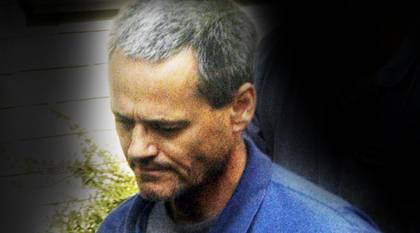
Ulf Olsson
Murderer Juha Valjakkala
Murderer · Sweden · 1988
Juha Veikko Valjakkala (born June 13, 1965) was convicted of the murder of a fa…
3 victims
Juha Valjakkala
Murderer · Sweden · 1988
Juha Veikko Valjakkala (born June 13, 1965) was convicted of the murder of a fa…
3 victims
 Helge Fossmo
Murderer · Sweden · 1999
Helge Arnold Fossmo (1971-) was a Pentecostal pastor. He was involved in the Kn…
2 victims
Helge Fossmo
Murderer · Sweden · 1999
Helge Arnold Fossmo (1971-) was a Pentecostal pastor. He was involved in the Kn…
2 victims
 Jackie Arklöv
Murderer · Sweden · 1999
Jackie Arklöv was sentenced to life imprisonment. Jackie Arklöv (born June 6, 1…
2 victims
Jackie Arklöv
Murderer · Sweden · 1999
Jackie Arklöv was sentenced to life imprisonment. Jackie Arklöv (born June 6, 1…
2 victims
 Hampus Hellekant
Murderer · Sweden · 1999
Karl Helge Hampus Hellekant was later known as Karl Svensson. He was born Janua…
1 victim
Hampus Hellekant
Murderer · Sweden · 1999
Karl Helge Hampus Hellekant was later known as Karl Svensson. He was born Janua…
1 victim
 John Ausonius
Murderer · Sweden · 1991
John Ausonius (born Wolfgang Alexander Zaugg on July 12, 1953), also known in t…
1 victim
John Ausonius
Murderer · Sweden · 1991
John Ausonius (born Wolfgang Alexander Zaugg on July 12, 1953), also known in t…
1 victim
 Jon Nödtveidt
Murderer · Sweden · 1997
Jon Andreas Nödtveidt (June 28, 1974 – August 16, 2006) was a lead guitarist an…
1 victim
Jon Nödtveidt
Murderer · Sweden · 1997
Jon Andreas Nödtveidt (June 28, 1974 – August 16, 2006) was a lead guitarist an…
1 victim
 Rodolpho Hernandez
Murderer · USA · 1985
Rodolfo Baiza Hernandez was convicted and sentenced to death for the capital mu…
1 victim
Rodolpho Hernandez
Murderer · USA · 1985
Rodolfo Baiza Hernandez was convicted and sentenced to death for the capital mu…
1 victim
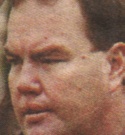 Matthew Grant Webster
Murderer · Australia · 1989
Matthew Grant Webster was described as the man who raped and murdered Newcastle…
1 victim
Matthew Grant Webster
Murderer · Australia · 1989
Matthew Grant Webster was described as the man who raped and murdered Newcastle…
1 victim
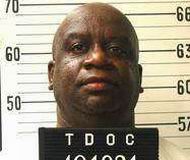 Robert Lee Faulkner
Murderer · USA · 1999
Robert Lee Faulkner was convicted of first degree premeditated murder of his wi…
1 victim
Robert Lee Faulkner
Murderer · USA · 1999
Robert Lee Faulkner was convicted of first degree premeditated murder of his wi…
1 victim
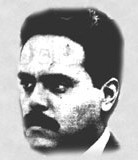 Alejandro Henriquez
Serial killer · USA · 1988
Alejandro Henriquez was sentenced to three consecutive terms of 25 years to lif…
6 victims
Alejandro Henriquez
Serial killer · USA · 1988
Alejandro Henriquez was sentenced to three consecutive terms of 25 years to lif…
6 victims
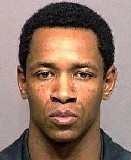 John Allen Muhammad
Spree killer · USA · 2002
John Allen Muhammad carried out the 2002 D.C. sniper attacks with his 17-year-o…
10 victims
John Allen Muhammad
Spree killer · USA · 2002
John Allen Muhammad carried out the 2002 D.C. sniper attacks with his 17-year-o…
10 victims
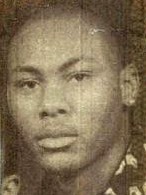 Regis Deon Thomas
Murderer · USA · 1992
Regis Deon Thomas was a member of a notorious Los Angeles gang known as "Bounty…
3 victims
Regis Deon Thomas
Murderer · USA · 1992
Regis Deon Thomas was a member of a notorious Los Angeles gang known as "Bounty…
3 victims
- Gender
- male
- Country
- Sweden
- Location
- Hörby/Malmö, Sweden
- Date of birth
- December 19, 1951
- Age at first offence
- 38
- Characteristics
- abduction, rape, domestic violence, drug addict, history of mental illness
- Victim profile
- Helén Nilsson (female, 10) / Jannica Ekblad (female prostitute, 26)
- Method of murder
- Beating with a blunt instrument
- Date(s) of murder
- March /August 1989
- Years active
- 1989
- Date of arrest
- June 23, 2004
- Status
-
Died in custody
Sentenced to life imprisonment in April 2005; transferred to psychiatric hospital; committed suicide on January 10, 2010
Background
Ulf Olsson (1951–), also known as Helénmannen (“the Helén man”) in Sweden, was convicted for the murders of 10-year-old Helén Nilsson and 26-year-old Jannica Ekblad in 1989.
The offence
Helén Nilsson
Helén Nilsson was abducted on the night of March 20, 1989. Her body was found six days later. She had been alive for a couple of days after the abduction and had been raped. The body was found in the woods about 20 kilometres outside Hörby. It was later described as being concealed by a mound of stones in a forest 25 km from her home, and her naked body was found in a plastic bag. Forensic investigators concluded that after being imprisoned for several days Helén had been beaten to death with a blunt instrument.
Jannica Ekblad
Jannica Ekblad was a prostitute in Malmö. She was found dead on August 4, 1989. Olsson was convicted of killing her. She was described as being outside Malmö and last seen leaving together with a man. It was said that she tried to have her follow Jannica and a man to a location outside of Malmö, but the friend was unable to. No names were used, but it was believed that the man was Olsson. Jannica visited a male friend who occasionally provided her with heroin, and she appeared worried.
In 2004, large amounts of Jannica’s blood were found in the summer cabin that belonged to Olsson at the time of the murder. Olsson’s sperm was found in her vagina and other evidence was described as enabling the conviction.
The police also described a connection between the murders. The same type of plastic bag and traces of the same type of dog hair were said to be present on both bodies, and investigators suspected a connection despite clear differences between the victims.
Investigation
The investigation was described as the second-largest in Swedish history, only surpassed by the 1986 assassination of Swedish prime minister Olof Palme.
A police technician responsible for the two murders was described as being early convinced that the same killer was responsible. Before proofs against Olsson were collected in 2004, no established connection between the murders was described as having been made. Investigators suspected there was a connection based on parameters including the type of location in which the bodies were discovered, the combination of strangulation and massive force against their heads, and the presence of dog’s hair on both bodies.
A semen sample remained frozen at the State Criminal Technical Laboratory in Linköping. The semen sample was sent to Forensic Science Service in Birmingham, UK for analysis, and a DNA profile was received in August 2003. In April 2004, a group of 29 men that had appeared in the investigation was selected for interrogations and for voluntarily providing DNA samples.
It was described that there were rumours over the years that Swedish serial killer Thomas Quick was involved; Quick was said to have been allowed to leave a sample by his own initiative to rule him out.
A match was reported on June 23, 2004.
Anonymous tips and letters
Olsson was said to have been brought to the attention of police during a private dinner in 2002. The investigation was reopened in 2002 with the intention of reviewing interrogation transcripts, letters, and other available data. It was said that the police had received anonymous letters and phone calls, with a caller admitting to the crimes.
A telephone call on April 6, 1991 was traced to a pay phone in Malmö and led police to believe it was the killer calling. The caller said:
"I'm so lonely. That's why I did it. It just happened to be Helén. She was just there. And Jannica, I got so angry that I killed her. I strangled them and beat them to death."
The caller promised the detective to call again the next day, which did not happen.
More than 13 years later, on June 1, 2004, detective Alf Andersson received a CD-ROM with a letter of confession. The letter read:
"Hadn't I been bullied while in Hörby Elementary School this would never had happened. I killed Heléne & Jannica. I did it alone."
It was described that the statement that the killer acted alone was described as a direct response to the capture of two suspects the year before.
A tip was filed after locals around the time of the murder had suspected Olsson. After the investigation reopened, it was described that a revisited lead concerned a man reported to have attempted rapes in the 1980s and who lived in the area; two men were described as having very different views about what they had been doing on the day Helén disappeared. It was also described that six girls questioned during the new investigations mentioned being harassed or assaulted by the man.
Arrest
Olsson was arrested on June 23, 2004. It was described that he was the match reported on that date, and he was arrested the same evening.
Trial
The case was described as proceeding in Lund District Court.
On December 2, 2004, Olsson denied the charges in Lund district court. The session began with chaos when a 26-year-old Malmö resident with a knife attempted to force his way into the courtroom. He was tackled by police and security guards and carried over the street to the police station for questioning. Police said that he had no connection with either of the victims’ families or to Ulf Olsson. He said it was a coincidence that he had the knife and that he had come to watch the trial. He was released after questioning.
After lunch on December 2, 2004, Ulf Olsson, aged 52, took the stand. Chief prosecutor Pär Andersson began questioning about Olsson’s childhood. Olsson said:
"There's not much to say."
Olsson described being often alone in the forest and being interested in nature. He described moving around and confirmed that in 1989 he was living in the cottage where the murders were said to have taken place. He admitted he was often in Hörby to visit his sister. He said he could not remember where he was on March 20, 1989.
When questioned:
"Did you take Helén away?"
"No," replied Olsson.
"I've never seen her."
When asked about his semen:
"You have heard the experts testify about the certainty that it is your semen which was found in her."
"I don't know about that. I have no explanation."
When asked who murdered Helén:
"You have seen the pictures of how Helén was murdered. Who did it?"
"I don't know," said Olsson.
It was reported that his most common answer was:
"I have no idea"
Before the lunch break, the judge Jan Alvå told Olsson:
"If it is you who did this, I ask you to tell the court," said Jan Alvå.
"Whoever did this cannot expect to be forgiven, nor can he demand to be understood. One can perhaps attain a certain sympathy but it requires courage to talk about such a thing."
"I think that you, Ulf Olsson, should think about that over lunch," he concluded.
Regarding Jannica Ekblad, Olsson denied involvement and said someone else must have taken her to his cottage and killed her while he slept in the other room. When asked:
"Who has been in your cottage and murdered Jannica and cleaned up when you weren't there?"
"I don't know," Olsson replied.
"It's just a theory."
It was described that the trial was expected to close on December 16, 2004, and that his former wife and a woman with whom he has a child would testify.
On December 16, 2004, it was described that Lund District Court delayed judgment until further DNA testing could be carried out. The decision effectively split the case into two, with evidence against Olsson for murdering Helén said to have been presented while results of new DNA analysis on semen found in Jannica Ekblad would not be available for at least ten weeks.
It was said that the third attempt at DNA analysis would be carried out at a laboratory in Birmingham, England, and that the first two attempts had failed to produce conclusive results.
An interview with Christian Diesen, described as a professor of law, included these remarks:
"there is no problem for the court to find Ulf Olsson guilty of murder"
Diesen described three strong indications:
"The fact that they found Ulf Olsson's semen in Helén's body is not proof that he killed her, but it's a very strong indicator that he did it," he said.
"Neither is Jannica's blood in his summer cottage proof that he killed her, but it's similarly strong circumstantial evidence."
"The semen, the blood and the telephone card build a net of independent circumstantial evidence which, together with the lack of an alibi, tie Ulf Olsson to the murders."
In connection with the telephone card, Diesen said:
"In this context this telephone card is as strong an indicator as the DNA evidence,"
Sentencing
Olsson was convicted to psychiatric care in 2005 and was sentenced to life imprisonment in April 2005. He was transferred to a psychiatric hospital. He was described as being convicted to lifetime imprisonment in a hospital for the criminally insane.
Appeals
The verdict was described as being appealed, and it was described that the second authority determined Olsson’s mental condition to be severe enough to warrant psychiatric care.
Outcome
Olsson was convicted for the murders of Helén Nilsson and Jannica Ekblad. It was described that Helén’s body was found six days after her abduction and that she had been raped and beaten to death with a blunt instrument. It was also described that Jannica Ekblad’s blood was found in Olsson’s summer cabin and that Olsson’s sperm was found in her vagina along with other evidence.
Aftermath
On January 10, 2010, at 5:00 am CET, Olsson published a post on his blog stating:
"the best thing for me is simply to die, rather than to sit here as a living dead" (Swedish: det bästa för mig är helt enkelt att bara få dö, än att sitta här som en levande död)
At approximately 6:15 am CET the same morning, Olsson was found lifeless by staff of the psychiatric clinic where he was situated. Officials of the psychiatric clinic confirmed that he had committed suicide.
Other details
Arrests and interrogations over the years
It was described that a number of arrests were made over the years. On March 22, two days after the abduction and while the search was still on, a man living in the same area as Helén was interrogated by police and had his home searched. It was described that he could not present an alibi and that he was never informed of being suspected of the crime.
In 1989, it was described that the jury had been unsolved and that several suspects were questioned, including a Danish rapist, a serial killer, and a pair of cousins who were held for almost two months, but none were prosecuted.
Details of Helén’s abduction described
Helén had decided to meet two friends outside a grocery store at 19.00. Failing to find them, she made a short walk around the block. She met a couple of friends of her sister, who informed her about two girls waiting outside the store. Helén ran after the girls leaving the parking lot, and this was described as the last known observation of Helén Nilsson.
It was described that after 20.00, when she should have returned home, her family became worried and a search started. At 22.10, police were informed, and media attention increased over the following days.
Five independent witnesses were described as having seen a young man, 20–25 years old, at the same place and time as Helén disappeared. One witness was described as seeing him force a little girl into his car. The witness was described as confirming that the man did not look like the judged man.
Additional described evidence and locations
The small amount of sperm found on Helén’s body was said to have been sent to Linköping. In 1989, techniques were described as not advanced enough to get information from such small amounts, and the sample was frozen. In 2002, the sample was sent to Forensic Science Service in Birmingham and a DNA profile was received in August 2003.
Large amounts of Jannica’s blood were found in Olsson’s summer cabin. The cabin was later described as the killing site of both Helén and Jannica.
Defence and trial conduct
The trial judge Jan Alvå was described as having an exchange with prosecutor Pär Andersson and Olsson’s defence lawyer Sven Jernryd regarding the delay for further DNA testing.
Olsson’s television, radio, and newspaper access was described as being restricted during coverage.
Personal background and mental health (as described)
Olsson was described as having an upbringing filled with violence. It was described that his parents were abusive and that his mother carried out beatings by claiming she knew when to stop. It was described that Ulf was severely beaten on a regular basis. His upbringing was described as strict and filled with violence; his brothers were described as managing to put the actions of their abusive parents behind them while Ulf could not.
Olsson was described as becoming the local “odd-ball,” often seen in the woods surrounding Hörby, spending most of his time there, being afraid of being beaten if he came home. After his baby sister was born, it was described that abuse lessened and that he managed to pull his life together somewhat.
He was described as finishing school with mediocre grades in all classes but excelling in art class. After graduating, he was described as getting a job as an errand boy for a local business for about a year, terminated when he did not show up for work for several weeks. After being fired, it was described that he drifted around taking odd jobs, suffered a complete mental breakdown, and was sent to an asylum. After two months of treatment he was described as being deemed fit to return to society. He was described as holding jobs at a slaughterhouse and a tool manufacturer for about two years until his mental condition started to assert itself again.
It was described that he joined the crew of a merchant ship. It was also described that on returning to Sweden he tried to go back to the asylum but was denied treatment.
It was described that he joined and later escaped the French Foreign Legion and made a trip in a rubber dinghy tied to a passenger ship between Sweden and Germany. These claims were described as unconfirmed or denied.
Olsson was described as having married and later divorced, and it was described that his second marriage ended shortly after it began.
It was described that he lived in a small cabin outside of Höör and later moved to Vimmerby after selling the cabin the year after the murders. He was described as being known as “The Man With The Dog” because he was never seen without his companion, a black dog. It was described that in 1994 he was suspected of several accounts of arson in Vimmerby and later cleared, and that he was convicted of vandalism after he put sharp screws on the road causing cars to blow their tires.
During his years in Vimmerby it was suggested that he might have been behind the disappearance and murder of a local 6-year-old girl called Jasmina; it was described that he had hinted this himself several times, and that he had used the possibility of this crime as a way to get more media attention. It was also described that he had a spotty memory of what happened to Helén and Jannica and denied involvement in their murders for a long time after arrest.
It was described that Olsson said he executed two of his dogs with a long-bladed knife.
Quotations linked to legal proceedings and coverage
The confessional telephone call and CD-ROM letter of confession were included above. The blog post before his death included above.
The description of a police chief and probability estimate included the following quote:
"According to the English company which carried out the DNA profiling, the chance is one in fifteen million that it wasn't the 52 year old in custody who left traces on Helén Nilsson's body."
It was described that police chief Henrik Malmquist said:
"But we have never before been so close to solving it," he said.
Spotted an error, or have more information about this case?