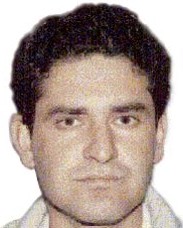
Mir Aimal Kasi
Murderer Brian Kevin Rosenfeld
Murderer · USA · 1985
Brian Kevin Rosenfeld Brian Kevin Rosenfeld was sentenced to three concurrent l…
23 victims
Brian Kevin Rosenfeld
Murderer · USA · 1985
Brian Kevin Rosenfeld Brian Kevin Rosenfeld was sentenced to three concurrent l…
23 victims
 Russell Ellwood
Murderer · USA · 1991
Russell Ellwood was a former taxi driver. Authorities suspected him of killing…
20 victims
Russell Ellwood
Murderer · USA · 1991
Russell Ellwood was a former taxi driver. Authorities suspected him of killing…
20 victims
 Robert Martines Perez
Murderer · USA · 1994
Name: Robert Martines Perez · Other name used in proceedings: Robert Martinez P…
15 victims
Robert Martines Perez
Murderer · USA · 1994
Name: Robert Martines Perez · Other name used in proceedings: Robert Martinez P…
15 victims
 Billy Frank Vickers
Murderer · USA · 1993
Billy Frank Vickers Vickers was executed by lethal injection in Texas on Januar…
14 victims
Billy Frank Vickers
Murderer · USA · 1993
Billy Frank Vickers Vickers was executed by lethal injection in Texas on Januar…
14 victims
 Sean Mercer
Homicide · United Kingdom · 2007
Sean Mercer was convicted of murdering Rhys Milford Jones. Mercer was described…
1 victim
Sean Mercer
Homicide · United Kingdom · 2007
Sean Mercer was convicted of murdering Rhys Milford Jones. Mercer was described…
1 victim
 Alfonso Rodriguez
Murderer · USA · 2003
Alfonso Rodriguez, Jr. was sentenced to death on September 22, 2006. Alfonso Ro…
1 victim
Alfonso Rodriguez
Murderer · USA · 2003
Alfonso Rodriguez, Jr. was sentenced to death on September 22, 2006. Alfonso Ro…
1 victim
 Susan DeJong
Murderer · USA · 2011
Susan DeJong was the wife of Thomas DeJong. Susan DeJong was convicted of first…
1 victim
Susan DeJong
Murderer · USA · 2011
Susan DeJong was the wife of Thomas DeJong. Susan DeJong was convicted of first…
1 victim
 Graham Saunders Henry
Murderer · USA · 1986
Graham Saunders Henry was a Caucasian defendant. · Roy Estes was a Caucasian vi…
1 victim
Graham Saunders Henry
Murderer · USA · 1986
Graham Saunders Henry was a Caucasian defendant. · Roy Estes was a Caucasian vi…
1 victim
 David Roland Waters
Murderer · USA · 1995
David Roland Waters was an American office manager for American Atheists. He wa…
4 victims
David Roland Waters
Murderer · USA · 1995
David Roland Waters was an American office manager for American Atheists. He wa…
4 victims
- Gender
- male
- Country
- USA
- Location
- Fairfax County, Virginia, USA
- Date of birth
- February 10, 1964
- Age at first offence
- 29
- Characteristics
- shooting rampage, fugitive
- Victim profile
- Frank Darling, 28, and Lansing Bennett, 66 (CIA employees)
- Method of murder
- Shooting (AK-47)
- Date(s) of murder
- January 25, 1993
- Years active
- 1993
- Date of arrest
- June 15, 1997
- Status
-
Executed
Executed by lethal injection in Virginia on November 14, 2002
Case record: Mir Aimal Kasi
Background
Mir Aimal Kasi was a Pakistani native who was also known as Mir Aimal Kansi and as Aimal Kasi / Aimal Khan Kasi in some contexts. He was residing in Reston, Virginia, with a friend, Zahed Mir, at the time of the January 25, 1993 shootings. He was employed as a driver for a local courier service and was familiar with the area surrounding the CIA entrance.
The offence
On Monday, January 25, 1993, near 8:00 a.m., a number of automobiles were stopped in two north-bound, left-turn lanes on Route 123 in Fairfax County at the main entrance to the headquarters of the Central Intelligence Agency (CIA). The vehicle operators had stopped for a red traffic light and were waiting to turn into the entrance.
A lone gunman emerged from another vehicle stopped behind the automobiles. The gunman, later identified as defendant Mir Aimal Kasi (also known as Mir Aimal Kansi), was armed with an AK-47 assault rifle. He proceeded to move among the automobiles firing the weapon into them. Within a few seconds, Frank Darling and Lansing Bennett were killed and Nicholas Starr, Calvin Morgan, and Stephen Williams were wounded by the gunshots. All the victims were CIA employees and were operators of separate automobiles. The gunman fled the scene.
A statement attributed to an FBI agent at trial described Kasi as having confessed that he wanted to punish the U.S. government for bombing Iraq and for what he saw as its involvement in the killing of Palestinians, and because the CIA was too deeply involved in the internal affairs of Muslim countries.
Kasi gave an oral and written confession to FBI agent Bradley J. Garrett. In the written statement, Kasi confirmed he purchased the AK-47 rifle and about 150 rounds of ammunition several days before the incident. He stated that he drove his pickup truck to the scene, “got out of my vehicle & started shooting into vehicles stopped at a red light.” Continuing, he stated that “I shot approximately 10 rounds shooting 5 people. I aimed for the chest area of the people I shot. I then returned to my truck & drove back to my apartment.” He also stated that “several days before the shooting I decided to do the shooting at the CIA or the Israeli Embassy but decided to shoot at the CIA because it was easier because CIA officials are not armed.”
In Kasi’s oral statement to Garrett, he enumerated political reasons for why he wanted to do the shooting. He said he was “upset” because U.S. aircraft had attacked parts of Iraq, he was “upset with the CIA because of their involvement in Muslim countries,” and he was concerned with “killing of Pakistanians by U.S. components.” When Garrett asked why he stopped shooting, he replied “there wasn’t anybody else left to shoot.” When asked about the gender of those shot, Kasi replied “that he only shot males because it would be against his religion to shoot females.”
Kasi’s final words at execution were: “There is no God but Allah.”
Identified victims
- Frank Darling, 28, CIA employee (killed).
- Lansing Bennett, 66, CIA employee (killed).
- Nicholas Starr (wounded).
- Calvin Morgan (wounded).
- Stephen Williams (wounded).
Investigation and apprehension
After the shootings, Kasi fled to Pakistan the next day. Two days later, Mir reported to police that defendant was a “missing person.” A police search was later conducted.
On February 8, 1993, the police searched Mir’s apartment and discovered the weapon used in the shootings as well as other property of Kasi. Kasi had purchased the weapon in Fairfax County three days prior to commission of the crimes.
Nearly four and one-half years later, on June 15, 1997, FBI agents apprehended Kasi in a hotel room in Pakistan. Agents dressed in “native clothing” apprehended him in the hotel room. Kasi responded to a knock on the door and the agents rushed inside. Kasi began screaming in a foreign language and refused to identify himself. After a few minutes, Kasi was subdued, handcuffed, and gagged. Garrett identified him through the use of fingerprints.
During the scuffle, Kasi sustained “minor lacerations” to his arm and back. When the agents left the hotel with Kasi in custody, Kasi was handcuffed and shackled, and a hood had been placed over his head.
Kasi was transported in a vehicle for about an hour to board an airplane. During the trip, Garrett told Kasi he was an FBI agent. The flight lasted “a little over an hour.” After the plane landed, Kasi was transferred to a vehicle and driven for about 40 minutes to a “holding facility” where he was turned over to Pakistani authorities. The FBI agents removed Kasi’s handcuffs, shackles, and hood when the group arrived at the holding facility, but persons in charge of the facility put other handcuffs on him. Kasi was placed in one of eight cells where he remained until the morning of June 17.
During Kasi’s stay in the facility, FBI agents did not interrogate or “harass” him. He was allowed to eat, drink, and sleep. On two occasions, agents removed Kasi from his cell to “look at his back and look at his arm” and to take his blood pressure and pulse. The agents did not interrogate Kasi in the holding facility and made certain he was treated “fairly and humanely.”
On June 16, late in the day, Garrett was advised by an official at the U.S. Embassy in Pakistan that Kasi would be “released” the next morning. On June 17 near 7:00 a.m., Kasi “was allowed to be released” from the facility in the custody of FBI agents. He was handcuffed, shackled, and hooded during a 15-minute ride to an airplane, and once on the plane, the hood was removed.
Confession and transfer to Virginia
During the flight to Fairfax County, Garrett first conducted a “background” conversation with Kasi discussing “his life in the United States, where he lived, where he worked.” Garrett knew from his four-and-one-half-year search that Kasi was a Pakistani national. Kasi was not a U.S. citizen and had not returned to the United States after fleeing on January 26, 1993.
After the background conversation, Garrett advised Kasi of rights according to Miranda v. Arizona. Kasi signed an FBI “Advice of Rights” form after reading it and having it explained. Kasi indicated he was waiving his rights and was willing to give a statement. The subsequent interview lasted about one and one-half hours before Kasi signed a written statement summarizing the interview.
On June 17, 1997, Kasi was flown from Pakistan to Fairfax County in the custody of FBI agents after signing a written rights waiver form.
Trial
Kasi was indicted on February 16, 1993. The indictment charged:
- Capital murder of Darling as part of the same act that killed Bennett, Code § 18.2-31(7).
- Murder of Bennett, Code § 18.2-32.
- Malicious woundings of Starr, Morgan, and Williams, Code § 18.2-51.
- Five charges of using a firearm in commission of the foregoing felonies, Code § 18.2-53.1.
After pretrial hearings, Kasi was tried by a single jury during ten days in November 1997 upon his plea of not guilty to the indictments.
The jury found Kasi guilty of all charges.
In the second phase of the bifurcated capital proceeding, the jury fixed Kasi’s punishment at death based upon the vileness predicate of the capital murder sentencing statute, Code § 19.2-264.4.
In addition to the capital murder conviction, the jury fixed punishment for other convictions:
- For the first-degree murder of Bennett, life imprisonment and a $100,000 fine.
- For each of the malicious woundings, 20 years’ imprisonment and a $100,000 fine.
- For the firearms charges, two years in prison for one charge and four years in prison for each of the remaining four charges.
Sentencing
On February 4, 1998, after three post-trial hearings, the court sentenced Kasi to death for the capital murder. The trial court imposed the other sentences as accorded with the jury’s verdict: life imprisonment and a $100,000 fine for the first-degree murder of Bennett; 20 years’ imprisonment and a $100,000 fine for each malicious woundings conviction; and 2 years for one firearm charge and 4 years for each of the remaining four firearm charges.
The death sentence was subject to automatic review under former Code § 17-110.1(A) (now § 17.1-313(A)), with consolidated review with Kasi’s appeal of the capital murder conviction. The Court also certified the record in noncapital convictions as Record No. 980798, and those noncapital convictions were affirmed without further address.
In the capital sentencing proceeding described in a federal appeals opinion, a separate three-day capital sentencing proceeding was held on November 14, 1997 for the capital murder of Darling. The jury fixed Kasi’s punishment for the murder of Frank Darling at death based upon the finding that the offense was “outrageously or wantonly vile, horrible or inhuman, in that it involved torture, depravity of mind or an aggravated battery to the victim.”
Appeals
Virginia Supreme Court
In the capital murder appeal, review included whether the sentence of death was imposed under the influence of passion, prejudice, or any other arbitrary factor, and whether the sentence was disproportionate to the penalty imposed in similar cases.
The Virginia Supreme Court upheld the convictions and sentences on direct appeal and denied Kasi’s petition for state habeas relief.
The Virginia Supreme Court also described a jurisdictional argument: Kasi contended that a treaty between the United States and the United Kingdom should have applied to his extradition from Pakistan to the United States. The Court concluded that Kasi was not “extradited” under the treaty provisions. It stated: “The treaty language here does not expressly or impliedly prohibit prosecution in the United States where the defendant's presence was obtained by forcible abduction. Like the treaty in Alvarez-Machain, this treaty ‘does not purport to specify the only way in which one country may gain custody of a national of the other country for the purposes of prosecution.’ In sum, [Kasi] was not ‘extradited’ under the provisions of this treaty.”
The Virginia Supreme Court rejected the request for commutation “to avoid possible violent acts of reprisal,” and affirmed that there was nothing “arbitrary” about the death sentence imposed under the circumstances of the case.
The Virginia Supreme Court also addressed discovery and trial procedures issues. It summarily dismissed assignments of error concerning subpoenas and discovery, and it summarily held no abuse of discretion in refusing motions for mistrial connected to news reports of the murder of four Americans in Karachi, Pakistan.
U.S. Supreme Court
The U.S. Supreme Court denied Kasi’s petition for writ of certiorari after direct appeal. It again denied certiorari after Kasi’s petition for state habeas relief.
Federal habeas and certificate of appealability
A U.S. Court of Appeals decision described the denial of federal habeas relief. It stated that Kasi raised claims including:
- The trial court lacked personal jurisdiction because he was abducted in violation of an Extradition Treaty.
- Alleged denial of access to potentially exculpatory evidence due to refusal to enforce subpoenas.
- Alleged compromise of the right to a fair and impartial jury by refusal to conduct individual voir dire about the murder of four Americans in Karachi.
The district court dismissed the federal habeas petition and denied a certificate of appealability. The U.S. Court of Appeals denied Kasi a certificate of appealability and dismissed his appeal. The opinion concluded that Kasi’s claims were not entitled to habeas relief.
Outcome
Kasi was executed by lethal injection in Virginia on November 14, 2002.
He was pronounced dead at 9:07 p.m. EST (0207 GMT) at the Greensville Correctional Center in southeast Virginia. He entered the death chamber and prayed quietly with his spiritual adviser, Dr. Miah Muhammed Saeed, described as president of the Islamic Center in northern Virginia.
Kasi’s last meal was fried rice, bananas, boiled eggs and wheat bread. His last words were: “There is no God but Allah.”
Other details
A press report described Kasi’s spiritual adviser as Dr. Miah Muhammed Saeed and described witnesses seeing Kasi praying quietly and continuously until his death.
Another press report included testimony by Judy Becker-Darling describing the shooting and the sound of glass breaking. She testified:
“And all of a sudden, I heard glass smash behind me. My husband looked in the rear view mirror and said right away, 'My God, I've been shot. Get down!'”
She also testified she continued to hear what sounded liked balloons popping and said:
“I picked my head up and I was looking down the barrel of a gun . . . my husband said again, 'Get down.'”
She testified:
“When I picked my head up, Frank was shot in the head.”
A Reuters report described protests in Pakistan after Kasi’s conviction and leading up to his execution, including calls for the sentence to be commuted and chanting that “Aimal is our hero,” as well as burning an American flag. The same report described security measures in Virginia for the execution, as well as heightened security at the prison and at the state capitol in Richmond.
A Governor’s press release included the statement that on January 25, 1993, several vehicles were waiting at a traffic light on Route 123 near the main entrance to CIA headquarters and that Kasi began to walk among the vehicles firing into them. The release stated that after a ten-day trial in November 1997, a Fairfax County jury found Kasi guilty of capital murder of Frank Darling, murder of Lansing Bennett, malicious woundings of Nicholas Starr, Calvin Morgan, and Stephen Williams, and five charges of using a firearm in commission of the foregoing felonies. It also stated that on February 4, 1998, the court sentenced Kasi to death and that the Governor declined to intervene after reviewing Kasi’s clemency petition and judicial opinions.
The Washington Post report stated that some teachers from Kasi’s hometown elementary school in Quetta testified describing him as a solemn boy and a poor math student. It also stated that a widow of one of the victims, Judy Becker Darling, testified she had been unable to live in the house she shared with her husband and could not return to her CIA job, and that she told the jury she couldn’t eat, sleep, or function normally for almost two years after he was killed.
Spotted an error, or have more information about this case?