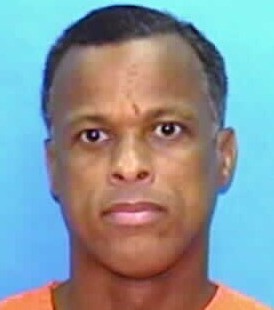
Jacob Dougan
Murderer Ervil LeBaron
Murderer · USA · 1972
Ervil Morrell LeBaron (1925 to August 16, 1981) was the leader of a polygamous…
35 victims
Ervil LeBaron
Murderer · USA · 1972
Ervil Morrell LeBaron (1925 to August 16, 1981) was the leader of a polygamous…
35 victims
 Marvin Gray
Murderer · USA · 1975
Marvin Gray was convicted killer who claimed responsibility for 23 slayings and…
23 victims
Marvin Gray
Murderer · USA · 1975
Marvin Gray was convicted killer who claimed responsibility for 23 slayings and…
23 victims
 Yahweh ben Yahweh
Murderer · USA · 1980
Yahweh ben Yahweh was born and legally named Hulon Mitchell Jr. (October 27, 19…
23 victims
Yahweh ben Yahweh
Murderer · USA · 1980
Yahweh ben Yahweh was born and legally named Hulon Mitchell Jr. (October 27, 19…
23 victims
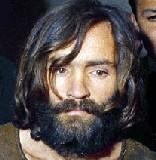 Charles Manson
Murderer · USA · 1969
Charles Milles Manson (born November 12, 1934) was an American criminal and mus…
9 victims
Charles Manson
Murderer · USA · 1969
Charles Milles Manson (born November 12, 1934) was an American criminal and mus…
9 victims
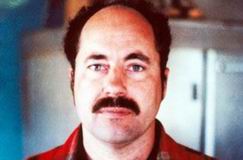 Leonard Lake
Serial killer · USA · 1983
Leonard Lake (October 29, 1945 – June 6, 1985) was an American serial killer. H…
25 victims
Leonard Lake
Serial killer · USA · 1983
Leonard Lake (October 29, 1945 – June 6, 1985) was an American serial killer. H…
25 victims
 Taichin Preyor
Murderer · USA · 2004
Taichin Preyor was sentenced to death on March 30, 2005. · February 26, 2004 —…
1 victim
Taichin Preyor
Murderer · USA · 2004
Taichin Preyor was sentenced to death on March 30, 2005. · February 26, 2004 —…
1 victim
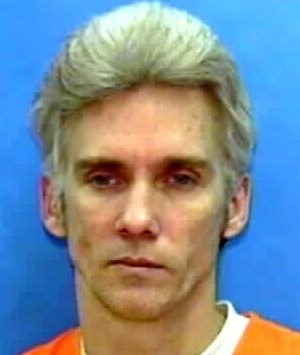 Robert Lester Patton
Murderer · USA · 1981
Robert Lester Patton Robert Lester Patton previously had been adjudicated not g…
1 victim
Robert Lester Patton
Murderer · USA · 1981
Robert Lester Patton Robert Lester Patton previously had been adjudicated not g…
1 victim
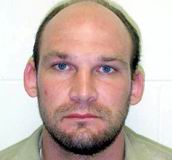 John Lotter
Murderer · USA · 1993
John L. Lotter was convicted in connection with the December 1993 deaths of Tee…
3 victims
John Lotter
Murderer · USA · 1993
John L. Lotter was convicted in connection with the December 1993 deaths of Tee…
3 victims
- Gender
- male
- Country
- USA
- Location
- Duval County, Florida, USA
- Date of birth
- July 11, 1947
- Age at first offence
- 27
- Characteristics
- hate crime, kidnapping, torture
- Victim profile
- Steve Orlando, 18
- Method of murder
- Shooting (.22 caliber pistol)
- Date(s) of murder
- June 17, 1974
- Years active
- 1974
- Date of arrest
- —
- Status
-
Sentenced to death
Sentenced to death on April 10, 1975; resentenced to death on October 25, 1979, and December 4, 1987
Case overview
Jacob Dougan was indicted for First-Degree Murder and was convicted and sentenced to death for the murder of Stephen Orlando in Jacksonville, Florida.
Timeline
- 06/17/74 — Dougan and four accomplices armed with a .22 caliber pistol and a knife set out in Jacksonville, Florida to kill a white person they termed “devils,” and picked up a hitchhiker named Stephen Orlando.
- 06/17/74 — The group drove Stephen Orlando to an isolated trash dump, ordered Orlando out of the car, threw him to the ground, and one accomplice began stabbing him with the knife.
- 06/17/74 — Dougan put his foot on Orlando’s head and fired two shots to Orlando’s head, including one striking Orlando in the cheek and one striking Orlando in the ear, killing him instantly.
- 09/26/74 — Dougan was indicted for First-Degree Murder.
- 03/05/75 — A jury returned a guilty verdict and recommended death by a vote of 10-2.
- 04/10/75 — Dougan was sentenced to death.
- 04/23/75 — Dougan filed a direct appeal with the Florida Supreme Court.
- 03/17/77 — The Florida Supreme Court upheld the conviction and sentence of death.
- 08/29/77 — Dougan filed a petition for writ of certiorari with the U.S. Supreme Court.
- 10/10/78 — The U.S. Supreme Court denied that petition.
- 09/07/78 — A Gardner relief petition was granted by the Florida Supreme Court, vacating the sentence and remanding for resentencing.
- 10/25/79 — Dougan was resentenced to death.
- 11/21/79 — Dougan filed a second direct appeal with the Florida Supreme Court.
- 04/09/81 — The Florida Supreme Court again affirmed the death sentence.
- 07/06/81 — Dougan filed a petition for writ of certiorari with the U.S. Supreme Court.
- 10/05/81 — The U.S.
- 03/01/82 — Dougan filed a petition for writ of habeas corpus with the Florida Supreme Court.
- 04/05/84 — The Florida Supreme Court granted the petition and ordered another direct appeal with separate counsel.
- 12/04/87 — Dougan was resentenced to death.
- 01/04/88 — Dougan filed a fourth direct appeal with the Florida Supreme Court.
- 04/01/92 — The Florida Supreme Court affirmed the death sentence.
- 08/21/92 — Dougan filed a petition for writ of certiorari with the U.S. Supreme Court.
- 10/19/92 — The U.S.
- 03/23/94 — Dougan filed a second petition for writ of habeas corpus with the Florida Supreme Court.
- 09/08/94 — The Florida Supreme Court denied that petition.
- 10/17/94 — Dougan filed a 3.850 motion in the circuit court, amended on 09/06/02 and pending.
Background
Dougan was born 07/11/47. He was 18-year-old at the time of the Father's Day evening incident described in the New York Times article, and later was 28-year-old at arrest. The case included discussion of his background as a Vietnam veteran and an organizer for black causes.
A handwritten letter of resignation from some anti-poverty program was initially found in a cardboard box containing files and literature collected by many detectives. The writing matched the note found on the body. The letter was signed by Jacob Dougan.
The New York Times article described that Steve Orlando played pool with friends at a Howard Johnson motel in Jacksonville, and that his parents were divorced; he lived with his mother in Jacksonville, Florida.
The offence
On the evening of 06/17/74, in Jacksonville, FL, Dougan, along with four accomplices, armed with a .22 caliber pistol and a knife, set out to kill a white person whom they termed “devils.” While driving to Jacksonville Beach, the men picked up a hitchhiker named Stephen Orlando and drove him to an isolated trash dump.
After arriving, the men ordered Orlando out of the car, threw him to the ground, and one of the accomplices began stabbing him with the knife. Dougan put his foot on the head of Orlando and fired two shots to Orlando’s head: one striking Orlando in the cheek and the other in the ear, killing him instantly.
A note was attached to Orlando’s body and read:
“Warning to the oppressive state. No longer will your atrocities and brutalizing of black people be unpunished. The black man is no longer asleep. The revolution has begun and the oppressed will be victorious. The revolution will end when we are free. The Black Revolutionary Army. All power to the people."
In addition to the note, the offenders recorded a number of audio tapes concerning the murder and sent them to Orlando’s mother and local media outlets. The New York Times article described that a man recorded audio tapes in gruesome detail about the torture of Orlando and sent the recordings to the victims’ families and TV stations.
The New York Times article stated that Orlando was found lying in the middle of the sandy road that leads to a dump the next morning, having been pummeled and tortured with a knife, and shot in the left cheek and then in the left ear. It further stated that a week after Orlando’s death, another white teenage boy was killed in the Jacksonville area under similar circumstances.
Investigation
The investigation was described as reaching a dead end in two months. A veteran homicide sergeant, Tommy Reeves, was placed in charge in August.
In late September, Reeves and other officers arrested Dougan.
Fingerprint evidence was described as follows: the detective sent the letters to the Federal Bureau of Investigation, which got Dougan’s fingerprints from the Air Force. The agency said both letters were Dougan’s and that there was a Dougan fingerprint on one of the tape recordings.
The New York Times article also described that Orlando had been found with a note impaled in his stomach with the knife, and that the note called for revolution by oppressed blacks and vowed to kill other whites.
Arrest
In late September, Tommy Reeves and other officers arrested Jacob Dougan. The New York Times article stated Dougan was 28-year-old at arrest.
Trial
Charges and jury verdict
Dougan was indicted for First-Degree Murder on 09/26/74.
A jury returned a guilty verdict and recommended death by a vote of 10-2 on 03/05/75.
The New York Times article described that defense counsel had little room for maneuver, except to argue temporary insanity caused by racial problems, and that testimony from William Hearn persuaded the jury to find Dougan guilty. It described the decision-making by a seven-member homicide panel.
Parties and counsel
The sentencing judge was The Honorable R. Hudson Olliff.
Trial attorneys included Ernest D. Jackson, Sr. & Dietra Micks – Private Attorneys.
Direct appeals included representation by:
- Ernest D. Jackson, Sr. (Direct Appeal (1977))
- Joseph M. Nursey (Direct Appeal (1981) after re-sentencing; Direct Appeal (1985) after order from FSC; Direct Appeal (1992) after re-sentencing)
- James E. Ferguson II (Direct Appeal (1992))
Collateral appeals included Mark Olive – Private.
Hearn statement and plea context
The New York Times article described a reduction in charges: in return for reduced charges, William Hearn, who had driven the car used in the kidnapping of Stephen Orlando, made a full statement naming Dougan as the leader of a plot to seize a “white devil” and execute him to promote black revolution. The New York Times article quoted Dougan’s alleged plot in describing that he and others sought to execute a “white devil” to promote black revolution.
Sentencing
First sentencing
On 04/10/75, Judge R. Hudson Olliff ordered that Dougan be sentenced to death. The New York Times article described that the judge ordered that Dougan be electrocuted.
The sentencing-related facts in the case record included:
- Dougan was sentenced to death on 04/10/75.
- The jury recommended death by a vote of 10-2.
Resentencing
Dougan was resentenced to death on 10/25/79 and on 12/04/87.
The case record stated:
- Resentenced as a result of a successful Gardner appeal on 10/25/79.
- Resentenced on 12/04/87, with the jury recommending a death sentence by a vote of 9-3, as a result of a successful habeas appeal.
Appeals
Direct appeal and Florida Supreme Court
Dougan filed a direct appeal with the Florida Supreme Court on 04/23/75, claiming:
- the trial court erred in deciding the venue of the trial; and
- he was denied a fair and impartial trial because the prosecutor failed to reveal complete details of a plea bargain agreement with a witness (an accomplice) in exchange for his testimony.
The Florida Supreme Court upheld the conviction and sentence of death on 03/17/77.
U.S. Supreme Court certiorari
Dougan filed a petition for writ of certiorari with the U.S. Supreme Court on 08/29/77, and it was denied on 10/10/78.
Gardner relief resentencing
After Gardner v. Florida, the Florida Supreme Court took a petition for Gardner relief to ensure the sentencing procedure in this case satisfied the Due Process clause of the U.S. Constitution. The Gardner petition was based on the fact that the defense did not have sufficient opportunity to rebut information contained in the presentence investigation report, which was used as evidence of aggravating factors in the sentencing phase of the trial.
On 09/07/78, the petition was granted, with the sentence vacated and the proceeding remanded to the trial court for resentencing.
Second direct appeal
Dougan filed a second direct appeal with the Florida Supreme Court on 11/21/79, arguing that he was prejudiced by the trial court’s early consideration of a presentence investigation report, which defense counsel had no opportunity to rebut.
On 04/09/81, the Florida Supreme Court affirmed the sentence of death.
U.S. Supreme Court certiorari (second)
Dougan filed another petition for writ of certiorari with the U.S. Supreme Court on 07/06/81 and it was denied on 10/05/81.
Habeas corpus and conflict of interest
Dougan filed a petition for writ of habeas corpus with the Florida Supreme Court on 03/01/82, citing ineffective assistance of counsel due to conflict of interest and failure to raise meritorious legal claims. The court ruled that a conflict of interest did exist, since the same counsel represented both Dougan and another conspirator in the same direct appeal to the FSC.
On 04/05/84, the court granted the petition and ordered another direct appeal be filed with separate counsel.
Third direct appeal issues and new sentencing hearing
Dougan’s third direct appeal with the Florida Supreme Court was filed on 04/05/84, citing:
- improper search and seizure,
- victim’s stepfather identifying the victim at trial,
- errors in jury instruction regarding felony murder,
- exclusion of relevant defense evidence at trial, and
- exclusion of death-scrupled prospective jurors.
The court found that during the sentencing phase of the trial, the state did not prove beyond a reasonable doubt all aspects of all the aggravating circumstances, vacated Dougan’s death sentence, and remanded for a new sentencing hearing with a new jury.
U.S. Supreme Court certiorari (third)
Supreme Court on 07/11/85 and it was denied on 03/31/86.
Fourth direct appeal
Dougan filed a fourth direct appeal with the Florida Supreme Court on 01/04/88, citing:
- race-biased use of peremptory challenges during jury selection,
- inability of the jury to recommend life imprisonment regardless of its findings as to aggravating and mitigating circumstances,
- errors in instructing the jury as to mitigating circumstances, and
- disproportionality of the death sentence.
On 04/01/92, the FSC affirmed the death sentence for Dougan.
U.S. Supreme Court certiorari (fourth)
Supreme Court on 08/21/92, and it was denied on 10/19/92.
Second habeas corpus and denial
Dougan filed a second petition for writ of habeas corpus with the Florida Supreme Court on 03/23/94, arguing that the jury was given inadequate instruction and weighed an invalid aggravating factor. The court found the error harmless and denied the petition on 09/08/94.
3.850 motion
Dougan filed a 3.850 Motion in the circuit court on 10/17/94, amended on 09/06/02, and it was pending.
Other details
The case information included:
- DC#: 046622
- Fourth Judicial Circuit, Duval County
- Case #: 74-4139
- Date of offense: 06/17/74
- Date of sentence: 04/10/75
- Date of resentencing: 10/25/79 and 12/04/87
The New York Times article described that:
- Dougan did not have a criminal record,
- his adoptive parents and church upbringing and his Eagle Scout badge erased any doubt in Ed Austin’s mind that Dougan knew right from wrong,
- Duval County had about 200 homicide prosecutions a year,
- the Orlando killing was one for which the prosecutor sought the death penalty in 1 percent to 5 percent of murders,
- Dougan had been in Courtroom 8 three times for the same crime,
- there had been 34 legal steps over whether Dougan would someday sit in Florida’s electric chair, and
- the article stated the case had not gone the Federal appeals court route.
The New York Times article described Dougan’s sentencing judge as a 64-year-old judge with decades at the Duval County courthouse who issued nine death sentences, but to seven men.
Spotted an error, or have more information about this case?