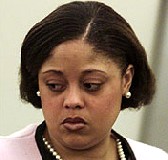
Chante Mallard
Murderer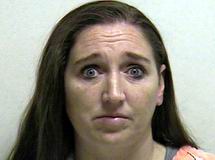 Megan Huntsman
Murderer · USA · 1996
Megan Huntsman was 40 at sentencing. She was a mother of three children who wer…
6 victims
Megan Huntsman
Murderer · USA · 1996
Megan Huntsman was 40 at sentencing. She was a mother of three children who wer…
6 victims
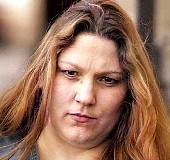 Angela Johnson
Murderer · USA · 1993
Angela Jane Johnson was convicted in federal court of aiding and abetting the m…
5 victims
Angela Johnson
Murderer · USA · 1993
Angela Jane Johnson was convicted in federal court of aiding and abetting the m…
5 victims
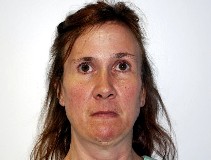 Michele Kalina
Murderer · USA · 1996
Michele Kalina pleaded guilty to murder for one of five infants she initially w…
5 victims
Michele Kalina
Murderer · USA · 1996
Michele Kalina pleaded guilty to murder for one of five infants she initially w…
5 victims
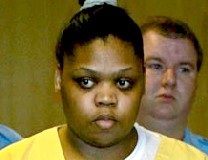 Tiffany Hall
Murderer · USA · 2006
Tiffany Hall was 24 when she was charged in September 2006. She later entered a…
5 victims
Tiffany Hall
Murderer · USA · 2006
Tiffany Hall was 24 when she was charged in September 2006. She later entered a…
5 victims
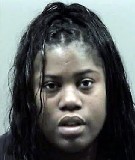 Banita Jacks
Murderer · USA · 2007
Banita Jacks was a Washington, DC resident convicted of murdering her four daug…
4 victims
Banita Jacks
Murderer · USA · 2007
Banita Jacks was a Washington, DC resident convicted of murdering her four daug…
4 victims
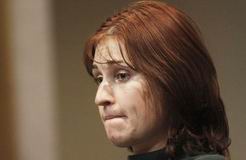 Holly Grigsby
Murderer · USA · 2011
Holly Grigsby was sentenced to life in prison without parole on July 15, 2014.…
4 victims
Holly Grigsby
Murderer · USA · 2011
Holly Grigsby was sentenced to life in prison without parole on July 15, 2014.…
4 victims
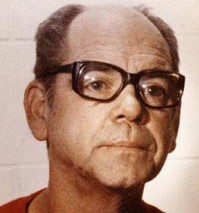 Gilbert Paul Jordan
Serial killer · Canada · 1965
Gilbert Paul Jordan (born December 12, 1931; died July 7, 2006) was known as th…
10 victims
Gilbert Paul Jordan
Serial killer · Canada · 1965
Gilbert Paul Jordan (born December 12, 1931; died July 7, 2006) was known as th…
10 victims
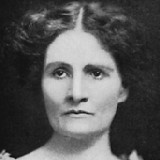 Linda Hazzard
Homicide · USA · 1911
Linda Burfield Hazzard was an alternative medicine practitioner who promoted fa…
1 victim
Linda Hazzard
Homicide · USA · 1911
Linda Burfield Hazzard was an alternative medicine practitioner who promoted fa…
1 victim
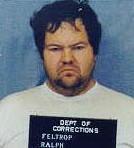 Ralph Cecil Feltrop
Murderer · USA · 1997
Ralph Cecil Feltrop was convicted of first-degree murder in the Circuit Court o…
1 victim
Ralph Cecil Feltrop
Murderer · USA · 1997
Ralph Cecil Feltrop was convicted of first-degree murder in the Circuit Court o…
1 victim
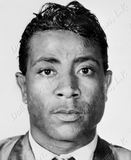 DeVernon LeGrand
Serial killer · USA · 1963
DeVernon LeGrand, who called himself a bishop and headed St. John’s Pentecostal…
12 victims
DeVernon LeGrand
Serial killer · USA · 1963
DeVernon LeGrand, who called himself a bishop and headed St. John’s Pentecostal…
12 victims
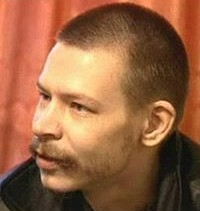 Alexander Spesivtsev
Serial killer · Rusia · 1991
Alexander Nikolayevich Spesivtsev (Russian: Александр Николаевич Спесивцев ), a…
19 victims
Alexander Spesivtsev
Serial killer · Rusia · 1991
Alexander Nikolayevich Spesivtsev (Russian: Александр Николаевич Спесивцев ), a…
19 victims
- Gender
- female
- Country
- USA
- Location
- Fort Worth, Texas, USA
- Date of birth
- 1975
- Age at first offence
- 26
- Characteristics
- alcohol, drug addict
- Victim profile
- Gregory Glenn Biggs, 37 (homeless man)
- Method of murder
- H itting with her car and then left to die embedded in the windshield
- Date(s) of murder
- October 26, 2001
- Years active
- 2001
- Date of arrest
- February 26, 2002
- Status
-
Imprisoned
Sentenced to 50 years in prison for murder and an additional 10 for tampering with evidence on June 27, 2003
Case details
Chante Jawan Mallard was convicted of murder and tampering with evidence in Tarrant County, Texas. She was sentenced to fifty years confinement for murder and ten years confinement for tampering with evidence, with the sentences to be served concurrently.
Victim
Gregory Glenn Biggs, a 37-year-old homeless man, was struck by Mallard’s car on or about October 26, 2001, and was later found dead in a park.
Relationship and other involved people
- Titilisee Fry testified that Mallard called her at approximately 3:30 a.m. and that Fry arrived at Mallard’s house after receiving Mallard’s call.
- Clete Jackson (also referred to as Clete a/k/a Vaughn and Clete Denal Jackson) testified that Mallard met him at his grandmother’s house and that they drove to Mallard’s house; he stated that he called his cousin for help after checking the man lodged in the car.
- Herbert Tyrone Cleveland was Cleveland’s cousin to Clete Jackson and pleaded guilty to tampering with evidence.
Timeline
- Oct. 25, 2001 — Mallard drank, split an ecstasy pill, smoked marijuana, and left the club about 2:30 a.m.
- Oct. 26, 2001 — Mallard drove and struck Biggs on a highway about 5 miles southeast of downtown Fort Worth; she parked her car in her garage with Biggs lodged in the windshield.
- Oct. 26, 2001 — Mallard picked up Clete Denal Jackson; after he arrived, Clete and Herbert Tyrone Cleveland removed the body to Cobb Park.
- Oct. 27, 2001 — Biggs’ body was found in Cobb Park.
- Jan. 7, 2002 — The medical examiner changed the autopsy status to “could not be determined” when information concerning Biggs’ death failed to surface.
- March 2002 — After police obtained information from one of Fry’s friends, Mallard was arrested.
- Feb. 26, 2002 — After receiving a tip, police went to Mallard’s house with a search warrant, found bloodstained and dented car evidence, and also found the front passenger seat burned in the back yard; Mallard was arrested, charged with failing to stop and render aid, and released on bond.
- March 6, 2002 — After talking to the medical examiner about Biggs’ injuries, authorities arrested Mallard again on a charge of murder.
- April 25, 2002 — Mallard was indicted on charges of murder and tampering with evidence.
- Jan. 8, 2003 — Clete Denal Jackson pleaded guilty to tampering with evidence and was sentenced to 10 years in prison.
- June 23, 2003 — Mallard pleaded guilty to tampering with evidence but pleaded innocent to murder; her murder trial began.
- June 26, 2003 — Jury began deliberations.
- June 27, 2003 — Jury sentenced Mallard to 50 years for murder and an additional 10 years for tampering with evidence; the sentences were to be served concurrently.
- March 3, 2005 — The appellate court delivered its opinion affirming Mallard’s convictions.
Background
Mallard and her friend Titilisee Fry had a drink and split an ecstasy pill before smoking a marijuana joint on the way to Joe’s Big Bamboo Club. Mallard socialized, danced, smoked marijuana, and drank three or more drinks before leaving the club about 2:30 a.m.. Fry could tell that Mallard was intoxicated, so Fry drove after they arrived at Fry’s house and Mallard decided to go home.
The offence
Collision and immediate events
Mallard’s statement admitted into evidence described driving toward home and striking a person, and it stated that the person had come through the right front windshield. Her statement said she parked her car in the garage and lowered the door, and that she wanted to take him to the hospital but was too scared.
Mallard admitted that the man was alive when she drove into her garage and that she heard him moan. Fry testified that Mallard borrowed her cell phone and called friends named Terrence and Vaughn, and that Mallard told Fry she had hit a white guy and that she had tried to get him off the car near the Martin/Village Creek area, but that he was too heavy. Fry testified that Mallard did not call 911 when Fry told Mallard to do so.
According to trial testimony, Mallard drove with Biggs lodged through the windshield and into her garage, shut the garage door, and prevented medical care from being provided.
Medical condition and death
An autopsy revealed Biggs suffered a near total amputation of his left leg and bled to death from this injury. The evidence included that Biggs initially survived the impact and could moan. Trial testimony also included that Mallard’s actions ensured Biggs’ death by foreclosing the possibility of medical treatment.
Felony murder theory and indictment
Mallard pleaded guilty to tampering with evidence and pleaded not guilty to murder. The murder indictment alleged that on or about October 26, 2001, Mallard intentionally or knowingly committed or attempted to commit the felony of failure to stop and render aid as proscribed in Texas Transportation Code 550.021, and that in the course of and in furtherance of the commission or attempt, or in immediate flight, she committed or attempted to commit an act clearly dangerous to human life by transporting Greg Biggs to her home when he was seriously injured and lodged in her car, and by secreting him in her garage which prevented him from receiving medical care, causing Biggs’ death.
The appellate court’s analysis addressed Mallard’s argument that the State failed to prove an act clearly dangerous to human life, and addressed the State’s position that driving Biggs to her house, with him bleeding and injured, and hiding him in her garage caused his death.
Investigation
Police obtained information from one of Fry’s friends and arrested Mallard in March 2002. Earlier, after receiving a tip from one of Mallard’s acquaintances, police went to Mallard’s house with a search warrant on Feb. 26, 2002, found bloodstained and dented car evidence, and found the front passenger seat burned in the back yard.
Firefighter Todd Breedlove received a report about someone who looked dead in Cobb Park and called 911. Brad Patterson, with the Fort Worth Police Department, arrived and completed a crime scene search, noting missing victim shoes and socks and concluding that the victim had been moved to the park and placed there where he could be found.
The medical examiner initially classified the autopsy results as pending but changed the status to “could not be determined” on January 7, 2002 when information concerning Biggs’ death failed to surface. After police obtained information from Fry’s friend and arrested Mallard, the medical examiner ruled Biggs’ death a homicide.
Arrest and charges
After being taken to a police station and giving a statement, Mallard was arrested and charged with failing to stop and render aid, and she was released on bond. After talking to the medical examiner about Biggs’ injuries, authorities arrested Mallard again on March 6, 2002 on a charge of murder. On April 25, 2002, Mallard was indicted on charges of murder and tampering with evidence.
Trial
Pleas
Mallard pleaded guilty to tampering with evidence but pleaded not guilty to murder. During the trial, the jury found Mallard guilty of both offences.
Key testimony about medical survivability
The appellate court recounted medical examiner testimony by Dr. Nizam Peerwani that driving with Biggs lodged in the windshield and leaving him in the garage without help would have aggravated his condition and contributed to his cause of death. The appellate court also summarized testimony indicating Biggs could have survived up to two hours lodged in the windshield and would have died from blood loss from the failure to receive medical attention.
Discussion of the jury charge issues
Mallard argued on appeal that the trial court erred by including a definition of transferred intent in the jury charge and by defining concurrent causation in the jury charge. The appellate court overruled the relevant points, concluding there was no error requiring reversal for transferred intent and concluding that inclusion of concurrent causation instruction did not egregiously harm Mallard, in part because the jury was not authorized to convict on that theory.
Post-arrest silence and mistrial
Mallard asserted that the trial court erred by overruling her request for a mistrial after the State allegedly commented on her post-arrest silence during the punishment phase. The appellate court stated that the objection was untimely and that Mallard forfeited the point.
Verbatim exchange during punishment phase cross-examination: [PROSECUTOR:] Ms. Mallard, I m going to ask you some questions about your testimony. We haven t talked before, right? [MALLARD:] No, sir. [PROSECUTOR:] May I approach, Your Honor? THE COURT: You may. [DEFENSE COUNSEL:] Your Honor objection, Your Honor. May we approach? (At the bench, on the record:) [DEFENSE COUNSEL:] That is a comment on the failure that is a comment on her ability to assert the Fifth Amendment. That s absolutely error. I do not want to call the jury s attention to it and focus on it, but I want a mistrial, and I want it right now. THE COURT: Denied. [DEFENSE COUNSEL:] Your Honor, I want for the record . . . exactly what he said. He said, You and I have not talked before, and that is clearly a comment on her assertion of the Fifth Amendment right. Clearly. [PROSECUTOR:] Your Honor, we just ask for a[n] instruction to disregard if he believes that s what I was referring to. That wasn t my intent. (Open court:) THE COURT: All right. Jury will disregard the last question. You may continue. [DEFENSE COUNSEL:] Your Honor, I renew my request for a mistrial. THE COURT: Denied.
Sentencing
On June 27, 2003, the jury sentenced Mallard to 50 years in prison for murder and an additional 10 years for tampering with evidence. The sentences were to run concurrently. Under Texas law as described in the case summary, Mallard would be eligible for parole after serving half of the term, and the summary stated she would be eligible for parole in 2027. The appellate opinion described her punishment as ten years confinement for tampering with evidence and fifty years confinement for murder.
Appeals
Mallard appealed her convictions for tampering with evidence and murder. She challenged:
- sufficiency of the evidence supporting her murder conviction,
- the trial court’s definition of transferred intent in the jury charge,
- the trial court’s charging on concurrent causation,
- the trial court’s overruling her motion for a mistrial based on the State’s alleged comment on her post-arrest silence.
The appellate court affirmed the trial court’s judgment and overruled Mallard’s points.
Outcome
Mallard’s murder conviction and tampering-with-evidence conviction were affirmed on appeal, and the judgment was upheld. The appellate court panel included SUE WALKER (Justice) with GARDNER, WALKER, and MCCOY, JJ. delivering the opinion.
Spotted an error, or have more information about this case?