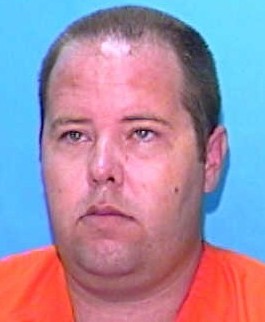
Robert Eugene Hendrix
Murderer Brian Kevin Rosenfeld
Murderer · USA · 1985
Brian Kevin Rosenfeld Brian Kevin Rosenfeld was sentenced to three concurrent l…
23 victims
Brian Kevin Rosenfeld
Murderer · USA · 1985
Brian Kevin Rosenfeld Brian Kevin Rosenfeld was sentenced to three concurrent l…
23 victims
 Yahweh ben Yahweh
Murderer · USA · 1980
Yahweh ben Yahweh was born and legally named Hulon Mitchell Jr. (October 27, 19…
23 victims
Yahweh ben Yahweh
Murderer · USA · 1980
Yahweh ben Yahweh was born and legally named Hulon Mitchell Jr. (October 27, 19…
23 victims
 Russell Ellwood
Murderer · USA · 1991
Russell Ellwood was a former taxi driver. Authorities suspected him of killing…
20 victims
Russell Ellwood
Murderer · USA · 1991
Russell Ellwood was a former taxi driver. Authorities suspected him of killing…
20 victims
 Robert Martines Perez
Murderer · USA · 1994
Name: Robert Martines Perez · Other name used in proceedings: Robert Martinez P…
15 victims
Robert Martines Perez
Murderer · USA · 1994
Name: Robert Martines Perez · Other name used in proceedings: Robert Martinez P…
15 victims
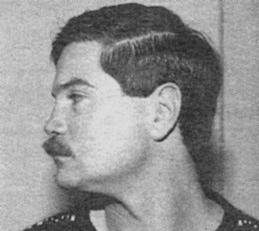 Thomas McIlvane
Mass murderer · USA · 1991
Thomas McIlvane was a former postal worker who committed suicide by shooting hi…
4 victims
Thomas McIlvane
Mass murderer · USA · 1991
Thomas McIlvane was a former postal worker who committed suicide by shooting hi…
4 victims
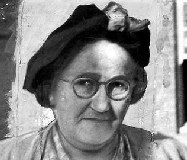 Caroline Grills
Serial killer · Australia · 1947
Caroline Grills (born Caroline Mickelson; 1890 – October 1960), was an Australi…
4 victims
Caroline Grills
Serial killer · Australia · 1947
Caroline Grills (born Caroline Mickelson; 1890 – October 1960), was an Australi…
4 victims
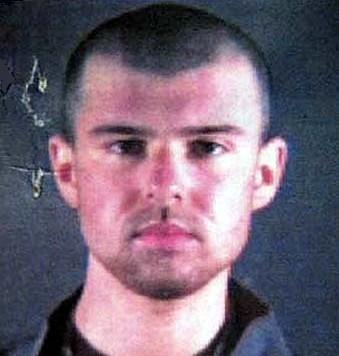 Aaron Lindh
Murderer · USA · 1988
Aaron Lindh, a 19-year-old adoptee, carried a .22-caliber rifle into the Madiso…
2 victims
Aaron Lindh
Murderer · USA · 1988
Aaron Lindh, a 19-year-old adoptee, carried a .22-caliber rifle into the Madiso…
2 victims
 Alexey Pichugin
Murderer · Russia · 1998
Alexei Vladimirovich Pichugin (Aleksey Pichugin) was born in the town of Orekho…
5 victims
Alexey Pichugin
Murderer · Russia · 1998
Alexei Vladimirovich Pichugin (Aleksey Pichugin) was born in the town of Orekho…
5 victims
 Richard Lee Adams
Murderer · USA · 1998
The District Court of Appeal of the State of Florida opinion 5D00-1685 Richard…
1 victim
Richard Lee Adams
Murderer · USA · 1998
The District Court of Appeal of the State of Florida opinion 5D00-1685 Richard…
1 victim
 Exzavious Gibson
Murderer · USA · 1990
Exzavious Lee Gibson was 25 years old when he was sentenced to death. He was co…
1 victim
Exzavious Gibson
Murderer · USA · 1990
Exzavious Lee Gibson was 25 years old when he was sentenced to death. He was co…
1 victim
- Gender
- male
- Country
- USA
- Location
- Lake County, Florida, USA
- Date of birth
- October 21, 1966
- Age at first offence
- 24
- Characteristics
- murder for hire
- Victim profile
- His cousin Elmer Scott and and Scott’s wife, Michelle
- Method of murder
- Shooting - Slashed their throats
- Date(s) of murder
- August 27, 1990
- Years active
- 1990
- Date of arrest
- —
- Status
-
Executed
Sentenced to death on November 4, 1991; executed by lethal injection in Florida on April 23, 2014
Case information
Robert Eugene Hendrix (DC # 104721; DOB: 10/21/66) was tried in the Fifth Judicial Circuit, Lake County (Lake County Case # 90-1297; CFA; Sentencing Judge: The Honorable Jerry Lockett). The trial attorneys were Thomas Turner & Edward Kirkland. The attorney for direct appeal was Michael S. Becker – Assistant Public Defender. The collateral appeals attorney was Harry Brody.
Timeline
- 08/27/90 — Date of offense.
- 08/28/1990 — Court date was set.
- 09/18/90 — Indicted on five counts: Count I Conspiracy to Commit Murder; Count II Conspiracy to Commit Murder; Count III First-Degree Murder; Count IV First-Degree Murder; Count V Armed Burglary.
- 09/20/91 — Defendant was found guilty by the trial jury on all counts.
- 09/23/91 — The jury unanimously recommended Death for both counts of First-Degree Murder.
- 11/04/91 — Date of sentence; Defendant was sentenced: Count I Conspiracy to Commit Murder—30 years; Count II Conspiracy to Commit Murder—30 years; Count III First Degree Murder—Death; Count IV First Degree Murder—Death; Count V Armed Burglary—Life.
- 12/09/91 — Direct appeal filed.
- 04/21/94 — Florida Supreme Court affirmed the conviction of First Degree Murder and the sentence of Death.
- 06/21/94 — Rehearing denied.
- 07/21/94 — Mandate issued.
- 09/19/94 — Petition filed for a writ of certiorari.
- 11/14/94 — U.S. Supreme Court denied petition.
- 02/29/96 — Rule 3.850 motion filed.
- 12/11/03 — Motion denied.
- 01/12/04 — Florida Supreme Court 3.850 appeal filed.
- 07/07/05 — Florida Supreme Court affirmed denial of 3.850 Motion.
- 07/28/05 — Mandate issued.
- 08/31/04 — Petition for a writ of habeas corpus filed with the Florida Supreme Court.
- 07/07/05 — Florida Supreme Court denied habeas petition.
- 07/28/05 — Mandate issued.
- 07/27/06 — Petition for writ of habeas corpus filed in the U.S. District Court, Middle District.
- 05/03/07 — U.S. District Court denied petition.
- 07/25/07 — Certificate of Appealability filed.
- 08/08/07 — COA granted.
- 07/06/07 — Appeal filed in the U.S. Court of Appeals, 11th Circuit.
- 06/16/08 — Appeal denied.
- 08/11/08 — Petition for writ of certiorari filed in the U.S. Supreme Court.
- 11/03/08 — Petition denied.
- 04/23/2014 — Executed by lethal injection in Florida at Florida State Prison in Starke at 6:21 p.m.
Victims and background
Elmer Scott and Michelle Scott were murdered at their Lake County home. Their daughter, Rachel Scott, was only 5 months old when her parents were killed and was home in her crib but was not harmed. Elmer Scott’s sister, Lisa Hunt, was also a cousin of Hendrix.
The offence
Hendrix broke into a house with his cousin, Elmer Scott. Soon after the incident, Scott was caught and entered into a plea agreement with the State.
As part of that plea arrangement, Scott agreed to plead no contest to a lesser charge of simple burglary. His adjudication was withheld and he received a two-year sentence of community control. Scott’s agreement to testify truthfully against Hendrix was a condition of the plea. Based on Scott’s deposition, Hendrix was arrested and charged with armed burglary of the dwelling.
Hendrix did not want to accept the plea offer and told several friends prior to his court date that he intended to kill Scott to prevent him from testifying. Hendrix also discussed plans to kill Scott with his live-in girlfriend, Denise Turbyville. Hendrix approached several people and attempted to get a “throw-away” pistol that was not traceable back to him.
On August 27, 1990 (the day before the court date), Hendrix arrived at his residence with a handgun, test-fired it, and attempted to construct a silencer for it. After 11 p.m., Hendrix decided to go to Scott’s residence and told Denise to get ready. Hendrix wore gloves, a mask, and a hat. Denise drove near Scott’s mobile home, dropped him off, drove to the county line to wait, and pulled over.
Prosecutors said Denise heard several shots fired. A short period of time later, Hendrix returned to the car and prompted Denise to quickly leave. After they returned to their residence, they elected to leave with the lights off. Hendrix proceeded to shower and to burn his clothing behind the residence.
Hendrix gave Denise an account of the murders. Hendrix told Denise that he shot Elmer Scott in the head, that when Michelle Scott tried to fight him he slashed her throat with a knife, and that he hit Elmer over the head with the gun butt and slashed his throat “for insurance.” As he shot Elmer, Hendrix swore: “I'll see you in hell!”
The medical examiner testified that each victim had been shot, bludgeoned, and stabbed.
Hendrix was convicted of conspiracy to commit murder (two counts), first-degree murder (two counts), and armed burglary (one count).
Counts and trial findings
- Count I: Conspiracy to Commit Murder
- Count II: Conspiracy to Commit Murder
- Count III: First-Degree Murder
- Count IV: First-Degree Murder
- Count V: Armed Burglary
The trial jury found Hendrix guilty on all counts.
Evidence and witnesses
Denise Turbyville drove Hendrix to the Scotts’ trailer area and testified about what she heard and what Hendrix told her afterward. Turbyville pleaded guilty to two counts of second-degree murder and was sentenced to 75 years in prison.
Roger LaForce was a witness against Hendrix. LaForce was described as a confidential informant for a narcotics task force by Hendrix’s attorneys, who said LaForce could stand to gain a lighter sentence in exchange for assistance. In the postconviction proceedings, LaForce’s prior cooperation as a confidential informant with a drug task force was addressed in connection with undisclosed impeachment material.
Sentencing
The jury unanimously recommended a sentence of death for each murder. Judge Jerry Lockett followed the jury’s recommendation and imposed death sentences for both murders, finding five aggravating circumstances and nonstatutory mitigating circumstances.
Aggravating circumstances found
The following aggravators were found:
- Hendrix committed the murders in a cold, calculated, and premeditated manner (CCP)
- The murders were committed by Hendrix to avoid lawful arrest
- He committed the murders in the course of an armed burglary
- The murders were committed in an especially heinous, atrocious, or cruel manner (HAC)
- Hendrix had been convicted of a prior capital felony
Nonstatutory mitigating circumstances found
The court found the following nonstatutory mitigating circumstances applied:
- The Defendant’s family history, juvenile history, and close relationship with his mother and sisters, as well as the sentence of his co-defendant herein, Alma Denise Turbyville, to seventy-five (75) years in the Department of Corrections as a result of her plea negotiated with the State in return for her cooperation herein, give rise to non-statutory mitigating circumstances, which have been given weight by this court.
Penalty-phase testimony
During the penalty phase, Dr. Tell testified that he interviewed Hendrix and found Hendrix to be in the middle range of intellectual functioning, with no learning disability or psychosis but with feelings of anger and aggression. Dr. Paskewicz testified that Hendrix’s anger and aggression may have been caused by beatings at the hands of his father. Hendrix’s father testified that Hendrix worked hard as he was growing up. Hendrix’s sister testified that the father had a bad temper, had been hard on the boys, and had beat them with belts. A second sister testified that Hendrix was a good brother and wonderful uncle to her daughter.
In the postconviction evidentiary hearing, additional mitigation evidence was discussed and additional mental health expert testimony was presented regarding brain damage and effects of drugs.
Investigation and arrest
Evidence in the case showed Hendrix shot Scott in the face in his trailer home, hit him in the head with the gun, and stabbed him in the neck the night before Hendrix’s trial in the armed burglary case was to begin in August 1990.
Prosecutors said Hendrix killed the couple to prevent one of them from testifying against him in the armed burglary trial. Hendrix’s attorney said no forensic evidence linked Hendrix to the murders and argued that witnesses against him were unreliable.
Hendrix’s arrest occurred after Scott’s deposition.
Postconviction and appeals
Florida Supreme Court — direct appeal
Hendrix raised nine claims on direct appeal, and the State cross-appealed. The Florida Supreme Court rejected all of Hendrix’s arguments except for the conspiracy-to-murder Michelle Scott issue. The Florida Supreme Court reversed and vacated the conviction and sentence for one conspiracy charge.
The U.S. Supreme Court denied Hendrix’s petition for a writ of certiorari.
U.S. Supreme Court — denial of certiorari
- Hendrix filed a petition for a writ of certiorari; the U.S. Supreme Court denied it on 11/14/94.
- Hendrix filed another petition for a writ of certiorari; the U.S. Supreme Court denied it on 11/03/08.
Rule 3.850 postconviction proceedings in Florida
Hendrix filed a timely motion for postconviction relief, later amended, raising twenty-five claims. Judge Lockett summarily denied several claims and granted an evidentiary hearing for claims 4, 12, and 24. Judge Lockett retired before the hearing, and Judge Law was assigned; Hendrix requested the opportunity to depose Judge Lockett and the codefendant’s attorneys. Hendrix moved to disqualify Judge Law, which the court granted, and Judge Hill was assigned to the case. Judge Hill allowed Hendrix to depose Judge Lockett but only relating to whether Hendrix’s shackles were visible to the jury.
A multi-day evidentiary hearing occurred with counsel presenting evidence regarding:
- mitigation evidence from lay witnesses about Hendrix’s drug abuse problems, emotional and physical abuse at home, and a head injury
- mitigation evidence that could have been presented by mental health experts
- undisclosed information relating to Roger LaForce’s prior record as a confidential informant
- expert testimony about whether the HAC aggravator was present
- evidence that Hendrix was shackled during the trial
- ineffective assistance of counsel
Twenty-three witnesses testified during the evidentiary hearing.
The postconviction court denied Hendrix’s remaining claims and Hendrix appealed that denial and also filed a petition for a writ of habeas corpus.
Issues raised on the Rule 3.850 appeal
Hendrix raised four claims:
- Whether the postconviction court erred in denying a claim that newly discovered evidence about LaForce and Judge Lockett demonstrated denial of a neutral and impartial judge.
- Whether the postconviction court erred in holding that shackling did not deny Hendrix his right to a fair trial.
- Whether the postconviction court erred in denying relief on ineffective assistance of counsel claims.
- Whether the postconviction court erred in denying relief on the claim that the State failed to disclose Brady information relating to witness LaForce.
The court summarily disposed of the first claim because it was not properly preserved.
The court denied relief on the remaining claims.
Habeas corpus petition
In the sole habeas corpus claim, Hendrix argued that his appellate counsel was ineffective for failing to raise the shackling claim on direct appeal. The petition was denied.
U.S. District Court and U.S. Court of Appeals
Hendrix filed a petition for writ of habeas corpus in the U.S. District Court, Middle District; it was denied on 05/03/07. A certificate of appealability was granted on 08/08/07. Hendrix’s appeal in the U.S. Court of Appeals, 11th Circuit was filed on 07/06/07 and denied on 06/16/08.
Aftermath and execution
Hendrix executed on April 23, 2014. He was pronounced dead at 6:21 p.m. at Florida State Prison in Starke shortly after the lethal injection procedure began. He made no final statement.
Earlier Wednesday, the U.S. Supreme Court denied Hendrix’s last-minute request for a stay without comment. State corrections officials stated Hendrix ate a last meal consisting of pork chops, sausage gravy and biscuits, German chocolate cake, and a soft drink.
Lisa Hunt described a sense of relief from the execution, and Rachel Scott stated: “I plan on keeping them alive in my heart and suggest everyone else do the same. I will always continue to tell their story,” she said.
Other details
Prior convictions and juvenile
The Florida Supreme Court’s footnote listed that one of the aggravating circumstances included that Hendrix had been convicted of a prior capital felony. The State cross-appealed on whether the trial court erred in refusing to allow the State to present as an aggravating factor that Hendrix had a prior conviction for a violent felony as a juvenile.
Trial participation and attorney decisions
Hendrix’s attorney, Harry Brody, argued that the presiding judge had a conflict of interest, that Hendrix’s trial lawyer was ineffective at presenting mitigating circumstances during sentencing, and that Hendrix was shackled during his trial, leading jurors to a biased impression that he was dangerous.
During trial, Hendrix’s attorney Harry Brody also said the presiding judge conflict and alleged ineffective assistance.
Trial defense counsel Thomas Turner (later a circuit judge in the Ninth Judicial Circuit of Florida) testified in the postconviction proceedings that Turner learned Hendrix had been examined by Dr. Krop, but chose not to call him because Dr. Krop believed the murders were cold, calculated acts not caused by mental illness or defect. Turner stated this strategy was intended to avoid the jury hearing details of the crime and not “buy a psychiatric defense” or any defense at all.
Turner also testified that he did not want to present evidence of Hendrix’s voluntary use of drugs and alcohol in the penalty phase because he did not believe it was viable in light of Hendrix being clear-headed at the time of the murder. Turner further testified that he chose instead to argue Hendrix had many problems and was crying out for help, but that the help was never provided. Turner conceded the HAC aggravator because the evidence showed an extremely brutal murder.
Shackling evidence
During postconviction proceedings, Judge Lockett and Arthur Newcombe, a bailiff from Hendrix’s trial, testified that jurors never would have been able to see Hendrix’s shackles. Newcombe testified about an escape plot and a shank found in Hendrix’s cell.
Evidence described about LaForce disclosure
The court found that information about Roger LaForce’s prior cooperation with the Lake County drug task force should have been disclosed as impeachment evidence favorable to Hendrix. It determined that disclosure would not likely have put the case “in such a different light as to undermine confidence in the verdict.” The court noted LaForce testified he was receiving nothing and gained nothing from testifying and had hoped the State attorney’s office would cut him a deal for coming forward.
Factors contributing to delay in sentence
The direct appeal took three years for a decision to be rendered. The Circuit Court 3.850 was pending for nearly eight years.
Footnote content preserved
The court’s footnotes listed:
- Five aggravators including CCP, avoidance of lawful arrest, armed burglary, HAC, and a prior capital felony conviction.
- Nonstatutory mitigators as quoted above.
- Appellate claims listed included: (1) denying motion to disqualify the judge; (2) denying motion to strike the jury panel based on under-representation of African-Americans; (3) denying motions for mistrial based on improper comments during opening and closing; (4) denying mistrial based on prejudicial effect of emotional outburst by the victim’s father; (5) permitting admission of inflammatory photos of the victim; (6) denying motion for judgment of acquittal on conspiracy counts; (7) failing to give limiting instructions on HAC and CCP; (8) failing to hold Florida’s death penalty statute unconstitutional; and (9) failing to hold HAC unconstitutionally vague.
Spotted an error, or have more information about this case?