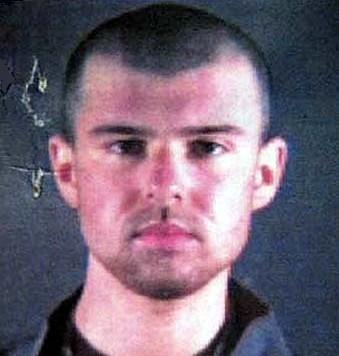
Aaron Lindh
Murderer Brian Kevin Rosenfeld
Murderer · USA · 1985
Brian Kevin Rosenfeld Brian Kevin Rosenfeld was sentenced to three concurrent l…
23 victims
Brian Kevin Rosenfeld
Murderer · USA · 1985
Brian Kevin Rosenfeld Brian Kevin Rosenfeld was sentenced to three concurrent l…
23 victims
 Yahweh ben Yahweh
Murderer · USA · 1980
Yahweh ben Yahweh was born and legally named Hulon Mitchell Jr. (October 27, 19…
23 victims
Yahweh ben Yahweh
Murderer · USA · 1980
Yahweh ben Yahweh was born and legally named Hulon Mitchell Jr. (October 27, 19…
23 victims
 Russell Ellwood
Murderer · USA · 1991
Russell Ellwood was a former taxi driver. Authorities suspected him of killing…
20 victims
Russell Ellwood
Murderer · USA · 1991
Russell Ellwood was a former taxi driver. Authorities suspected him of killing…
20 victims
 Robert Martines Perez
Murderer · USA · 1994
Name: Robert Martines Perez · Other name used in proceedings: Robert Martinez P…
15 victims
Robert Martines Perez
Murderer · USA · 1994
Name: Robert Martines Perez · Other name used in proceedings: Robert Martinez P…
15 victims
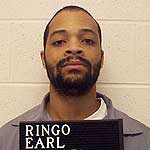 Earl Ringo
Murderer · USA · 1998
Earl Ringo, Jr. was a prisoner under sentence of death in the State of Missouri…
2 victims
Earl Ringo
Murderer · USA · 1998
Earl Ringo, Jr. was a prisoner under sentence of death in the State of Missouri…
2 victims
 Gerald Lee Powers
Murderer · USA · 1996
Gerald Lee Powers was convicted in Tennessee of first degree felony murder in t…
1 victim
Gerald Lee Powers
Murderer · USA · 1996
Gerald Lee Powers was convicted in Tennessee of first degree felony murder in t…
1 victim
 Carl Coppolino
Murderer · USA · 1965
Carl Anthony Coppolino was a retired physician and an anesthesiologist. · July…
1 victim
Carl Coppolino
Murderer · USA · 1965
Carl Anthony Coppolino was a retired physician and an anesthesiologist. · July…
1 victim
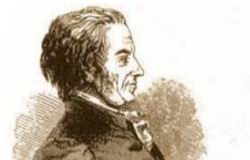 John Tawell
Murderer · United Kingdom · 1845
John Tawell was a British murderer. In 1845, he became the first person to be a…
1 victim
John Tawell
Murderer · United Kingdom · 1845
John Tawell was a British murderer. In 1845, he became the first person to be a…
1 victim
 Jose de la Cruz
Murderer · USA · 1987
Jose De La Cruz was convicted for the 1988 murder of Domingo Rosas. De La Cruz…
1 victim
Jose de la Cruz
Murderer · USA · 1987
Jose De La Cruz was convicted for the 1988 murder of Domingo Rosas. De La Cruz…
1 victim
 Ruth Blay
Infanticide? · USA · 1768
Ruth Blay died on December 30, 1768. She was executed by hanging. Ruth Blay was…
1 victim
Ruth Blay
Infanticide? · USA · 1768
Ruth Blay died on December 30, 1768. She was executed by hanging. Ruth Blay was…
1 victim
- Gender
- male
- Country
- USA
- Location
- Dane County, Wisconsin, USA
- Date of birth
- 1968
- Age at first offence
- 20
- Characteristics
- shooting spree
- Victim profile
- Coroner Clyde Chamberlain and secretary Eleanor Townsend
- Method of murder
- Shooting ( .22-caliber rifle)
- Date(s) of murder
- January 15, 1988
- Years active
- 1988
- Date of arrest
- Same day (wounded by police)
- Status
-
Life imprisonment
Sentenced to two consecutive life terms in prison; additional 35 years imposed; conviction affirmed in Lindh v. Murphy, warden Aaron Lindh (U.S. Supreme Court, 23 June 1997) after reversal and remand on whether AEDPA chapter 153 amendments applied to pending noncapital cases
Case overview
Aaron Lindh, a 19-year-old adoptee, carried a .22-caliber rifle into the Madison Police Department detective bureau and opened fire on Jan. 15, 1988. A Wisconsin jury convicted Aaron of fatally shooting coroner Clyde Chamberlain and secretary Eleanor Townsend.
In a separate trial, Aaron was found to have been sane at the time of the killings. He was sentenced to two consecutive life terms in prison and an additional 35 years for the shooting deaths and wounding of Erik Erickson, who was paying a parking ticket when Aaron went on his shooting spree.
At the age of 29, Aaron was serving his sentence at Columbia Correctional Institution when he got a new sanity hearing.
Timeline
- Jan. 15, 1988 — Aaron Lindh carried a .22-caliber rifle into the Madison Police Department detective bureau and opened fire; he fatally shot coroner Clyde Chamberlain and secretary Eleanor Townsend; he also shot Erik Erickson, who was paying a parking ticket, and Erickson was not killed.
- 1988 — A Wisconsin jury convicted Aaron of two counts of first-degree murder; attorneys maintained that he was insane when he went on a shooting rampage at the Dane County Courthouse in January 1988.
- After the 1988 conviction — In a separate trial, Aaron was found to have been sane at the time of the killings; he received two consecutive life terms plus 35 years and three months.
- 1992 — On July 9, 1992, Aaron Lindh filed a habeas corpus application in the United States District Court; relief was denied in October 1995.
- 1995 — A federal judge overturned Lindh’s sentence in 1997, ruling that the trial judge erred when it prevented the defense from cross-examining Dr. Roberts on his own impending criminal charges.
- At age 29 — Aaron Lindh served his sentence at Columbia Correctional Institution and got a new sanity hearing.
- 1997 — In 1997, the Supreme Court case Lindh v. Murphy, warden, considered whether the Antiterrorism and Effective Death Penalty Act of 1996 amendments to chapter 153 applied to Lindh’s pending noncapital case; the Court reversed and remanded on the timing question.
- April 24, 1996 — The Antiterrorism and Effective Death Penalty Act of 1996 was signed into law on April 24, 1996.
- April 14, 1997 — Oral argument occurred on April 14, 1997.
- June 23, 1997 — The U.S. Supreme Court decided the case on June 23, 1997.
Background
Aaron Lindh was an adoptee adopted by a white family. He was described as black, and his adoption played a role in his defense. Defense lawyers said that, “To understand what happened on Jan. 15, 1988, you have to understand Aaron's whole life.”
His life of crime began at age 4 with shoplifting, setting fires, stealing, fighting, and fantasizing about murder and trying to kill himself. The woman who adopted him said he tried to hang himself with a belt in a closet.
Mary Ann Lindh told the court that despite her family’s love, their adoptee told them that he would rob them, burn down their house, and kill them.
Several therapists, doctors and others treated or analyzed Aaron during his troubled childhood. Aaron was taken from his mother when he was 11 days old by Milwaukee County social services. The Lindh family of Madison adopted him when he was just 4 months old.
A Madison psychologist indicated that Aaron’s lack of opportunity to bond with his parents marked him for life. He suffered from “reactive attachment disorder,” stemming from family disruptions during infancy that made it difficult for children to ever connect with people.
Yale psychiatrist, Dr. Ezra Griffith, testified that Aaron had a lifetime of mental problems, suffering from anti-social personality disorder, borderline personality disorder, and narcissistic personality disorder.
Fifteen previous witnesses described Aaron as having a life-long battle with mental problems. He continued to exhibit signs of mental illness throughout his childhood and was treated by various counselors and doctors, and spent most of his teenage years in juvenile court-ordered treatment centers, foster homes, or group homes.
Griffith said Aaron’s impaired logic perceived problems as rejections and that events before the shootings were seen as a series of abandonments. The events included:
- his credit union’s refusal to grant him a loan unless he had a co-signer,
- his adopters’ refusal to co-sign,
- a second burglary of his home,
- his view that police didn’t care that he was burglarized,
- his belief that a former roommate stole his belongings, and
- a dispute with his landlord.
Aaron’s defense maintained that he was a “tragic loner” and that he was depressed, unable to bond with anyone, unable to grasp the importance or meaning of truth, and was “a thief from age 4” who also later set fires and was confused about his identity as an interracial child adopted by a white family.
Prosecutor John Burr, who prosecuted Aaron the first time, agreed with the defense description.
The prosecution argued that Aaron was lucid, methodical and in complete control when he decided to kill the people he encountered at the courthouse. Prosecutor John Burr said that Lindh knew exactly what he was doing because he changed out of a short coat into a longer one to conceal the weapon as he entered the courthouse.
The prosecution also claimed that before shooting the county coroner, Aaron allegedly responded to his victim’s attempts to soothe him by saying, “Take that, you son-of-a -bitch!”
State experts argued that Aaron suffered from anti-social personality disorder, which they said did not qualify as a mental disease but did explain his propensity for negative behavior, and they said Aaron showed no evidence of a psychotic breakdown.
The offence
On Jan. 15, 1988, Aaron Lindh carried a .22-caliber rifle into the Madison Police Department detective bureau and began shooting.
Erik Erickson was paying a parking ticket when Aaron went on his shooting spree. Erik Erickson was shot in the head but was not killed.
Aaron also shot and killed secretary Eleanor Townsend, who was behind Erik Erickson.
Aaron killed the coroner, Clyde Chamberlain.
With sheriff’s deputies in pursuit, Aaron left the office and made his way down the hallway to the coroner’s office, where he killed the coroner. He was then trapped by the pursuing sheriff’s deputies.
The officers shot Aaron twice and arrested him.
Investigation
The material described pre-shooting events that were treated as abandonments by the defense and that occurred prior to the shooting:
- Aaron completed an 11 p.m. to 7 a.m. shift at Webcrafters book manufacturing company, where he worked full-time for almost three years.
- Aaron went to his credit union to inquire about a loan.
- Aaron returned home and found his apartment burglarized and that his new TV and VCR were stolen.
- Since there was no forced entry and his former roommate Bart still had a key, Aaron suspected Bart.
- Aaron reported the burglary to police but was irked when the investigating officer chastised him for leaving his ground floor windows open.
- Aaron tried to obtain a gun.
- Aaron acquired a gun from another former roommate, Paul.
- Aaron went to a local K-mart to buy ammunition.
- He tried to find Bart by making various calls but was unsuccessful.
- After being frustrated by his inability to find Bart, Aaron went to the police station within the Dane County courthouse to check on progress of the burglary investigation.
- There he was told that the detective on his case had been reassigned.
- Angered, Aaron returned to his car and loaded his gun.
- Aaron went back into the courthouse and into the sheriff’s office, took aim at his first victim, and began shooting.
The retired Sheriff’s Deputy, who shot Aaron, said that the adoptee kept repeating, “Shoot me. Kill me. I'm going to shoot you.''
Arrest
The officers shot Aaron twice and arrested him after he was trapped by pursuing sheriff’s deputies.
Trial
Conviction phase
Sanity phase and sentencing
In the separate sanity trial, Aaron was found to have been sane at the time of the killings and was sentenced to two consecutive life terms in prison and an additional 35 years.
The material also described the first trial as a shooting spree insanity trial, stating that:
- Urging jurors to be merciful, defense attorneys claimed Lindh was insane when he went on a shooting rampage at the Dane County Courthouse in January 1988.
- Defense attorneys said Lindh did not know right from wrong at the time and deserved counseling, not incarceration.
- Jurors were not convinced.
- Lindh was sentenced to two consecutive life sentences plus 35 years and three months.
In addition to the murder convictions, the material said Aaron Lindh pleaded guilty to carrying a concealed weapon and was convicted on one count of attempted murder for shooting another person in the head.
Key testimony came from state psychiatrist Dr. Leigh Roberts, who refuted the defense’s insanity theory.
Evidence on Dr. Roberts and cross-examination
During the penalty phase of Aaron Lindh’s trial, the defense wanted to damage Dr. Roberts’ credibility by confronting him about his own impending criminal charges stemming from sexual misconduct. Roberts was accused of having sex with several of his patients, but the trial judge did not allow that evidence into Lindh’s trial.
After Lindh’s conviction and sentencing, Dr. Roberts pleaded no contest to a single misdemeanor charge of sexual misconduct and received probation. He voluntarily surrendered his psychiatrist’s license.
Appeals
Federal habeas corpus and Supreme Court timing issue
In 1997, a federal judge overturned Lindh’s sentence, ruling that the trial judge erred when it prevented the defense from cross-examining Dr. The federal judge found the information critical for impeaching Dr. Roberts’ credibility.
The material also said defense lawyers suggested that Roberts’ testimony against Lindh was influenced by his desire to cut a deal with prosecutors for his sexual misconduct charges.
Lindh v. Murphy, warden Aaron Lindh, was decided by the U.S. Supreme Court on June 23, 1997. The Court considered whether the amended federal habeas provisions in chapter 153 applied to a pending noncapital case.
- The Court stated that the Supreme Court issue involved whether new provisions of chapter 153 generally apply only to cases filed after the Antiterrorism and Effective Death Penalty Act of 1996 became effective.
- The Court held that the chapter 153 amendments did not apply to pending noncapital cases such as Lindh’s.
- The Court reversed and remanded the judgment of the Court of Appeals.
The Supreme Court decision included:
- “Held: Since the new provisions of chapter 153 generally apply only to cases filed after the Act became effective, they do not apply to pending noncapital cases such as Lindh's. Pp. 324-337.”
- “96 F.3d 856, reversed and remanded.”
- “SOUTER, J., delivered the opinion of the Court, in which STEVENS, O'CONNOR, GINSBURG, and BREYER, JJ., joined.”
- “REHNQUIST, C. J., filed a dissenting opinion, in which SCALIA, KENNEDY, and THOMAS, JJ., joined, post, p. 337.”
The Supreme Court record also stated that Lindh was tried on noncapital murder and attempted murder charges and that:
- In response to his insanity defense, the State called a psychiatrist who had examined Lindh but had come under criminal investigation for sexual exploitation of patients before the trial began.
- Lindh’s attempt to question the doctor about that investigation was barred by the trial court.
- Lindh was convicted.
- Lindh was denied relief on direct appeal where he claimed a violation of the Confrontation Clause.
- Lindh raised that claim again in a federal habeas corpus application, which was denied, and he promptly appealed.
Seventh Circuit after Supreme Court remand (habeas analysis)
After the Supreme Court remand, the Seventh Circuit reversed and remanded with instructions to issue a writ of habeas corpus requiring Wisconsin to treat Lindh as not criminally responsible for the killings unless within 120 days it offered him a new trial on the mental-disease-or-defect question.
The Seventh Circuit described the Confrontation Clause issue as involving psychiatrist Leigh Roberts’ testimony. The material stated:
- At the mental-condition phase of Lindh’s trial, psychiatrist Leigh Roberts testified that Lindh did not have a mental disease when he killed two people and tried to kill a third.
- The jury reached the same conclusion.
- The prosecutor elicited background information leading the jury to infer Roberts was a pillar of the medical community.
- Other evidence that the jury did not hear included that Roberts sexually abused some of his patients, Roberts was about to lose his medical license, and Roberts had stood a chance of going to prison.
- The Seventh Circuit said Lindh could have used excluded evidence to show Roberts had a reason to be biased in the prosecutor’s favor and to show the background information used to add luster to Roberts was misleading.
The Seventh Circuit held that limiting cross-examination violated the Constitution and that the denial was not harmless given the prosecutor’s presentation of Roberts’ credentials.
Kanne, Circuit Judge, dissented. The dissent argued:
- The Confrontation Clause should not have applied to the second phase of Lindh’s trial.
- Even if it applied, the trial judge did not violate the Constitution by limiting cross-examination of Dr. Roberts.
- The dissent argued that there was no evidence Roberts changed his opinion to favor the State.
- The dissent also stated that Roberts’ alleged misconduct was unrelated to his diagnosis and did not impeach his overall professional credibility.
Sentencing
Aaron Lindh was sentenced to two consecutive life terms in prison. An additional 35 years were imposed for the shooting deaths and wounding of Erik Erickson.
The material also described that:
- He was also convicted on one count of attempted murder for shooting another person in the head.
- He pleaded guilty to carrying a concealed weapon.
Aaron was silent as he was resentenced in connection with the second sanity trial, which again sentenced him to two life terms plus 35 years in prison.
Outcome
Aaron Lindh was found sane at the time of the killings in the separate sanity trial and was sentenced accordingly to two consecutive life terms plus additional years.
In Lindh v. Murphy, warden, the U.S. Supreme Court held that the AEDPA chapter 153 amendments did not apply to pending noncapital cases such as Lindh’s, reversing and remanding the Court of Appeals.
Other details
People named in the material
- Aaron Lindh — defendant/adoptee; 19-year-old adoptee at the time of the shootings; served his sentence at Columbia Correctional Institution.
- Clyde Chamberlain — coroner; was fatally shot.
- Eleanor Townsend — secretary; was killed.
- Erik Erickson — was shot in the head; was not killed; was paying a parking ticket.
- John Burr — prosecutor.
- Mary Ann Lindh — adoptee’s adoptive mother.
- John Lindh — adoptee’s adoptive father.
- Martin Fliegel — child psychiatrist who treated Aaron for three years and testified about intimacy.
- Ezra Griffith — Yale psychiatrist who testified about lifelong mental problems.
- Leigh Roberts — state psychiatrist who refuted insanity theory and later pleaded no contest to misdemeanor sexual misconduct.
- Bryan Robinson — reporter credited with “Reported by Court TV's Jane Bigelsen.”
- Jane Bigelsen — named in connection with Court TV reporting.
Pre-shooting and witness accounts
- Defense claimed a Reactive Attachment Disorder contributed to stress vulnerability and a brief psychotic breakdown that affected his ability to appreciate right from wrong.
- Prosecutors argued Aaron was lucid and in complete control, including concealment by changing coats.
- The retired Sheriff’s Deputy reported that Aaron kept repeating, “Shoot me. Kill me. I'm going to shoot you.''
Spotted an error, or have more information about this case?