
George Russell Henry
Murderer Brian Kevin Rosenfeld
Murderer · USA · 1985
Brian Kevin Rosenfeld Brian Kevin Rosenfeld was sentenced to three concurrent l…
23 victims
Brian Kevin Rosenfeld
Murderer · USA · 1985
Brian Kevin Rosenfeld Brian Kevin Rosenfeld was sentenced to three concurrent l…
23 victims
 Russell Ellwood
Murderer · USA · 1991
Russell Ellwood was a former taxi driver. Authorities suspected him of killing…
20 victims
Russell Ellwood
Murderer · USA · 1991
Russell Ellwood was a former taxi driver. Authorities suspected him of killing…
20 victims
 Robert Martines Perez
Murderer · USA · 1994
Name: Robert Martines Perez · Other name used in proceedings: Robert Martinez P…
15 victims
Robert Martines Perez
Murderer · USA · 1994
Name: Robert Martines Perez · Other name used in proceedings: Robert Martinez P…
15 victims
 Billy Frank Vickers
Murderer · USA · 1993
Billy Frank Vickers Vickers was executed by lethal injection in Texas on Januar…
14 victims
Billy Frank Vickers
Murderer · USA · 1993
Billy Frank Vickers Vickers was executed by lethal injection in Texas on Januar…
14 victims
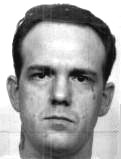 Leo Ernest Jenkins
Murderer · USA · 1998
Leo Ernest Jenkins was executed by lethal injection in Texas on February 9, 199…
2 victims
Leo Ernest Jenkins
Murderer · USA · 1998
Leo Ernest Jenkins was executed by lethal injection in Texas on February 9, 199…
2 victims
 Wayne Butler
Murderer · Australia · 1983
Wayne Butler was convicted of murdering Celia Natasha “Tasha” Douty, who was a…
1 victim
Wayne Butler
Murderer · Australia · 1983
Wayne Butler was convicted of murdering Celia Natasha “Tasha” Douty, who was a…
1 victim
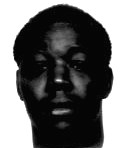 Emanuel Kemp
Murderer · USA · 1987
Emanuel Kemp Jr. was convicted in the stabbing death of Johnnie Gray, 34, and w…
1 victim
Emanuel Kemp
Murderer · USA · 1987
Emanuel Kemp Jr. was convicted in the stabbing death of Johnnie Gray, 34, and w…
1 victim
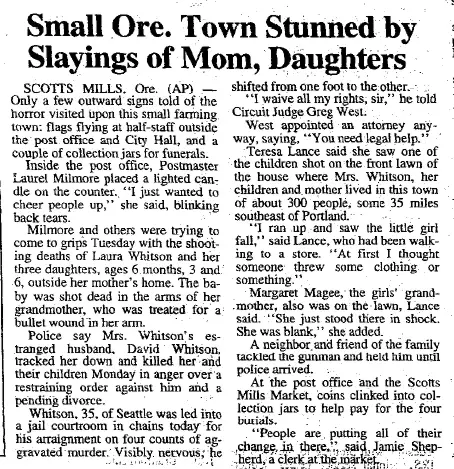 David Whitson
Mass murderer · USA · 1995
David Whitson of Seattle was involved in a tumultuous divorce with his estrange…
4 victims
David Whitson
Mass murderer · USA · 1995
David Whitson of Seattle was involved in a tumultuous divorce with his estrange…
4 victims
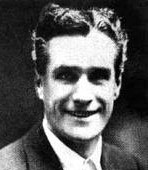 Patrick Mahon
Murderer · United Kingdom · 1924
Patrick Herbert Mahon (also known as Pat Waller), born in West Derby, Liverpool…
1 victim
Patrick Mahon
Murderer · United Kingdom · 1924
Patrick Herbert Mahon (also known as Pat Waller), born in West Derby, Liverpool…
1 victim
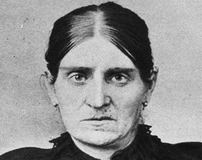 Elisabeth Wiese
Serial killer · Germany · 1902
Elisabeth Wiese (1 July 1853 – 2 February 1905) was a German serial killer from…
5 victims
Elisabeth Wiese
Serial killer · Germany · 1902
Elisabeth Wiese (1 July 1853 – 2 February 1905) was a German serial killer from…
5 victims
- Gender
- male
- Country
- USA
- Location
- Cobb County, Georgia, USA
- Date of birth
- 1969
- Age at first offence
- 24
- Characteristics
- to avoid arrest, police officer
- Victim profile
- Robert Ingram (police officer)
- Method of murder
- Shooting (.380 semiautomatic pistol)
- Date(s) of murder
- July 13, 1993
- Years active
- 1993
- Date of arrest
- Same day
- Status
-
Sentenced to death
Sentenced to death on November 15, 1994
Case record: George Russell Henry
Background
George Russell Henry was 28 years old when he was sentenced to death in Cobb County in November 1994 for the shooting death of Cobb County Police Officer Robert Ingram. Officer Robert Ingram was a two-year police veteran.
Henry had previously been convicted of burglaries and forgery and was on probation at the time of the murder.
The offence
On July 13, 1993, Henry shot and killed police officer Robert Ingram while Ingram was investigating a report of a suspicious person near the railroad tracks in the Elizabeth area.
Ingram radioed his dispatcher that he was going to conduct an investigatory stop of a suspicious “white male dressed in all black carrying some type of a bag.”
Henry’s girl friend had purchased a Davis Industries .380 semiautomatic pistol at Henry’s request during Henry’s incarceration.
A security guard in the area testified that he heard two pistol shots fired four to seven seconds apart.
Officer Ingram was shot twice: once in the face and once in the back of the head. Expert testimony established that both shots were fired from a distance of less than one foot and that Ingram was standing when shot in the face but was on the ground when shot in the back of the head.
Henry then fled the scene in the patrol car.
The missing patrol car was discovered at a municipal golf course.
Investigation
After Ingram’s body was found shortly thereafter, only 14 minutes had elapsed since the time he first notified the dispatcher of the suspicious person.
Ingram’s pistol was still snapped in its holster and Henry’s wallet containing his identification was found a few feet from the body.
The police discovered the missing patrol car at a municipal golf course and arrested Henry. Henry was seen, still dressed in black, talking on a nearby pay phone.
Henry admitted that he had been at the murder scene but initially claimed that another person had used his pistol to kill the officer.
Henry then led the police to places on the golf course where he had hidden some of his possessions, including the .380 pistol that was later determined to be the murder weapon.
Henry was taken to the police station where he confessed to the killing.
Henry stated that Officer Ingram approached him, requested his identification, and asked him what was in the bag. According to Henry, Ingram’s demeanor during this exchange was “pleasant and respectful.”
Henry pulled some of his possessions out of his bag to show the officer but realized that Ingram had seen the ammunition for Henry’s pistol. Realizing that a search would lead to his arrest for being a felon in possession of a firearm, Henry retrieved the weapon from its hiding place and shot Ingram in the face. When the officer moved or moaned, Henry shot him again in the back of the head.
Henry gathered his possessions and accidentally dropped his wallet in the process before fleeing the scene in the patrol car.
Arrest
Henry was arrested after the police discovered the missing patrol car at a municipal golf course.
He was taken into custody on Atlanta Road south of Marietta.
Trial
Henry pled guilty to malice murder in the shooting death of Cobb County Police Officer Robert Ingram.
A sentencing trial followed where the overwhelming evidence summarized in Division 1 of the opinion was presented.
The jury in the sentencing trial recommended a death sentence for the murder and found two statutory aggravating circumstances:
- the offense of murder was committed against a peace officer while engaged in the performance of his official duties, OCGA 17-10-30 (b) (8)
- the murder was committed for the purpose of avoiding, interfering with, or preventing a lawful arrest, OCGA 17-10-30 (b) (10)
The trial court denied Henry’s motions to set aside the guilty plea and for a new trial.
Sentencing
The jury sentenced Henry to death on November 12, 1994, with judgment entered on the sentence the same day.
The death sentence was sentenced to death on November 15, 1994.
The trial court denied Henry’s claim that the death sentence was imposed as the result of impermissible passion, prejudice or other arbitrary factor under OCGA 17-10-35 (c) (1).
The trial court also found the death sentence was not excessive or disproportionate under OCGA 17-10-35 (c) (3), considering both the crime and the defendant.
The similar cases listed in the Appendix supported the imposition of the death penalty in this case because all involved the deliberate killing of a peace officer in the performance of his official duties.
Appeals
Henry appealed, and the conviction and sentence were affirmed.
Henry’s appeal raised several claims, and each was resolved adversely to him:
- Henry claimed the trial court erred by denying his motion to set aside his guilty plea for failure to determine the factual basis of the plea as required by Uniform Superior Court Rule 33.9. The court held that when the term of court expired in which a defendant was sentenced pursuant to a guilty plea, the trial court lacked jurisdiction to allow withdrawal of the plea. The only available means to withdraw the guilty plea was through habeas corpus proceedings, and the trial court properly denied the motion. The court also held that even if timely, the subsequent evidence did not support withdrawal to correct a “manifest injustice,” citing USCR 33.12 and State v. Evans.
- Henry claimed two trial lawyers had a conflict of interest violating the Sixth Amendment right to counsel. The court held that an actual conflict must be palpable and based in fact, and theoretical or speculative conflicts were insufficient. The court concluded Henry’s assertions were conjecture and insufficient to support a finding of actual conflict, finding no Sixth Amendment violation.
- Henry challenged the trial court’s instruction to the jury regarding life without parole. The court held the challenge had been resolved adversely to him, citing Bishop v. State and Henry v. State.
- Henry claimed ineffective assistance of counsel, arguing counsel failed to prepare adequately the psychologist who testified in mitigation and failed to object to improper cross-examination of the expert. The court held counsel’s preparation was not deficient because the psychologist had thoroughly reviewed Henry’s statements and was adequately prepared to testify. The court further held that counsel’s decision not to object during cross-examination was a reasonable tactical decision. The court held Henry’s trial counsel was not ineffective under Strickland v. Washington.
The court also held that the death sentence was not the result of impermissible passion, prejudice or other arbitrary factor and was not excessive or disproportionate, as addressed under OCGA 17-10-35 (c) (1) and (c) (3).
The judgment was decided September 14, 1998, and reconsideration was denied October 2, 1998.
FLETCHER, Presiding Justice, concurred specially. Justice Sears joined in the special concurrence.
Outcome
Henry’s conviction and sentence were affirmed.
Other details
Timeline
- July 1, 1993 — Henry was released.
- July 12, 1993 — Henry stayed with a friend until he was asked to leave because his roommates suspected Henry was stealing from them.
- July 13, 1993 — Henry was walking to a nearby industrial park to look for a business to burglarize; Officer Robert Ingram conducted a routine patrol in the Elizabeth area and radioed his dispatcher about an investigatory stop of a suspicious “white male dressed in all black carrying some type of a bag”; Ingram was shot to death; Henry fled in the patrol car; Henry was arrested after the patrol car was found at a municipal golf course; the cruiser was abandoned near the Marietta City Club; the police took Henry into custody on Atlanta Road south of Marietta.
- October 7, 1993 — Henry was indicted in Cobb County for malice murder.
- October 8, 1993 — the State filed a notice of intent to seek the death penalty.
- October 31, 1994 — Henry pled guilty to murder; a sentencing trial ensued.
- November 12, 1994 — the jury sentenced Henry to death; judgment was entered on the sentence the same day.
- November 15, 1994 — Henry was sentenced to death.
- December 5, 1994 — Henry’s motion for new trial was filed.
- November 22, 1996 — Henry’s motion for new trial was amended.
- November 22, 1996 — Henry filed a motion to set aside his guilty plea.
- December 3, 1997 — the trial court denied both motions.
- January 2, 1998 — Henry filed a notice of appeal.
- February 4, 1995 — the case was docketed.
- May 18, 1998 — the case was orally argued.
- September 14, 1998 — the case was decided.
- October 2, 1998 — reconsideration was denied.
- 269 Ga. 851 and 507 SE2d 419 (1998) — appellate citation information associated with the decision “HENRY v. THE STATE. S98P0719.”
Victim details
Officer Robert “Robbie” Ingram was born January 27, 1969, in Atlanta, Georgia. Robbie grew up in the area and graduated from Sprayberry High School in 1987. Robbie attended Valdosta State University for one year studying sports medicine before joining the United States Air Force in 1988. After being honorably discharged from the Air Force in 1990, Robbie joined the Cobb County Police Department on March 31, 1991.
Assigned to the Uniform Patrol Bureau, Robbie was sent to Precinct 3 for training, and upon completion of his training, was assigned to Precinct 1 Morning Watch.
Robbie was killed on July 13, 1993 while checking a suspicious person near the railroad tracks in the Elizabeth area.
Robbie was 24 when he was killed, only a few short months after he married, and he was the first officer to be killed by a firearm in the line of duty.
Officer Robbie Ingram was posthumously awarded the Cobb County Police Department’s Medal of Valor.
Jury instruction on life without parole (verbatim)
The trial court’s charge, which tracked the language of OCGA 17-10-31.1 (d) (1), provided as follows:
Life without parole means that the defendant will be incarcerated for the remainder of his natural life and shall not be eligible for parole unless he is subsequently adjudicated to be innocent of the offense for which he was sentenced.
FLETCHER, Presiding Justice, concurring specially stated:
As I have stated before, a jury instruction that follows the language of O.C.G.A. 17-10-31.1 (d) is confusing. A trial court would do better to charge only the correct definition of life without parole, “[l]ife without parole means that the defendant will be incarcerated for the remainder of his natural life and shall not be eligible for parole.” 3 However, I cannot conclude that the additional confusing language constitutes reversible error. Therefore, I concur in the affirmance of the conviction and sentence.
Trial attorneys and officials
Thomas J. Charron, District Attorney, Debra H. Bernes, Jack E. Mallard, Assistant District Attorneys, Thurbert E. Baker, Attorney General, Susan V. Boleyn, Senior Assistant Attorney General, and Christopher L. Phillips, Assistant Attorney General, represented the appellee.
Edwin J. Wilson represented Henry as appellant.
Appendix similar cases listed
Davis v. State, 263 Ga. 5 (426 SE2d 844) (1993); Hill v. State, 250 Ga. 277 (295 SE2d 518) (1982); Wallace v. State, 248 Ga. 255 (282 SE2d 325) (1981); Stevens v. State, 247 Ga. 698 (278 SE2d 398) (1981); McClesky v. State, 245 Ga. 108 (263 SE2d 146) (1980); Collier v. State, 244 Ga. 553 (261 SE2d 364) (1979).

Spotted an error, or have more information about this case?