
Graham Saunders Henry
Murderer Brian Kevin Rosenfeld
Murderer · USA · 1985
Brian Kevin Rosenfeld Brian Kevin Rosenfeld was sentenced to three concurrent l…
23 victims
Brian Kevin Rosenfeld
Murderer · USA · 1985
Brian Kevin Rosenfeld Brian Kevin Rosenfeld was sentenced to three concurrent l…
23 victims
 Yahweh ben Yahweh
Murderer · USA · 1980
Yahweh ben Yahweh was born and legally named Hulon Mitchell Jr. (October 27, 19…
23 victims
Yahweh ben Yahweh
Murderer · USA · 1980
Yahweh ben Yahweh was born and legally named Hulon Mitchell Jr. (October 27, 19…
23 victims
 Russell Ellwood
Murderer · USA · 1991
Russell Ellwood was a former taxi driver. Authorities suspected him of killing…
20 victims
Russell Ellwood
Murderer · USA · 1991
Russell Ellwood was a former taxi driver. Authorities suspected him of killing…
20 victims
 Richard Ramirez
Serial killer · USA · 1984
Richard Ramirez—also known as Ricardo “Richard” Muñoz Ramírez and Richard Muñoz…
16 victims
Richard Ramirez
Serial killer · USA · 1984
Richard Ramirez—also known as Ricardo “Richard” Muñoz Ramírez and Richard Muñoz…
16 victims
 Joshua Maxwell
Murderer · USA · 2000
Joshua Maxwell was convicted of capital murder and sentenced to death for the r…
2 victims
Joshua Maxwell
Murderer · USA · 2000
Joshua Maxwell was convicted of capital murder and sentenced to death for the r…
2 victims
 Dallas Ray Stevens
Murderer · USA · 1988
Dallas Ray Stevens was convicted in 1988 of aggravated murder in the slaying of…
1 victim
Dallas Ray Stevens
Murderer · USA · 1988
Dallas Ray Stevens was convicted in 1988 of aggravated murder in the slaying of…
1 victim
 Thomas Doty
Mass murderer · USA · 1962
Thomas G. Doty was a passenger on Continental Airlines Flight 11. He was a marr…
44 victims
Thomas Doty
Mass murderer · USA · 1962
Thomas G. Doty was a passenger on Continental Airlines Flight 11. He was a marr…
44 victims
 Elfriede Blauensteiner
Serial killer · Austria · 1981
Elfriede Blauensteiner (born 22 January 1931 in Vienna; died 18 November 2003)…
5 victims
Elfriede Blauensteiner
Serial killer · Austria · 1981
Elfriede Blauensteiner (born 22 January 1931 in Vienna; died 18 November 2003)…
5 victims
 Michelle Byrom
Murderer · USA · 1999
Name: Michelle Byrom · Offender data (as stated): White; age 43 at crime (DOB 1…
1 victim
Michelle Byrom
Murderer · USA · 1999
Name: Michelle Byrom · Offender data (as stated): White; age 43 at crime (DOB 1…
1 victim
- Gender
- male
- Country
- USA
- Location
- Mohave County, Arizona, USA
- Date of birth
- J uly 24, 1946
- Age at first offence
- 40
- Characteristics
- kidnapping, robbery
- Victim profile
- Roy Estes (an elderly man, was partially paralyzed and used a walker)
- Method of murder
- St abbing with knife
- Date(s) of murder
- June 6, 1986
- Years active
- 1986
- Date of arrest
- 2 days after
- Status
-
Sentenced to death
Sentenced to death on February 23, 1995
Case record: Graham Saunders Henry
Parties and basic identifiers
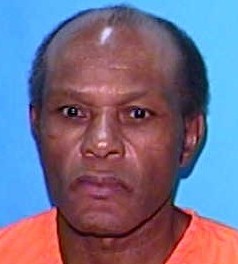
- Graham Saunders Henry was a Caucasian defendant.
- Roy Estes was a Caucasian victim.
The offence
On June 6, 1986, at approximately 3:00 p.m., Henry and Vernon Foote kidnapped Roy Estes from his Las Vegas apartment. The two men forced Estes into his truck and drove off with him. Estes, an elderly man, was partially paralyzed and used a walker. Henry and Foote took Estes to a desert area approximately 40 miles north of Kingman, where they cut his throat and stabbed him in the heart. After hiding Estes' body behind a bush, Henry and Foote drove back to Highway 93, where police officers stopped Henry, who was driving the wrong way on the highway.
Investigation and arrest
Henry gave the police a false name and was arrested for drunk driving. On June 8, 1986, after learning Henry's true name and that Estes was missing, the police questioned Henry about Estes' whereabouts. Henry immediately blamed Foote for killing Estes and led police to the body.
Trial
- Presiding Judge: Steven F. Conn
- Prosecutor: James J. Zack
- Start of Trial: November 24, 1987
- Verdict: December 9, 1987
Henry was tried for the murder.
In a separate trial, Foote was convicted of robbery and theft, but the jury could not reach a verdict on the murder charge. Foote later pled guilty to attempted first-degree murder.
Sentencing and resentencing
- Sentencing: March 16, 1988
- Resentencing: February 23, 1995
The court found aggravating circumstances, including:
- Prior convictions punishable by life imprisonment
- Prior convictions involving violence
- Pecuniary gain
The court found mitigating circumstances: None sufficient to call for leniency.
Appeals
The case included published opinions:
- State v. Henry, 176 Ariz. 569, 863 P.2d 861 (1993).
- State v. Henry, 189 Ariz. 452, 944 P.2d 57 (1997).
Timeline
- June 6, 1986 — Henry and Vernon Foote kidnapped Roy Estes from his Las Vegas apartment, drove off with him in his truck, took him to a desert area approximately 40 miles north of Kingman, killed him, and hid his body behind a bush.
- June 6, 1986 — Police stopped Henry on Highway 93 for driving the wrong way; Henry gave a false name and was arrested for drunk driving.
- June 8, 1986 — Police questioned Henry after learning his true name and that Estes was missing; Henry blamed Foote and led police to the body.
- November 24, 1987 — Trial began.
- December 9, 1987 — Verdict was returned.
- March 16, 1988 — Henry was sentenced to death.
- February 23, 1995 — Henry was resentenced to death.
- March 21, 2002 — A warrant of execution was issued by the Arizona Supreme Court for the execution of Graham Saunders Henry, ADC#067112, on May 8, 2002.
- April 16, 2002 — A stay was issued by the U.S. District Court in the May 8, 2002 scheduled execution of Graham Saunders Henry, ADC#067112.
Outcome
Henry was sentenced to death, and his resentencing occurred on February 23, 1995.
Aftermath and related proceedings
More than 20 years later, Henry’s case continued through further proceedings, with new proceedings scheduled in federal court later in the month mentioned in the account.
Jace Zack, assistant county attorney for Mohave County, said:
"It's amazing, isn't it?"
He also said:
"None of the countys death penalty cases are anywhere close to finalization."
Mohave County Attorney Matt Smith said:
"The worst effect is on the victims, who have to wait to see justice meted out,"
and:
"There is a great deal of frustration."
Zack laid blame on capital defense lawyers and said:
"New procedure laws were supposed to streamline the death penalty,"
He added:
"However, defense attorneys are working overtime figuring out how to thwart justice in many cases."
Jim Belanger, president of Arizona Attorneys for Criminal Justice, said:
"In Arizona, you have a reversal rate and an error rate approaching 60 %,"
and:
"If you're going to have a death penalty, you've got to have an adequately funded and competent defense."
Belanger also said:
"The state and counties had no one to blame but themselves for the slow pace of executions."
Smith said:
"In a lot of the counties Mohave County among them the resources devoted to the defense of capital cases was historically inadequate,"
He also said:
"Arizona has generally not met its obligation to adequately fund capital defenses."
Smith further said:
"It minimizes the cost to the county by seeking the death penalty in an appropriate case,"
and:
"Not every 1st-degree murder case is a death penalty case."
Zack said:
"It still requires some of our resources,"
and:
"These things take years."
The execution-related account mentioned that a recent ruling by the U.S. Supreme Court on the constitutionality of lethal injection appeared to clear the way for the execution of Jeffrey Landrigan, who was convicted of a brutal murder in Phoenix. It also said that it would be Arizona's 1st execution since the execution of Robert Comer by lethal injection in 2007, and that Comer’s execution was Arizona's 1st in more than 7 years. The account also stated that, before that, the last recorded execution of a Mohave County prisoner took place in 1928 at the state penitentiary in Florence, described as a rare quadruple hanging of 4 Chinese immigrants convicted of the murder of a fellow immigrant in Kingman in 1926. The account said the immigrants, described as assassins tied to Chinas feared Tong gang, allegedly assassins tied to Chinas feared Tong gang, burst into Tom King's restaurant in Kingman, shot him dead, and were apprehended by authorities in Topock.
The account stated that beginning with Henry's conviction and death sentence in 1988, seven other Mohave County prisoners joined him on death row, and that proceedings on all 8 continued without an end in sight. It also mentioned that at least six death row inmates had been exonerated and released in Arizona since 1976, and that in 2002 Ray Krone, a U.S. Postal Service mail carrier with no prior criminal record, was released after previously being sentenced to death; it stated that after 2 convictions and 10 years imprisonment, DNA evidence pointed to another killer already in custody.

Spotted an error, or have more information about this case?